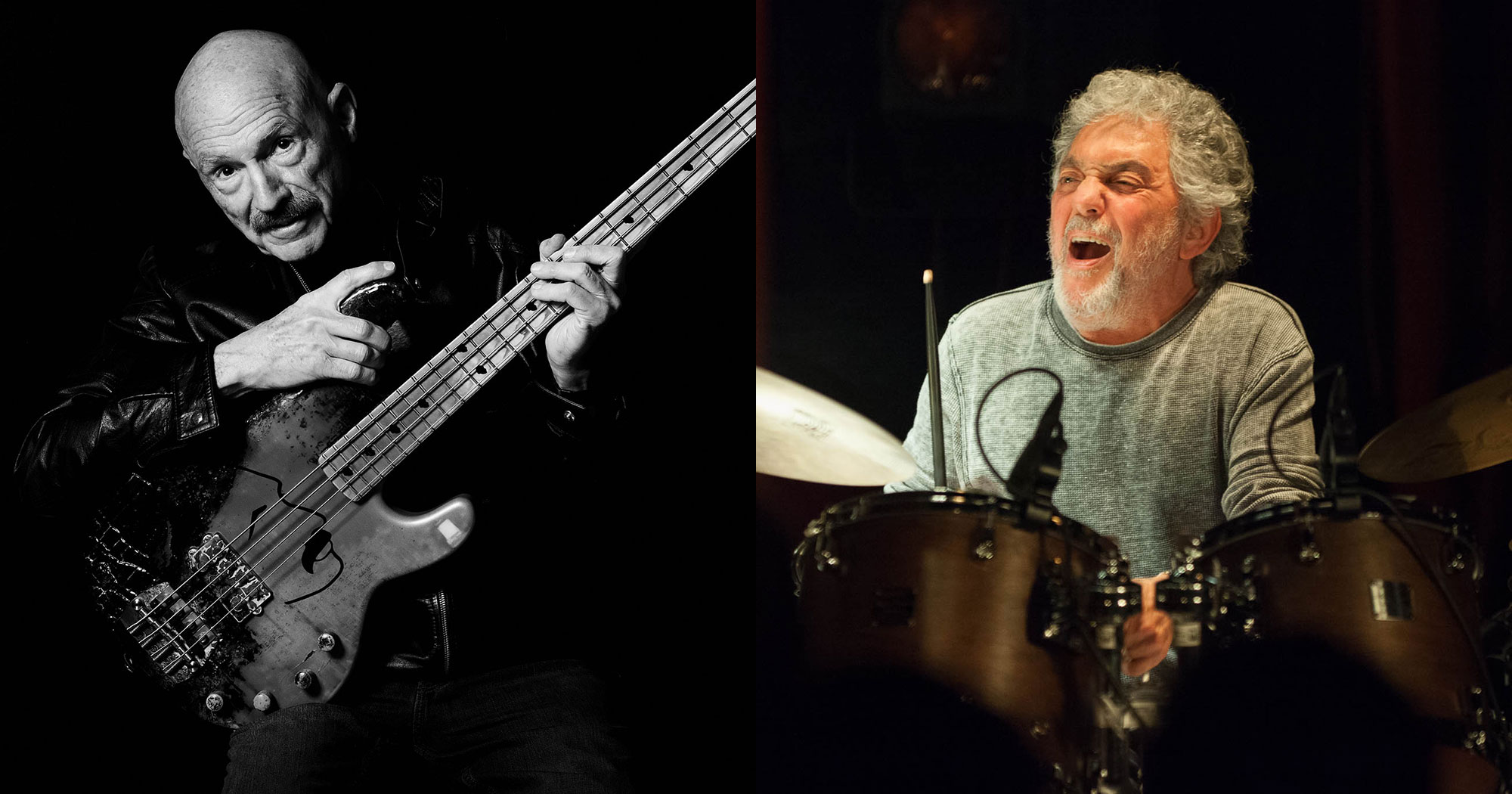
Tony Levin is a preeminent bassist and Chapman Stick pioneer, best known for his decades-long work with Peter Gabriel and King Crimson. Across more than 500 albums, his innovative use of the Stick, "Funk Fingers," and the Music Man StingRay has redefined the role of the rhythm section in progressive rock and jazz-fusion.
As of 2026, Tony Levin remains one of the most prolific and respected figures in the music industry. His career spans over five decades, moving seamlessly between the high-pressure environment of New York session work and the avant-garde complexities of progressive rock. To understand Levin is to understand the evolution of the electric bass itself—from a supportive rhythmic foundation to a lead melodic voice capable of atmospheric textures and percussive intensity.
Early Years and the Foundation of a Session Legend
Born in June 1946 in Boston, Tony Levin’s musical journey began not with the bass guitar, but with the upright bass and the tuba. His classical training at the Eastman School of Music provided a rigorous technical foundation that many of his self-taught contemporaries lacked. This formal education allowed him to approach the bass with a deep understanding of theory and arrangement, which would later become his "secret weapon" in the studio.
In the early 1970s, Levin moved to New York City, quickly becoming a first-call session musician. His ability to read complex charts while providing a soulful, "locked-in" groove made him invaluable. During this era, he contributed to landmark recordings for artists such as Paul Simon (Still Crazy After All These Years), Alice Cooper (Welcome to My Nightmare), and Lou Reed (Berlin). Perhaps most notably, his work on John Lennon’s Double Fantasy showcased his ability to provide exactly what a song needed—nothing more, nothing less—a philosophy that has guided his entire career.
The Peter Gabriel Partnership: A Lifelong Creative Bond
In 1977, Levin was recruited for the first solo album of former Genesis frontman Peter Gabriel. This meeting marked the beginning of one of the most enduring partnerships in rock history. Levin has appeared on almost every Gabriel studio album and has been a staple of his touring band for nearly 50 years.
The collaboration with Gabriel allowed Levin to experiment with sounds that were unconventional for the time. On tracks like "Sledgehammer," Levin utilized a fretless bass combined with a pick and heavy compression to create a punchy, iconic line that defined the sound of 1980s pop-rock. In more atmospheric pieces like "Don't Give Up" or "San Jacinto," he demonstrated his mastery of the "less is more" approach, using long, sustaining notes to build emotional tension.
The 2023–2024 i/o tour, which saw Levin back on stage with Gabriel, reaffirmed their telepathic musical connection. Even in 2026, the influence of their work together remains a benchmark for how technology and organic musicianship can coexist in a live setting.
King Crimson and the Evolution of Progressive Bass
If Peter Gabriel provided the commercial and emotional canvas, King Crimson provided the technical and intellectual laboratory. Levin joined the band in 1981 for the Discipline era, alongside Robert Fripp, Adrian Belew, and Bill Bruford. This iteration of the band focused on interlocking, gamelan-inspired polyrhythms, requiring Levin to play parts of immense complexity.
It was within King Crimson that Levin’s use of the Chapman Stick became a defining element of the band's sound. His ability to navigate the complex time signatures of "Elephant Talk" or the dark, brooding textures of "The Sheltering Sky" made him irreplaceable. Levin participated in multiple "incarnations" of the band, including the "Double Trio" of the 1990s and the massive "Seven-Headed Beast" (and eventually eight-headed) lineup that toured from 2014 through 2021.
By 2026, the legacy of Levin’s work with Crimson is being celebrated through projects like the "BEAT" tour, where Levin teamed up with Adrian Belew, Steve Vai, and Danny Carey to perform the 1980s trilogy material, bringing these intricate compositions to a new generation of listeners.
The Master of the Chapman Stick
Tony Levin is arguably the most famous practitioner of the Chapman Stick, a multi-stringed instrument designed by Emmett Chapman. The Stick is played by "tapping" the strings against the frets with both hands, allowing the player to perform bass lines, chords, and melodies simultaneously.
Levin’s approach to the Stick is unique. While some players focus on the instrument's piano-like capabilities, Levin often treats it as a percussive, rhythmic engine. He frequently uses the "bass side" of the instrument to create growling, synth-like tones that occupy a frequency space different from a traditional bass guitar.
Technical Specifications of the Stick
The Stick typically features 10 or 12 strings, divided into a bass group and a melody group. Levin’s mastery involves:
- Two-Handed Independence: Playing a driving 4/4 bass line with the left hand while tapping syncopated, melodic counterpoints with the right.
- Tuning Systems: Levin often uses the standard "Matched Reciprocal" tuning, which facilitates wide intervals and unique chord voicings.
- Signal Processing: He often splits the output, sending the bass strings to a traditional bass rig and the melody strings through various effects pedals, including delays and harmonizers.
Iconic Gear: The Music Man StingRay and Beyond
While Levin is a multi-instrumentalist, he is most closely associated with the Ernie Ball Music Man StingRay. He has used both 4-string and 5-string models throughout his career. The StingRay’s active electronics and humbucking pickup provide a "bright yet thick" tone that cuts through dense mixes, a necessity when playing alongside Robert Fripp’s crystalline guitar lines or Peter Gabriel’s heavy synth arrangements.
The Innovation of "Funk Fingers"
One of Levin’s most famous contributions to bass technique is the invention of "Funk Fingers." During the recording of Peter Gabriel’s So album, Levin wanted a more percussive sound, similar to a drummer hitting the strings. He eventually developed small, chopped-down drumsticks that are strapped to the index and middle fingers of the right hand.
This allows the player to strike the strings with wood rather than flesh or a pick, creating a highly articulated, "slap-like" attack but with a distinct tonal quality. Levin continues to use these in live performances, particularly on the song "Big Time."
The NS Electric Upright
For a more organic, jazz-influenced sound, Levin frequently employs the NS Electric Upright Bass, designed by Ned Steinberger. This instrument allows him to achieve the resonance and feel of a traditional double bass while maintaining the portability and "edge" required for modern rock stages.
A Discography of Giants: Notable Collaborations
Levin’s discography is a "who’s who" of 20th and 21st-century music. His versatility allows him to adapt to almost any genre, from folk-rock to heavy metal.
| Artist | Notable Album/Work | Levin's Primary Instrument | Key Contribution |
|---|---|---|---|
| Peter Gabriel | So (1986) | Bass / Funk Fingers | The iconic "Big Time" and "Sledgehammer" lines. |
| King Crimson | Discipline (1981) | Chapman Stick / Bass | Redefined prog-rock bass with polyrhythmic tapping. |
| John Lennon | Double Fantasy (1980) | Bass Guitar | Subtle, melodic support for Lennon's final studio work. |
| Paul Simon | Still Crazy After All These Years | Bass Guitar | The rhythmic anchor for "50 Ways to Leave Your Lover." |
| Pink Floyd | A Momentary Lapse of Reason | Bass Guitar | Provided the low-end for the post-Waters era. |
| Liquid Tension Experiment | LTE 1, 2, & 3 | Stick / Bass | High-velocity fusion alongside members of Dream Theater. |
| Liquid Tension Experiment | Bringing It Down to the Bass | Various | Levin's 2024 solo masterwork featuring multiple guest bassists. |
Modern Activity and the 2024 Solo Breakthrough
In late 2024, Levin released his highly anticipated solo album, Bringing It Down to the Bass. This project served as a summation of his technical philosophy, featuring collaborations with other bass legends and exploring various sub-genres of the low end. As we move through 2026, the album remains a critical reference point for bassists, showcasing Levin’s ability to lead a project without overshadowing the musicality of the compositions.
Beyond his solo work, Levin remains active with L'Image, a group formed with long-time friends Mike Mainieri, Steve Gadd, Warren Bernhardt, and David Spinozza. This project highlights his jazz-fusion roots and his continued desire to play in ensemble settings where improvisation is key.
Common Questions Regarding Tony Levin’s Career
What makes Tony Levin's bass tone so distinctive?
Levin’s tone is built on a foundation of "clean power." He typically uses high-headroom amplifiers (like Ampeg or Ashdown) and favors the active EQ of his Music Man StingRay. His use of compression is crucial, as it allows his percussive techniques (like Funk Fingers) to sit perfectly in the mix without spiking too high or disappearing.
Is Tony Levin still touring in 2026?
Yes, Levin remains remarkably active. While the massive King Crimson tours of the past have concluded, he continues to tour with Peter Gabriel and participates in various collaborative tours, such as the 2024–2025 BEAT tour. He is also a frequent clinician, sharing his knowledge at bass camps and masterclasses worldwide.
How did the "Funk Fingers" come to be?
The idea originated during the So sessions. Levin asked his tech to cut down some drumsticks and attach them to his fingers to get a harder attack on the strings. This evolved into a commercial product, though Levin often still uses custom-made versions. They are essentially a way to bring a drummer’s "rudiments" to the bass strings.
What was Tony Levin's role in Liquid Tension Experiment?
Levin provided the rhythmic and harmonic "glue" for this instrumental supergroup. Playing alongside John Petrucci, Jordan Rudess, and Mike Portnoy, Levin proved that he could handle extreme technicality and high-speed unison lines while still maintaining the "groove" that the more metal-focused members required.
Why is the Chapman Stick so important to his legacy?
Before Levin, the Stick was a niche instrument known mostly to experimentalists. Levin brought it into the mainstream, using it on hit records and world tours. He demonstrated that it wasn't just a "gimmick" instrument but a powerful tool for modern composition, capable of deep bass and ethereal melodies.
Practical Recommendation for Aspiring Bassists
If you are looking to incorporate Tony Levin’s style into your own playing, start by focusing on rhythmic precision rather than speed. Levin’s greatest strength is his ability to place a note exactly where it provides the most "lift" to the song.
- Study the "Sledgehammer" Line: Analyze how the fretless bass slide works in tandem with the kick drum.
- Experiment with Tapping: You don't need a Chapman Stick to start; try basic two-handed tapping on a standard 4-string bass to understand how to separate your left-hand rhythm from your right-hand melody.
- Read His Photography Books: Levin is also a world-class photographer. His book Crimson Chronicles offers a unique "insider" look at the life of a touring musician, providing context that can help you understand the mental side of a high-level musical career.