The highest-grossing concert tour of all time is Taylor Swift's The Eras Tour, which shattered historical financial records by surpassing the milestone of $1 billion in gross revenue in late 2023 and continuing to scale significantly higher through its conclusion. Live music economics have evolved dramatically over the last few decades, shifting from secondary revenue streams to the primary financial engine for recording artists.
The Evolution of Touring Revenue and Economics
Understanding how a concert tour achieves record-breaking revenue requires examining the fundamental business model of live entertainment. Historically, touring served primarily as a promotional vehicle to drive physical album sales. Artists and record labels viewed concerts as marketing expenses rather than profit centers. However, the digital music revolution, the steep decline in physical compact disc sales, and the emergence of streaming platforms drastically altered this dynamic. Today, recorded music streaming yields fractions of a cent per play for creators, making live performance the single most lucrative sector of the music industry.
Modern concert economics rely heavily on dynamic pricing algorithms, VIP packages, massive stadium capacities, and global routing strategies. When an artist commands a stadium tour across multiple continents, the sheer volume of tickets sold creates an exponential revenue curve. Furthermore, ancillary revenue streams—including official tour merchandise, brand sponsorships, and cinematic releases of concert experiences—contribute tens of millions of dollars to the overall gross. As production values have scaled to match stadium proportions, ticket prices have risen correspondingly, reflecting both inflation and the extraordinary demand for experiential, shared entertainment.
Historical Milestones: How Records Have Been Broken
The threshold for what constitutes a record-breaking tour has shifted enormously over the past twenty years. To appreciate the scale of contemporary tours, one must look at the milestones established by previous record-holders.
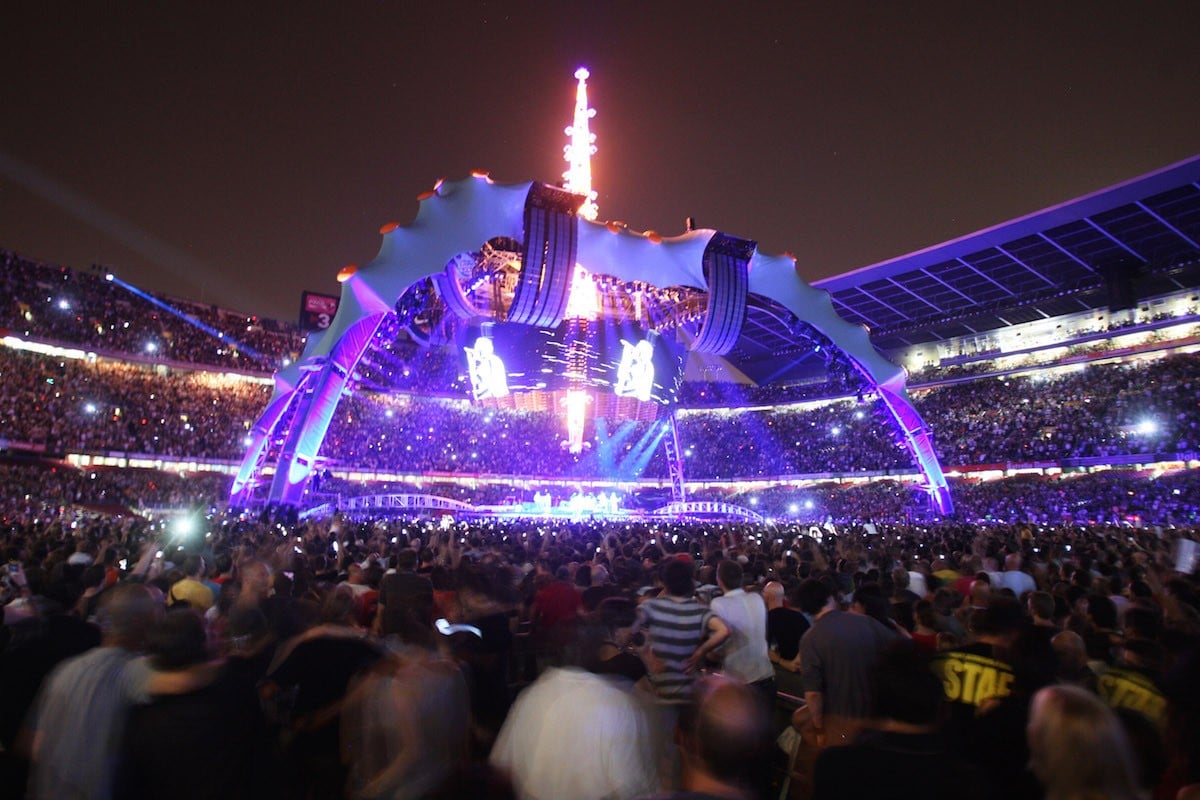
In the late 2000s, The Rolling Stones' A Bigger Bang Tour set a high-water mark by grossing over $550 million. This record stood for several years until U2’s 360° Tour eclipsed it by utilizing an innovative, massive central stage design known as "The Claw," which allowed for increased stadium seating capacities and ultimately grossed approximately $736 million between 2009 and 2011.
For over a decade, U2's record remained the gold standard until Ed Sheeran’s Divide Tour surpassed it in ticket volume and gross revenue, crossing the $770 million threshold. Following the global disruptions of the early 2020s, the live entertainment industry experienced an unprecedented resurgence. Pent-up consumer demand, combined with artists mounting massive multi-year global itineraries, paved the way for a new tier of billion-dollar blockbusters, led by Taylor Swift and followed closely by other contemporary stadium acts like Beyoncé and Coldplay.
Anatomy of a Billion-Dollar Tour
Breaking the all-time gross revenue record requires a convergence of massive global demand, meticulous logistical planning, and favorable economic conditions. The Eras Tour, which began in March 2023, exemplifies this modern formula. By spanning multiple eras of an artist's catalog over a three-hour-plus performance, the show engineered a high-value consumer experience that drove unprecedented demand.
Key Drivers of Record-Breaking Revenue
- Stadium-Scale Itineraries: Playing multi-night stands in major metropolitan stadiums rather than arenas maximizes nightly attendance, often drawing between 60,000 and 90,000 fans per show.
- Dynamic and Tiered Pricing: Implementing advanced pricing models ensures that ticket prices capture true market value, while extensive VIP tier options cater to high-net-worth consumers willing to pay a premium for exclusive access and merchandise.
- Global Market Penetration: Extending tours beyond traditional North American and European strongholds into Latin America, Asia, and Australia unlocks massive new revenue pools.
- Integrated Merchandise Sales: Pop-up shops, venue-specific exclusive items, and high-volume online sales transform merchandise into a secondary revenue stream that can rival the box office take of entire opening acts.
Comparative Overview of Historical Record-Breaking Tours
The following table highlights the major concert tours that have held or challenged the all-time gross revenue record, illustrating the rapid acceleration of live music earnings over recent decades.
| Tour Name | Artist | Active Years | Estimated Gross Revenue | Primary Markets |
|---|---|---|---|---|
| The Eras Tour | Taylor Swift | 2023–2024 | $1+ Billion (Historical High) | Global (North America, South America, Asia, Europe, Australia) |
| Music of the Spheres World Tour | Coldplay | 2022–Ongoing | $900M+ (Projected/Updated) | Global |
| Renaissance World Tour | Beyoncé | 2023 | $579 Million | North America, Europe |
| Divide Tour | Ed Sheeran | 2017–2019 | $776 Million | Global |
| 360° Tour | U2 | 2009–2011 | $736 Million | Global |
| A Bigger Bang Tour | The Rolling Stones | 2005–2007 | $558 Million | Global |
Note: Gross revenue figures are reported by industry tracking publications such as Billboard Boxscore and Pollstar. Figures are subject to final independent verification and may exclude unverified local taxes, promoter fees, or subsequent adjustments.
Logistical and Operational Challenges of Massive Tours
Mounting a tour that generates record-breaking revenue is a complex logistical feat. Behind the glittering stage production lies a massive corporate operation that requires years of preparation and coordination among promoters, booking agencies, local governments, and venue operators.
Transporting stage sets, lighting rigs, and audio equipment across oceans requires dedicated cargo fleets of aircraft and semi-trucks. Crew management is equally intricate; a tour of this magnitude typically employs hundreds of traveling personnel, alongside thousands of local staging, security, and hospitality workers hired at every stop. Furthermore, routing must account for crew fatigue, equipment maintenance cycles, and regulatory constraints imposed by municipal venues regarding sound curfews and structural weight limits.
Promoters and management teams must also navigate the volatility of foreign exchange rates, local entertainment taxes, and shifting geopolitical landscapes. Insuring a tour worth hundreds of millions of dollars requires specialized risk assessment, covering potential cancellations due to health crises, weather emergencies, or artist illness.
The Economic Impact on Local Host Cities
Record-breaking tours do not merely enrich the artists and promoters; they act as powerful economic catalysts for the host cities. Economists and municipal tourism boards frequently study the influx of capital generated by multi-night stadium residencies, often referred to by analysts as an economic halo effect or localized stimulus.
When tens of thousands of travelers converge on a city for a weekend concert, local hospitality sectors reap immediate benefits. Hotels experience near-full occupancy rates, often commanding peak seasonal rates. Restaurants, public transit systems, rideshare drivers, and retail establishments also report surging sales volumes. In many cases, cities actively court major tours, recognizing that the tax revenue generated from local sales, hospitality, and entertainment levies provides a substantial boost to municipal budgets.
Frequently Asked Questions
What constitutes a concert tour gross revenue record?
A concert tour gross revenue record is determined by the total box office receipts collected across all ticket sales for a specific tour, as verified and reported by industry box office trackers like Billboard Boxscore and Pollstar. It does not factor in production costs, taxes, or promoter expenses.
How do ticket prices impact all-time gross records?
Ticket prices play a significant role, but overall gross is a function of both pricing and volume. While higher average ticket prices and VIP packages accelerate revenue accumulation, playing to massive stadium crowds over an extensive number of dates is what ultimately propels a tour past the billion-dollar threshold.
Are festival appearances included in tour gross calculations?
Generally, box office trackers calculate tour grosses based on headlining arena or stadium dates where the artist controls the ticketing and revenue split. Single-day festival appearances or corporate private events are typically tracked separately and are not the primary drivers of all-time tour records.
How is inflation accounted for when comparing historical tours?
Industry analysts frequently adjust older box office grosses for inflation to provide a clearer comparative baseline. However, unadjusted nominal grosses are also widely cited in contemporary media reports, as modern dynamic pricing and stadium-scale logistics represent a fundamentally different economic era than the touring environments of the 1980s or 1990s.
Why have concert revenues increased so dramatically in recent years?
The shift is primarily driven by the decline of physical album sales and the rise of streaming, which forced artists to rely on live performance as their primary income source. Additionally, consumer spending habits have increasingly prioritized experiential purchases, such as live entertainment, over material goods.
Next Actions and Industry Outlook
For researchers, music industry professionals, and enthusiasts tracking the live entertainment sector, analyzing box office data requires consulting primary reporting agencies such as Billboard Boxscore and Pollstar. As production technologies advance and global touring networks expand, the benchmarks set by current record-holders will continue to shape how future artists plan, price, and execute blockbuster live experiences. Monitoring ongoing stadium itineraries will reveal whether upcoming tours can sustain or surpass the unprecedented financial milestones established in the current decade.