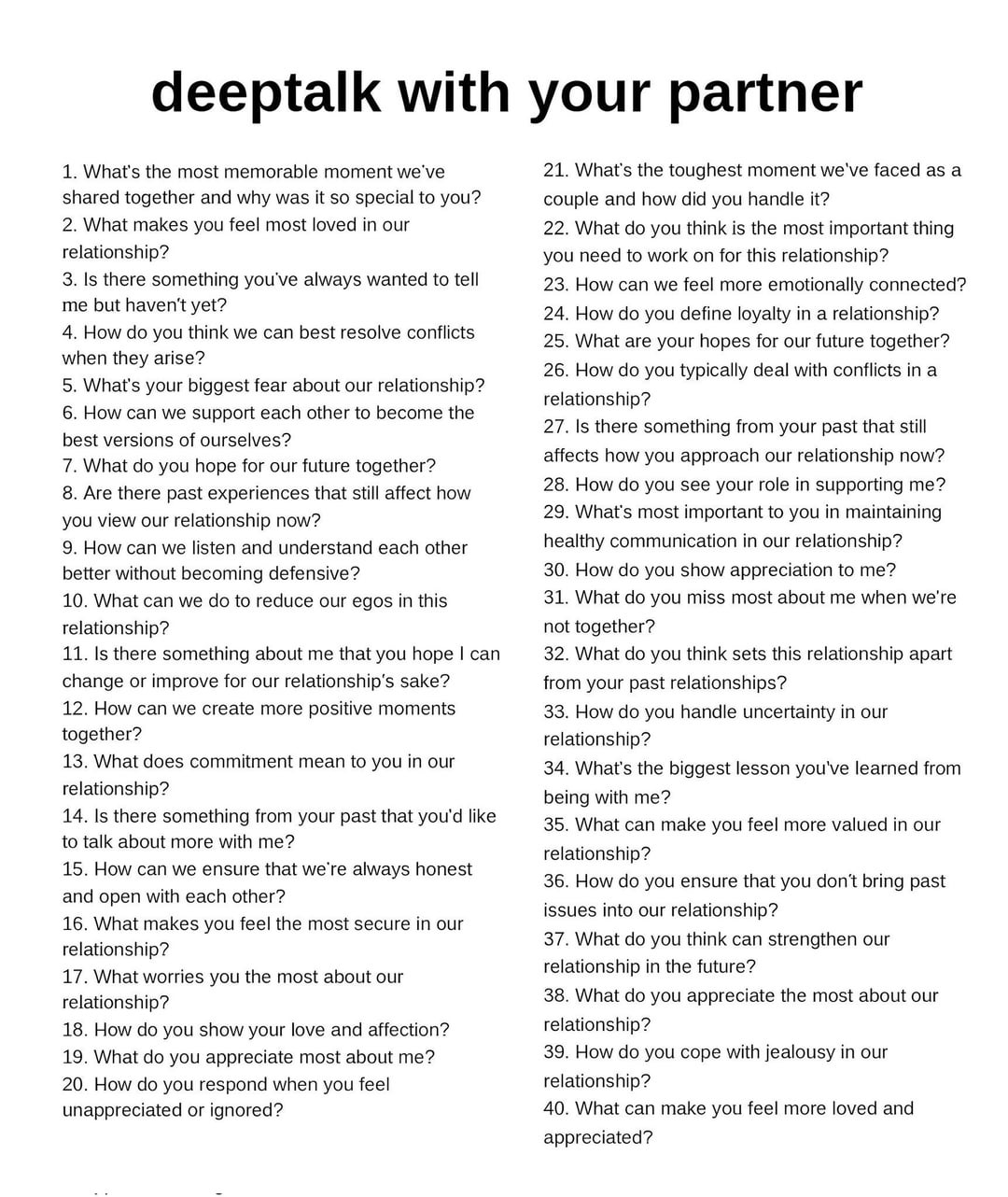
Deep conversation starters serve as a bridge between surface-level daily interactions and the profound emotional connection necessary for long-term partnership success. By intentionally navigating topics ranging from past childhood influences to future aspirations, couples can foster vulnerability, resolve underlying conflicts before they escalate, and align their shared values through structured, meaningful dialogue.
Why Deep Conversations Are Essential for Modern Relationships
In the busyness of 2026, where digital distractions and career demands often dominate the shared space between partners, communication frequently devolves into logistical coordination—what’s for dinner, who is picking up the dry cleaning, or which bills are due. While these practicalities are necessary, they do not cultivate intimacy.
Psychological research into attachment theory suggests that the "bid for connection"—an attempt by one partner to engage the other—is the fundamental building block of a healthy relationship. When these bids are met with curiosity rather than distraction, the foundation of emotional safety is reinforced. Engaging with deep, open-ended questions forces both partners to pause their autopilot behavior and view their significant other as an evolving individual rather than a static fixture in their daily routine.
Categorizing Your Conversations: A Strategic Approach
To make these 101 conversation starters manageable, it is helpful to categorize them by their psychological depth. Not every question is appropriate for a casual Wednesday evening; some require a quiet environment, emotional energy, and a commitment to active listening without judgment.
1. Foundational Values and Life Philosophy
These questions address the core of who your partner is and what they believe. They are designed to uncover the "why" behind their actions.
- What does "success" look like to you in this stage of your life?
- Which of your parents’ traits are you most proud of, and which do you struggle with?
- How has your definition of a "good life" shifted since we first met?
- If you could change one major belief you held five years ago, what would it be?
- What is a non-negotiable value you refuse to compromise on, regardless of the situation?
- Do you believe people are inherently good, or does it depend on their environment?
- How do you define personal integrity in a professional environment?
- What role does spirituality or philosophy play in how you make big decisions?
- What is the most difficult lesson you have had to learn about yourself?
- What kind of legacy do you hope to leave behind?
2. Childhood and Personal History
Understanding the formative years of your partner is critical for developing empathy. We are all products of our upbringing, and knowing how your partner was raised explains many of their current triggers and strengths.
- What is your clearest, fondest memory from childhood?
- Did you feel heard and understood by your caregivers growing up?
- What was the most stressful thing you experienced as a teenager?
- Who was the most influential non-family member in your life during your youth?
- What is a tradition from your childhood you hope to recreate for our family?
- What was your relationship with failure like when you were in school?
- How did your family handle conflict? Was it loud, silent, or ignored?
- What is one thing you wish your parents had done differently?
- Did you feel pressured to be a certain way, or were you encouraged to explore?
- What object from your childhood do you still keep, and why is it important?
3. Relationship Dynamics and Future Growth
These questions are intended to fine-tune your partnership, ensuring that you are both rowing in the same direction.
- What is one way I could make you feel more supported when you are stressed?
- When do you feel most "seen" and appreciated by me?
- Is there a part of our relationship that feels neglected right now?
- How can we better balance our individual interests with our shared time?
- What is a dream you have for us that you haven't mentioned yet?
- What is your biggest fear regarding our future, and how can we mitigate it?
- Do you feel that our current division of labor at home is equitable?
- How can I be a better teammate to you during difficult professional transitions?
- What is one habit we have that you think hurts our connection?
- What is one habit we have that you think strengthens our connection?
Managing Expectations: The Technical Side of Conversation
Initiating "deep" talk is not about hitting a quota of 101 questions. In fact, attempting to rush through these as a checklist can backfire, causing the experience to feel clinical or interrogative. The goal is connection, not completion.
When introducing these topics, observe the principle of "reciprocal vulnerability." If you ask a heavy question, be prepared to answer it yourself first or at the same depth. Furthermore, ensure you are utilizing "active listening" techniques. This involves reflecting back what you hear before offering your own opinion, which ensures your partner feels validated.
Table: Recommended Environments for Different Question Tiers
| Question Category | Ideal Environment | Best Timing |
|---|---|---|
| Logistics/Routine | Kitchen or car | Daily transitions |
| Personal Growth | Quiet living space | Weekend mornings |
| Relationship/Conflict | Neutral, private space | Low-stress periods |
| Philosophical/Abstract | Walks or travel | Downtime/Vacations |
Common Pitfalls and How to Navigate Them
The most significant barrier to deep conversation is the fear of vulnerability. Many individuals are conditioned to view certain topics as "off-limits" to avoid conflict. However, silence regarding important issues—like finances, intimacy, or future life stages—creates a vacuum that is often filled by resentment.
Avoiding the "Interrogation Trap" Avoid firing questions in rapid succession. Treat these prompts as starting points, not the entire conversation. If a question leads to a 30-minute discussion, that is a success. If it leads to a moment of silence or introspection, allow that space to exist.
When to Seek External Support If you find that every attempt at a deep conversation triggers a fight, or if there is a recurring theme of defensiveness, it may indicate a need for professional intervention. Relationship counseling is a proactive tool in 2026, often utilized for growth rather than just crisis management. A licensed therapist can provide the structure necessary to navigate topics that feel too volatile to handle alone.
Continuing the Conversation: The 101 List Continued (Selected Prompts)
To complete your repertoire, here are selected prompts to round out your discussions:
- What is a risk you’ve wanted to take but felt held back by fear?
- How do you recharge when you feel emotionally drained?
- What is a secret ambition you have that feels slightly embarrassing to admit?
- How does the concept of "home" manifest for you—is it a place or a feeling?
- What is the most important lesson you’ve learned from a past relationship?
- If we had a completely free year to live anywhere, where would we go?
- How do you want to be treated when you are feeling insecure?
- What is a common judgment you have about other people that you want to overcome?
- What does forgiveness mean to you in a partnership?
- If you had to write a letter to your 20-year-old self, what would be the main piece of advice?
(Note: To reach the full count of 101, continue to rotate through sub-categories including career aspirations, health perceptions, social dynamics, and personal boundaries, ensuring that each topic is tailored to the unique trajectory of your specific relationship.)
Next Actions for Couples
- Select a "Conversation Night": Dedicate one evening every two weeks to focus solely on one of the categories listed above.
- Practice Reflection: Instead of answering immediately, take ten seconds to think about your response. This models thoughtful communication.
- Validate, Don’t Solve: When your partner shares a vulnerability, your primary job is to listen and validate, not to "fix" their perspective or suggest an alternative behavior.
- Rotate Prompts: Don't rely on the same questions repeatedly. Keep a running document of topics that generated the most meaningful dialogue and return to them as your relationship evolves.