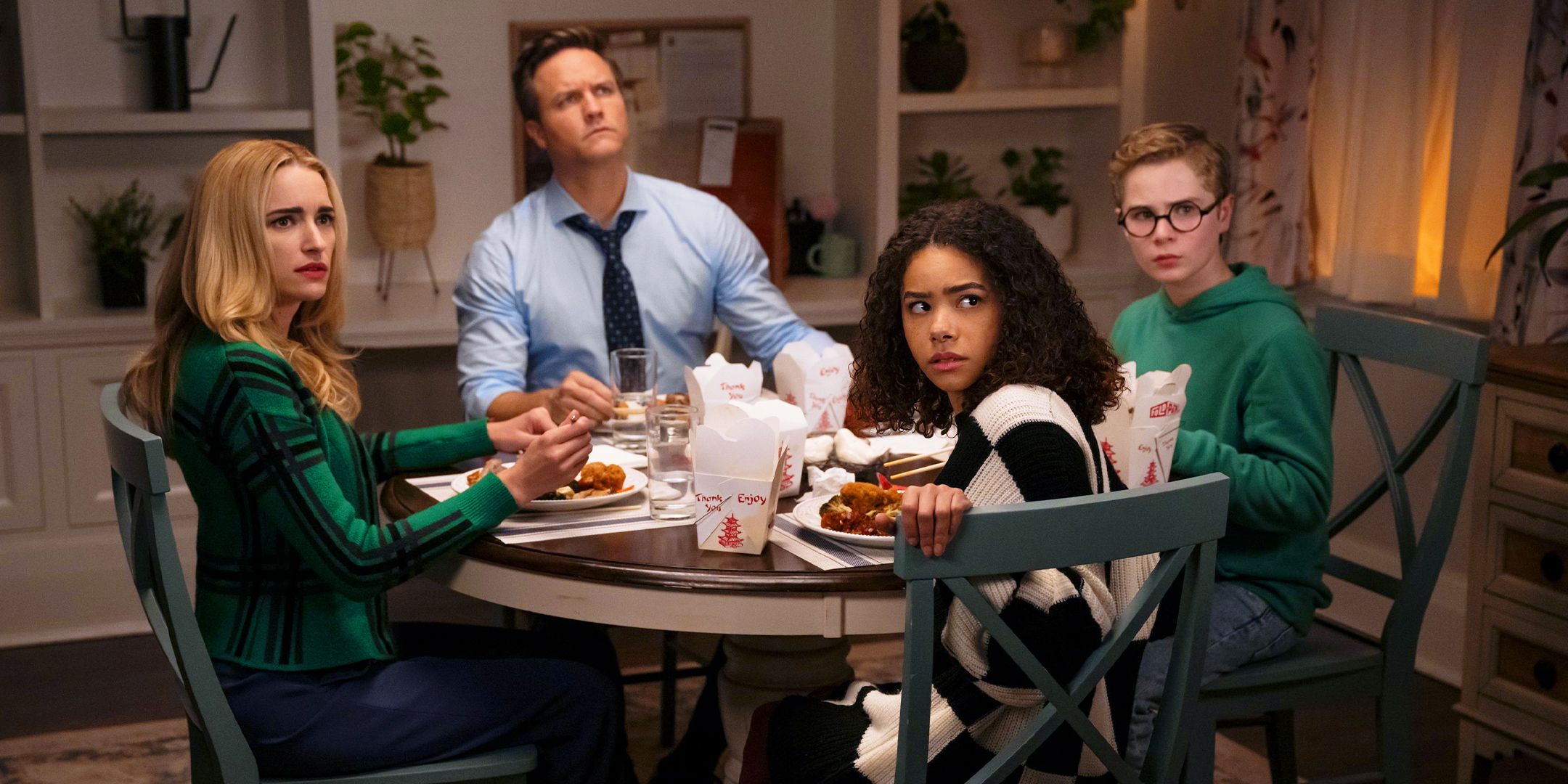
Ginny and Georgia is a popular Netflix comedy-drama series created by Sarah Lampert that explores the complex, high-stakes relationship between thirty-something Georgia Miller and her fifteen-year-old daughter, Ginny. Blending dark comedy, coming-of-age angst, murder mystery, and serialized soap opera drama, the series follows the Miller family as they attempt to put down roots in a picturesque New England town after years of moving from place to place.
Introduction to the World of Ginny and Georgia
The television landscape is saturated with family dramas, but few capture the volatile, fiercely protective, and deeply complicated bond between a young mother and her teenage children quite like Netflix’s Ginny and Georgia. Premiering in February 2021, the series quickly amassed a massive global audience, drawing comparisons to classic rapid-fire dialogue dramas while carving out its own distinct identity through a darker, more cynical lens.
At its core, the show centers on Georgia Miller, a charismatic, beautiful, and deeply flawed mother who had her first child, Ginny, at age fifteen. Having survived an abusive childhood, poverty, and a string of toxic relationships, Georgia will stop at nothing—including financial fraud and murder—to secure a safe, affluent future for Ginny and her younger half-brother, Austin. When they relocate to the fictional, wealthy enclave of Wellsbury, Massachusetts, the family believes they have finally found a safe haven. However, Georgia’s shadowy past quickly catches up with her, turning their picturesque new life into a ticking time bomb.
For viewers, navigating the series means unpacking multiple genres at once. It functions simultaneously as a high school teen drama filled with social politics, first loves, and identity struggles, and a suburban noir thriller driven by detective investigations and buried secrets. Understanding the appeal, structure, and critical reception of Ginny and Georgia requires examining how these dual narratives collide.
Core Characters and Complex Dynamics
The narrative success of Ginny and Georgia relies heavily on its character work, specifically the psychological mirror between the two titular leads. The mother-daughter dynamic is neither purely toxic nor purely wholesome; it is a nuanced exploration of generational trauma, codependency, and survival instincts.
Georgia Miller: The Surviving Machiavellian Matriarch
Played by Brianne Howey, Georgia Miller is a modern-day Southern belle archetype weaponized by street smarts and unyielding pragmatism. Georgia presents herself as a bubbly, cocktail-loving suburban mother, but beneath the surface lies a ruthless operator. Having navigated severe childhood trauma, she learned early that the world does not protect women and children unless they take control themselves.
Georgia’s protective instincts are both her greatest asset and her most dangerous flaw. While she provides lavish comforts and fierce advocacy for her children, her methods—embezzlement, forgery, and lethal elimination of abusive husbands—jeopardize the very stability she fights to create. Her character forces viewers into a moral gray area: she is a sympathetic survivor protecting her family, yet she is also a remorseless criminal.
Ginny Miller: The Traumatized Perfectionist Teen
Antonia Gentry portrays Virginia "Ginny" Miller, a fifteen-year-old grappling with an identity crisis amplified by her transient upbringing. As a biracial teen (born to a white mother and a Black father, Zion), Ginny struggles to find her footing in predominantly white spaces like Wellsbury, while also feeling alienated by her mother's chaotic, fast-paced lifestyle.
Ginny exhibits traits inherited from Georgia—including manipulation and secret-keeping—while desperately trying to distance herself from her mother's moral flexibility. Her internal struggles manifest through profound anxiety, self-harm, and rebellion. Throughout the series, Ginny acts as both the audience's moral compass and a deeply flawed adolescent trying to figure out who she is outside of her mother's shadow.
Supporting Ensemble and Wellsbury Dynamics
The fictional town of Wellsbury serves as a pressure cooker for the main characters. Key figures include:
- Austin Miller (Diesel La Torraca): Georgia’s sensitive younger son who slowly absorbs the violent reality of his family's survival mechanisms.
- Zion Miller (Nathan Mitchell): Ginny’s biological father and Georgia’s charming, nomadic ex-fiancé, who remains an emotional anchor for both Ginny and Georgia.
- Paul Randolph (Scott Porter): The ambitious, handsome mayor of Wellsbury who falls for Georgia’s charms, providing the family with political shield and social standing.
- Maxine "Max" Baker (Sara Waisglass): Ginny’s theatrical, fiercely loyal best friend whose dramatic flair often eclipses the emotional needs of those around her.
- Marcus Baker (Felix Mallard): Max’s twin brother, Ginny’s next-door neighbor, and her primary romantic interest and confidant through her mental health struggles.
Thematic Exploration: Trauma, Identity, and Mental Health
Beyond its soapy plot twists, Ginny and Georgia distinguishes itself by tackling heavy, contemporary social issues. The writers weave systemic themes directly into the daily lives of the characters, grounding the high-drama elements in recognizable emotional truths.
Intergenerational Trauma and Parenting
The central thesis of the show examines how unresolved childhood trauma echoes down through generations. Georgia tries to give Ginny the financial security and maternal presence she never had, but her toxic survival mechanisms and boundary issues inflict new psychological wounds. Conversely, Ginny views her mother's actions through a lens of adolescent judgment, only to find herself repeating the same patterns when under pressure.
Race, Intersectionality, and Microaggressions
As a biracial teenager moving from Texas to a predominantly white Massachusetts suburb, Ginny navigates a constant stream of microaggressions, cultural alienation, and identity erasure. The show addresses these struggles through Ginny’s interactions with peers, teachers, and even her mother's well-meaning white partner, Paul. Additionally, Ginny explores her Black heritage through her relationship with her father, Zion, and her paternal grandmother, highlighting the distinct complexities of growing up between two racial worlds.
Mental Health, Self-Harm, and Therapy
Mental health is treated not as a passing plot device, but as a critical narrative thread. Both Ginny and Georgia grapple with anxiety, depression, and post-traumatic stress disorder. The series depicts the reality of adolescent self-harm with clinical sensitivity, emphasizing the importance of professional therapy, support systems, and open communication over quick fixes.
Narrative Structure: Comedy, Crime, and Coming-of-Age
One of the defining characteristics of Ginny and Georgia is its dizzying tonal shifts. The series pivots rapidly from lighthearted high school drama to intense psychological thriller, a structure that mirrors the chaotic energy of Georgia's life.
| Narrative Element | Description | Primary Characters Involved |
|---|---|---|
| Suburban Satire & Romance | Political campaigns, PTA drama, high school cliques, and budding teenage romances in Wellsbury. | Georgia, Paul, Max, Marcus, Norah, Abby |
| Coming-of-Age & Identity | Exploration of racial identity, sexuality, mental health struggles, and teenage rebellion. | Ginny, Maxine, Marcus, Hunter, Bracia |
| Dark Noir & Mystery | Investigation into Georgia's past crimes, suspicious deaths of former husbands, and PI surveillance. | Georgia, PI Gabriel Cordova, Austin, Zion |
This blending of genres creates a polarized viewing experience. Some audiences embrace the campy, fast-paced soap opera elements, while others tune in specifically for the grounded emotional exploration of teenage mental health and mother-daughter dynamics.
Frequently Asked Questions
What is the main premise of Ginny and Georgia?
The series follows Georgia Miller and her two children, Ginny and Austin, as they relocate to a wealthy New England town called Wellsbury to start fresh. While trying to fit into high-class suburban life, Georgia's dark past involving crime and mysterious deaths threatens to unravel their new beginning.
Is Ginny and Georgia appropriate for younger teens?
The series is rated TV-14 for language, sexual content, substance use, and mature themes, including self-harm and violence. Parents and guardians should review content advisories regarding adolescent mental health struggles and dark criminal plots before watching with younger viewers.
How is the show connected to Gilmore Girls?
While officially unrelated, Ginny and Georgia frequently draws comparisons to Gilmore Girls due to its premise of a young, fast-talking single mother raising a bright teenage daughter in a quirky New England town. However, Ginny and Georgia features a significantly darker tone, incorporating murder mysteries and heavier psychological trauma.
Where is Wellsbury located in real life?
Fictionally set in Massachusetts, Ginny and Georgia is actually filmed primarily in Cobourg and Toronto, Ontario, Canada. The picturesque town square, local cafes, and New England-style architecture are brought to life through Canadian locations and set design.
What are the primary mental health themes addressed in the series?
The show focuses heavily on adolescent anxiety, depression, and self-harm through Ginny's character arc, alongside PTSD and complex trauma stemming from Georgia's abusive upbringing. Therapy and professional counseling play a major role in how characters navigate their emotional pain.
Conclusion and Next Viewing Steps
Ginny and Georgia succeeds by refusing to fit neatly into a single television genre. By combining the witty banter of classic family dramedies with the high-stakes tension of a suburban crime thriller, the series delivers a uniquely compelling viewing experience. Whether you are analyzing its sharp social commentary on race and class, evaluating its unflinching portrayal of adolescent mental health, or simply enjoying the chaotic momentum of Georgia Miller's survival tactics, the show offers rich material for discussion.
To fully appreciate the narrative arc, viewers should watch the series sequentially from Season 1, paying close attention to how early character motivations and background details pay off in later investigative plots. Prepare for tonal shifts, emotional depth, and a relentless pace that keeps the Miller family constantly on the run from their own history.