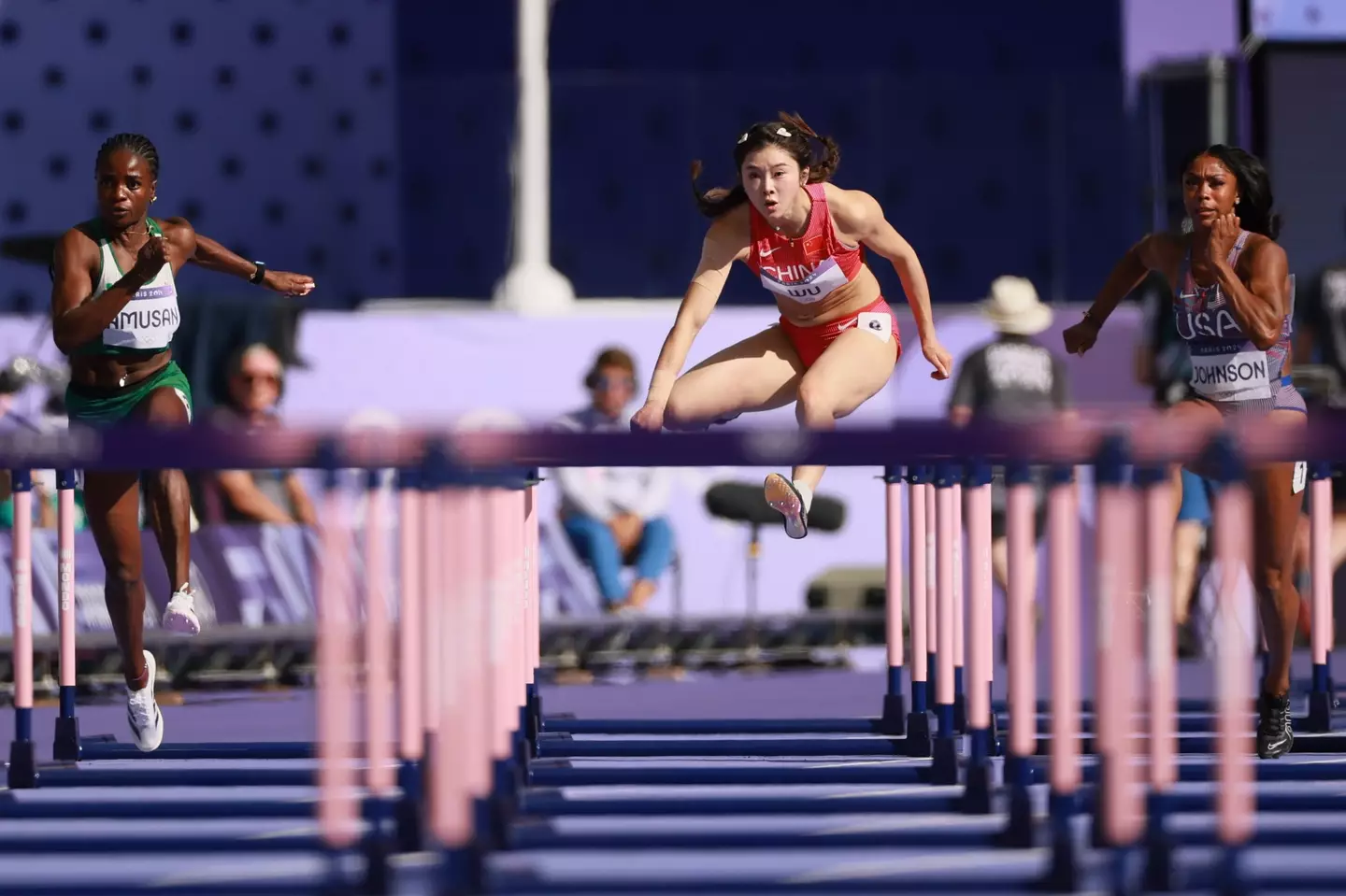
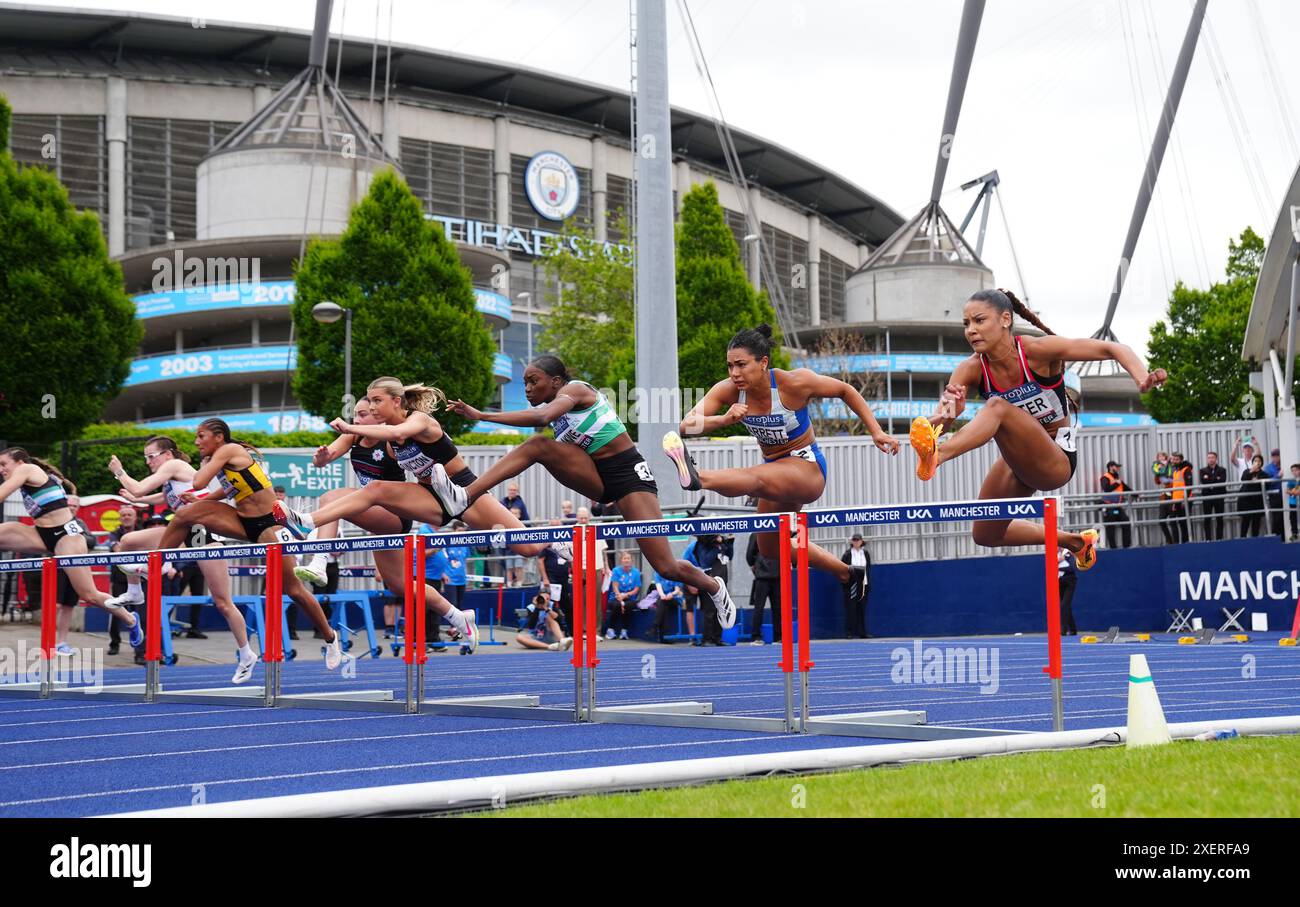
The 110m hurdles is a premier Olympic track and field event for men, requiring athletes to sprint over ten barriers, each 1.067 meters high. Success depends on a combination of explosive speed, precise rhythm, and technical mastery of the "three-step" pattern between hurdles, all governed by strict World Athletics regulations and Olympic standards.
The Technical Framework: Rules and Specifications
The 110m hurdles is often described as a "sprint with obstacles," but this minimizes the extreme technical precision required. Unlike the 400m hurdles, which allows for some rhythmic variation, the 110m version is a high-speed exercise in constraint. By 2026, the rules governing this event have remained largely consistent with the modernization efforts of the late 20th century, focusing on athlete safety and the integrity of the sprint.
Dimensions and Barrier Placement
The race consists of ten hurdles. The height of each hurdle is fixed at 1.067 meters (42 inches) for the men’s Olympic event. The placement of these hurdles is mathematically precise to facilitate a specific number of strides:
- Start to First Hurdle: 13.72 meters. This distance is critical because it determines the athlete's acceleration phase and whether they use a seven-step or eight-step approach.
- Distance Between Hurdles: 9.14 meters. This distance is designed to accommodate exactly three high-speed strides between the clearance of one barrier and the takeoff for the next.
- Last Hurdle to Finish Line: 14.02 meters. This final "run-in" is where many races are won or lost as athletes transition from a rhythmic jumping motion back into a pure sprint.
The Physics of the Hurdle
Modern Olympic hurdles are "L-shaped." This design is a significant safety feature. The base is weighted so that the hurdle will tip over if hit with sufficient force, but only in the direction the athlete is running. This prevents the "tripping" effect common with the old T-shaped hurdles of the early 20th century. Under World Athletics rules, knocking down a hurdle is not grounds for disqualification unless the official determines the athlete did so deliberately or if the hurdle was knocked into another lane, interfering with a competitor.
Disqualification and Lane Integrity
The most common reasons for disqualification in the Olympic 110m hurdles include:
- False Starts: Since 2010, the "one-and-done" rule has been in effect. Any athlete who leaves the blocks before the starter's gun (specifically, reacting in less than 0.100 seconds) is immediately disqualified.
- Trailing Leg Violation: An athlete’s foot or leg must not trail below the horizontal plane of the top of the hurdle at the moment of clearance. Essentially, you cannot "hook" your leg around the side of the hurdle.
- Interference: If an athlete strikes a hurdle and it moves into an adjacent lane, impeding another runner, the offender is disqualified.
The Historical Evolution of the Olympic 110m Hurdles
The 110m hurdles has been a staple of the Modern Olympic Games since the inaugural 1896 Athens Games. However, the event we recognize today is vastly different from its Victorian-era origins.
The Early Era (1896–1932)
In the first Olympic Games, hurdles were often made of heavy wood and were stuck firmly into the ground. If an athlete hit a hurdle, they were likely to fall or suffer injury. The technique was also rudimentary; many athletes "jumped" over the hurdles with their legs tucked under them, losing significant forward momentum.
The first major technical revolution came from Alvin Kraenzlein, the American who won the gold at the 1900 Paris Games. Kraenzlein pioneered the "straight-lead-leg" technique. Instead of jumping, he drove his lead leg straight over the hurdle, allowing him to maintain a much lower center of gravity and stay closer to a sprinting motion.
The Modernization of the Hurdle (1930s–1970s)
The 1930s saw the introduction of the L-shaped hurdle, which allowed athletes to attack the barrier with more aggression. With the fear of "catching" a fixed hurdle removed, times began to drop rapidly. This era also saw the transition from cinder tracks to synthetic surfaces, which provided the consistent "bounce" necessary for the rhythmic three-step pattern.
The Professional Era and Electronic Timing
By the late 20th century, the 110m hurdles became a showcase of extreme athleticism. The introduction of fully automatic timing (FAT) allowed for the measurement of records to the hundredth of a second. This precision highlighted the razor-thin margins of the event, where a single clipped hurdle could mean the difference between a world record and a fourth-place finish.
Elite Performers: The Legends of the 110m Hurdles
To understand the 110m hurdles is to understand the individuals who mastered the "invisible" art of the three-step. These athletes combined the raw speed of a 100m sprinter with the flexibility of a gymnast.
Historical Icons
- Harrison Dillard (USA): Dillard remains a unique figure in Olympic history. After failing to qualify for the 110m hurdles in 1948, he won the 100m sprint instead. He returned in 1952 to win the 110m hurdles gold, making him the only man to win Olympic gold in both the 100m sprint and the 110m hurdles.
- Lee Calhoun (USA): The first man to defend an Olympic 110m hurdles title, winning in 1956 and 1960. He was known for his "Calhoun dip" at the finish line.
- Roger Kingdom (USA): A powerhouse of the 1980s, Kingdom won back-to-back golds in 1984 and 1988, breaking the Olympic record and asserting American dominance in the event.
The Modern Greats
- Colin Jackson (GBR): While he never won an Olympic gold, his world record of 12.91 seconds set in 1993 stood for over a decade. His technical efficiency remains a textbook example for young hurdlers in 2026.
- Liu Xiang (CHN): Liu’s victory at the 2004 Athens Olympics was a watershed moment for Asian athletics. He tied the world record (12.91) to win gold, becoming a global icon and proving that the 110m hurdles was an event of truly international depth.
- Aries Merritt (USA): Merritt’s 2012 season is arguably the greatest in the history of the sport. He won Olympic gold in London and shortly after set the current world record of 12.80 seconds. His "seven-step" approach to the first hurdle became the gold standard for the modern era.
- Grant Holloway (USA): Dominating the landscape through the early 2020s, Holloway’s explosive start is perhaps the best the sport has ever seen. As of 2026, he remains the benchmark for consistency, having maintained a years-long undefeated streak in the indoor 60m hurdles, which translates directly to his dominance in the first half of the 110m Olympic race.
Technical Execution: The Biomechanics of Winning
Winning the 110m hurdles at the Olympic level requires a "perfect" race. Unlike the 100m dash, where a poor start can sometimes be overcome by top-end speed, a mistake in the hurdles is compounding.
The Start and the Seven-Step Approach
For decades, athletes took eight steps to the first hurdle. However, modern elite hurdlers like Grant Holloway and Aries Merritt popularized the seven-step approach. By taking fewer, more powerful strides, athletes arrive at the first hurdle with more vertical momentum. This requires immense core strength and height, as the strides must be exceptionally long.
The Clearing Motion
The goal of clearing a hurdle is not to "jump" but to "step over" it.
- The Lead Leg: This leg is driven straight at the hurdle, not upward. The knee is "cocked" and then snapped forward.
- The Trail Leg: Once the lead leg clears the barrier, the trail leg is pulled through in a circular, horizontal motion. This is the most technical part of the race. If the trail leg is slow, the athlete's hips will drop, ruining the rhythm for the next three steps.
- Arm Action: The opposite arm of the lead leg is thrust forward to maintain balance, while the other arm stays tight to the body to prevent rotational force that could pull the athlete out of their lane.
The Three-Step Rhythm
Between hurdles, there is no time for "sprinting" in the traditional sense. The athlete must execute three distinct strides. The first stride is typically the shortest (the "landing" stride), the second is the longest, and the third is slightly shorter to prepare for the next takeoff. This rhythmic "dah-dah-dah-JUMP" pattern must be maintained perfectly across all ten barriers.
Olympic Progressions and Records
The following table illustrates the progression of the Olympic record and the level of performance required to reach the podium in recent decades.
| Olympic Year | Gold Medalist | Country | Time (Seconds) | Notable Fact |
|---|---|---|---|---|
| 1988 Seoul | Roger Kingdom | USA | 12.98 | First sub-13 in Olympic history |
| 1996 Atlanta | Allen Johnson | USA | 12.95 | Set a new Olympic Record |
| 2004 Athens | Liu Xiang | CHN | 12.91 | Equaled the then-World Record |
| 2012 London | Aries Merritt | USA | 12.92 | Followed by a 12.80 WR later that year |
| 2020 Tokyo | Hansle Parchment | JAM | 13.04 | Huge upset over Grant Holloway |
| 2024 Paris | Grant Holloway | USA | 12.99 | Reclaimed dominance for the US |
Common Challenges and Training Requirements
To compete at the Olympic level in 2026, athletes undergo rigorous specialized training. The 110m hurdles is notoriously hard on the body, particularly the hamstrings and the lower back.
- Mobility: Hurdlers require the hip flexibility of a dancer. Without "open" hips, the trail leg cannot clear the 1.067m barrier without forcing the athlete to jump higher than necessary.
- Speed Endurance: While the race is short, the energy required to lift the center of gravity ten times is immense. Athletes often train by running "over-distance" hurdles (12 or 14 barriers) to ensure they don't fade in the final 14 meters.
- Mental Focus: In a sprint, you can run on instinct. In the hurdles, you must be hyper-aware. One slight clip of a hurdle can change the lead-leg angle, leading to a "crasher" on the next barrier.
Frequently Asked Questions
Why are the hurdles 110 meters instead of 100 meters?
The 110m distance originates from the English "120 yards" (roughly 109.7 meters). When the metric system was adopted for the Olympics, the distance was slightly rounded up to 110 meters to maintain the traditional spacing used in early British competitions.
Can an athlete be disqualified for hitting a hurdle?
Generally, no. An athlete can hit all ten hurdles and still win, provided they do not use their hands to knock them down or intentionally interfere with other runners. However, hitting a hurdle creates friction and slows the athlete down, making it disadvantageous to do so.
What is the height difference between Olympic men's and women's hurdles?
The men's hurdles are 1.067 meters (42 inches) high, while the women's (100m hurdles) are 0.838 meters (33 inches) high. Additionally, the spacing between hurdles is shorter for the women's event (8.5 meters versus the men's 9.14 meters).
Is the "seven-step" start mandatory?
No, it is a choice based on the athlete's height and power. Shorter hurdlers often stick to an eight-step approach because they can generate more turnover, whereas taller athletes like Grant Holloway use seven steps to avoid "crowding" the first hurdle.
How do athletes avoid "lead-leg" injury?
Athletes spend hours on "lead-leg" drills, focusing on snapping the foot down quickly after it clears the hurdle. Injuries usually occur when an athlete reaches too far forward, causing a "braking" action that puts extreme stress on the hamstring.
Practical Recommendation for Enthusiasts
If you are following the 110m hurdles during the current 2026 athletic season, pay close attention to the reaction times and the first three hurdles. In the modern elite field, the race is often decided by the fourth hurdle. If an athlete has not established their "three-step" rhythm by then, they rarely have the space to recover. Watch for the "snap-down" of the lead leg; the faster the foot returns to the track, the more speed the hurdler carries into the next stride.