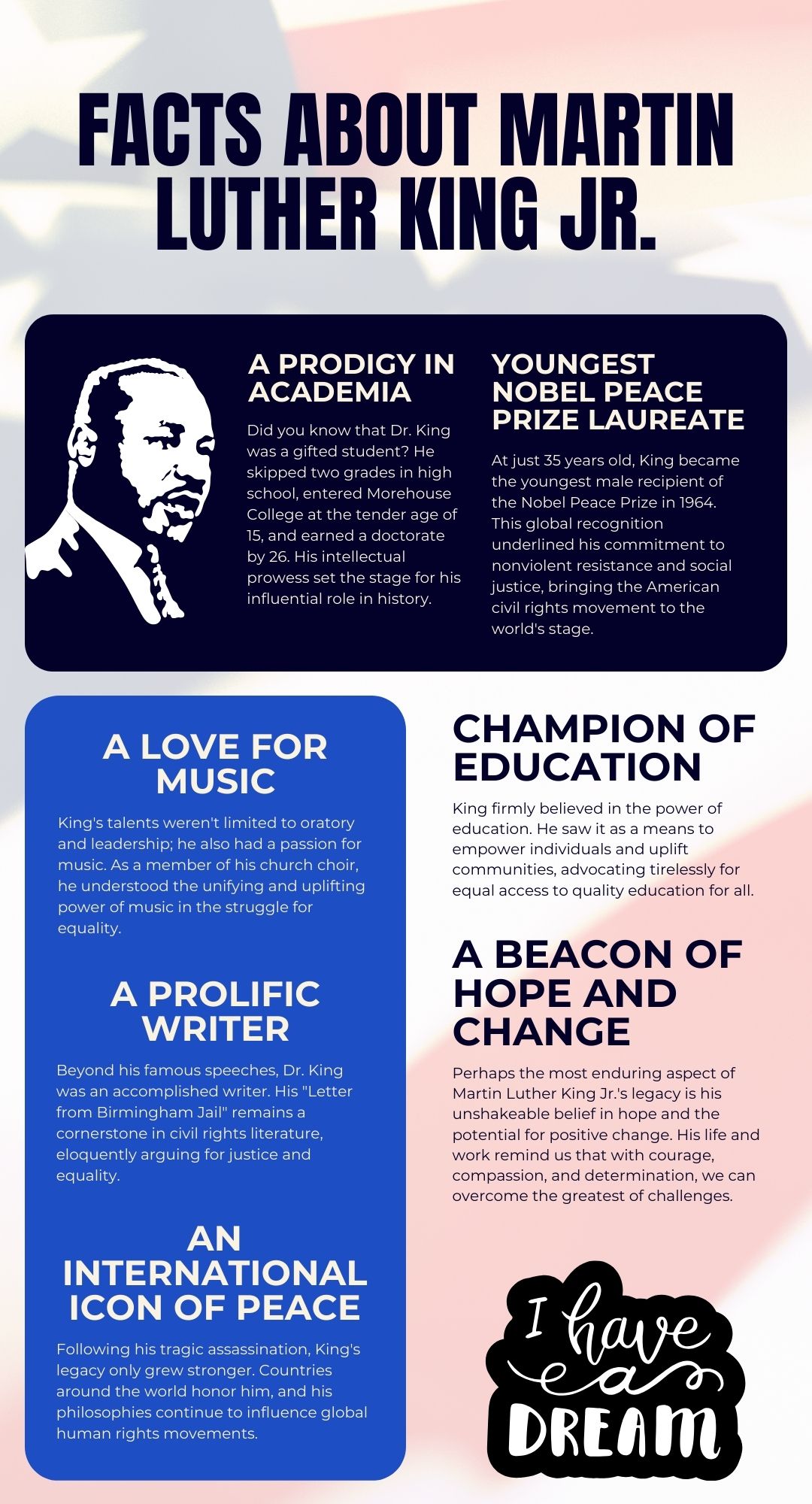
Martin Luther King Jr. remains the most prominent figure of the American Civil Rights Movement, fundamentally altering the nation’s social and legal landscape through nonviolent resistance. His life, from his roots in Atlanta to his leadership in the Southern Christian Leadership Conference and his tragic assassination in 1968, serves as a blueprint for grassroots advocacy and moral leadership in the modern era.
Early Life and Formative Years
Born Michael King Jr. on January 15, 1929, in Atlanta, Georgia, his father later changed both their names to honor the German reformer Martin Luther. Growing up in the Sweet Auburn neighborhood, King was exposed early to both the warmth of his community and the harsh realities of Jim Crow segregation. His intellectual path led him to Morehouse College at age 15, a precocious entry made possible by the college's wartime accelerated programs.
At Morehouse, King was mentored by President Benjamin E. Mays, who encouraged him to view Christianity as a potent force for social change. He then attended Crozer Theological Seminary, where he was introduced to the philosophy of Mohandas Gandhi. This synthesis—Christian love paired with Gandhian nonviolent resistance—would become the hallmark of his strategic approach to dismantling systemic inequality.
Academic Rigor and Theological Foundations
King’s doctoral studies at Boston University provided the intellectual scaffolding for his activism. In 1955, he received his Ph.D. in Systematic Theology. His dissertation examined the ideas of Paul Tillich and Henry Nelson Wieman, reflecting his interest in how religious ethics could be applied to human history.
His theological training was not merely academic; it informed his rhetorical style. Drawing heavily from the Black prophetic tradition, King framed the struggle for civil rights as a moral imperative. He argued that laws infringing on human dignity were inherently unjust, a position he famously articulated while confined in a Birmingham jail cell. His ability to bridge the gap between complex theological concepts and the lived struggles of disenfranchised communities was pivotal to his ability to mobilize the masses.
The Montgomery Bus Boycott
In 1955, the arrest of Rosa Parks acted as a catalyst for the Montgomery Bus Boycott. King, then a young minister at Dexter Avenue Baptist Church, was thrust into the spotlight as the spokesperson for the Montgomery Improvement Association. The boycott lasted 381 days, testing the resilience of the local Black community and the efficacy of nonviolent economic pressure.
The legal victory in Browder v. Gayle (1956), which declared segregated buses unconstitutional, established King as a national figure. It was during this period that he refined his commitment to nonviolence, noting that the goal was not to defeat or humiliate the opponent but to win their friendship and understanding.
Strategic Leadership: The SCLC and Beyond
Following the success in Montgomery, King co-founded the Southern Christian Leadership Conference (SCLC) in 1957. The SCLC provided a structural foundation for civil rights actions across the South, focusing on moral authority and coordinated nonviolent protest. Under his guidance, the organization spearheaded campaigns in Albany, Birmingham, and Selma.
The Birmingham campaign of 1963 was particularly significant. King’s decision to involve students and children in the demonstrations resulted in violent reactions from authorities, which were captured on television and broadcast globally. This forced a national dialogue on the morality of segregation, ultimately leading to the passage of the Civil Rights Act of 1964.
Major Milestones and Legislative Achievements
King’s career was defined by monumental moments of public speaking and legislative influence. The March on Washington for Jobs and Freedom in August 1963 stands as the apex of the movement's visibility. His "I Have a Dream" speech did more than outline a vision for the future; it created a shared vocabulary for American equality.
| Event / Achievement | Year | Key Outcome |
|---|---|---|
| Montgomery Bus Boycott | 1955-56 | Desegregation of city buses |
| Formation of the SCLC | 1957 | Coordinated regional activism |
| Letter from Birmingham Jail | 1963 | Intellectual defense of direct action |
| March on Washington | 1963 | Heightened political pressure for reform |
| Civil Rights Act | 1964 | Outlawed discrimination based on race/origin |
| Nobel Peace Prize | 1964 | Global recognition of nonviolent strategy |
| Voting Rights Act | 1965 | Prohibited racial discrimination in voting |
The Philosophy of Nonviolence
King’s dedication to nonviolence was not a passive strategy but an active, militant force. He understood nonviolence as a means of "persuading" the oppressor to acknowledge the humanity of the oppressed. This required immense discipline from protesters, who were trained to absorb physical attacks without retaliation.
This approach served two purposes: it maintained the moral high ground and it prevented the movement from being dismissed by the public as mere civil unrest. By forcing the state to react with violence against peaceful protesters, King exposed the rot of segregation to the broader American public, effectively shrinking the middle ground of indifference.
Expanding the Scope: Economics and War
In his final years, King shifted his focus toward economic inequality and the Vietnam War. He became increasingly critical of a capitalist system that he believed concentrated wealth while trapping millions in poverty. His planned "Poor People's Campaign" aimed to bring attention to the systemic barriers faced by all marginalized Americans, regardless of race.
His opposition to the Vietnam War, most notably articulated in his 1967 "Beyond Vietnam" speech at Riverside Church, alienated him from some of his political allies, including the Johnson administration. Despite this, he insisted that the violence of war abroad and the violence of poverty at home were inextricably linked, a testament to his evolving understanding of justice.
Legacy and Memory
King was assassinated on April 4, 1968, in Memphis, Tennessee, where he had traveled to support striking sanitation workers. While his life was cut short, his influence expanded exponentially. The movement he led secured fundamental legislative changes that remain the bedrock of modern civil rights protections in the United States.
Today, his memory is preserved not only through a federal holiday and a national memorial in Washington, D.C., but through the continued study of his rhetoric and strategic planning. The King Center in Atlanta continues to archive his papers and promote the philosophy of nonviolent change.
Frequently Asked Questions
What was King’s official role in the SCLC?
King served as the first president of the Southern Christian Leadership Conference (SCLC) from its inception in 1957 until his death in 1968. He was responsible for setting the organization's agenda, fundraising, and serving as its primary public face during major campaigns.
How did the Birmingham campaign impact legislation?
The Birmingham campaign forced the hand of the Kennedy administration by creating a crisis that could not be ignored. The public reaction to the images of police using fire hoses and attack dogs on protesters provided the political momentum necessary to introduce and ultimately pass the Civil Rights Act of 1964.
Why is the "Letter from Birmingham Jail" significant?
The letter is considered a foundational text of modern political philosophy. Written on scraps of paper while he was incarcerated, it explains why nonviolent direct action is necessary to expose social injustice and argues that "injustice anywhere is a threat to justice everywhere."
What was the goal of the Poor People's Campaign?
Initiated in 1968, the campaign sought to address the lack of economic opportunity in America. King wanted to unite poor people of all racial and ethnic backgrounds to lobby Congress for an "Economic Bill of Rights," focusing on jobs, fair wages, and housing.
Where can I find primary source documents regarding King?
The Martin Luther King, Jr. Research and Education Institute at Stanford University houses the definitive collection of his papers, including sermons, speeches, and correspondence, providing the most reliable primary source documentation for academic and historical research.
Practical Recommendations for Ongoing Study
To truly understand the depth of King’s impact, one should move beyond popular soundbites and engage directly with his writing. Reading his collected essays, such as "Strength to Love" or "Where Do We Go from Here: Chaos or Community?", offers a clear look at his intellectual evolution. Furthermore, visiting historical sites such as the Civil Rights District in Birmingham or the National Civil Rights Museum at the Lorraine Motel provides essential context for the physical reality of the movement. By engaging with the source material rather than the curated myth, researchers and students alike can better understand the tactical brilliance and moral rigor that defined his life.