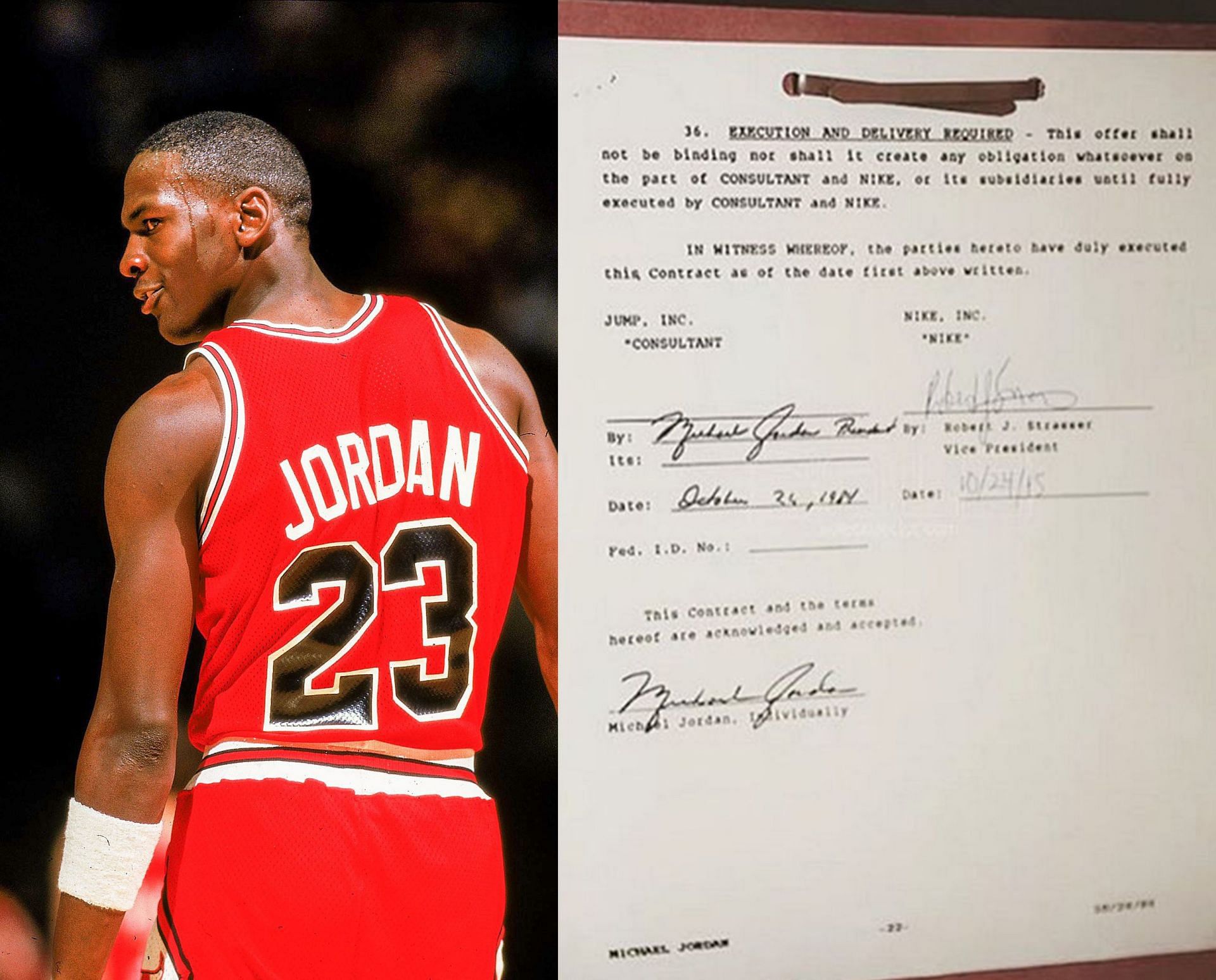
Yes, Nike still pays Michael Jordan an enormous sum of money every single year through a revolutionary royalty structure established when they first signed him in 1984. Far from a traditional fixed-term athlete endorsement deal, the partnership has evolved into a multi-billion-dollar subsidiary brand that yields hundreds of millions of dollars annually for the NBA legend, making it one of the most successful commercial ventures in corporate history.
To understand how this relationship persists decades after Jordan played his final professional basketball game, it is necessary to examine the financial mechanics of the Air Jordan brand, the evolution of athletic endorsements, and the structural agreements that turned a rookie basketball player into a corporate titan. What began as a risky $500,000-per-year gamble by a fledgling athletic footwear company has transformed into a financial behemoth that fundamentally reshapes how athletes and brands share revenue.
The Origins of the 1984 Agreement and the Royalty Model
When Michael Jordan entered the NBA as a rookie out of the University of North Carolina in 1984, Nike was primarily known as a running shoe company seeking to break into the booming basketball market. Converse was the dominant player on NBA hardwood floors, and Adidas was the preferred brand for many stylish urban youths. Nike needed a seismic shift to capture market share, and sports marketing executive Sonny Vaccaro pushed aggressively for the company to spend its entire annual rookie basketball budget on a single player: Michael Jordan.
The resulting contract was unprecedented for its time. Nike offered Jordan a five-year deal worth $500,000 annually—a massive figure for a rookie—plus stock options and royalties on shoe sales. The inclusion of a royalty clause was the masterstroke that changed the industry. Instead of receiving a flat fee for wearing the sneakers, Jordan secured a percentage of every single signature shoe sold.
- Agreement Element: Initial 1984 Terms vs. Modern Evolution
- Base Compensation: Started at $500,000/year; now driven by royalties
- Royalty Structure: Pioneered a percentage cut of every shoe sold
- Brand Autonomy: Evolved into a standalone Nike subsidiary (Jordan)
- Cultural Reach: Expanded from basketball to global streetwear
This royalty model ensured that as long as the shoes remained popular, Jordan’s income would scale infinitely with the brand's success. Even during his various retirements from the NBA and his subsequent transition into a team owner, the royalty checks continued to arrive unabated, driven by the enduring cultural appeal of the Air Jordan product line.
How the Jordan Brand Generates Billions Today
Decades after its inception, the Jordan Brand operates almost as an independent entity under the corporate umbrella of Nike. While Nike handles the global manufacturing, distribution, marketing logistics, and retail infrastructure, the brand maintains its own dedicated design teams, roster of sponsored athletes across multiple sports, and distinct aesthetic identity highlighted by the iconic Jumpman logo.
The financial performance of the brand explains why Nike is more than willing to continue paying Jordan astronomical sums. For the fiscal year, the Jordan Brand routinely surpasses multi-billion-dollar revenue milestones, cementing its status as a cornerstone of Nike's overall global portfolio. Because Jordan receives a direct percentage of these sales—widely reported by financial analysts to be a mid-single-digit to high-single-digit royalty rate—his annual payout from Nike dwarfs what he ever earned during his entire 15-season NBA playing career in salary.
To put this financial reality into perspective, Jordan’s career earnings as an NBA player totaled approximately $94 million, with the vast majority coming during his final two seasons with the Chicago Bulls. In contrast, his annual payout from Nike routinely exceeds $100 million, with some recent fiscal years yielding well over $150 million to $200 million in royalty distributions alone.
The Evolution from Basketball Sneaker to Global Lifestyle Staple
The longevity of Nike's payments to Michael Jordan relies heavily on the brand's successful transition from a functional basketball sneaker line into a ubiquitous lifestyle and fashion staple. If the Air Jordan shoe had remained merely a piece of basketball equipment worn by players on the court, sales likely would have fluctuated with the changing trends of athletic footwear technology.
Instead, Nike and Jordan cultivated a retro strategy in the late 1990s and 2000s, systematically re-releasing classic models like the Air Jordan I through XI in limited quantities. This created a secondary resale market, generated intense consumer scarcity, and introduced the sneakers to generations of fans who never saw Jordan play a live game in the NBA.
Furthermore, the brand expanded its reach beyond basketball by signing elite athletes across soccer, football, baseball, and motor sports. Premier football clubs like Paris Saint-Germain wear kits featuring the Jumpman logo, and top-tier NFL and MLB stars serve as brand ambassadors. This diversification ensures that the revenue streams feeding Jordan's annual royalty checks come from a global demographic far wider than just basketball enthusiasts.
Financial Comparison: Playing Career Earnings vs. Nike Royalties
A stark contrast exists between Michael Jordan's earnings as an active professional athlete and the compounding wealth generated by his post-playing business partnership with Nike.
| Metric / Category | NBA Playing Career (1984–2003) | Modern Nike Partnership Era |
|---|---|---|
| Primary Income Source | Team contracts (Bulls and Wizards) | Corporate royalties and equity distributions |
| Average Annual Inflow | Ranged from $550,000 to $33 million | Estimated $150M+ annually in royalties |
| Total Accumulated Wealth | ~$94 million in salary | Multi-billion-dollar net worth anchored by Nike |
| Financial Risk | High physical injury risk | Passive, compounding brand equity |
This financial structure completely redefined the economic model for professional athletes. Before Jordan, athletes relied primarily on team salaries and modest endorsement flat-fees. After Jordan, elite superstars like LeBron James, Kevin Durant, and Steph Curry negotiated lifetime deals and equity stakes modeled directly on the trailblazing precedent set by Nike and Jordan in 1984.
Frequently Asked Questions
Does Michael Jordan still own any part of the Jordan Brand?
No, the Jordan Brand is fully owned and operated as a subsidiary of Nike, Inc. Michael Jordan does not own equity in the corporate parent company or the subsidiary itself; rather, he maintains a historic, highly lucrative licensing and royalty agreement that guarantees him a percentage of all revenue generated by products bearing his name and likeness.
How much does Nike pay Michael Jordan every year?
While exact figures fluctuate based on annual global sales reports, financial analysts and industry insiders estimate that Michael Jordan makes well over $150 million annually in royalty payments from Nike. In peak sales years, that figure has been reported to climb even higher as the Jordan Brand shatters previous revenue records.
Will Nike ever stop paying Michael Jordan?
The partnership between Nike and Michael Jordan is structured for the long term. Even though Jordan is retired from professional basketball, the royalty agreements and licensing terms extend indefinitely into the future, ensuring that the brand bearing his name continues to compensate him for as long as consumers purchase Air Jordan footwear and apparel.
Did Michael Jordan wear shoes from other brands before Nike?
During his college career at the University of North Carolina, Jordan wore Converse shoes, as the university had a corporate sponsorship deal with the brand. Coming out of college, Jordan personally preferred Adidas and initially hoped they would match Nike's offer, but Adidas failed to present a competitive proposal, paving the way for the historic 1984 signing with Nike.
Why is the Air Jordan partnership considered so unique in sports history?
The partnership broke the mold because it treated an athlete not merely as a billboard for a product, but as the foundational identity of an autonomous sub-brand. The revenue-sharing royalty structure transformed Jordan from a heavily compensated endorser into a commercial partner sharing directly in the explosive financial upside of the enterprise.
Conclusion and Next Actions
Nike continues to pay Michael Jordan massive sums of money every year, and this financial relationship remains secure due to the unprecedented success and cultural permanence of the Jordan Brand. For sports historians, business analysts, and fans tracking the intersection of sports and commerce, examining this partnership offers a clear lesson in the power of equity-style royalty agreements. To explore this topic further, review corporate financial filings from Nike, Inc., or examine industry reports from athletic footwear market researchers analyzing the ongoing commercial dominance of retro and lifestyle sneaker sales.