Donald J. Trump served as the 45th president of the United States from January 20, 2017, to January 20, 2021. His administration marked a distinct shift in American domestic policy, trade strategy, judicial appointments, and foreign relations, characterized by an "America First" agenda that reshaped traditional political alignments and executive governance.
Constitutional Background and Executive Inauguration
The presidency of the United States is established by Article II of the United States Constitution, which outlines the qualifications, powers, and duties of the chief executive. To assume the office, an individual must be a natural-born citizen of the United States, at least 35 years old, and a resident within the United States for 14 years. Donald John Trump, a businessman and television personality from New York, won the presidential election of November 8, 2016, defeating Democratic nominee Hillary Clinton. He secured 304 electoral votes to Clinton's 227, despite losing the national popular vote by approximately 2.87 million votes. He was sworn into office as the 45th president on January 20, 2017, succeeding Barack Obama.
The transition from a corporate and real estate executive background to the presidency represented an unprecedented entry into high political office without prior military or governmental experience. This unique trajectory influenced his approach to administration management, communication style, and interactions with both the legislative branch and federal agencies. Throughout his term, executive actions frequently utilized the administrative state, executive orders, and direct public communication via social media to bypass conventional political channels and convey policy positions directly to the electorate.
Domestic Policy and Economic Initiatives
The domestic agenda of the 45th administration focused heavily on deregulation, tax reform, and energy independence. One of the signature legislative achievements of the term was the passage of the Tax Cuts and Jobs Act of 2017. This sweeping legislation reduced the corporate tax rate from 35 percent to 21 percent, lowered individual income tax brackets temporarily through 2025, doubled the standard deduction, and repealed the individual mandate penalty associated with the Affordable Care Act. Proponents argued that the tax cuts stimulated economic growth, investment, and low unemployment rates prior to the onset of the COVID-19 pandemic in early 2020. Critics contended that the legislation disproportionately benefited corporations and high-income earners while substantially increasing the federal deficit.
Regulatory reform was another cornerstone of the administration's domestic strategy. Under the executive order requiring federal agencies to revoke two regulations for every new one issued, the administration systematically targeted environmental protections, financial oversight rules, and labor standards. Notable actions included the withdrawal from the Paris Climate Agreement, the replacement of the Clean Power Plan with the Affordable Clean Energy rule, and the rolling back of portions of the Dodd-Frank Wall Street Reform and Consumer Protection Act. These measures aimed to reduce compliance costs for American manufacturing, energy production, and small businesses, though they faced sustained legal challenges from environmental coalitions and state attorneys general.
| Policy Area | Key Action / Legislation | Stated Objective | Primary Criticism |
|---|---|---|---|
| Taxation | Tax Cuts and Jobs Act of 2017 | Stimulate economic growth and business investment | Increased national debt and favored high-income earners |
| Regulation | Two-for-One Executive Order | Reduce bureaucratic burden on American industry | Weakened environmental and consumer protections |
| Immigration | Travel Restrictions / Border Policies | Enhance national security and enforce border sovereignty | Humanitarian concerns and family separation policies |
| Trade | USMCA / China Tariffs | Protect domestic manufacturing and reduce trade deficits | Triggered retaliatory tariffs and supply chain disruptions |
Judicial Appointments and the Federal Judiciary
A lasting structural legacy of the 45th president's term was the reshaping of the federal judiciary through the appointment of conservative judges to lifetime positions. Working in close coordination with Senate Majority Leader Mitch McConnell, the administration successfully appointed three associate justices to the Supreme Court of the United States: Neil Gorsuch in 2017, Brett Kavanaugh in 2018, and Amy Coney Barrett in 2020. This secured a robust 6-3 conservative majority on the nation's highest court, which subsequently led to major legal shifts, including the overturning of Roe v. Wade in 2022.
Beyond the Supreme Court, the administration confirmed 54 judges to the United States courts of appeals and 174 judges to the United States district courts. These appointments shifted the ideological balance of several circuit courts, most notably the Second, Third, and Eleventh Circuits. The acceleration of judicial confirmations relied in part on the Senate's elimination of the filibuster for Supreme Court nominees in 2017, a procedural change that streamlined the confirmation process but intensified partisan polarization surrounding judicial vacancies.
Foreign Policy and International Trade
In foreign affairs, the 45th president pursued an "America First" doctrine that prioritized bilateral negotiations and skepticism toward multilateral institutions and agreements. This approach led to the withdrawal from several major international pacts, including the Trans-Pacific Partnership (TPP) trade agreement, the Joint Comprehensive Plan of Action (JCPOA)—commonly known as the Iran nuclear deal—and the UN Human Rights Council. The administration also engaged in a renegotiation of trade deals, replacing the North American Free Trade Agreement (NAFTA) with the United States-Mexico-Canada Agreement (USMCA), which incorporated stricter rules of origin for the automotive industry and enhanced labor provisions.
Trade relations with the People's Republic of China deteriorated into a prolonged trade dispute characterized by the imposition of tariffs on hundreds of billions of dollars worth of Chinese goods. This prompted retaliatory tariffs from Beijing affecting American agricultural exports, leading to federal bailout packages for farmers. In the Middle East, the administration facilitated the Abraham Accords, a series of normalization agreements between Israel and several Arab nations, including the United Arab Emirates, Bahrain, Sudan, and Morocco. Conversely, relations with traditional European allies in NATO were frequently strained over defense spending commitments and security burden-sharing.
Impeachments and Congressional Investigations
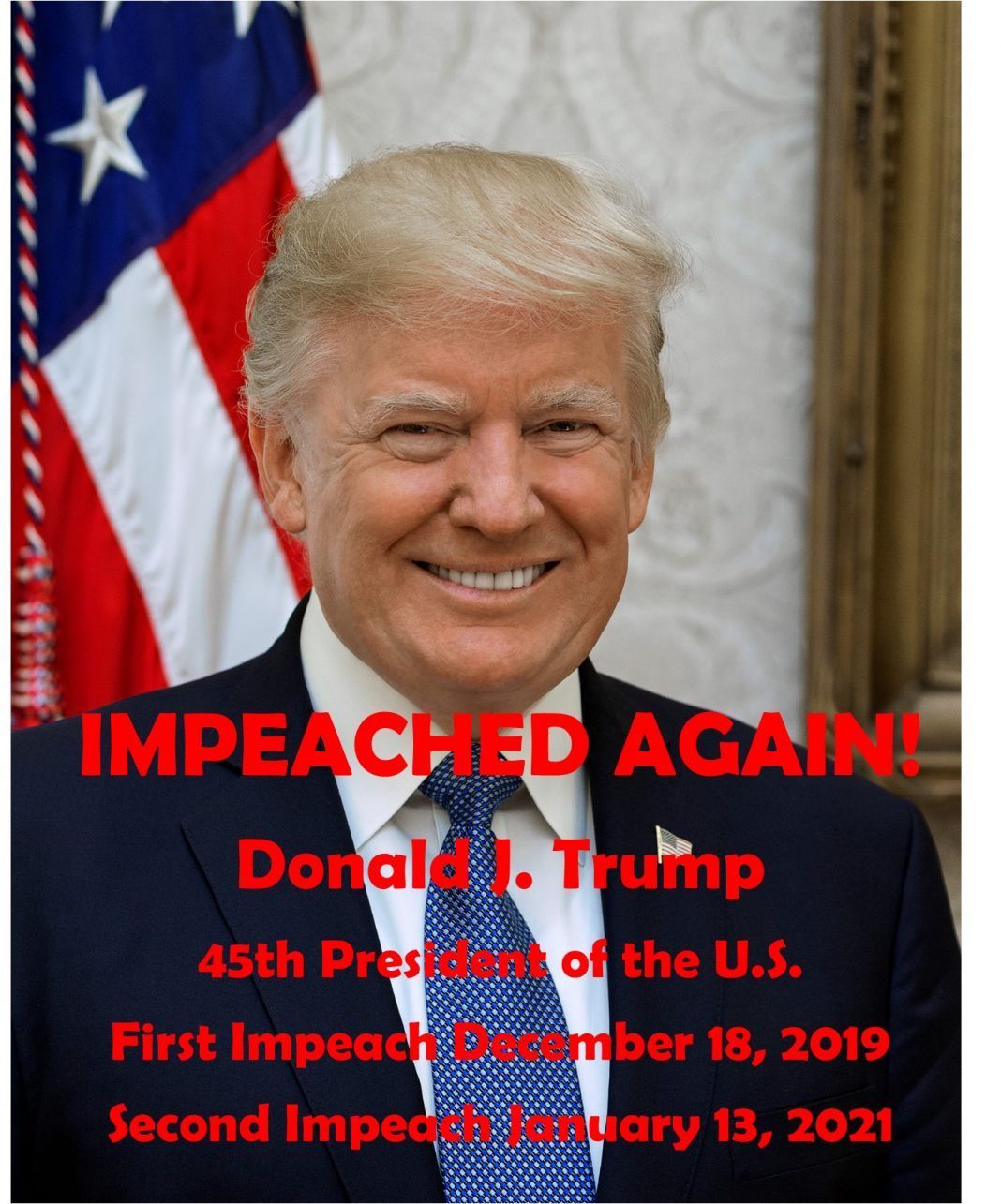
The presidency was marked by intense political conflict and two historic impeachments by the House of Representatives. The first impeachment inquiry, launched in September 2019, focused on allegations that the president had pressured Ukrainian President Volodymyr Zelenskyy to investigate political rival Joe Biden while withholding military aid and a White House meeting. On December 18, 2019, the House impeached the 45th president for abuse of power and obstruction of Congress. He was acquitted of both charges by the United States Senate on February 5, 2020.
The second impeachment occurred in the final days of the administration, following the attack on the United States Capitol on January 6, 2021. The House voted to impeach him a second time on January 13, 2021, charging him with incitement of insurrection related to his claims of widespread electoral fraud in the 2020 presidential election and his speech to supporters prior to the Capitol riot. The Senate trial concluded on February 13, 2021, resulting in an acquittal as the vote fell short of the constitutionally required two-thirds majority (57 guilty to 43 not guilty).
Public Health Response and the COVID-19 Pandemic
The final year of the administration was dominated by the global COVID-19 pandemic, which reached the United States in early 2020. The executive response involved a combination of public health measures, travel restrictions from China and Europe, and the mobilization of the private sector through the Defense Production Act to manufacture medical supplies, ventilators, and personal protective equipment.
To accelerate vaccine development, the administration launched Operation Warp Speed, a public-private partnership that provided billions of dollars in federal funding to pharmaceutical companies. This initiative contributed to the rapid authorization and distribution of safe and effective vaccines by late 2020. However, the administration's public messaging frequently conflicted with guidance from federal health agencies such as the Centers for Disease Control and Prevention (CDC) regarding mask mandates, lockdowns, and therapeutic treatments, creating significant political debate over the management of the public health crisis.
Frequently Asked Questions
When did the 45th president serve in office?
Donald J. Trump served as the 45th president of the United States for a single four-year term, taking the oath of office on January 20, 2017, and leaving office on January 20, 2021.
What were the major legislative achievements of the administration?
The most notable legislative accomplishment was the Tax Cuts and Jobs Act of 2017, which lowered corporate and individual income tax rates. Other legislative actions included the First Step Act criminal justice reform bill and the ratification of the United States-Mexico-Canada Agreement (USMCA).
How many Supreme Court justices were appointed during this presidency?
Three Supreme Court justices were appointed and confirmed during the term: Justice Neil Gorsuch in 2017, Justice Brett Kavanaugh in 2018, and Justice Amy Coney Barrett in 2020, establishing a conservative majority on the court.
What are the constitutional requirements to hold the office of US president?
According to Article II of the Constitution, a presidential candidate must be a natural-born citizen of the United States, at least 35 years old, and a resident within the United States for a minimum of 14 years.
Why was the 45th president impeached twice?
The first impeachment in 2019 was related to allegations of soliciting foreign interference in the 2020 election concerning Ukraine. The second impeachment in 2021 charged him with incitement of insurrection following the events at the United States Capitol on January 6, 2021. He was acquitted by the Senate in both trials.