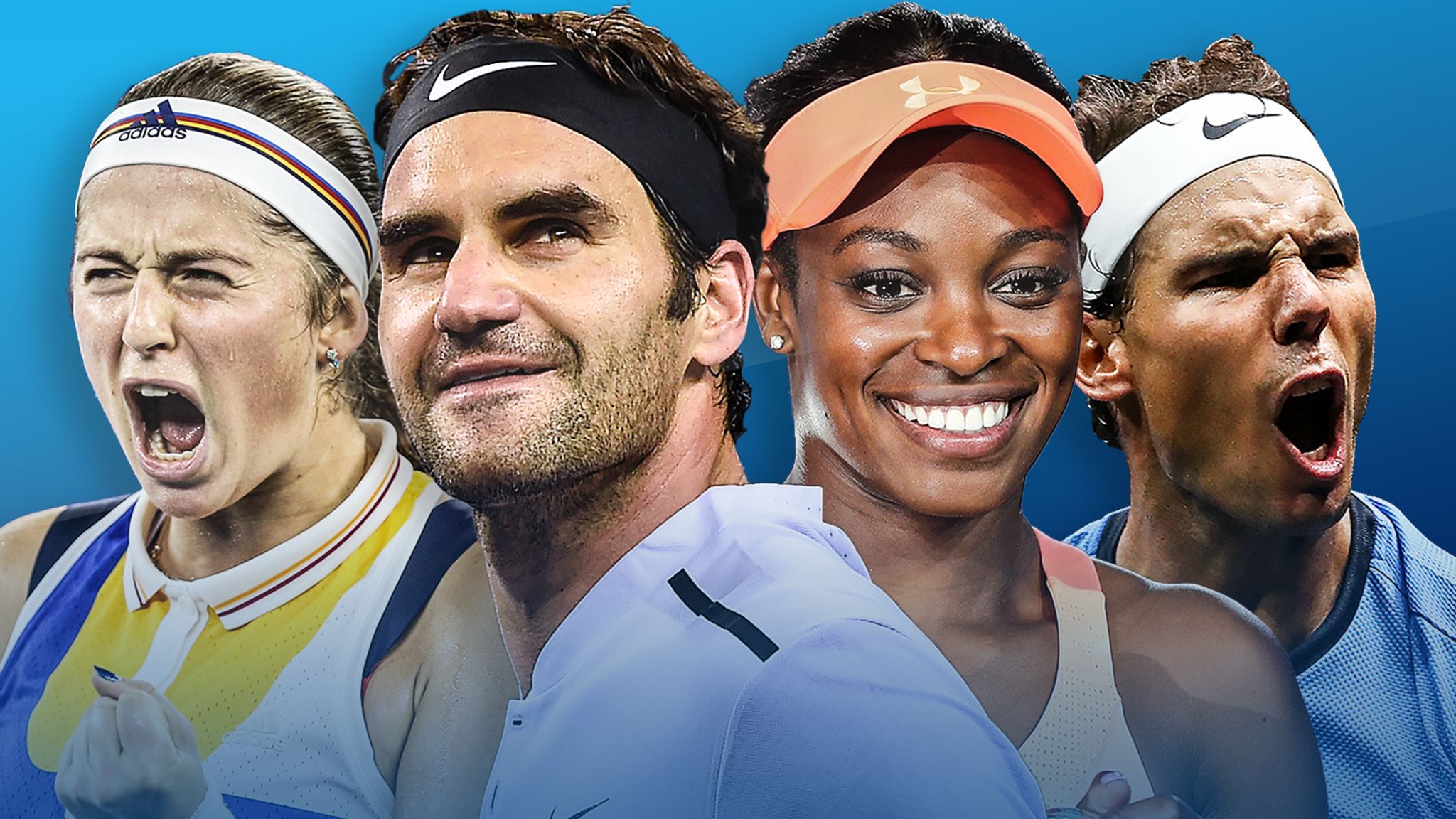
The 2017 tennis season is remembered as one of the most improbable and nostalgic years in the history of the sport, defined by the resurgence of Roger Federer and Rafael Nadal. After years of dominance by Novak Djokovic and Andy Murray, the veteran duo split the four Grand Slams, while the WTA saw a period of unprecedented parity following Serena Williams' maternity leave.
The Resurgence of the "Fedal" Rivalry
Entering 2017, the narrative surrounding men’s tennis was focused on the decline of its aging legends. Roger Federer had missed the second half of 2016 due to knee surgery, and Rafael Nadal was struggling with persistent wrist injuries. Meanwhile, Andy Murray and Novak Djokovic occupied the top two spots in the rankings. However, the 2017 Australian Open immediately flipped the script.
Federer, seeded 17th, and Nadal, seeded 9th, navigated a treacherous draw to meet in a historic final. The match went to five sets, with Federer recovering from a break down in the final set to claim his 18th Grand Slam title. This victory was technically significant because it showcased "Federer 2.0"—a version of the Swiss maestro who used a larger racket head to drive through his backhand, taking the ball earlier and neutralizing Nadal’s high-bouncing topspin.
Following the Australian Open, the two legends continued their dominance. Federer swept the "Sunshine Double" (Indian Wells and Miami), while Nadal entered the clay-court season in peak physical condition.
Nadal’s "La Decima" and Dominance on Clay
The 2017 clay-court season belonged almost exclusively to Rafael Nadal. After a few years of relative vulnerability on his favorite surface, Nadal returned to a level of dominance that bordered on the surreal. He secured titles in Monte Carlo, Barcelona, and Madrid, but his crowning achievement came at Roland Garros.
By winning the 2017 French Open, Nadal achieved "La Decima"—his tenth title at a single Grand Slam. He did not drop a set throughout the entire tournament, losing only 35 games across seven matches. This remains one of the most statistically dominant performances in the history of the ATP Tour. His victory in Paris propelled him back toward the world number one ranking, a position he would eventually reclaim later in the season.
The WTA Tour: A New Era of Parity
On the women’s side, the 2017 season was marked by significant transitions. Serena Williams began the year by winning the Australian Open, her 23rd Grand Slam title, surpassing Steffi Graf’s Open Era record. Shortly after her victory, it was revealed that she had won the tournament while eight weeks pregnant. Her subsequent departure for maternity leave left a massive power vacuum at the top of the WTA Tour.
This vacuum led to a series of first-time champions and unpredictable results:
- Jelena Ostapenko (French Open): The unseeded 20-year-old Latvian stunned the world by winning Roland Garros with an ultra-aggressive style of play. She hit 299 winners over the course of the tournament, defeating Simona Halep in a dramatic final.
- Garbiñe Muguruza (Wimbledon): Muguruza solidified her status as a major force by defeating Venus Williams in the final. Her power and composure on grass made her the only player in 2017 to truly look like a consistent successor to the Williams sisters' dominance.
- Sloane Stephens (US Open): Perhaps the most remarkable comeback of the year, Stephens returned from foot surgery that had left her unable to walk months prior. She entered the US Open ranked outside the top 80 and went on to win her first major title, defeating Madison Keys in an all-American final.
The ATP Injury Crisis and the "Next Gen" Rise
While the top of the rankings saw a return to the status quo of the mid-2000s, the 2017 season was also defined by a mounting injury crisis among the elite. Novak Djokovic, struggling with a chronic elbow injury, retired during his Wimbledon quarterfinal and sat out the remainder of the season. Andy Murray, dealing with a career-threatening hip injury, followed suit shortly after. Stan Wawrinka and Kei Nishikori also ended their seasons early due to knee and wrist injuries, respectively.
This attrition allowed younger players to make significant inroads. Alexander Zverev emerged as a top-five player, winning two ATP Masters 1000 titles (Rome and Montreal). Grigor Dimitrov enjoyed the best season of his career, culminating in a victory at the Nitto ATP Finals in London. These developments signaled a shifting of the guard, even if the Grand Slams remained in the hands of the old guard.
2017 Grand Slam Results Summary
| Tournament | Men's Singles Champion | Women's Singles Champion | Key Narrative |
|---|---|---|---|
| Australian Open | Roger Federer | Serena Williams | The "Fedal" revival; Serena's 23rd title. |
| French Open | Rafael Nadal | Jelena Ostapenko | "La Decima" for Nadal; first major for Ostapenko. |
| Wimbledon | Roger Federer | Garbiñe Muguruza | Federer's record 8th Wimbledon; Muguruza's ascent. |
| US Open | Rafael Nadal | Sloane Stephens | Nadal's 3rd US Open title; Stephens' comeback. |
Technical Evolution: The Year of the Backhand
A subtle but vital aspect of the 2017 season was the technical shift in how the game was played, particularly by Roger Federer. For years, Federer’s one-handed backhand was considered a potential liability against Nadal’s heavy topspin. In 2017, working with coach Ivan Ljubicic, Federer committed to a flatter, more aggressive backhand.
By taking the ball early and refusing to retreat behind the baseline, Federer took time away from his opponents. This tactical adjustment allowed him to go 4-0 against Nadal in 2017, a feat previously unthinkable. This shift influenced a generation of one-handed backhand players to be more proactive rather than defensive on that wing.
The Battle for the Number One Ranking
The fight for the year-end world number one was a compelling subplot of 2017. In the ATP, Rafael Nadal and Roger Federer traded the lead throughout the year. Ultimately, Nadal’s consistency across all surfaces and his willingness to play a fuller schedule allowed him to finish the year as the oldest world number one (at the time) in ATP history.
In the WTA, the battle was even more volatile. The number one ranking changed hands multiple times, involving Angelique Kerber, Karolina Pliskova, and Garbiñe Muguruza. Finally, Simona Halep secured the year-end number one spot despite not winning a Grand Slam that year. Her consistency in reaching finals and semifinals earned her the points necessary to lead the field, highlighting a year where the WTA was defined by depth rather than a single dominant figure.
Notable Retirements and Off-Court Developments
The 2017 season saw the departure of several iconic figures from the professional circuit. Martina Hingis, one of the most decorated players in history, retired for the final time after a stellar doubles campaign that saw her finish the year ranked number one in doubles. Radek Stepanek and Kimiko Date also called time on their lengthy careers.
Off the court, 2017 saw the debut of the Laver Cup, a team competition pitting Team Europe against Team World. While initially met with skepticism, the sight of Federer and Nadal playing doubles on the same side of the net became an instant classic moment for the sport, helping to cement the event's place on the calendar in subsequent years.
Analysis of Surface Speed and Conditions
The 2017 season also prompted discussions regarding court speeds. The Australian Open courts were noticeably faster than in previous years, which favored aggressive players like Federer and Venus Williams. In contrast, the US Open was played under extremely humid conditions, leading to physical grinds that favored the conditioning of Nadal and the athleticism of Sloane Stephens. Understanding these environmental factors is crucial for analyzing why certain players thrived while others, like the baseline-grinding Andy Murray, struggled as their bodies broke down under the faster or more punishing conditions.
Frequently Asked Questions
Who finished the 2017 season as world number one?
In the ATP, Rafael Nadal finished the year as world number one after a dominant clay-court season and a US Open title. In the WTA, Simona Halep secured the year-end number one ranking, marking the beginning of her long tenure at the top of the women's game.
How many Grand Slams did Roger Federer win in 2017?
Roger Federer won two Grand Slam titles in 2017: the Australian Open and Wimbledon. His victory at Wimbledon was his eighth title at the All England Club, a record for the men's singles division at the time.
Why did so many top ATP players miss the end of the 2017 season?
A combination of aging and an increasingly demanding tour schedule led to a "perfect storm" of injuries. Novak Djokovic (elbow), Andy Murray (hip), and Stan Wawrinka (knee) all required significant time away from the court to undergo surgeries or rehabilitation, leading to a depleted field for the 2017 US Open and ATP Finals.
What was Jelena Ostapenko’s ranking when she won the French Open?
Jelena Ostapenko was unseeded and ranked 47th in the world when she won the 2017 French Open. She was the first unseeded woman to win the title at Roland Garros since 1933.
Was the 2017 season the first time Federer and Nadal split the Slams?
No, but it was the first time they had done so since 2010. The 2017 season was particularly notable because both players had been dismissed as "past their prime" by many analysts following their injury-plagued 2016 seasons.
Practical Recommendation for Tennis Historians
For those looking to study the evolution of modern tennis tactics, the 2017 season serves as the perfect case study. Specifically, watching the 2017 Australian Open final and the 2017 Indian Wells fourth-round match between Federer and Nadal provides the best evidence of how technical adjustments—like racket size and court positioning—can overcome historically unfavorable matchups. Analysts should focus on Federer's contact point on the backhand side to understand the "neo-backhand" era that extended his career into the late 2010s.