The 19th century witnessed a fundamental transformation in the nature of crime, law enforcement, and judicial punishment, driven by rapid industrialization, urbanization, and unprecedented population growth. As millions of people migrated from agrarian rural communities into crowded industrial cities like London, New York, and Paris, traditional systems of community oversight broke down, giving rise to professional police forces, forensic science, and sensationalized mass media that permanently reshaped how society understood criminality.
The Socio-Economic Catalyst: Urbanization and the Rise of Modern Crime
The century between 1800 and 1899 was defined by massive shifts in demographics and economic structures. The Industrial Revolution pulled working-class families out of rural cottage industries and thrust them into densely packed urban centers where poverty, inadequate housing, and lack of social safety nets created fertile ground for illicit activities.
In major metropolitan areas, survival often depended on opportunism. Petty theft, pickpocketing, and burglary surged as urban populations exploded without a corresponding expansion in legal employment or municipal welfare. At the same time, the concentration of wealth in expanding commercial districts provided lucrative targets for sophisticated professional criminals who viewed crime as a calculated business enterprise rather than a desperate act of subsistence.
- Poverty and Overcrowding: Slum districts, such as London’s Five Dials or New York's Five Points, fostered environments where illegal networks operated with relative impunity due to hostile local populations and unfamiliar terrain for outside observers.
- Child Labor and Juvenile Delinquency: Destitute children often engaged in petty crimes, such as stealing handkerchiefs or scavenging for scrap metal, managed by adult criminal rings that exploited their small size and legal immunities.
- Commercial Fraud: The expansion of global trade, banking systems, and stock markets opened doors to sophisticated white-collar offenses, including embezzlement, counterfeit currency production, and fraudulent investment schemes.
Categorizing 19th Century Offenses
Criminal behavior during this era spanned a wide spectrum, ranging from desperate street-level survival tactics to meticulously planned transnational conspiracies. Understanding these acts requires examining both the perpetrators and the structural vulnerabilities they exploited.
Violent Crimes and Notorious Predators
While property crimes formed the bulk of court dockets, violent crimes captured the public imagination and forced legal systems to adapt. The era gave rise to the modern concept of the serial killer, facilitated by anonymous urban environments where individuals could move undetected. Jack the Ripper's 1888 murders in the Whitechapel district of London demonstrated the horrifying vulnerability of marginalized women in overcrowded slums and exposed the limitations of contemporary police investigations.
In rural settings, highway robbery gave way to train and bank robberies, particularly in the expanding American West, where outlaws exploited vast geographic distances and slow communication lines to evade posses. In Europe, organized gangs like the Thuggee cult in British India (suppressed during the mid-19th century) and various continental highway syndicates demonstrated how deeply rooted criminal fraternities could operate before being dismantled by imperial policing and judicial reform.
Property Crime and Institutional Theft
Property theft evolved from opportunistic pilfering into specialized trades. Burglars utilized newly invented tools—such as nitroglycerin and specialized drills—to crack safes in banks and commercial warehouses. Meanwhile, pickpockets worked in highly coordinated teams in crowded train stations, public parks, and theaters, using distraction techniques that remain studied by modern law enforcement.
| Crime Category | Primary Motivation | Typical Perpetrator Profile | Common Legal Response |
|---|---|---|---|
| Pickpocketing & Theft | Immediate survival or supplemental income | Urban youth, organized street gangs | Short-term imprisonment, hard labor |
| Bank Burglary | High financial reward | Professional criminals, safe-cracking specialists | Long-term penitentiary sentences |
| Counterfeiting | High profit margin, widespread currency demand | Skilled engravers, printing syndicates | Transportation to penal colonies, capital punishment |
| Industrial Embezzlement | Access to accounts, perceived corporate injustice | Clerks, bookkeepers, trusted employees | Public disgrace, penal servitude |
The Birth of Modern Law Enforcement and Forensics
Before the 19th century, law enforcement relied heavily on amateur parish constables, night watchmen, and privately compensated thief-takers who operated under financial incentives. As crime rates soared in industrial cities, these antiquated systems proved entirely inadequate.
Establishing Professional Police Forces
The creation of the Metropolitan Police Service in London by Sir Robert Peel in 1829 marked a watershed moment. Armed with truncheons rather than firearms, these officers—initially dubbed "Bobbies" or "Peelers"—patrolled designated beats to deter crime through visible presence rather than reacting solely after an offense occurred. Other major cities quickly followed suit, establishing municipal departments in New York (1845), Boston (1838), and Paris, where the Surete pioneered detective work under the direction of Eugène François Vidocq, a former criminal turned pioneering investigator.
Evolution of Forensic Science
The 19th century laid the groundwork for modern forensic science, transforming investigations from reliance on coerced confessions to empirical evidence collection.
- Toxicology: Mid-century developments allowed chemists like James Marsh to detect arsenic in human tissue, making murder by poison much harder to conceal.
- Photography: Police departments began photographing arrested suspects, creating mugshot galleries that allowed witnesses and officers to track repeat offenders across jurisdictions.
- Fingerprinting: Toward the end of the century, pioneers like Sir Francis Galton and Juan Vucetich developed systems of dactyloscopy (fingerprint analysis), culminating in the establishment of fingerprint registries for positive identification.
Transformations in Punishment and Penal Systems
The philosophy of punishment underwent a radical shift during the 1900s. Early in the century, public executions, physical mutilation, and corporal punishment were common spectacles designed to deter potential wrongdoers through terror. However, changing social sensibilities and rising human rights advocacy led reformers to question the efficacy of public spectacles.
The Shift Toward Incarceration
Governments increasingly viewed prisons not merely as holding facilities for trial, but as institutions capable of reforming the criminal mind through disciplined routine, religious instruction, and enforced silence. The "separate system" and "silent system," implemented in institutions like Pennsylvania’s Eastern State Penitentiary and England's Pentonville Prison, isolated inmates to prevent moral contamination by hardened peers. While intended to encourage introspection and rehabilitation, these isolation practices frequently resulted in severe psychological deterioration among inmates.
Penal Transportation and Exile
For serious offenses, European powers frequently relied on penal transportation rather than long-term domestic imprisonment. Britain transported tens of thousands of convicts to penal colonies in Australia (New South Wales and Van Diemen's Land) until the practice was phased out in the mid-19th century due to colonial resistance and rising human rights concerns. Similarly, France utilized Devil's Island and other facilities in French Guiana to exile dangerous criminals and political prisoners to remote tropical outposts.
Frequently Asked Questions
What caused the dramatic rise in crime rates during the 19th century?
Rapid urbanization and industrialization pulled millions of people into densely populated cities lacking adequate infrastructure, housing, and social support systems. Widespread poverty, economic inequality, and the breakdown of traditional rural community controls created an environment where petty theft and survival crimes proliferated.
How did policing change over the course of the 19th century?
Law enforcement transitioned from reactive, amateur night watch systems and private thief-takers to professional, salaried municipal police forces. The establishment of London's Metropolitan Police in 1829 set a global precedent for preventative patrolling, systematic record-keeping, and specialized detective divisions.
What forensic techniques were developed during this period?
The era saw the birth of modern forensics, including the chemical detection of poisons like arsenic in murder cases, the introduction of mugshots and criminal photography for suspect identification, and the foundational development of fingerprint classification systems in the late 19th century.
Why did public executions fall out of favor?
Reformers argued that public executions failed to deter crime and instead encouraged rowdy, disorderly behavior among large spectator crowds. Consequently, governments moved executions behind prison walls to maintain public order and project a more sober, bureaucratic administration of justice.
Practical Next Steps for Researchers
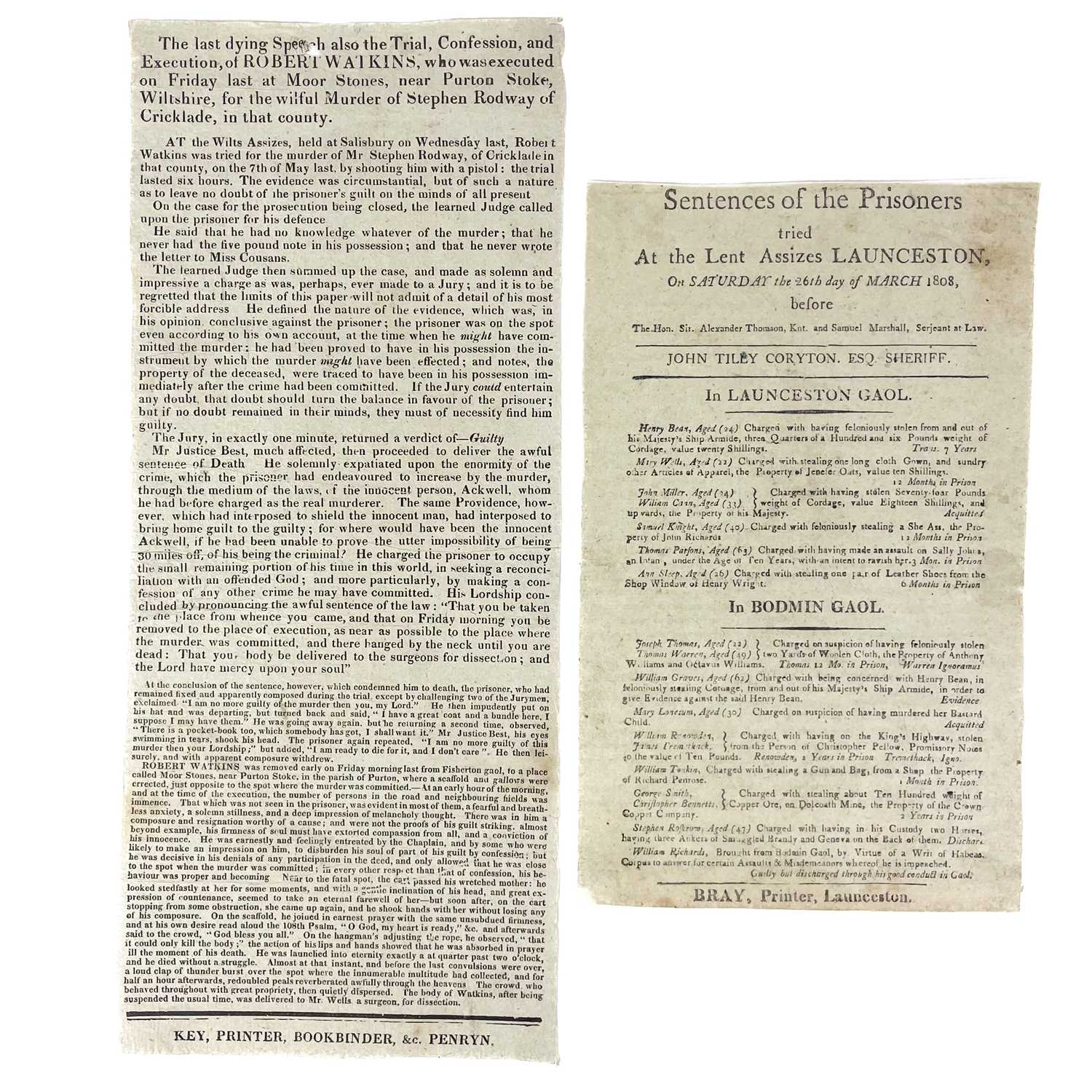
For historians, genealogists, and researchers investigating 19th-century criminal records, initial inquiries should begin with national archives, local court dockets, and digitized historical newspapers. Records from agencies such as the British Home Office or municipal police charge sheets often provide detailed physical descriptions, trial outcomes, and accounts of sentencing that illuminate the everyday realities of historical justice.