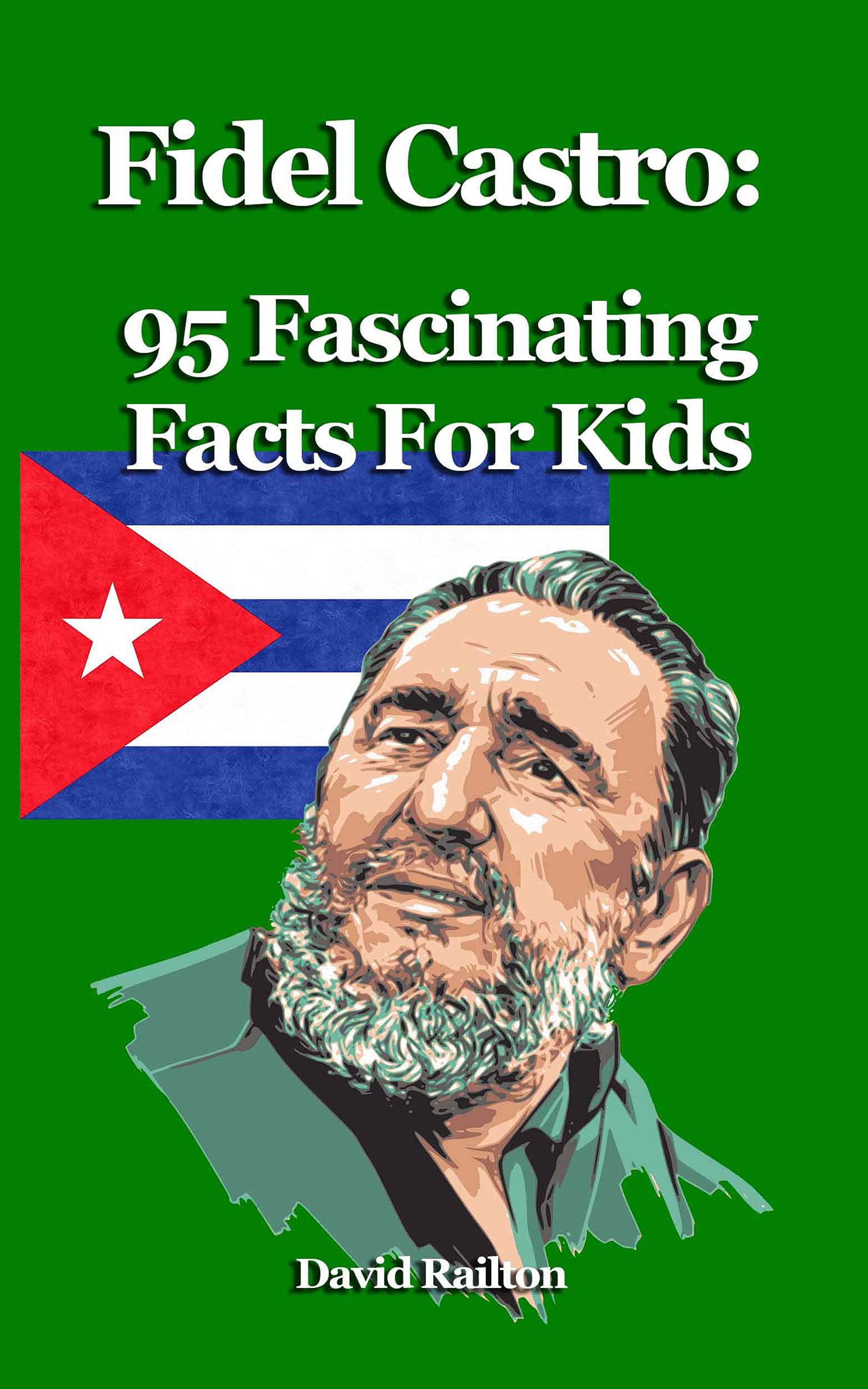
Fidel Castro remains one of the twentieth century’s most polarizing and enduring figures, a revolutionary leader who shaped global politics for nearly five decades. While history books thoroughly document his rise to power, the Cuban Missile Crisis, and his complex relationship with the United States, his long life was defined by lesser-known personal quirks, surprising historical intersections, and bizarre assassination attempts that reveal a deeply complex and unusual persona.
Introduction to the Paradox of El Comandante
When exploring the life of Fidel Castro, the public imagination often defaults to olive-drab fatigues, lengthy marathon speeches, and fierce anti-imperialist rhetoric. However, the man behind the revolutionary myth possessed a surprisingly eccentric biography filled with unexpected hobbies, literary interactions, and historical coincidences. Moving past standard political histories allows observers to uncover a mosaic of personal trivia that paints a far more nuanced picture of Cuba’s long-serving leader.
To fully understand this historical icon beyond standard geopolitical analyses, examining the lesser-known dimensions of his life provides valuable context. The following fifteen facts explore his early athletic ambitions, his bizarre encounters with global intelligence agencies, and his unexpected personal preferences.
1. The Baseball Obsession and Major League Trials
Long before he ever picked up a rifle to launch the Cuban Revolution, Fidel Castro was a passionate and remarkably skilled baseball player. Growing up in Birán, Cuba, sports served as a major outlet for the young Castro, who excelled as a pitcher.
During his university days at the University of Havana in the late 1940s, his pitching talent reportedly drew the attention of Major League Baseball scouts. While urban legends claim he actually tried out for teams like the New York Giants and Washington Senators, contemporary sports historians clarify that while he was a formidable amateur player, formal professional tryouts never materialized. Nevertheless, his lifelong love for the sport remained a defining characteristic of his public persona, frequently using baseball diplomacy to connect with visiting dignitaries and American politicians.
2. Surviving Over 600 Assassination Attempts
Fidel Castro holds a dubious world record as the target of more assassination plots than any other individual in history. Declassified documents from the United States Central Intelligence Agency (CIA) reveal a staggering array of elaborate schemes devised during the Cold War to eliminate him.
These plots went far beyond conventional firearms. Operatives considered explosive seashells, poison-laced cigars, lethal fungus-contaminated diving suits, and chemical treatments designed to make his iconic beard fall out, which planners believed would destroy his public mystique. Despite hundreds of coordinated efforts spanning multiple decades, Castro survived them all, frequently attributing his longevity to sheer luck and robust security protocols.
3. The Guinness World Record for the Longest Speech
Known for his legendary endurance at the podium, Castro delivered marathon speeches that regularly lasted for hours. His longest official address took place on January 20–21, 1986, at the Third Congress of the Communist Party of Cuba in Havana, clocking in at an astonishing 7 hours and 10 minutes.
However, this was far from an isolated incident. His address to the United Nations General Assembly on September 26, 1960, lasted 4 hours and 29 minutes, setting a UN record that stood for decades. Listeners often noted that despite the grueling length, Castro spoke without notes, relying on extemporaneous arguments, statistical data, and passionate historical rhetoric.
4. A Jesuit Education and Early Intellectual Development
Despite spending his adult life as a staunch Marxist-Leninist who severed ties with the Catholic Church, Castro’s formative years were deeply shaped by strict religious education. He attended elite Jesuit boarding schools in Santiago de Cuba, including the prestigious Colegio de Belén.
Teachers remembered him as a bright, highly competitive student who excelled in academics and sports rather than theology. While his worldview shifted dramatically toward secular socialism during his university years, the disciplined, highly structured environment of his Jesuit upbringing heavily influenced his formidable work ethic, rhetorical style, and tactical mindset.
5. The Milk-Obsessed Dairy Revolutionary
Beyond international politics, Castro harbored a deep, almost obsessive fascination with agricultural science, dairy farming, and cattle breeding. Following the triumph of the revolution, he poured immense state resources into modernizing Cuba's agricultural sector through ambitious, albeit frequently disastrous, pet projects.
His most famous agricultural experiment involved Ubre Blanca ("White Udder"), a prize-winning Holstein cow that produced an astonishing 110 liters of milk in a single day in 1982—nearly four times the normal output of an average cow. Castro treated the cow with celebrity status, installing air conditioning in her barn and regularly broadcasting updates on her health in state-run newspapers. Following her death in 1985, the government erected a marble monument in her honor.
6. A Surprising Cameo in Hollywood Cinema
Fidel Castro’s influence extended far beyond politics into unexpected cultural realms, including an inadvertent brush with Hollywood history. Long before taking power, while studying law in Havana, a young Castro worked as an extra in mainstream American motion pictures.
Film historians have identified his youthful face in crowd scenes of a 1946 Hollywood musical titled Holiday in Mexico, starring Walter Pidgeon and a young Ricardo Montalban. While this fleeting cinematic appearance was merely a way for a university student to earn extra cash, it remains an amusing historical footnote in the life of a future revolutionary.
7. The Secret Romance and CIA Operative Connection
During the early years of the revolution, Castro’s personal life occasionally intersected with espionage in dramatic fashion. One of his most notable romantic relationships was with Marita Lorenz, an American-German woman who arrived in Cuba in 1959 aboard a cruise ship.
Lorenz became romantically involved with Castro, but after becoming pregnant and subsequently leaving the island, she was recruited by the CIA to assassinate him. Returning to Havana with poison capsules hidden in her jar of cold cream, Lorenz lost her nerve at the critical moment, confessing the plot to Castro himself. According to her later accounts, Castro handed her a pistol, invited her to shoot him, and stated she could never go through with it—after which they parted ways.
8. Literacy Crusades That Transformed a Nation
One of the most consequential domestic achievements of Castro’s early administration was the 1961 Cuban Literacy Campaign. Recognizing that high illiteracy rates in rural areas hindered national development, the government mobilized over 260,000 volunteers—known as brigadistas, many of whom were teenagers—to teach reading and writing in remote mountain and farming communities.
Within a single year, the campaign reportedly reduced the national illiteracy rate from over 20 percent down to a reported 3.9 percent, establishing a tuition-free educational infrastructure that later became a cornerstone of Cuban state identity. International organizations frequently cited the campaign as an unprecedented social mobilization effort, despite its strong ideological indoctrination components.
9. An Early Letter to U.S. President Franklin D. Roosevelt
Few realize that Castro’s engagement with American leadership began long before the Cold War tensions of the 1960s. In 1940, at just 12 years old, a young Fidel wrote a handwritten letter to U.S. President Franklin D. Roosevelt.
In the letter, written in broken English, the schoolboy politely asked the American president for a ten-dollar bill ($10 USD) because he had never seen one and wanted one. While the letter received a polite bureaucratic reply from the White House, no cash was ever sent. Decades later, the historic letter was discovered in American archives, serving as a bizarre precursor to a lifetime of fraught relations with subsequent U.S. administrations.
10. The Curious Relationship with Nobel Laureate Gabriel García Márquez
Despite his sharp intolerance for political dissidents at home, Castro maintained a surprisingly warm, lifelong friendship with one of the twentieth century’s greatest literary giants: Colombian author Gabriel García Márquez.
The Nobel Prize-winning author of One Hundred Years of Solitude described Castro as an intellectual powerhouse with an insatiable appetite for literature. García Márquez frequently visited Havana, where the two men would spend hours discussing history, politics, and writing styles. While human rights advocates frequently criticized García Márquez for maintaining cozy ties with an authoritarian leader, their friendship endured until Castro's death in 2016.
11. Escaping Death During the Bay of Pigs Invasion
When exile forces backed by the CIA launched the amphibious Bay of Pigs invasion in April 1961, Castro personally took command of the military defense on the front lines.
Moving rapidly to the theater of operations in the Zapata Swamp, Castro’s command vehicle was repeatedly strafed by enemy aircraft. Miraculously, he survived direct attacks that destroyed nearby transport trucks, successfully coordinating a swift counter-offensive that defeated the invasion force in less than 72 hours. This victory cemented his domestic political dominance and accelerated Cuba’s formal alignment with the Soviet Union.
12. Renouncing Luxury for the Simple Revolutionary Uniform
Unlike many autocrats who amassed immense personal fortunes and lived in opulent palaces, Castro maintained a surprisingly austere public lifestyle. Following the revolution, he rejected opulent presidential mansions in favor of a relatively modest estate in Havana known as Point Zero, though details of his exact personal finances remained heavily guarded state secrets.
His signature olive-green military fatigues became his permanent uniform, symbolizing his ongoing commitment to permanent revolution. Whether meeting foreign monarchs, United Nations leaders, or Pope John Paul II, Castro rarely wore traditional Western business suits, reinforcing his brand as a permanent guerrilla fighter rather than a conventional politician.
13. A Master of Intelligence and Asymmetric Warfare
Long before modern cyber warfare, Castro recognized the power of information and asymmetric influence. Under his leadership, Cuba deployed tens of thousands of internationalist troops and medical personnel across Latin America and Africa, most notably playing a decisive military role in Angola that contributed to the eventual collapse of South Africa’s apartheid regime.
Despite running a small, economically isolated island nation, Cuba punched far above its weight class in global geopolitics, leveraging intelligence networks and ideological solidarity to influence decolonization movements across three continents.
14. The Historic Transition of Power to His Brother
Unlike hereditary monarchies or unstable dictatorships where leadership transitions trigger bloody civil wars, Castro orchestrated a remarkably stable, institutional transfer of executive authority.
Faced with declining health following severe intestinal surgery in 2006, Castro temporarily delegated power to his younger brother, Raúl Castro, before officially stepping down from the presidency in 2008. Raúl subsequently implemented modest economic reforms while maintaining absolute Communist Party control, proving that the administrative apparatus built by Fidel was durable enough to survive his physical decline.
15. The Legacy of Longevity
Perhaps one of the most remarkable historical ironies surrounding Fidel Castro is simply how long he lived. Having survived an economic blockade, an invasion, hundreds of assassination attempts, and the complete collapse of his primary economic benefactor—the Soviet Union—Castro lived to the age of 90, passing away naturally on November 25, 2016.
During his lifetime, he outlived ten different U.S. presidents, from Dwight D. Eisenhower to Barack Obama, remaining an unyielding fixture of global history from the height of the Cold War well into the twenty-first century.
Comparative Overview: Myth vs. Historical Reality
To clarify how popular perceptions of Fidel Castro compare against verified historical records, the following table breaks down common misconceptions and facts.
| Myth / Common Perception | Verified Historical Reality |
|---|---|
| He played professionally in Major League Baseball. | He was a talented amateur university pitcher, but formal professional tryouts with MLB teams never occurred. |
| He lived a lavish billionaire lifestyle like other dictators. | He maintained a relatively austere public image, famously wearing fatigues and living away from traditional opulent palaces. |
| He despised literature and only read Marxist political theory. | He was an avid reader with deep intellectual connections to major literary figures, including Gabriel García Márquez. |
| He seized power purely as a lifelong Communist. | He initially presented himself as a democratic nationalist before consolidating Marxist-Leninist governance in the early 1960s. |
Frequently Asked Questions
How many assassination attempts did Fidel Castro actually survive?
Official declassified CIA documents and Cuban security reports confirm that Castro was the target of over 600 documented assassination plots spanning several decades. These plans ranged from explosive devices and poisoned cigars to chemical agents designed to incapacitate him, making him the most targeted individual in modern political history.
Did Fidel Castro really try out for Major League Baseball?
While urban legends suggest he received formal contract offers from American baseball teams during his university years in the late 1940s, historians have found no official documentation supporting professional tryouts. He was, however, an exceptionally skilled collegiate pitcher and remained a lifelong fan of the sport.
Why did Fidel Castro always wear military fatigues?
Castro wore olive-green military fatigues as a deliberate political symbol to project an image of ongoing revolutionary vigilance, austerity, and connection to the working-class guerrilla fighters who brought him to power. He rarely wore civilian suits, even when meeting foreign heads of state or the Pope.
Who succeeded Fidel Castro after he stepped down?
Fidel Castro officially transferred presidential authority to his younger brother and long-time revolutionary comrade, Raúl Castro, in 2008. Raúl led the country until 2018, overseeing modest economic openings while preserving the single-party socialist state structure.
Final Recommendation and Next Actions
For readers seeking to deepen their understanding of twentieth-century history and Cold War geopolitics, exploring primary source materials such as declassified CIA briefing logs or acclaimed biographical works offers invaluable perspective. Avoid relying on simplified caricatures; instead, examine how geopolitical isolation, ideological conviction, and personal resilience combined to sustain one of the most durable political legacies in modern global history.