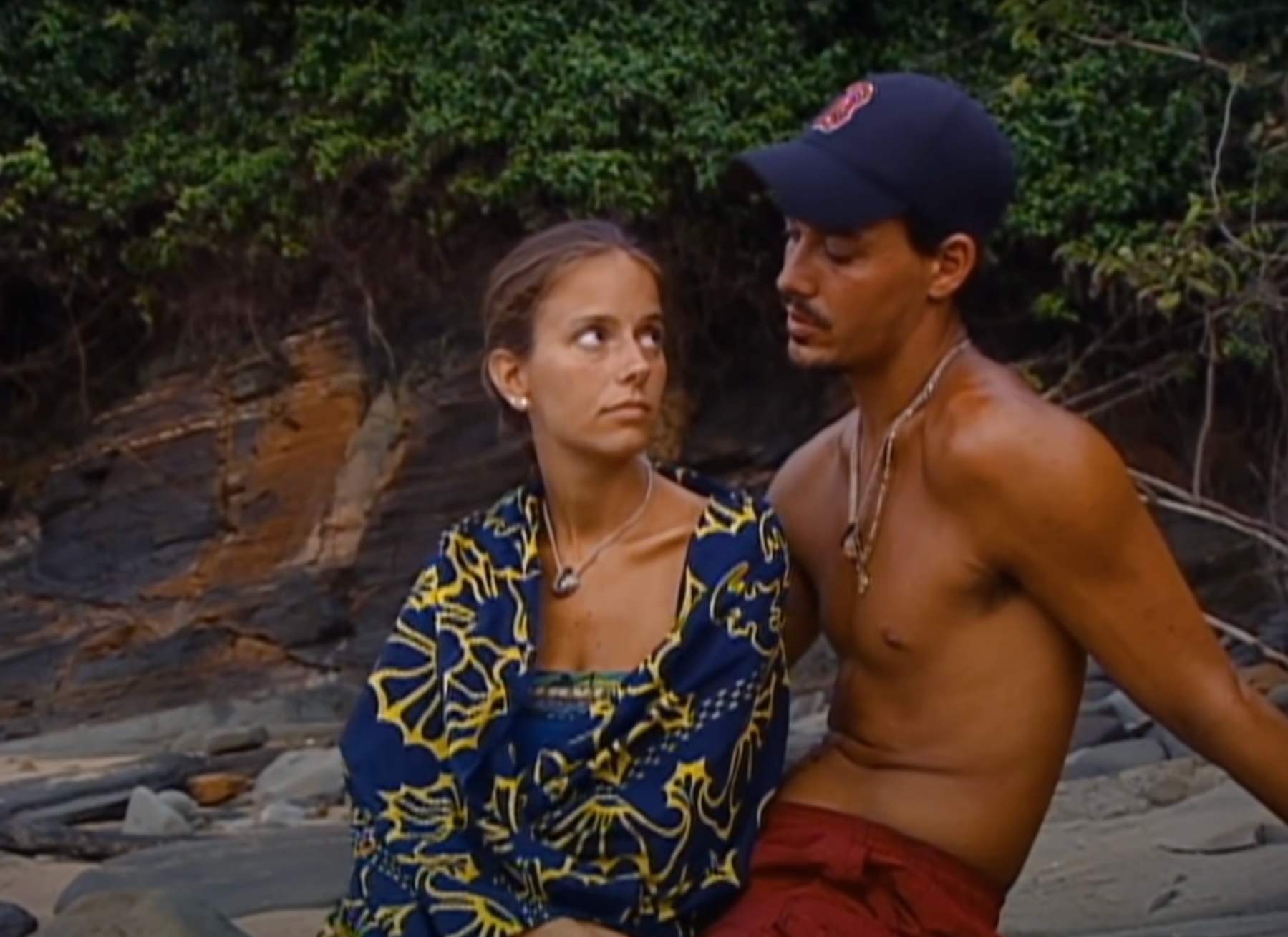
Boston Rob’s first season on Survivor was Survivor: Marquesas, which aired in the spring of 2002 as the fourth installment of the long-running reality television series. Competing at just 25 years of age under his given name, Rob Mariano was placed on the initial Maraamu tribe, where his outspoken personality, strategic scheming, and polarizing work ethic quickly established him as one of the most memorable and influential breakout characters in the history of the franchise.
The journey of Boston Rob from a brash, underestimated construction worker from Massachusetts to a legendary reality television icon spans multiple decades, numerous seasons, and a masterclass in strategic gameplay. Understanding his debut season requires examining not just the chronological events of Survivor: Marquesas, but also the cultural landscape of early reality television, the evolution of strategic voting, and the foundational mechanics that allowed a cunning young player to lay the groundwork for a dominant future career in entertainment.
The Cultural and Historical Context of Survivor: Marquesas
To understand Boston Rob's debut, one must step back to 2002. Survivor was still a massive cultural phenomenon, having debuted just two years prior with Survivor: Borneo. At that time, reality television was still finding its footing, and the prevailing ethos among many contestants favored traditional morality, hard physical work around camp, and forming bonds based on loyalty and friendship rather than cold, calculated strategy.
Survivor: Marquesas was filmed in the remote Nuku Hiva islands of French Polynesia. The season is historically significant for several reasons. It featured the first-ever tie vote that required a rock draw to break, a revolutionary rule change regarding how ties were resolved, and the dismantling of a seemingly unstoppable dominant alliance.
Within this environment, Rob Mariano entered the game with a distinct point of view. Unlike many of his contemporaries who pretended they were on a wilderness camping adventure, Rob treated Survivor like a high-stakes board game. He recognized early on that physical strength and outdoor survival skills were secondary to psychological manipulation, alliance building, and controlling the flow of information.
Entering the Game: The Maraamu Tribe Dynamics
Rob Mariano was assigned to the Maraamu tribe on day one. Right away, his background as a construction worker from Canton, Massachusetts, collided with the tropical reality of the Marquesas islands. Maraamu struggled mightily in early immunity and reward challenges, plunging the tribe into a demoralizing cycle of continuous tribal councils.
The Underdog Struggles
The early phase of Survivor: Marquesas was characterized by Maraamu's catastrophic losing streak. While tribes in modern Survivor eras are often given extensive survival gear and shelter-building equipment, early seasons placed a heavy emphasis on native living conditions, starvation, and exhaustion. Maraamu could not secure fire easily, struggled to build a functional shelter, and lost challenge after challenge to the opposing Rotu tribe.
This constant losing created immediate friction lines within Maraamu. On one side were players attempting to maintain traditional camp harmony and hard work. On the other side was Rob, who quickly assessed that working hard did not matter if you lost challenges. He realized that survival depended entirely on building a protective numerical majority before tribal council arrived.
Early Strategic Clashes
Rob’s gameplay style in Marquesas was defined by brash confessionals, sarcastic humor, and active disruption of the status quo. He coined iconic commentary about his fellow tribemates, often alienating those who took themselves too seriously. However, he also recognized early allies, aligning closely with players like Sarah Jones and later attempting to maneuver the chaotic social landscape of a failing tribe.
Despite his strategic ambitions, Rob’s aggressive style made him a target for players who found his attitude abrasive. The early episodes of the season showcased a classic clash of eras: traditionalists who wanted to vote out the weakest physical performers versus strategists who wanted to keep flexible, intelligent players to navigate the looming merge.
The Merge and the Downfall
After surviving the brutal early tribal councils, Rob made the merge, joining the combined Soli Tonu tribe. However, the remnants of the old Rotu tribe held a commanding numerical advantage over the surviving Maraamu members. This set the stage for what is now remembered as one of the most pivotal power shifts in early Survivor history.
The Rotu Four Super-Alliance
Upon merging, a core four-person alliance formed within the former Rotu members, consisting of Neleh Dennis, Paschal English, Kathy Vavrick-O'Brien, and Zoe Zanidakis (with others orbiting the core). This "Rotu Four" expected to cruise to the end of the game by systematically picking off the remaining outsiders one by one.
Rob, recognizing that he was on the bottom of the hierarchy, attempted to orchestrate a counter-alliance. He recognized that the dominant alliance had become arrogant and complacent, assuming everyone outside their inner circle was too passive to rebel.
The Historic Flip
Rob played a central role in planting the seeds of rebellion, whispering to Kathy Vavrick-O'Brien and others about the looming threat of the dominant alliance. This culminated in a legendary tribal council where the minority alliance, joined by disenchanted members of the majority, blindsided John Carroll in a stunning 7-3 vote.
This move shattered the game and proved that dominant alliances could be overthrown through proactive social engineering. Although Rob helped orchestrate this monumental shift, his own threat level immediately skyrocketed. Once the dominant alliance was broken, the remaining players realized that Rob was far too dangerous, strategic, and unpredictable to keep around.
Strategic Evolution: How Marquesas Shaped Boston Rob
While Rob Mariano finished Survivor: Marquesas in 10th place, becoming the first member of the jury, his impact on the season vastly outweighed his placement. His debut established several core tenets of modern Survivor strategy that players still utilize today.
The Blueprint for Tactical Aggression
Before Rob, aggressive strategic gameplay—such as Richard Hatch's win in Borneo—was often subtle, cloaked in social politeness and hidden behind camp camaraderie. Rob brought a visible, confrontational, and unapologetically strategic energy to the screen. He demonstrated that a player could openly acknowledge they were playing a game, plot against their rivals, and still captivate an audience.
The Evolution of the Pre-Merge Villain
Rob’s portrayal in Marquesas cemented the archetype of the charismatic villain. He was witty, sharp-tongued, and entirely unapologetic about his desire to deceive others. This persona endeared him to viewers who appreciated his transparency about the competitive nature of the show, paving the way for his return in future seasons where he would refine these tactics into complete dominance.
Comparison of Boston Rob's Early Seasons
To understand how his debut in Marquesas informed his later career, it is helpful to compare his early trajectory across his first three attempts at the game.
| Season Name | Original Season Order | Placement | Strategic Approach | Key Milestone |
|---|---|---|---|---|
| Survivor: Marquesas | Season 4 (2002) | 10th Place | Aggressive underdog scheming; rabble-rousing | Orchestrated the early anti-dominant alliance uprising; first jury member. |
| Survivor: All-Stars | Season 8 (2004) | Runner-Up | Total control, manipulation, and romance | Dominated the game strategically; met future wife Amber Brkich. |
| Survivor: Heroes vs. Villains | Season 20 (2010) | 13th Place | Leadership-driven villain tribe control | Led his tribe effectively until a strategic blindside by Russell Hantz. |
Frequently Asked Questions
What year did Boston Rob’s first season air?
Boston Rob’s first season, Survivor: Marquesas, aired in the spring of 2002. It was filmed on the island of Nuku Hiva in French Polynesia and served as the fourth overall season of the American television series.
How old was Boston Rob during his first season?
Rob Mariano was 25 years old during the filming and airing of Survivor: Marquesas. His youthful energy, combined with his background in construction, heavily influenced his dynamic with older and more traditional tribemates.
Where did Boston Rob place in Survivor: Marquesas?
Rob finished in 10th place out of 16 contestants. He was the very first person voted out after the merge, making him the inaugural member of the season's official jury.
Did Boston Rob win his first season?
No, Boston Rob did not win Survivor: Marquesas. Although he became a legendary figure from the season due to his strategic mind and memorable confessionals, he was targeted as a major threat and eliminated early in the merge phase. He would later return to compete in multiple subsequent seasons, eventually winning Survivor: Redemption Island on his fourth try.
Who won Survivor: Marquesas?
The season was ultimately won by Vecepia Towery, who defeated Neleh Dennis in a 4-3 jury vote at the final tribal council, becoming the first African American winner and the first woman to win the game.
Conclusion and Next Actions
Boston Rob’s debut season on Survivor: Marquesas provided the foundation for one of the most storied legacies in reality television history. While his initial outing ended on the jury rather than with a million-dollar check, his tactical mind, sharp commentary, and willingness to disrupt complacent alliances set a new standard for strategic play. For viewers looking to explore the roots of modern Survivor strategy, revisiting Marquesas offers a fascinating look at a master strategist learning the ropes and planting the seeds for future dominance.