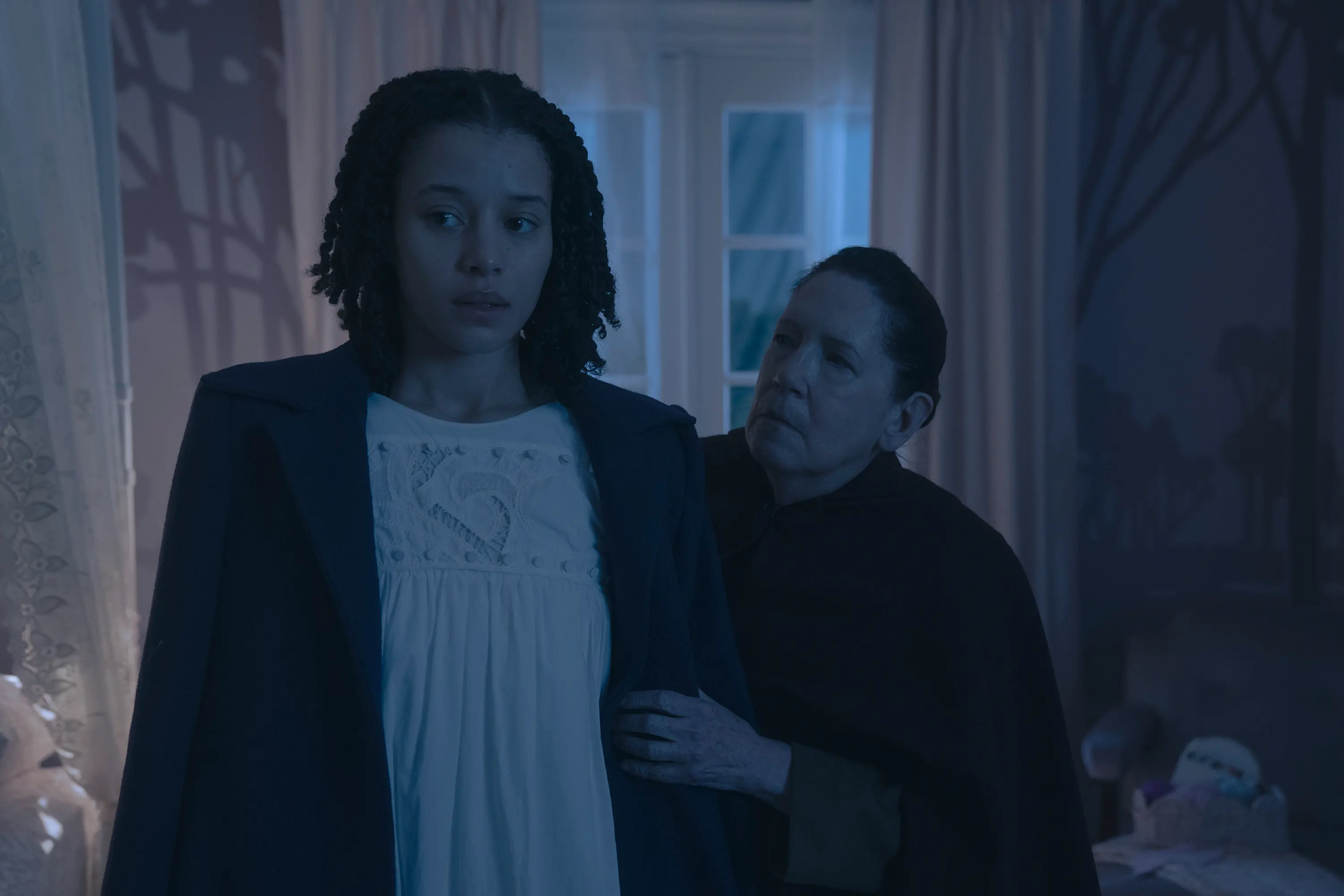
In Margaret Atwood’s 2019 novel The Testaments, June Osborne (known primarily as Offred in the original text) is not dead. Although she is not a primary narrator, the story reveals she survived her time in Gilead and became a high-ranking Mayday operative in Canada, eventually reuniting with both of her daughters, Agnes and Nicole.
The question of whether June Osborne survives the harrowing events of Gilead has been a central point of debate for readers and viewers alike. Since the publication of The Testaments, the sequel to Margaret Atwood’s 1985 classic The Handmaid’s Tale, we have a definitive answer regarding her fate in the literary canon. As of 2026, with the television adaptation of The Testaments moving into production following the conclusion of The Handmaid's Tale series, understanding the textual evidence of June’s survival is more important than ever for fans seeking to bridge the gap between the two works.
The Timeline and Setting of The Testaments
To understand June’s status, one must first grasp the chronological leap Margaret Atwood took with the sequel. The Testaments begins approximately 15 years after the final scene of the original Handmaid’s Tale novel, where Offred is led away into a van—whether to her death or to freedom remained a mystery for over three decades.
By the time the events of The Testaments unfold, Gilead has aged. It is no longer the burgeoning, chaotic regime of its early years but a stratified, increasingly paranoid theo-dictatorship facing internal rot and external pressure. The narrative is split between three female protagonists: Aunt Lydia, who provides an internal perspective of Gilead’s power structure; Agnes (revealed to be Hannah, June’s eldest daughter); and Daisy (revealed to be Nicole, June’s younger daughter).
Throughout the majority of the novel, June remains a shadowy, legendary figure. In Gilead, she is a ghost—a symbol of resistance or a cautionary tale, depending on who is speaking. In Canada, she is a target of Gilead’s Pearl Girls and assassins. The narrative tension relies heavily on the fact that while June is physically absent for most of the book, her legacy and the search for her daughters drive the entire plot.
June’s Role as a Mayday Operative
While The Handmaid’s Tale was an intimate, claustrophobic look at a woman trying to survive day-to-day, The Testaments reframes June as a formidable political actor. It is revealed that after escaping Gilead—an event that occurred shortly after the end of the first book—June did not simply disappear into a quiet life in Canada. Instead, she became a pivotal member of Mayday, the underground resistance movement.
In the 15-year interim, June survived multiple assassination attempts orchestrated by Gilead’s leadership. These attempts are mentioned by Aunt Lydia and are a reason why June had to remain in deep hiding, even from her own children. Her survival was not just a matter of personal safety; it was a strategic necessity for the resistance. June’s work with Mayday involved coordinating intelligence and assisting in the "extraction" of high-value targets, eventually facilitating the logistics that allowed her daughters to play their own roles in Gilead's downfall.
The "Legend" of Offred
In The Testaments, June has ascended to a mythic status. Among the younger generation of Handmaids and Marthas, the story of the woman who defied the Commanders and escaped twice is a source of hope. For the Aunts, she is a "stain" on the purity of the regime that must be erased. This shift from victim to legend is crucial; it confirms that June’s story did not end in a purge or a nameless grave, but in an active, ongoing defiance that lasted nearly two decades.
The Climactic Reunion: Evidence of Survival
The most concrete evidence that June is alive in The Testaments occurs in the final chapters of the novel. After Agnes and Nicole successfully smuggle a massive cache of incriminating Gilead documents into Canada—facilitated by Aunt Lydia’s double-agent maneuvers—they are met by Mayday operatives.
In a poignant and long-awaited scene, the girls are taken to a safe house where they are finally reunited with their mother. The text describes June as older, scarred by her years of service and survival, but unmistakably alive. This reunion serves as the emotional anchor of the sequel, providing a sense of closure that the original novel famously withheld.
The novel’s "Thirteenth Transcript," which details the arrival of the "A.L." (Aunt Lydia) files in Canada, confirms that the woman who meets the girls is indeed their biological mother. This moment is not a dream sequence or a hallucination; it is a documented event within the framework of the "Historical Notes" that conclude the book.
Comparison of June's Status: The Handmaid's Tale vs. The Testaments
The following table outlines the differences in June’s (Offred’s) status, location, and role between the two books to clarify how her survival is framed in the sequel.
| Feature | The Handmaid's Tale (Original) | The Testaments (Sequel) |
|---|---|---|
| Current Status | Uncertain / In custody | Alive / In Hiding |
| Primary Location | Cambridge, Gilead | Canada (Mayday Safe Houses) |
| Role in Story | Protagonist / Victim | Legend / Resistance Leader |
| Relationship with Daughters | Separated; fate of daughters unknown | Reunited with both Agnes and Nicole |
| Identity | Offred (Identity stripped) | June / Mayday Operative |
| Conflict | Survival against the Commander | Overthrowing the Gilead regime |
| Final Fate in Book | Stepping into the "darkness or light" | Living to see the beginning of Gilead's end |
Why June's Survival is Factually Consistent
Some readers have questioned if the woman at the end of The Testaments is truly June, or if Atwood left it ambiguous. However, several factors within the text and Atwood’s own commentary confirm her survival:
- The Historical Notes: As with the first book, The Testaments ends with a transcript from a futuristic academic symposium (set in 2197). These notes discuss the "Agnes and Nicole" era and confirm that the mother of these girls was a key figure in the resistance who lived to see the liberation of her children.
- Aunt Lydia’s Testimony: Lydia, the ultimate pragmatist, bases her entire endgame on the fact that June is a living, breathing asset in Canada. If June were dead, Lydia’s leverage and her plan to protect the girls would have fallen apart.
- The Statue at Ardua Hall: The Historical Notes mention a statue erected in later years to commemorate the women of the resistance. While the statue's identity is debated by the fictional historians, the context implies it honors the lineage of women (including the mother) who brought down the regime.
June in the 2026 Television Context
As we look at this topic in 2026, the distinction between the book and the television show remains a point of minor confusion for some fans. In the Hulu series The Handmaid's Tale, June Osborne (played by Elisabeth Moss) has already escaped to Canada much earlier than she does in the literal interpretation of the first book's timeline.
The television show has spent several seasons detailing her life as a refugee and activist. Because The Testaments is being adapted as a follow-up series, showrunners have had to ensure that the "TV June" aligns with the "Book June" of the sequel. In both mediums, the trajectory is the same: June survives. She does not die in a Gilead execution or a failed escape attempt. Instead, she becomes the architect of the regime's eventual collapse.
The Fate of Other Major Characters
To understand June’s survival, it is helpful to look at those around her in The Testaments. Their fates provide the context for her continued existence.
- Luke Bankole: In the novel, it is implied that June and Luke are reunited in Canada, though the book focuses much more on her relationship with her daughters.
- Nick Blaine: Nick’s fate is more mysterious, but he is described as being "deep underground" within the Gilead power structure, assisting Mayday from the inside. Like June, he is a survivor who works toward the same goal.
- Aunt Lydia: Unlike June, Lydia does not survive the events of The Testaments in the long term, as she chooses to go down with the ship after leaking the documents that destroy the regime. Her death serves as the catalyst that allows June and her daughters to live in peace.
The Importance of June's Survival for the Series' Themes
Margaret Atwood’s decision to keep June alive in The Testaments was a significant shift in tone from the original book. The Handmaid’s Tale was a study in the erasure of the individual; leaving Offred’s fate ambiguous served the theme that many victims of history are forgotten.
However, The Testaments is a book about the end of a regime. In this context, June’s survival represents the resilience of truth and the possibility of restoration. By allowing June to live and reunite with Agnes and Nicole, Atwood provides a "happy ending" that is rare in dystopian literature, suggesting that while the scars of Gilead remain, the human spirit—and the maternal bond—can survive even the most absolute forms of oppression.
Frequently Asked Questions
Does June die at the end of the Handmaid's Tale TV show?
As of the conclusion of the primary series, June does not die. The series was designed to lead into the events of The Testaments, where her survival is a requirement for the plot involving her daughters, Agnes and Nicole.
Is June the narrator of The Testaments?
No, June is not one of the three narrators. The story is told through the "Holograph of Ardua Hall" (Aunt Lydia) and the "Witness Testimonies" of Agnes and Nicole. June appears as a character in the present action only at the very end of the book.
What happens to Hannah (Agnes) in the sequel?
In The Testaments, Hannah, known as Agnes Jemima, becomes a Supplicant and eventually an Aunt in training. This position allows her to access the secret files used to take down Gilead. She eventually escapes to Canada and reunites with June.
How many years pass between the two books?
Approximately 15 years pass between the end of The Handmaid's Tale and the beginning of The Testaments. This allows the infants and children from the first era to grow into the young adults who drive the sequel’s plot.
Does June ever return to Gilead in the book?
In The Testaments novel, June does not return to Gilead as a resident. She operates from the outside (Canada) as a Mayday leader. However, she is instrumental in the extraction mission that brings her daughters out of the country.
Summary of Next Steps for Readers
If you are looking to fully experience June’s journey beyond the ambiguity of the first book, the following actions are recommended:
- Read The Testaments: Focus specifically on the "Thirteenth Transcript" and the "Historical Notes" for the most accurate account of June's survival and the eventual collapse of Gilead.
- Review the "Historical Notes": These are found at the end of both novels. They provide the "meta-data" of the story, confirming that the records of these women survived into a future where Gilead is a long-dead historical curiosity.
- Watch for The Testaments Adaptation: With the 2026 production schedule for the sequel series, viewers can expect to see June’s transition from an active protagonist to a legendary resistance leader depicted on screen.