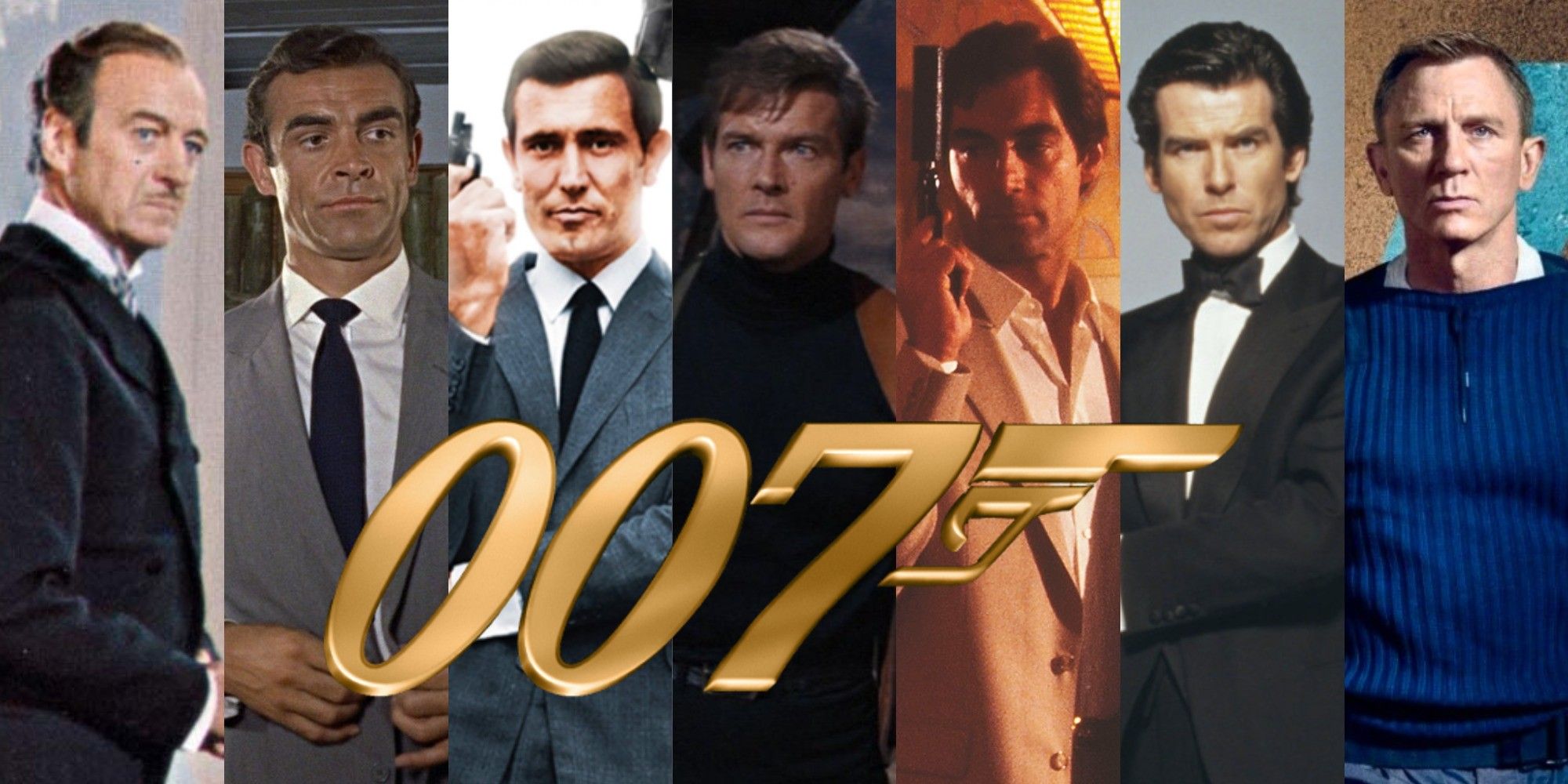
The 007 filmography spans over six decades, encompassing 27 feature films produced by Eon Productions alongside independent adaptations. It charts the evolution of the spy genre from Cold War espionage to modern geopolitical thrillers across performances by six primary actors: Sean Connery, George Lazenby, Roger Moore, Timothy Dalton, Pierce Brosnan, and Daniel Craig.
Introduction to the Eon Productions Franchise and Scope
The cinematic legacy of James Bond is one of the longest-running and most successful franchises in motion picture history. Originating from the spy novels and short stories written by Ian Fleming, the character was successfully transitioned to the big screen in 1962 by producers Albert R. "Cubby" Broccoli and Harry Saltzman under their Eon Productions banner.
Understanding the complete 007 filmography requires a look beyond simple sequential numbering. While Eon Productions has maintained tight control over the official core series, independent studio shifts, rights disputes, and non-Eon productions have occasionally complicated the timeline. The canonical series is anchored by a specific formula that balances exotic international locations, signature gadgetry provided by the Q Branch, memorable villains, and the iconic musical themes developed originally by Monty Norman and arranged by John Barry.
Evaluating this filmography involves analyzing shifting cultural tones, technical advancements in practical stunts and visual effects, and the distinct stylistic approaches brought by various directors. From the gritty realism of the early Connery era to the high-concept fantasy of the 1970s Roger Moore pictures and the serialized psychological depth of the Daniel Craig tenure, the franchise has consistently adapted to the changing expectations of global audiences.
The Canonical Eon Productions Era: Chronological Breakdown
The Eon Productions catalog forms the core of the 007 filmography. Every film in this official lineage carries the trademark opening gunbarrel sequence, the signature theme music, and the iconic sign-off: "James Bond will return."
The Sean Connery Era (1962–1967, 1971)
Sean Connery established the cinematic blueprint for James Bond, combining physical menace with sophisticated charm and dry wit.
- Dr. No (1962): Directed by Terence Young, this inaugural entry established the visual grammar of the franchise. Set in Jamaica, it introduces Bond investigating the disappearance of a British agent, leading him to the criminal organization SPECTRE and the titular villain.
- From Russia with Love (1963): Directed by Terence Young, this picture favored a more grounded, hard-edged Cold War thriller approach. It features intricate train-set sequences, memorable hand-to-hand combat on the Orient Express, and the introduction of classic henchman Red Grant.
- Goldfinger (1964): Directed by Guy Hamilton, this film cemented the commercial template for the series. It introduced the Aston Martin DB5, laser interrogation technology, and the iconic villain Auric Goldfinger alongside his henchman Oddjob.
- Thunderball (1965): Directed by Terence Young, this epic scale production focused heavily on underwater combat and nuclear extortion, winning an Academy Award for Best Visual Effects.
- You Only Live Twice (1967): Directed by Lewis Gilbert, this entry moved the action to Japan and introduced the iconic cinematic lair of Ernst Stavro Blofeld inside an extinct volcano.
- Diamonds Are Forever (1971): Directed by Guy Hamilton, Connery returned for a high-seas and Las Vegas-set adventure following a brief hiatus, focusing on diamond smuggling and a satellite laser weapon.
The George Lazenby Era (1969)
- On Her Majesty's Secret Service (1969): Directed by Peter Hunt, this single-film outing featuring Australian model George Lazenby is frequently cited by critics and fans as one of the strongest entries in the franchise. It broke convention by focusing on emotional vulnerability, featuring a tragic narrative arc and a faithful adaptation of Fleming's novel regarding Bond's romance and marriage to Tracy di Vicenzo.
The Roger Moore Era (1973–1985)
Roger Moore brought a lighter, more suave, and overtly comedic sensibility to the role, defining the franchise's tone throughout the 1970s and 1980s.
- Live and Let Die (1973): Directed by Guy Hamilton, Moore’s debut embraced blaxploitation tropes of the era, featuring voodoo mysticism, speedboat chases in the Louisiana bayou, and introducing Jane Seymour as Solitaire.
- The Man with the Golden Gun (1974): Directed by Guy Hamilton, this film pitted Moore against legendary assassin Francisco Scaramanga (played by Christopher Lee) across Macau, Hong Kong, and Thailand.
- The Spy Who Loved Me (1977): Directed by Lewis Gilbert, this is widely considered Moore's masterwork in the role. It paired Bond with Soviet agent Anya Amasova, introduced the Lotus Esprit submarine car, and featured the towering henchman Jaws.
- Moonraker (1979): Directed by Lewis Gilbert, capitalizing on the science-fiction boom following Star Wars, this entry sent 007 into Earth orbit for a space-station laser battle.
- For Your Eyes Only (1981): Directed by John Glen, this film course-corrected the franchise toward a grittier, more grounded Cold War spy thriller after the excess of Moonraker.
- Octopussy (1983): Directed by John Glen, this entry involved a Faberge egg smuggling ring and a plot involving a rogue Soviet general utilizing a circus troupe as a front.
- A View to a Kill (1985): Directed by John Glen, Moore's final outing featured a Silicon Valley microchip monopoly plot, co-starring Christopher Walken as Max Zorin and Grace Jones as May Day.
The Timothy Dalton Era (1987–1989)
Timothy Dalton sought to return the character to the serious, obsessive tone of Ian Fleming's original literary creation.
- The Living Daylights (1987): Directed by John Glen, Dalton’s debut explored Soviet defection, international arms dealing, and a complex alliance with a Czech cellist.
- Licence to Kill (1989): Directed by John Glen, this exceptionally dark and violent entry departed from the formula to follow Bond going rogue on a personal vengeance mission against a Latin American drug lord.
The Pierce Brosnan Era (1995–2002)
Pierce Brosnan revitalized the franchise for the post-Cold War era, blending the charm of Connery and Moore with modern action choreography.
- GoldenEye (1995): Directed by Martin Campbell, this massive box-office hit addressed the obsolescence of secret agents following the collapse of the Soviet Union, pitting Bond against a former ally turned rogue.
- Tomorrow Never Dies (1997): Directed by Roger Spottiswoode, the film tackled media manipulation and digital monopolies, featuring media mogul Elliot Carver as the primary antagonist.
- The World Is Not Enough (1999): Directed by Michael Apted, this entry incorporated oil pipeline politics and a villain, Renard, who could not feel physical pain.
- Die Another Day (2002): Directed by Lee Tamahori, Brosnan’s final film celebrated the 40th anniversary of the series with high-concept elements, including an invisible car and genetic modification subplots.
The Daniel Craig Era (2006–2021)
Daniel Craig anchored a gritty, character-driven reboot that serialized the narrative across a five-film arc exploring the psychological tolls of espionage.
- Casino Royale (2006): Directed by Martin Campbell, this direct adaptation of Fleming's first novel rebooted the continuity, presenting a raw, unrefined 007 earning his license to kill through a high-stakes poker game in Montenegro.
- Quantum of Solace (2008): Directed by Marc Forster, this direct narrative sequel followed Bond tracking down a shadowy organization while processing personal grief.
- Skyfall (2012): Directed by Sam Mendes, this film grossed over one billion dollars, exploring Bond's origins at his ancestral Scottish estate and an attack on MI6 by cyber-terrorist Raoul Silva.
- Spectre (2015): Directed by Sam Mendes, this entry reintroduced the global criminal syndicate SPECTRE and tied the previous three films together through a shared mastermind.
- No Time to Die (2021): Directed by Cary Joji Fukunaga, Craig’s swan song dealt with advanced biological weaponry, a scarred adversary named Safin, and the ultimate conclusion to the serialized timeline.
Non-Canonical and Independent 007 Productions
Beyond the Eon Productions mainstream library, two theatrical films bearing the James Bond name exist outside the official canon due to complex historical copyright arrangements.
- Casino Royale (1954): An early American television adaptation broadcast as part of the CBS anthology series Climax!, starring Barry Nelson as American agent "Jimmy Bond."
- Casino Royale (1967): A satirical spy comedy produced by Columbia Pictures starring David Niven as Sir James Bond 007, alongside a star-studded ensemble cast including Peter Sellers and Orson Welles.
- Never Say Never Again (1983): Produced by Jack Schwartzman and starring Sean Connery returning to the role of James Bond one final time. Because Kevin McClory retained partial literary rights to the novel Thunderball, this film was produced independently as a direct remake of the 1965 Eon picture, competing directly with Roger Moore’s Octopussy at the box office.
Comparative Analysis of the Official 007 Eras
| Era / Actor | Active Years | Canonical Films | Defining Tone | Primary Signature Elements |
|---|---|---|---|---|
| Sean Connery | 1962–1967, 1971 | 6 | Cool, confident, physically imposing | Aston Martin DB5, SPECTRE rivalry, tactical brawls |
| George Lazenby | 1969 | 1 | Emotional, romantic, tragic | Alpine settings, tragic narrative climax |
| Roger Moore | 1973–1985 | 7 | Lighthearted, witty, exotic | High-concept gadgets, globetrotting escapism |
| Timothy Dalton | 1987–1989 | 2 | Gritty, severe, literary-focused | Cold War realism, dark revenge motives |
| Pierce Brosnan | 1995–2002 | 4 | Sleek, modern, blockbuster action | Post-Cold War geopolitics, high-tech weaponry |
| Daniel Craig | 2006–2021 | 5 | Serialized, psychological, visceral | Continuity-driven arcs, character deconstruction |
Frequently Asked Questions
How many official James Bond movies are there?
There are 27 films in total that feature the James Bond character, but strictly speaking, there are 25 canonical films produced by Eon Productions. The count of 27 includes the independent 1967 spoof Casino Royale and the 1983 non-Eon remake Never Say Never Again.
Why is Never Say Never Again not considered part of the official Eon series?
The film was produced by Warner Bros. and Jack Schwartzman rather than Eon Productions. This occurred because producer Kevin McClory retained the cinematic and literary adaptation rights to the Thunderball novel following a legal settlement with Ian Fleming, allowing him to mount an independent adaptation in 1983.
Who played James Bond the most times in the official Eon series?
Roger Moore and Sean Connery hold the record for the most official Eon appearances as 007, though in different capacities. Roger Moore starred in seven consecutive official Eon films from 1973 to 1985. Sean Connery starred in six official Eon films consecutively, followed by a return in the 1971 film Diamonds Are Forever.
Which film in the 007 filmography grossed the most at the box office?
Skyfall (2012), directed by Sam Mendes and starring Daniel Craig, is the highest-grossing film in the franchise's history. It grossed over $1.1 billion worldwide unadjusted for inflation, making it a major commercial milestone for the studio.
Are the Daniel Craig films connected to the previous eras?
The Daniel Craig era operates as a narrative reboot that wipes the previous continuity clean. Starting with Casino Royale in 2006, the films establish a brand-new timeline where Bond is newly promoted to 007 status, telling a continuous, serialized story across five interconnected chapters.
Conclusion and Next Actions
Reviewing the complete 007 filmography provides a fascinating lens through which to observe cinematic history, shifting cultural norms, and the evolution of the action blockbuster. For viewers looking to explore the series, starting with Dr. No provides an appreciation of the historical origin of the formula, while chronological viewing through the Daniel Craig era highlights modern serialized filmmaking. To gain deeper insight into the production background of these films, consult the published historical accounts by Eon historians or explore the original Ian Fleming literary source material.