The 2022 Winter Olympics, officially known as the XXIV Olympic Winter Games, were held from February 4 to February 20, 2022, in Beijing, China, and surrounding areas. This landmark event made Beijing the first city in history to host both the Summer and Winter iterations of the Olympic Games.
The Games were defined by rigorous COVID-19 "closed-loop" protocols, significant technological advancements in venue sustainability, and the emergence of new global sports icons. Despite the complex geopolitical climate and the challenges of the pandemic, the event successfully facilitated 109 events across 15 disciplines, leaving a lasting impact on the winter sports landscape that continues to be felt today in 2026.
The Historical Significance of the Dual Olympic City
The selection of Beijing as the host city during the 128th IOC Session in Kuala Lumpur in 2015 was a strategic decision that prioritized the reuse of existing infrastructure. By leveraging venues originally constructed for the 2008 Summer Olympics, the Beijing Organizing Committee (BOCOG) aimed to demonstrate a model for sustainable Games management.
The transformation of the National Aquatics Center, famously known as the "Water Cube," into the "Ice Cube" for curling events serves as the primary example of this adaptive reuse. This involved a complex engineering process where the pool was filled with a removable steel structure, topped with a concrete deck and an ice-making system. This modular approach allowed the venue to switch between aquatic and ice sports, a technical feat that set a precedent for future multi-use stadium designs.
Furthermore, the National Indoor Stadium and the Wukesong Arena, both 2008 legacy venues, were retrofitted to host ice hockey. These facilities integrated advanced humidity control and high-efficiency ice-making technologies to meet the stringent requirements of winter sports while maintaining their capacity for summer-style events. The "Dual Olympic City" status was not merely a title but a functional blueprint for reducing the massive capital expenditures typically associated with Olympic hosting.
Organizing the Three Competition Clusters
To accommodate the diverse requirements of winter disciplines, the 2022 Games were organized into three distinct geographical clusters, connected by a high-speed railway designed specifically to transport athletes and media between locations at speeds of up to 350 km/h.
The Beijing Zone
The Beijing cluster focused primarily on ice sports and the opening and closing ceremonies. The National Stadium (Bird's Nest) once again hosted the ceremonial aspects of the Games. A standout addition to the city skyline was the National Speed Skating Oval, nicknamed the "Ice Ribbon." It featured 22 light strands flowing around the exterior, symbolizing the trails left by speed skaters.
The most visually striking venue in this zone was Big Air Shougang, the world’s first permanent venue for Big Air events. Built on the site of a former state-owned steel mill, the jump utilized decommissioned cooling towers as a backdrop, symbolizing urban regeneration and the transition from heavy industry to a service-oriented, sports-focused economy.
The Yanqing Zone
Located approximately 75 kilometers northwest of Beijing, the Yanqing district served as the hub for alpine skiing and sliding sports (bobsleigh, skeleton, and luge). This zone presented the most significant engineering challenges due to the arid climate. The National Alpine Skiing Centre, featuring slopes with a vertical drop of up to 900 meters, relied almost entirely on artificial snow.
The National Sliding Centre, known as the "Snow Dragon," featured a unique 360-degree roof that protected the track from direct sunlight and wind, significantly reducing the energy required to maintain the ice. This track is recognized for its "C-shaped" turn, which is considered one of the most technical sections in the world for luge and bobsleigh athletes.
The Zhangjiakou Zone
Further north in the Hebei province, the Zhangjiakou cluster hosted the majority of skiing and snowboarding events, including cross-country, ski jumping, and freestyle skiing. The National Ski Jumping Centre, designed to resemble a traditional "Ruyi" (a Chinese ceremonial scepter), utilized a circular architectural form that protected the landing area from crosswinds, providing a more stable environment for athletes.
The "Closed-Loop" Management System
One of the most defining technical aspects of Beijing 2022 was the implementation of the "closed-loop" management system. This was an unprecedented logistical undertaking designed to prevent the spread of COVID-19 between Olympic participants and the local Chinese population.
The loop encompassed all competition venues, official hotels, and transport links. Everyone within the loop—including athletes, officials, broadcasters, and support staff—was required to undergo daily PCR testing. Movement was strictly controlled through dedicated vehicles and high-speed rail carriages. There was no physical contact between those inside the loop and the general public.
From a technical SEO and historical perspective, the success of the closed-loop system is often cited in medical and logistical journals as a masterpiece of "bubble" management. While it imposed significant mental health challenges on participants due to the isolation, the system effectively limited the infection rate within the loop to manageable levels, ensuring that no major outbreaks disrupted the competition schedule.
Technological Milestones and Environmental Sustainability
Beijing 2022 aimed to be the "greenest" Winter Games to date, introducing several technological firsts in the realm of environmental protection.
Natural Carbon Dioxide Refrigeration
For the first time in Olympic history, natural carbon dioxide (CO2) transcritical refrigeration systems were used to cool ice rinks. This technology was implemented at four venues, including the National Speed Skating Oval. Traditional refrigerants like hydrofluorocarbons (HFCs) have high global warming potential; in contrast, CO2 is a natural refrigerant with a Global Warming Potential (GWP) of 1.
Beyond its environmental benefits, CO2 cooling is more efficient and provides a more uniform ice temperature. This consistency was a major factor in the high number of Olympic and track records broken during the speed skating events, as the ice quality remained exceptionally stable throughout the competition sessions.
Renewable Energy and Water Management
The organizing committee committed to powering all venues with 100% renewable energy, primarily sourced from wind and solar farms in the Zhangjiakou region. A dedicated DC grid was established to transport this "green" electricity to Beijing.
Water management was another critical focus, particularly in the arid Yanqing and Zhangjiakou zones. BOCOG implemented a series of reservoirs and water-recycling systems to capture snowmelt and rainwater. This stored water was then used for snowmaking during the winter season, reducing the impact on local groundwater supplies. According to official sustainability reports, the integrated water systems allowed for the recycling of nearly 100% of the water used in the Yanqing Olympic zone.
Key Sporting Highlights and Medal Table Results
The 2022 Games featured 109 events, including several new additions like Women’s Monobob, Freestyle Skiing Big Air (Men and Women), and mixed team events in short track speed skating, ski jumping, and snowboard cross.
Top Performing Nations
Norway continued its historical dominance of the Winter Games, finishing at the top of the medal table. Their success was largely driven by their biathlon and cross-country skiing programs. Germany followed in second place, maintaining its stronghold on the sliding sports, while host nation China achieved its best-ever Winter Olympic performance, finishing third.
| Rank | Country | Gold | Silver | Bronze | Total |
|---|---|---|---|---|---|
| 1 | Norway | 16 | 8 | 13 | 37 |
| 2 | Germany | 12 | 10 | 5 | 27 |
| 3 | China | 9 | 4 | 2 | 15 |
| 4 | USA | 8 | 10 | 7 | 25 |
| 5 | Sweden | 8 | 5 | 5 | 18 |
| 6 | Netherlands | 8 | 5 | 4 | 17 |
Iconic Performances
- Eileen Gu (Ailing Gu): Representing China, Gu became a global phenomenon by winning two gold medals (Big Air and Halfpipe) and one silver (Slopestyle). Her performance significantly boosted the profile of freestyle skiing in Asia.
- Nathan Chen: The American figure skater delivered a flawless performance to secure the gold medal in the men's singles, setting a world record in the short program and redeeming himself after a disappointing 2018 outing.
- Johannes Thingnes Bø: The Norwegian biathlete was the most successful athlete of the Games, winning five medals, four of which were gold.
- Ireen Wüst: The Dutch speed skater became the first athlete to win an individual gold medal at five different Olympic Games (Summer or Winter), a testament to her unprecedented longevity in a high-intensity sport.
Legal and Ethical Challenges: The Valieva Case
The Beijing 2022 Games were not without significant controversy. The most prominent issue was the doping scandal involving Russian figure skater Kamila Valieva. After leading the Russian Olympic Committee (ROC) to a gold medal in the team event, it was revealed that Valieva had tested positive for trimetazidine, a banned substance, in a sample taken in December 2021.
The case resulted in a complex legal battle involving the International Testing Agency (ITA), the World Anti-Doping Agency (WADA), and the Court of Arbitration for Sport (CAS). Because Valieva was 15 at the time, she was considered a "protected person" under the World Anti-Doping Code, which led to a provisional ruling allowing her to continue competing in the individual event.
However, the psychological pressure and global scrutiny led to a faltering performance in the women's free skate. The fallout of this case continued for years. In 2024, the CAS eventually handed down a four-year ban to Valieva, and the medals for the team event were reallocated, with the United States elevated to gold, Japan to silver, and the ROC (after points deduction) to bronze. This event prompted the International Skating Union (ISU) to raise the minimum age for senior competition to 17.
Diplomatic Boycotts and Geopolitical Context
The 2022 Games took place during a period of heightened geopolitical tension. Several nations, led by the United States, United Kingdom, Canada, and Australia, announced a "diplomatic boycott" of the Games. While their athletes were permitted to compete, these countries did not send official government delegations to the opening or closing ceremonies.
The stated reasons for the boycott included concerns over human rights issues in the Xinjiang region and the treatment of tennis player Peng Shuai. The Chinese government repeatedly denied these allegations, characterizing the boycott as a politicization of sports. These tensions created a stark contrast between the "Together for a Shared Future" motto and the reality of international relations at the time.
The Economic and Social Legacy in 2026
Four years after the flame was extinguished, the legacy of Beijing 2022 remains visible. China’s goal of engaging 300 million people in winter sports was largely met, leading to a massive expansion of ski resorts and ice rinks across the country.
The venues in Zhangjiakou and Yanqing have transitioned into year-round tourist destinations. The National Alpine Skiing Centre now hosts international FIS (International Ski Federation) events and serves as a high-altitude training base for national teams. Big Air Shougang has become a popular urban park and event space, proving that Olympic venues can avoid becoming "white elephants" if integrated into urban redevelopment plans from the outset.
For the international community, Beijing 2022 demonstrated that mega-events could be held under extreme public health constraints. The technical data gathered regarding the closed-loop system and CO2 ice-making has been invaluable for the organizers of the Milan-Cortina 2026 Games, who have adopted several of the sustainability and logistics frameworks established in Beijing.
Frequently Asked Questions
What were the official dates of the 2022 Winter Olympics?
The Games officially began with the Opening Ceremony on February 4, 2022, and concluded with the Closing Ceremony on February 20, 2022. Some preliminary competitions, such as curling and ice hockey, began a few days prior to the official opening.
Who was the mascot of the Beijing 2022 Games?
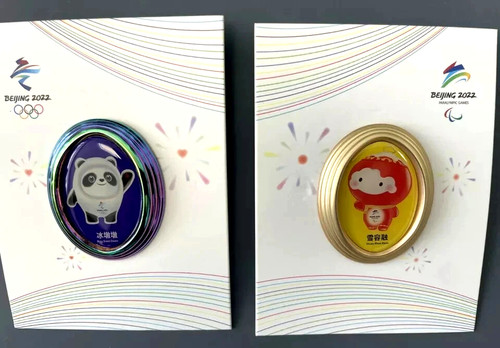
The mascot was Bing Dwen Dwen, a panda clad in a "shell" made of ice that resembled an astronaut suit. The name "Bing" translates to ice, symbolizing purity and strength, while "Dwen Dwen" suggests robustness and liveliness. The mascot became a massive commercial success, frequently selling out in stores across China.
How many new events were added to the 2022 program?
Seven new events were added to increase gender balance and appeal to younger audiences. These included Women’s Monobob, Men’s and Women’s Freestyle Skiing Big Air, Mixed Team Short Track Speed Skating, Mixed Team Ski Jumping, Mixed Team Snowboard Cross, and Mixed Team Freestyle Skiing Aerials.
Which country won the most medals in 2022?
Norway won the most medals overall (37) and the most gold medals (16). This set a new record for the most gold medals won by a single nation at a single Winter Olympics.
Was the 2022 Winter Olympics held entirely on artificial snow?
In the Yanqing and Zhangjiakou zones, the competition surfaces were almost 100% artificial snow. This was due to the low natural snowfall in these regions during the winter months. The organizers used advanced technopike snowmakers to ensure the snow density met international competition standards.
Practical Recommendation for Researchers
If you are looking for specific technical data, athlete performance metrics, or official sustainability reports from the Beijing 2022 Winter Olympics, the most authoritative source remains the International Olympic Committee (IOC) official website and the archived reports from the Beijing Organizing Committee. For legal precedents regarding the Valieva case, the Court of Arbitration for Sport (CAS) provides the full text of rulings which are essential for understanding the shifts in anti-doping regulations that occurred between 2022 and 2026.