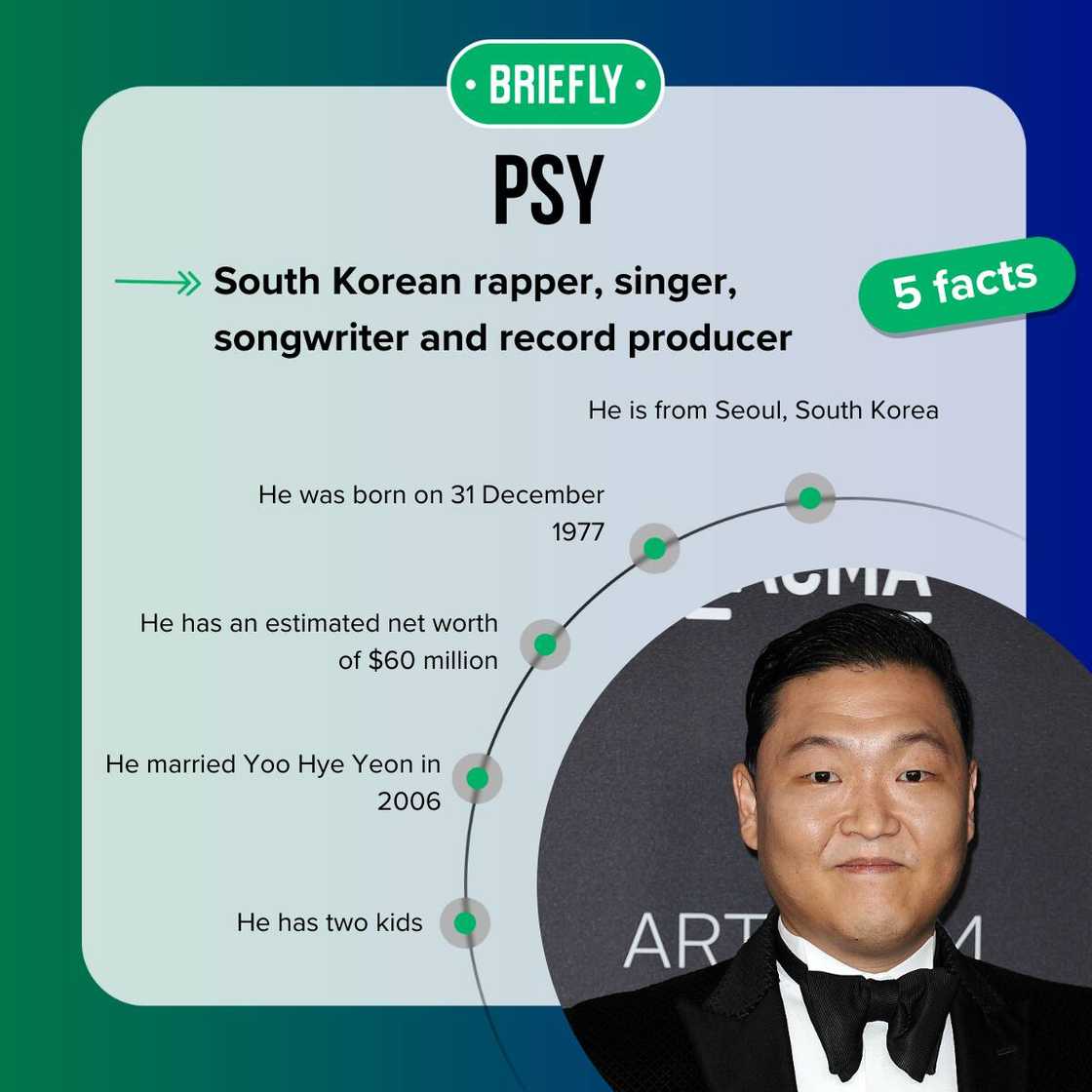
As of 2026, the South Korean superstar Psy is 48 years old, having been born on December 31, 1977. His estimated net worth stands at approximately $65 million, driven by his global music royalties, massive "Summer Swag" concert tours, and his successful role as the founder and CEO of P Nation.
Psy, born Park Jae-sang, remains one of the most influential figures in the global music industry. While many recognize him solely for the 2012 viral phenomenon "Gangnam Style," his career spans over two decades of reinvention. From a controversial "B-list" singer in South Korea to a pioneering entrepreneur and global cultural ambassador, Psy has navigated the complexities of fame and industry shifts with remarkable resilience. This profile examines his current status in 2026, his financial trajectory, and the pivotal moments that defined his career timeline.
Psy’s Age and Early Background
In the current year of 2026, Psy is entering his late 40s, a stage where he has successfully transitioned from a high-energy performer to a respected industry mogul. Born in the Seocho District of Seoul—an affluent area that would later inspire his biggest hit—Psy grew up in a family of business professionals. His father, Park Won-ho, was the chairman of DI Corporation, and his mother, Kim Young-hee, owned several restaurants.
Despite the pressure to follow in his father's corporate footsteps, Psy’s interest lay in music. He traveled to the United States in the late 1990s, briefly attending Boston University and later the Berklee College of Music. Although he did not graduate from Berklee, the creative environment of Boston served as the catalyst for his unique musical style—a blend of satirical hip-hop, electronic dance music, and unapologetic showmanship. Returning to Korea, he brought a persona that was starkly different from the polished, "idol" aesthetic that was beginning to dominate the K-pop scene.
The Definitive Career Timeline of Park Jae-sang
Psy’s career is often categorized into the "Pre-Gangnam Style" era, the "Global Explosion" era, and the "P Nation" era. Each phase represents a significant shift in his artistic identity and business acumen.
2001–2010: The Rise of the "Bizarre Singer"
Psy debuted in 2001 with the album Psy from the Psycho World!. He immediately earned the nickname "The Bizarre Singer" due to his unconventional dance moves and blunt lyrics. His debut was not without friction; he was fined by the South Korean government for "inappropriate content" in his lyrics, which only cemented his status as a rebel.
Between 2002 and 2010, Psy faced significant hurdles, including a highly publicized mandatory military service controversy. Due to allegations that he had not fulfilled his duties properly during his first stint (2003–2005), he was ordered to re-enlist, eventually serving a second term from 2007 to 2009. Many predicted this would end his career, but his 2010 comeback under YG Entertainment proved his staying power.
2012: The "Gangnam Style" Phenomenon
In July 2012, Psy released "Gangnam Style" as the lead single of his sixth studio album, Psy 6 (Six Rules), Part 1. The song was intended as a satire of the superficiality of Seoul’s elite district, but its infectious "horse dance" and colorful music video transcended language barriers.
By December 2012, it became the first YouTube video to reach one billion views. This wasn't just a win for Psy; it was a watershed moment for the entire K-pop industry, proving that non-English music could dominate the Western charts without traditional radio backing. He spent the next two years touring the world, performing at the Madison Square Garden, and meeting world leaders like UN Secretary-General Ban Ki-moon.
2013–2018: Life After Viral Fame
Following the success of "Gangnam Style," Psy released "Gentleman" (2013) and "Hangover" (2014), the latter featuring Snoop Dogg. While these tracks achieved high view counts, the pressure to replicate the "Gangnam Style" miracle was immense. In 2015, he released Chiljip PSY-da, which featured the hit "Daddy."
By 2018, Psy reached a professional turning point. He decided to leave YG Entertainment after eight years, seeking more creative control and a way to mentor the next generation of Korean talent.
2019–2026: The P Nation Era
In early 2019, Psy founded P Nation. His goal was to create a label that prioritized artist individuality over the rigid "factory" system of traditional K-pop. He signed high-profile artists like Jessi, Hyuna, Dawn, Crush, and Heize.
In 2022, Psy returned to his own music with Psy 9th, featuring the hit single "That That," produced by and featuring Suga of BTS. This collaboration bridged the gap between the "first wave" of global K-pop (Psy) and the "second wave" (BTS), solidifying his relevance in the 2020s. By 2026, P Nation has expanded into a multi-subsidiary entertainment company, managing actors, influencers, and a diverse roster of musicians.
Analyzing Psy’s Net Worth in 2026
Psy’s financial portfolio is a masterclass in diversifying income streams within the entertainment sector. As of 2026, his estimated net worth of $65 million is composed of several key pillars.
1. Music Royalties and Streaming
While "Gangnam Style" remains his most lucrative asset, Psy’s entire discography continues to generate significant passive income. Between YouTube AdSense revenue (where he has over 15 million subscribers) and streaming platforms like Spotify and Apple Music, his digital footprint is massive. Industry analysts estimate that "Gangnam Style" alone has generated over $20 million in total revenue since its release.
2. P Nation Ownership
As the founder and primary shareholder of P Nation, Psy’s wealth is heavily tied to the company’s valuation. P Nation is no longer just a talent agency; it has moved into content production and digital distribution. The success of artists like Hwasa and Crush under his leadership has increased the company's market cap, making it a major player alongside giants like HYBE and SM Entertainment.
3. The "Summer Swag" Concert Series
In South Korea, Psy’s "Summer Swag" (Soeum-pyo) concerts are legendary. Known for their high production value and massive water cannons, these shows sell out stadiums across the country within minutes. In 2024 and 2025, these tours reportedly grossed tens of millions of dollars, with Psy retaining a significant portion as both the headliner and the promoter through P Nation.
4. Real Estate and Corporate Holdings
Psy has made savvy investments in South Korean real estate. He owns high-value properties in districts like Hannam-dong and Gangnam. Additionally, his family’s connection to DI Corporation (a semiconductor equipment company) provides a stable financial backdrop, though Psy has largely built his own independent fortune.
| Revenue Stream | Estimated Contribution (Life-to-Date/2026) | Primary Source |
|---|---|---|
| YouTube & Streaming | $25M - $30M | AdSense, Spotify, Global Royalties |
| P Nation Equity | $20M - $25M | Company valuation and dividends |
| Live Performances | $15M - $20M | Summer Swag, Global Tours, Events |
| Endorsements | $10M+ | Brand deals (Samsung, CJ, etc.) |
| Real Estate | $10M+ | Commercial and residential holdings |
Psy’s Cultural Impact and Legacy
Psy’s influence cannot be measured solely in dollars or chart positions. He shattered the "glass ceiling" for Asian artists in the West. Before 2012, K-pop was a niche genre with a dedicated but limited international following. Psy proved that a Korean-language song could be the most-watched video in the world.
Furthermore, he challenged the beauty standards of the music industry. In an era of manufactured idols with perfect physiques, Psy—a middle-aged man with a "dad bod" and a penchant for comedy—became a global sex symbol and style icon. His success gave permission to subsequent artists to be more experimental and less concerned with conforming to traditional Western pop tropes.
In 2026, he is viewed as a "Sunbae" (senior) who provides a blueprint for longevity. His ability to transition from a performer who "dances until he collapses" to a CEO who strategically manages talent shows a high level of professional evolution.
Frequently Asked Questions
How old is Psy in 2026?
Psy is 48 years old. He was born on December 31, 1977. He will celebrate his 49th birthday on the last day of 2026.
What is Psy's net worth in 2026?
His net worth is estimated to be approximately $65 million. This figure includes his earnings from music, his ownership of the label P Nation, and his real estate investments in Seoul.
Does Psy still perform "Gangnam Style"?
Yes, Psy continues to perform "Gangnam Style" as the finale of his major concerts. In recent interviews, he has stated that the song is a "gift" and he never tires of seeing the joy it brings to audiences, even more than a decade after its release.
Who are the current artists under Psy’s label, P Nation?
As of 2026, P Nation’s roster includes prominent artists such as Hwasa, Crush, Heize, Swings, and The New Six (TNX). The label has also expanded into managing several high-profile actors and producers.
Why did Psy have to serve in the military twice?
Psy was required to serve a second time because his initial service as a technical specialist (2003–2005) was deemed neglectful of duties. He was accused of continuing his music career and performing on television during his service period. To rectify this, he re-enlisted as an active-duty soldier from 2007 to 2009.
Summary of Next Actions for Fans and Professionals
For those looking to keep up with Psy’s activities in 2026, the best course of action is to follow the official P Nation social media channels. The label frequently releases "behind-the-scenes" content showing Psy’s role as a mentor. For fans of live music, securing tickets to the "Summer Swag 2026" tour should be a priority, as these events remain the pinnacle of the South Korean summer concert season.
Professionally, Psy’s career serves as a vital case study for anyone interested in the intersection of viral marketing, international copyright law, and long-term brand management in the digital age.