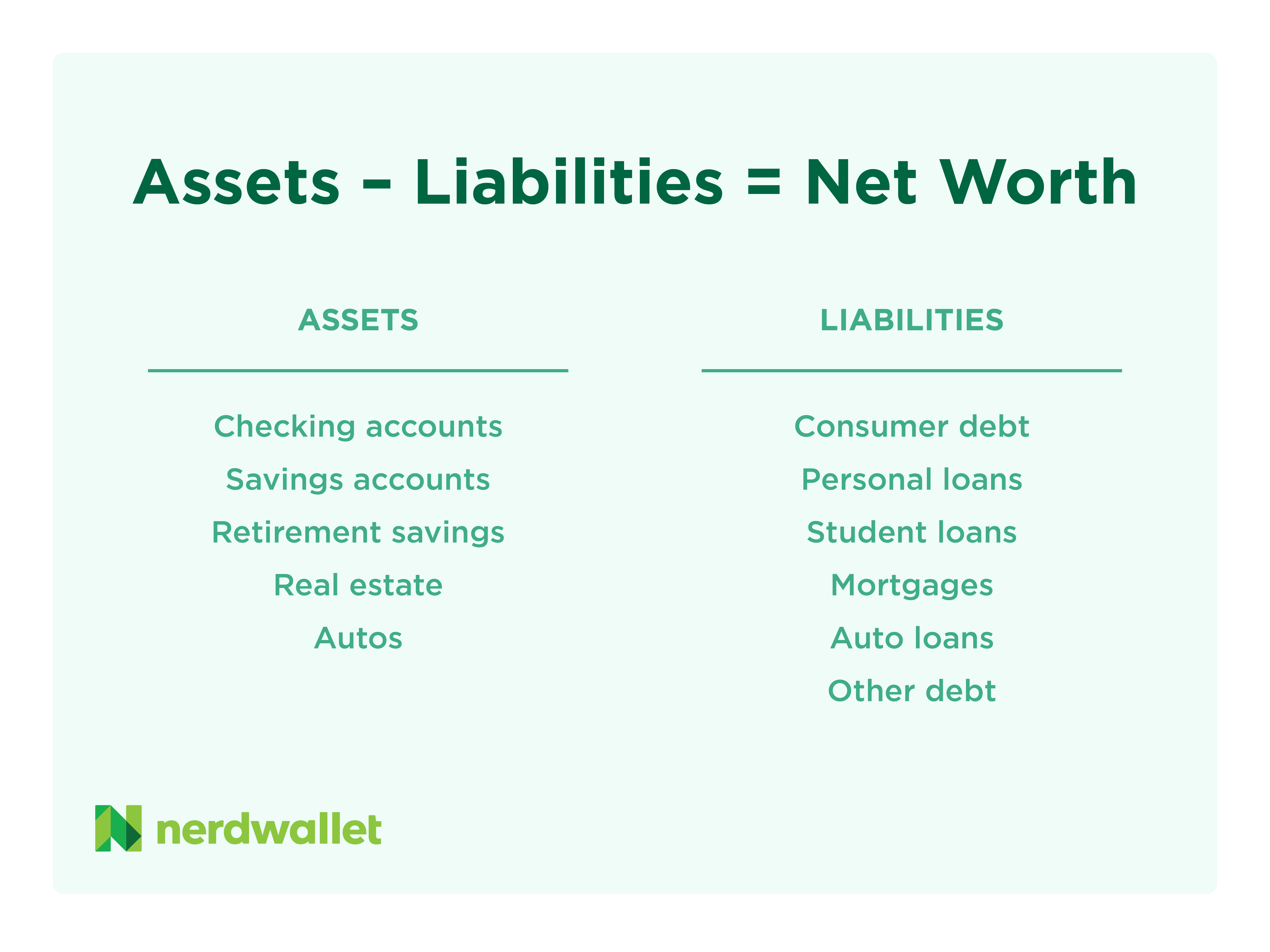
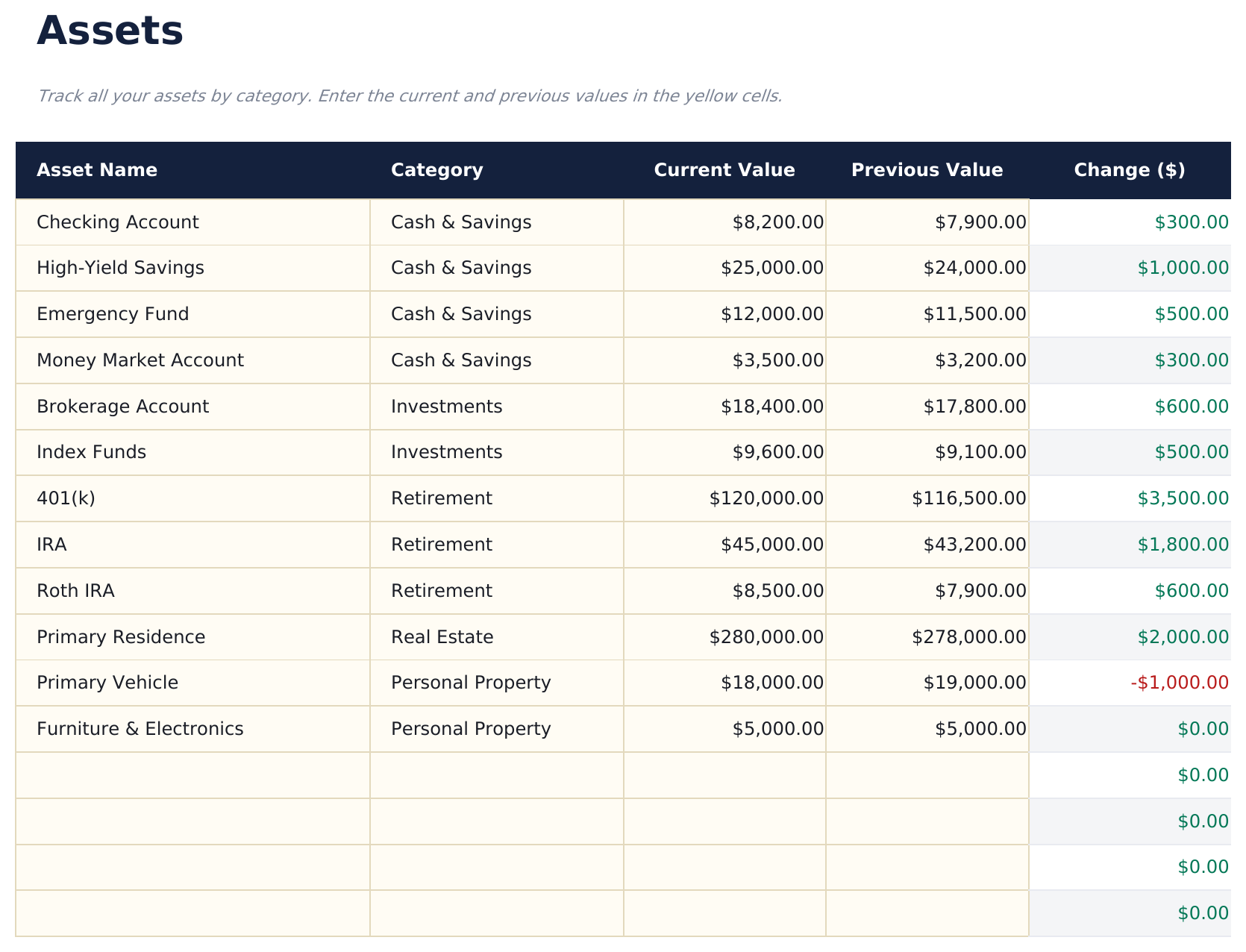
Net worth assets are the specific items of economic value that an individual or entity owns, which can be converted into cash to settle debts. To calculate your net worth, you must aggregate the total market value of these assets and subtract your total liabilities (debts).
In the financial landscape of 2026, tracking net worth has evolved beyond simple bank balances. It now encompasses a sophisticated mix of traditional equity, digital holdings, and real estate interests. Understanding which assets to include—and how to value them accurately—is the foundational step in wealth management and long-term financial planning. This guide examines the various categories of assets, their liquidity, and their role in your overall financial health.
Defining and Categorizing Net Worth Assets
When evaluating your financial position, assets are typically categorized by their liquidity—the ease and speed with which they can be converted into cash without significant loss in value. This categorization helps in understanding not just how much wealth you have, but how accessible that wealth is in an emergency or for an investment opportunity.
Liquid Assets (Cash and Equivalents)
Liquid assets are the most accessible part of your net worth. In 2026, the definition of "cash" has expanded to include various high-yield digital formats, but the core principle remains the same: these are funds available for immediate use.
- Checking and Savings Accounts: These are the most basic forms of liquid assets. While they often offer lower returns than investments, they provide the necessary liquidity for daily expenses and emergency funds.
- Money Market Accounts (MMAs): These accounts typically offer higher interest rates than standard savings accounts and are backed by short-term debt securities.
- Certificates of Deposit (CDs): While they have fixed terms, they are considered liquid assets because they can be cashed out (often with a small penalty).
- High-Yield Savings Accounts (HYSA): With the interest rate shifts seen leading into 2026, HYSAs remain a staple for preserving the purchasing power of cash reserves.
Invested Assets (Marketable Securities)
Invested assets are those held with the expectation of generating a profit or income. They are generally liquid, though selling them may result in capital gains taxes or losses if the market is down.
- Publicly Traded Stocks: Shares of ownership in companies listed on major exchanges like the NYSE or NASDAQ.
- Bonds: Debt securities issued by corporations or governments. In 2026, Treasury Inflation-Protected Securities (TIPS) and municipal bonds remain popular for their relative safety.
- Exchange-Traded Funds (ETFs) and Mutual Funds: These represent a basket of securities and offer instant diversification.
- Cryptocurrencies and Digital Assets: By 2026, major tokens like Bitcoin and Ethereum have become more integrated into traditional portfolios, often categorized under "Alternative Investments" but contributing significantly to the asset side of the ledger for many investors.
The Role of Real Estate in Net Worth
Real estate often represents the largest single component of an individual's net worth assets. However, it is also one of the most illiquid. Valuing real estate requires looking at the current Fair Market Value (FMV) rather than the purchase price.
Primary Residence
Your home is an asset, but it is also a liability if it carries a mortgage. For net worth calculations, you only count the equity—the market value of the home minus the remaining mortgage balance. In the 2026 housing market, characterized by stabilized growth following the volatility of the early 2020s, accurate appraisals are crucial.
Investment Properties
Rental properties, vacation homes, and commercial real estate are considered productive assets. Unlike a primary residence, these assets are often valued not just on their physical worth but on their income-generating potential (capitalization rates).
Real Estate Investment Trusts (REITs)
If you own REITs, these are typically categorized as invested assets rather than physical real estate, as they are highly liquid and traded on stock exchanges. They provide exposure to the real estate market without the burden of direct property management.
Retirement and Pension Assets
Retirement accounts are unique net worth assets because their value is often "locked" until a certain age. However, they represent a massive portion of long-term wealth.
Defined Contribution Plans (401(k), 403(b))
These employer-sponsored plans are valued based on the current account balance. In 2026, the Internal Revenue Service (IRS) provides specific guidelines on contribution limits and withdrawal rules that impact how these assets are managed over time.
Individual Retirement Accounts (IRAs)
Whether Traditional or Roth, IRAs are key components. For net worth purposes, a Roth IRA is often considered more valuable than a Traditional IRA of the same dollar amount because the withdrawals are tax-free, meaning the "net" value to the owner is higher.
Pension Plans (Defined Benefit)
Valuing a pension is more complex. It is typically calculated as the "present value" of the future stream of payments you are expected to receive. Many financial planners recommend using a conservative estimate or only including it once you are vested.
Health Savings Accounts (HSAs)
Often called the "triple-tax-advantaged" account, HSAs have become a significant wealth-building tool by 2026. If used as an investment vehicle rather than just for immediate medical costs, the balance constitutes a potent net worth asset.
Personal Property and Lifestyle Assets
Personal property includes physical items you own that have resale value. While these are part of your net worth, they are the most frequently overvalued by individuals.
Vehicles
Automobiles, boats, and motorcycles are depreciating assets. For an accurate net worth statement in 2026, you should use the current resale value (e.g., via Kelley Blue Book) rather than the original purchase price.
Collectibles and Jewelry
Items such as fine art, rare coins, stamps, or luxury watches can appreciate in value. However, they are highly illiquid. To include these in a professional net worth statement, they should be appraised by a third party.
Home Contents
While your furniture and electronics have value, they generally depreciate rapidly. Most conservative net worth calculations exclude general household goods unless they are of significant, verifiable value.
| Asset Category | Common Examples | Liquidity Level | Valuation Methodology |
|---|---|---|---|
| Cash Equivalents | Savings, Checking, CDs | Very High | Current Balance (Face Value) |
| Equities | Stocks, ETFs, Mutual Funds | High | Current Market Price |
| Fixed Income | Corporate/Gov Bonds | Medium-High | Market Value / Par Value |
| Real Estate | Primary Home, Rentals | Low | FMV minus Liens/Mortgages |
| Retirement | 401(k), IRA, Roth | Medium (Restricted) | Current Account Balance |
| Alternative | Crypto, Gold, Art | Variable | Market Index / Appraisal |
| Business Equity | Ownership stakes, IP | Very Low | Earnings Multiplier / Book Value |
Business Ownership and Intangible Assets
For entrepreneurs and professionals, business interests can be the most complex assets to value.
Private Business Equity
If you own a portion of a private company, its value is part of your net worth. Valuation is typically based on a multiple of earnings (EBITDA) or the book value of the company’s own assets minus its liabilities. The U.S. Small Business Administration (SBA) offers resources on understanding business valuation for small owners.
Intellectual Property (IP)
Patents, trademarks, and copyrights are intangible assets. They have value if they generate royalties or can be sold. In the creator economy of 2026, digital IP—such as established YouTube channels or proprietary software code—is increasingly recognized as a legitimate net worth asset.
Cash Value Life Insurance
Policies such as Whole Life or Universal Life often have a "cash value" component. This is the amount you would receive if you surrendered the policy today, and it should be included as a liquid or semi-liquid asset.
Valuing Assets: Fair Market Value vs. Book Value
A common mistake in tracking net worth assets is using the wrong valuation method. For personal net worth, the gold standard is Fair Market Value (FMV).
FMV is the price a willing buyer would pay a willing seller on the open market. This is distinct from:
- Purchase Price: What you originally paid (irrelevant for current net worth).
- Replacement Cost: What it would cost to buy the item new today (used for insurance, not net worth).
- Book Value: The original cost minus accumulated depreciation (used primarily in corporate accounting).
To maintain an accurate 2026 financial profile, you should update the FMV of your major assets—specifically real estate and investments—at least annually.
Common Mistakes When Identifying Assets
When compiling a list of net worth assets, avoid these frequent pitfalls to ensure your financial picture is realistic:
- Including Leased Items: If you lease a car, it is not an asset. You do not own the equity in the vehicle; you are merely paying for the right to use it.
- Overestimating Personal Property: Many people list their clothes or standard furniture at purchase price. In reality, these items often have negligible resale value and should be excluded or valued at "garage sale" prices.
- Ignoring Tax Liabilities: If you have $1 million in a Traditional 401(k), you don't actually have $1 million in spending power. You owe deferred income taxes on that amount. While the full balance is technically the asset, savvy planners often "discount" the value of pre-tax accounts to account for future taxes.
- Mixing Business and Personal Assets: If you own a business, ensure you are not double-counting assets that belong to the business entity rather than you personally.
Strategic Asset Management for 2026
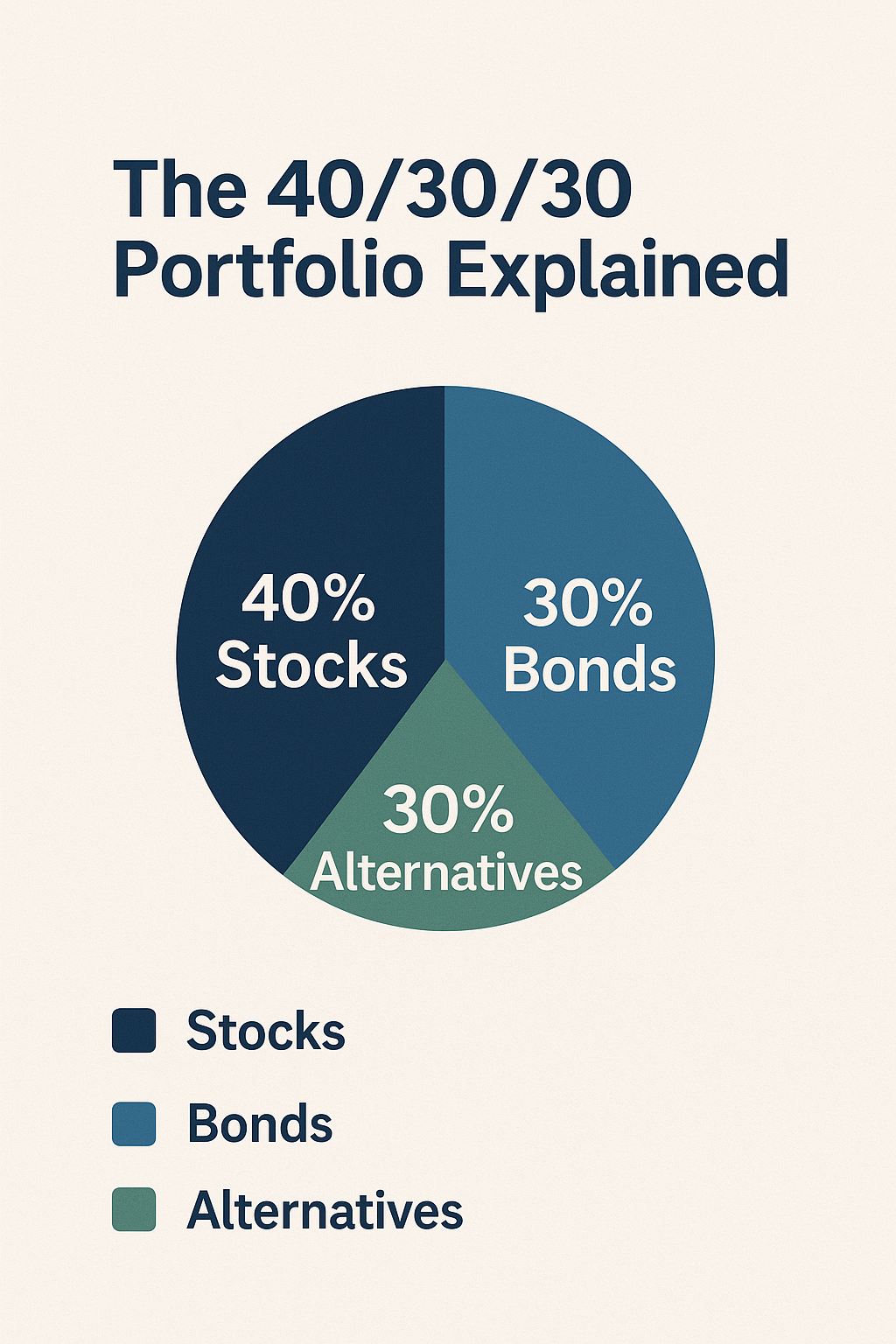
Building net worth is not just about accumulating assets; it is about accumulating the right assets. In the current economic climate, diversification across asset classes is essential to protect against inflation and market volatility.
- Rebalancing: Periodically shifting funds from overperforming assets to underperforming ones to maintain your desired risk level.
- Asset Location: Placing tax-inefficient assets (like high-turnover mutual funds) in tax-advantaged accounts (like IRAs).
- Liquidity Ratios: Ensuring you have enough liquid assets to cover at least 3–6 months of liabilities without having to sell long-term investments at a loss.
For detailed information on investor protection and market regulations regarding these assets, the Securities and Exchange Commission (SEC) provides comprehensive investor education resources.
Frequently Asked Questions
Does my car count as a net worth asset?
Yes, a vehicle you own is an asset because it has resale value. However, it is a depreciating asset, meaning its value decreases over time. When calculating your net worth, you should use the current trade-in or private-party sale value, not the price you paid for it. If you have an auto loan, the loan amount is a liability that will offset the asset's value.
Should I include my jewelry and art in my net worth?
You should only include jewelry, art, or collectibles if they have significant, verifiable value (typically over $1,000 to $5,000 depending on your total wealth). For high-value items, obtaining a professional appraisal is necessary to justify the amount on a formal financial statement. For most people, these items are considered "lifestyle assets" and are often excluded from conservative net worth calculations.
Is my term life insurance policy an asset?
No, a term life insurance policy is generally not a net worth asset. It has no cash value and only pays out upon the death of the insured. In contrast, "permanent" or "whole life" insurance policies do accumulate a cash value over time, which can be withdrawn or borrowed against, making that cash component a valid net worth asset.
How does inflation affect my net worth assets in 2026?
Inflation impacts different assets in different ways. Physical assets like real estate and commodities (gold, silver) often act as a hedge against inflation as their prices tend to rise when the currency loses value. Fixed-income assets like traditional bonds may lose value in a high-inflation environment unless they are specifically inflation-indexed. Cash is the most vulnerable asset to inflation, as its purchasing power erodes over time.
Are digital assets like NFTs and Crypto still considered assets?
As of 2026, cryptocurrencies are widely accepted as assets and should be included in your net worth at their current market value. NFTs (Non-Fungible Tokens) are also assets, but they are considered highly illiquid and volatile. They should be valued conservatively, often at the "floor price" of the collection or the last verifiable sale price, whichever is lower.
Practical Next Action
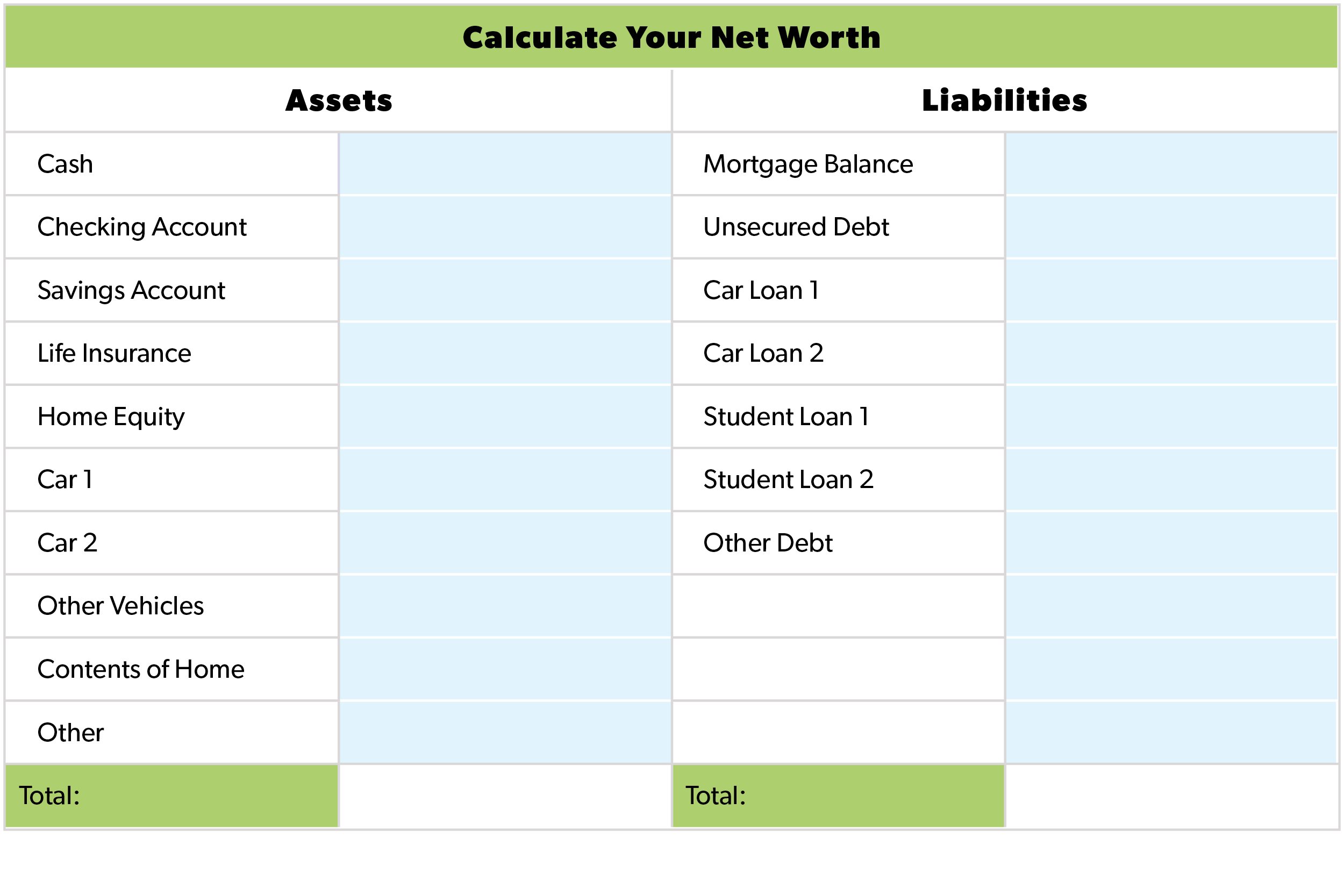
To get a clear picture of your financial health, create a "Net Worth Statement" today. List every asset category mentioned above, find the current Fair Market Value for each, and sum them up. Then, list all your liabilities (mortgages, credit card debt, student loans) and subtract that total from your assets. Review this statement every six months to track your progress and adjust your investment strategy as market conditions evolve throughout 2026.