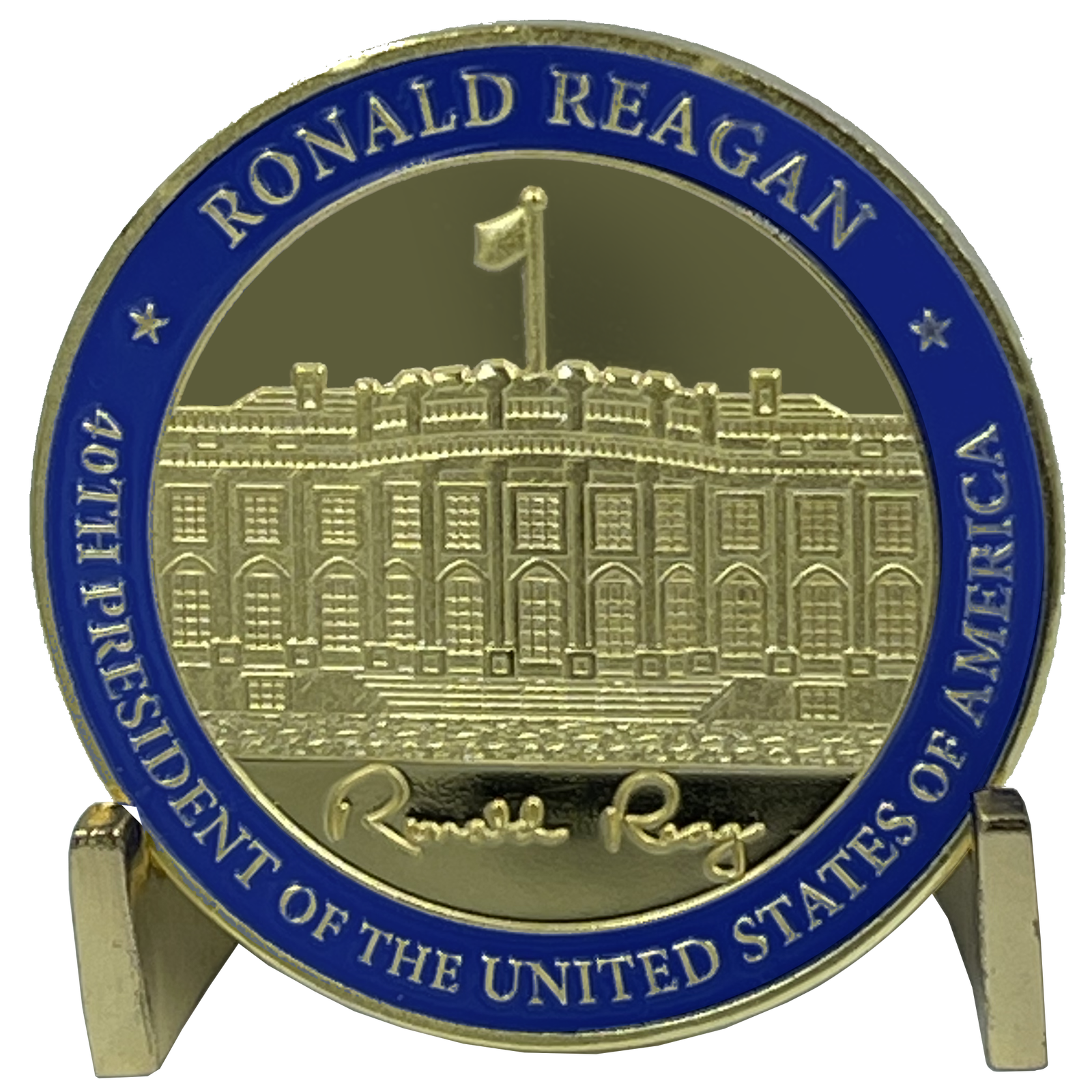
Ronald Reagan served as the 40th president of the United States from 1981 to 1989, leading a significant shift in American politics, economics, and foreign policy during the final decade of the Cold War. His two terms in office transformed the national conservative movement, introduced sweeping supply-side economic policies, and helped reshape international relations with the Soviet Union. Understanding his presidency requires examining his background, domestic agenda, foreign policy milestones, and lasting impact on modern political discourse.
Early Life, Hollywood Career, and Political Rise
Before entering national politics, Ronald Wilson Reagan built a diverse career as a radio broadcaster, a Hollywood film actor, and a corporate spokesman. Born in Tampico, Illinois, on February 6, 1911, he attended Eureka College, where he studied economics and sociology. Following graduation, he worked as a sports announcer for various radio stations in Iowa before moving to California in 1937 to pursue a career in motion pictures. He signed a contract with Warner Bros. and appeared in dozens of feature films over the next two decades, gaining widespread public visibility.
Reagan's transition from the entertainment industry to public service began during his tenure as president of the Screen Actors Guild (SAG) from 1947 to 1952 and again in 1959. In this role, he navigated complex labor negotiations, studio disputes, and internal union politics during the Red Scare. Initially a New Deal Democrat, his political views shifted toward conservatism during the 1950s, influenced in part by his work as a television host and corporate ambassador for General Electric, where he traveled across the country promoting free-market capitalism and limited government intervention.
His formal entry into partisan politics culminated in a celebrated televised speech supporting Republican presidential candidate Barry Goldwater in 1964. The speech, titled "A Time for Choosing," propelled Reagan to the forefront of the conservative movement. In 1966, he ran for Governor of California and defeated incumbent Edmund G. "Pat" Brown Sr. Reagan served two terms as California's 33rd governor from 1967 to 1975, balancing state budgets, reforming welfare systems, and confronting campus student protests, which established his executive credentials for a future presidential run.
The 1980 Presidential Election and the Reagan Coalition
Reagan sought the Republican presidential nomination in 1976, narrowly losing to incumbent President Gerald Ford. Four years later, in 1980, he secured the nomination and selected former CIA Director and United Nations Ambassador George H.W. Bush as his running mate. The general election campaign unfolded against a backdrop of severe economic stagflation, high interest rates, and the Iran hostage crisis, which involved 52 American diplomats and citizens held captive in Tehran.
Running on the campaign slogan "Are you better off than you were four years ago?", Reagan capitalized on widespread voter dissatisfaction with incumbent President Jimmy Carter's administration. He forged a powerful political coalition—often referred to as the Reagan Coalition—that united traditional conservative Republicans, fiscal hawks, national security proponents, and a significant block of working-class, union-affiliated Democrats known as "Reagan Democrats." In November 1980, Reagan won a decisive electoral landslide, capturing 489 electoral votes to Carter's 49 and winning 50.7 percent of the popular vote. At age 69, he was the oldest person elected president up to that time, an inauguration milestone later surpassed by subsequent commanders-in-chief.
Domestic Policy: Reaganomics and Economic Transformation
The defining domestic initiative of the Reagan administration was a sweeping economic program aimed at reducing the role of the federal government, lowering individual and corporate tax rates, and deregulation. Popularly known as "Reaganomics" or supply-side economics, the strategy was built on the premise that tax cuts would spur investment, stimulate business growth, and ultimately increase total tax revenue by expanding the broader economy.
The cornerstone of this legislative agenda was the Economic Recovery Tax Act of 1981, which reduced individual income taxes across the board by 25 percent over three years and accelerated depreciation write-offs for businesses. Concurrently, the administration sought to curb domestic federal spending, though defense expenditures grew significantly during the same period. To combat runaway inflation inherited from the 1970s, the Federal Reserve, under Chairman Paul Volcker, maintained tight monetary policies, which contributed to a severe economic recession in 1981 and 1982 before giving way to a sustained economic expansion.
| Policy Area | Key Legislation / Action | Primary Objectives |
|---|---|---|
| Taxation | Economic Recovery Tax Act (1981) | Lower marginal income tax rates and business levies to stimulate investment. |
| Deregulation | Executive Orders & Agency Rules | Reduce federal oversight in energy, finance, transportation, and environmental sectors. |
| Social Security | Social Security Amendments (1983) | Ensure long-term solvency by raising the retirement age and increasing payroll taxes. |
| Tax Reform | Tax Reform Act (1986) | Simplify the tax code and eliminate numerous tax shelters and deductions. |
While supporters credited Reaganomics with fueling a prolonged period of job creation and economic growth throughout the mid-to-late 1980s, critics argued that the policies disproportionately favored high-income earners and generated massive federal budget deficits. The national debt tripled over the course of his presidency, transforming the United States from the world's largest creditor nation to the largest debtor nation at the time. To address fiscal challenges, Reagan signed major bipartisan legislation, including the Tax Reform Act of 1986, which simplified the tax brackets and eliminated many loopholes, alongside compromise measures to rescue the Social Security trust fund from insolvency in 1983.
Foreign Policy and the Cold War Strategy
Reagan's foreign policy was defined by a firm stance against the Soviet Union, which he famously characterized as an "evil empire" in a 1983 address. Rejecting the détente policies of the 1970s, his administration adopted what became known as the Reagan Doctrine. This strategy provided overt and covert military and financial aid to anti-communist insurgencies and resistance movements in regions such as Central America, Afghanistan, and Angola, aiming to roll back Soviet influence globally.
Parallel to this muscular anti-communist posture, the administration initiated a massive military buildup, modernizing all three legs of the nuclear triad and proposing the Strategic Defense Initiative (SDI) in 1983—a space-based missile defense system derided by critics as "Star Wars." While SDI faced immense technological and financial hurdles, it exerted significant economic pressure on the Soviet Union, which attempted to match American military spending despite its deteriorating domestic economy.
The geopolitical landscape shifted dramatically after Mikhail Gorbachev assumed power as the General Secretary of the Communist Party of the Soviet Union in 1985. Recognizing the economic stagnation of his country, Gorbachev pursued domestic reforms known as glasnost (openness) and perestroika (restructuring) and sought arms control agreements with the United States.
Reagan and Gorbachev established a constructive personal rapport through a series of landmark summit meetings:
- Geneva Summit (1985): Established initial personal dialogue and agreed to accelerate arms reduction talks.
- Reykjavik Summit (1986): Explored radical reductions in nuclear arsenals, narrowly failing to reach a comprehensive agreement over SDI.
- Washington Summit (1987): Resulted in the signing of the Intermediate-Range Nuclear Forces (INF) Treaty, which eliminated an entire class of nuclear-armed ground-launched ballistic and cruise missiles.
- Moscow Summit (1988): Ratified the INF Treaty and fostered further cooperation on human rights and regional conflicts, symbolizing the easing of Cold War tensions.
These diplomatic breakthroughs laid the groundwork for the eventual dissolution of the Soviet Union in 1991, though Reagan left office before that milestone occurred.
Controversies and Administrative Challenges
Despite his high public approval ratings—earning him the moniker "The Great Communicator"—Reagan's presidency faced several serious controversies and legislative setbacks. The most damaging scandal of his administration was the Iran-Contra affair, which came to light in late 1986. Senior administration officials secretly facilitated the sale of anti-tank and anti-aircraft weapons to Iran—despite an arms embargo—in exchange for securing the release of American hostages held in Lebanon by Hezbollah militants. Profits from these covert arms sales were then illegally diverted to fund the Contra rebels fighting the socialist Sandinista government in Nicaragua, directly violating congressional prohibitions under the Boland Amendment.
Investigations by independent counsels and congressional committees revealed deep operational secrecy within the National Security Council. While Reagan maintained in televised addresses that he had no prior knowledge of the financial diversion, public opinion polls reflected a temporary drop in his approval ratings, and multiple administration officials faced criminal indictments and convictions, many of which were later overturned on appeal or resolved through pardons.
Other administrative controversies included the U.S. intervention in Lebanon, where a 1983 truck bombing at a Marine barracks in Beirut killed 241 American servicemen, prompting a subsequent withdrawal of U.S. forces from the region. Domestically, the administration faced sharp criticism from civil rights organizations and public health advocates for its slow initial public response to the emergence of the HIV/AIDS epidemic during the early 1980s.
Post-Presidency, Legacy, and Historical Evaluation
Reagan left office in January 1989, having completed two full terms, and retired to his ranch in California. In 1994, he made his final major public statement in a handwritten letter to the American public, disclosing that he had been diagnosed with Alzheimer's disease. He spent his final decade out of the public eye until his death on June 5, 2004, at the age of 93. He received a state funeral in Washington, D.C., and was buried at the Ronald Reagan Presidential Library in Simi Valley, California.
Decades after leaving office, Reagan remains a towering figure in American political history. Historians and political scientists consistently rank him among the upper tier of U.S. presidents, praising his communication skills, his role in ending the Cold War, and his ability to unite a fractured conservative movement. Conversely, critics emphasize the socioeconomic disparities associated with deregulation and tax cuts, the tripling of the national debt, and foreign policy interventions in Latin America and the Middle East. Regardless of ideological perspective, his administration fundamentally reshaped the trajectory of American governance and established a conservative political baseline that influenced subsequent generations of leaders in both major parties.
Frequently Asked Questions
What years did the 40th president serve in office?
Ronald Reagan served two consecutive terms as the 40th president of the United States, taking the oath of office on January 20, 1981, and concluding his tenure on January 20, 1989. He was succeeded by his vice president, George H.W. Bush, who won the 1988 presidential election.
What was the primary economic policy of the Reagan administration?
The primary economic strategy was supply-side economics, widely known as Reaganomics. This approach relied on significant marginal income tax cuts, deregulation of industries, and control of the money supply to curb inflation, with the ultimate goal of stimulating private-sector investment and economic expansion.
How did the 40th president contribute to ending the Cold War?
Reagan combined a significant defense buildup and rhetorical pressure on the Soviet Union with pragmatic diplomacy. By engaging Soviet leader Mikhail Gorbachev in a series of summit meetings, he negotiated the INF Treaty of 1987, which eliminated intermediate-range nuclear missiles and helped ease superpower tensions.
What was the Iran-Contra affair?
The Iran-Contra affair was a major political scandal in 1986 involving the secret sale of weapons to Iran to secure the release of American hostages, alongside the illegal transfer of the proceeds to fund anti-communist Contra rebels in Nicaragua in defiance of a congressional ban.
Where is the official presidential library located?
The Ronald Reagan Presidential Library and Museum is located in Simi Valley, California. It is administered by the National Archives and Records Administration (NARA) and houses millions of documents, photographs, and artifacts from his political career and presidency, including a retired Air Force One aircraft.