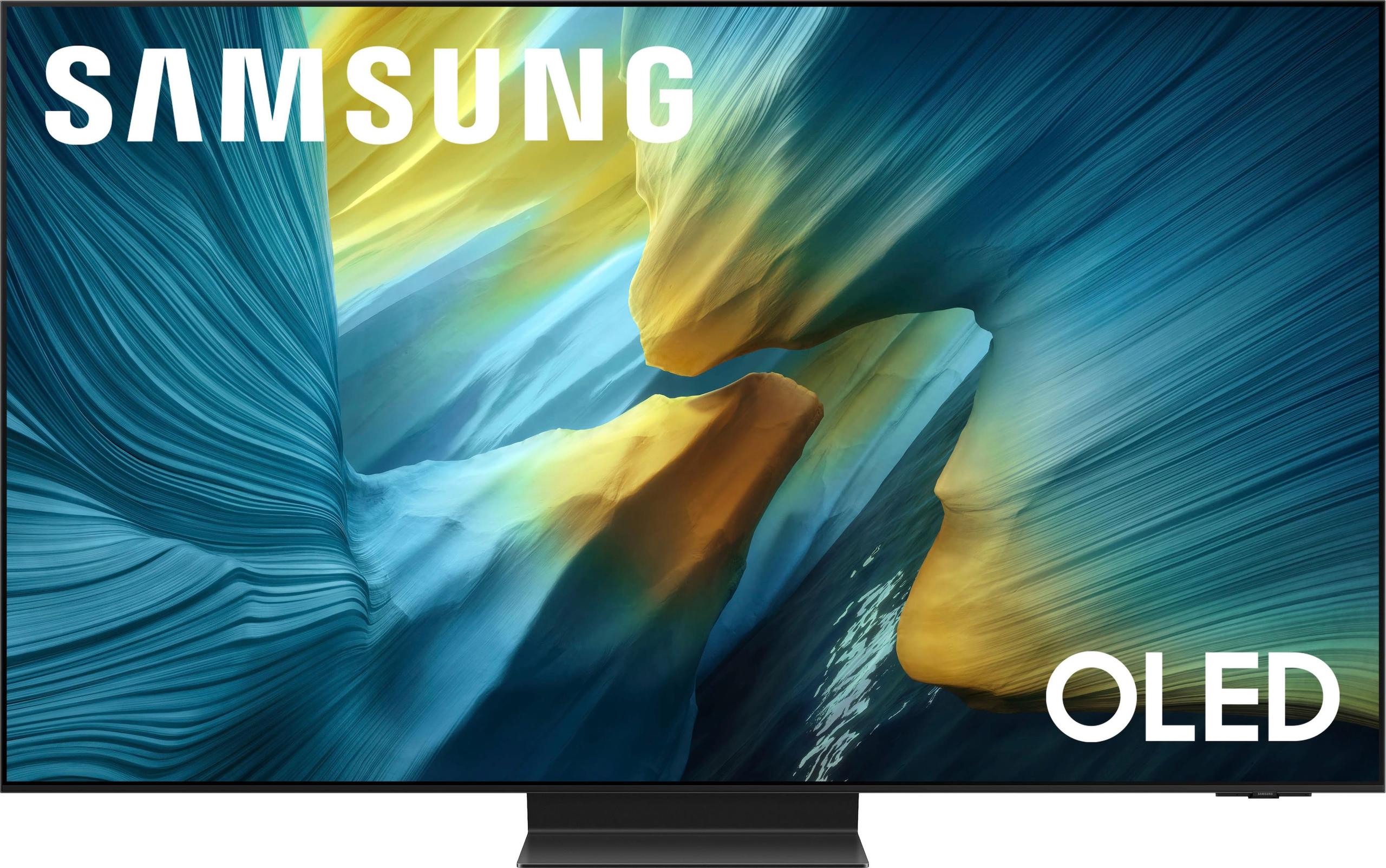
The 2025 television market represents a major maturation phase for home entertainment, anchored by refined OLED architectures, advanced QD-Mini LED backlighting, enhanced on-device artificial intelligence processing, and broad adoption of next-generation connectivity standards like Wi-Fi 7 and HDMI 2.1a.
Evolution of Display Technologies in 2025
The technological landscape of 2025 television models is defined less by radical, completely unprecedented form factors and much more by the microscopic refinement of existing pixel architectures. Manufacturers spent years optimizing light emission and control, and 2025 was the year these innovations trickled down from ultra-premium flagships to mid-range lineups.
Advanced QD-Mini LED vs. Refined OLED Panels
For years, the display market has been locked in a competitive battle between Organic Light-Emitting Diode (OLED) technology and Liquid Crystal Displays (LCD) enhanced by Quantum Dot (QD) and Mini LED backlighting. In 2025, this rivalry reached a fascinating parity.
QD-Mini LED sets achieved staggering local dimming zone counts—often exceeding 5,000 zones even in mid-tier 65-inch models. This allowed LCD panels to approach the deep, inky blacks traditionally reserved for OLEDs while pushing peak brightness levels past 2,000 to 3,000 nits. These high brightness thresholds make QD-Mini LED exceptionally well-suited for brightly lit living rooms, where HDR content requires intense highlights to pop against ambient daylight.
Conversely, 2025 OLED technology focused on material science improvements, specifically through enhanced micro-lens array (MLA) patterns and phosphorescent blue subpixel developments. These adjustments bridged the brightness gap that historically plagued OLEDs, allowing them to reach higher sustained luminance levels without risking premature panel degradation or aggressive automatic brightness limiter (ABL) interference. For dark-room movie viewing, self-emissive OLED pixels continue to provide pixel-level light control without blooming or halo artifacts.
MicroLED: The Horizon of Ultra-Premium Displays
While MicroLED technology remained largely out of reach for the mass market in 2025 due to astronomical manufacturing costs and yield challenges, it firmly established its footprint in the ultra-luxury residential sector. Displays spanning over 100 inches utilizing modular MicroLED tiles offered absolute black levels, limitless brightness, and zero bezel constraints. Throughout 2025, industry advancements slowly brought production costs down, signaling that MicroLED is the inevitable successor to current OLED and Mini LED technologies for the next decade.
The Role of Artificial Intelligence and Processing Chips
In 2025 television engineering, processing silicon is just as important as the physical display panel. The integration of advanced Neural Processing Units (NPUs) directly onto television mainboards transformed how lower-resolution content, streaming compression artifacts, and motion handling are managed.
AI Upscaling and Object-Based Enhancement
With the vast majority of broadcast television and streaming content still originating in 1080p (Full HD) or compressed 4K streams, upscaling algorithms are critical. 2025 processors leverage machine learning models trained on millions of visual reference points. Instead of relying on traditional bicubic interpolation algorithms, these AI chips analyze scenes in real time, recognizing specific textures such as human skin, hair, grass, and text.
By applying contextual sharpening and noise reduction algorithms to distinct objects rather than the entire frame uniformly, 2025 televisions deliver exceptionally clean upscaled images. This minimizes the jagged edges and shimmering artifacts that previously accompanied blowing up lower-resolution feeds onto massive 75-inch and 85-inch screens.
Automated Calibration and Audio Optimization
Beyond visual upscaling, onboard AI in 2025 models overhauled acoustic calibration. Using integrated far-field microphones or remote control sensors, modern televisions execute room-correction routines within seconds. The television measures the acoustic reflections of the room and dynamically adjusts frequency responses, dialogue clarity, and surround-sound virtualization to match the specific physical environment, reducing the immediate need for a dedicated external soundbar in casual viewing spaces.
Connectivity, Gaming Features, and Smart Ecosystems
The modern television functions as the central hub for home entertainment, bridging high-speed internet data, local smart home devices, and high-performance gaming consoles.
Gaming Enhancements: High Refresh Rates and Latency Control
For console and PC gamers, 2025 models cemented features that were once considered premium perks into standard baseline specifications.
- Native 144Hz Refresh Rates: Moving beyond the standard 120Hz cap of previous generations, many high-end 2025 panels supported up to 144Hz at full 4K resolution via HDMI 2.1 ports, accommodating high-end PC gaming rigs.
- Advanced VRR (Variable Refresh Rate): Support for AMD FreeSync Premium Pro and NVIDIA G-Sync reduced screen tearing and stuttering, while ultra-low input lag modes kept response times below 10 milliseconds.
- Dedicated Game Bars: Intuitive on-screen overlays became standard, allowing users to quickly toggle crosshairs, shadow enhancements, and aspect ratio controls without diving into deep system menus.
Smart Operating Systems and Protocol Adoption
Smart TV platforms in 2025—including Google TV, webOS, Tizen, and Fire TV—placed a heavy emphasis on personalization, privacy controls, and cross-device integration. The widespread implementation of Matter and Thread communication protocols allowed televisions to act as smart home control panels, interfacing seamlessly with smart lighting, thermostats, and security cameras. Furthermore, the inclusion of Wi-Fi 7 capabilities in flagship models ensured stable, high-bandwidth streaming of uncompressed 4K and 8K content without network bottlenecks.
Comparing 2025 Television Display Categories
To assist buyers and analysts in evaluating the 2025 television market, the following comparison breaks down the primary display categories by their core technical characteristics, ideal environments, and performance profiles.
| Technology Type | Peak Brightness (Nits) | Black Level Performance | Local Dimming / Control | Best Suited Environment | Typical Price-to-Performance |
|---|---|---|---|---|---|
| W-OLED / QD-OLED | 1,000 – 2,000 | Absolute Zero (Infinite Contrast) | Pixel-level self-emissive | Dark or controlled lighting rooms | Premium |
| QD-Mini LED | 1,500 – 3,000+ | Deep Blacks (Minor Halo Risk) | Thousands of independent zones | Bright living rooms, sunlit spaces | Moderate to High |
| Standard LED-LCD | 400 – 800 | Moderate (Grayish in dark scenes) | Edge-lit or basic direct-lit | Budget bedrooms, casual viewing | Entry-level |
| MicroLED | 4,000+ | Absolute Zero (Infinite Contrast) | Microscopic individual LEDs | Luxury residential theaters | Prohibitive (Ultra-luxury) |
Frequently Asked Questions About 2025 Televisions
What screen resolutions were standard for 2025 televisions?
4K Ultra HD (3840 x 2160 pixels) remained the absolute industry standard across mid-range to premium lineups in 2025. While 8K televisions were manufactured and marketed by major brands, they remained niche luxury items due to a continued lack of native 8K broadcast or streaming material, relying entirely on AI upscaling.
Are 2025 televisions compatible with older game consoles and audio receivers?
Yes, backward compatibility remained robust. 2025 models retained multiple HDMI ports, though typically only two supported full HDMI 2.1 bandwidth (48 Gbps) for 4K/120Hz or 4K/144Hz gaming. Audio Return Channel (ARC) and Enhanced Audio Return Channel (eARC) were standard across all major brands to route uncompressed Dolby Atmos audio to soundbars and AV receivers.
How did energy efficiency standards affect 2025 TV manufacturing?
Stricter global energy regulations, particularly in the European Union and North America, pushed manufacturers to redesign power boards and panel efficiency. 2025 TVs utilized advanced light-guiding plates and ambient light sensors that automatically dim the screen based on room lighting, successfully reducing power consumption compared to older generations while maintaining peak HDR highlight performance.
Is it worth buying a 2025 model over older inventory?
Buying a 2025 television model is primarily advantageous if you require advanced AI upscaling for standard cable broadcasts, improved anti-reflective screen coatings for bright rooms, or seamless Wi-Fi 7 networking integration. For pure dark-room movie viewing, closeout deals on late-generation 2023 or 2024 OLED panels often offered comparable picture quality at a lower cost.
What is the lifespan of a modern 2025 OLED or Mini LED television?
Modern OLED panels manufactured with contemporary organic materials and thermal management systems are rated for tens of thousands of hours—often exceeding 100,000 hours before hitting half-brightness—making burn-in a rare issue for standard mixed viewing. QD-Mini LED sets offer similarly high lifespans, limited primarily by the longevity of the LED backlighting array rather than the LCD panel itself.
Final Recommendation
When navigating the 2025 television market, your purchasing decision should be dictated strictly by room lighting conditions and primary use cases. If your viewing environment features large windows, ambient daylight, and heavy daytime usage, a high-end QD-Mini LED television with a robust local dimming system will provide the punchy, high-brightness HDR performance necessary to combat glare. Conversely, if your setup is situated in a dedicated media room, basement, or controlled-lighting environment, a modern OLED display remains the superior choice for cinematic fidelity, offering unmatched black levels and viewing angles. Always verify port availability if you plan to connect multiple gaming consoles or specialized audio gear simultaneously.