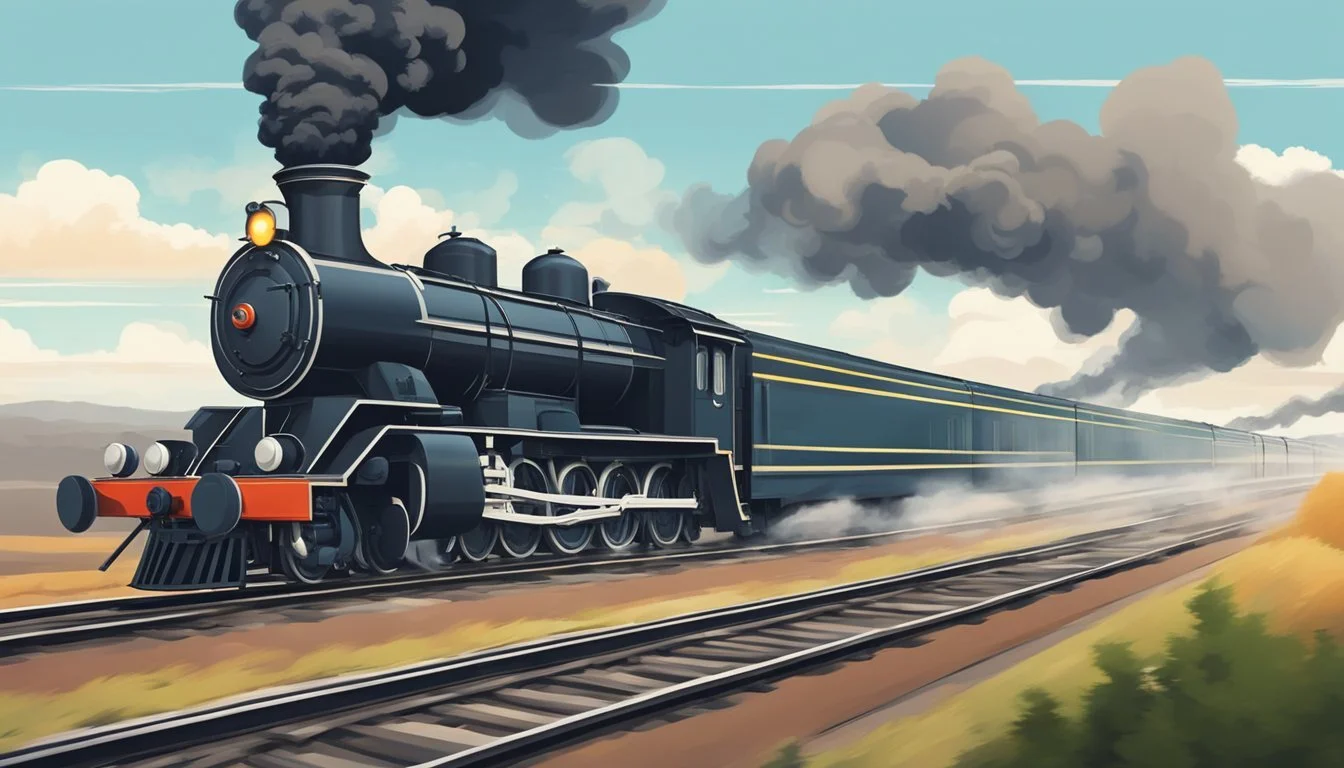
The 2010 film Unstoppable, directed by Tony Scott and starring Denzel Washington and Chris Pine, is indeed based on a real-life event. The movie draws its core premise—a massive, runaway freight train carrying hazardous materials—from the CSX 8888 incident that took place in Ohio on May 15, 2001. While the film dramatizes the intensity and pacing of the pursuit, the central mechanical failure and the public safety threat were grounded in historical fact.
The Origin: The CSX 8888 Incident
On May 15, 2001, in Walbridge, Ohio, an engineer operating CSX Transportation freight train 8888 stepped out of the locomotive to manually align a switch. Through a critical procedural error, the engineer failed to properly engage the locomotive's dynamic brakes before leaving the cab. Furthermore, the train’s independent brake was not set, and the throttle was inadvertently left in the notch eight position—the maximum power setting.
As the engineer dismounted, the train began to roll. Attempting to run alongside the locomotive to stop it, the engineer grabbed the side ladder but was unable to climb inside to engage the brakes. The train accelerated rapidly, leaving the Walbridge rail yard as a “runaway” heading southeast through Ohio. This specific incident serves as the direct historical catalyst for the narrative tension found in the film.
The Real-World Pursuit and Intervention
In the real event, the train traveled for approximately 66 miles over the course of two hours through rural and suburban Ohio. Unlike the highly stylized version presented in the 2010 film, the response was a coordinated effort by CSX, local law enforcement, and specialized rail personnel.
The strategy to stop the train involved several attempts. Authorities initially tried to derail the train using portable derailers, but the weight and speed of the locomotive rendered these devices ineffective, as the train simply crushed them. Following this failure, officials attempted to shoot the emergency fuel cutoff switch on the side of the engine with a police officer’s handgun, which also proved unsuccessful.
The breakthrough occurred when a crew from another train was instructed to chase the runaway down on a parallel track. Once the train slowed near Kenton, Ohio, due to a slight upgrade in the track and the train eventually losing momentum, a rail employee—Jon Hosfeld—managed to run alongside the moving locomotive, climb aboard, and successfully throttle down the engine. This real-life maneuver was significantly less cinematic than the high-speed coupling sequences depicted in the film but was equally effective in averting a potential catastrophe.
Comparing Movie Dramatization to Historical Fact
While the foundation is accurate, Unstoppable employs significant "Hollywood license" to heighten the stakes. Understanding these differences helps separate the technical reality of rail operations from the narrative requirements of a feature film.
- The Payload: In the film, the train, nicknamed "The Beast," is carrying highly volatile, toxic chemicals (molten phenol) and a significant amount of diesel fuel. In the actual CSX 8888 incident, the train was carrying a mixture of hazardous and non-hazardous materials, but the immediate threat was not framed as a "Chernobyl-on-wheels" scenario as it was portrayed on screen.
- The Timeline and Setting: The film compresses the timeline for dramatic effect and shifts the geography to fictionalized locations in Pennsylvania. The real event occurred entirely in Ohio and spanned a much longer, more methodical duration than the film's frantic, high-speed chase.
- The Heroes: In the movie, the primary protagonists are a veteran engineer and a young conductor who take extreme, rogue risks to stop the train. In reality, the stoppage was a product of inter-agency cooperation, rail safety protocols, and the expert timing of veteran rail workers who had been tracking the train's progress in real-time.
- Visual Hazards: The movie includes scenes of the train navigating hairpin turns at breakneck speeds and nearly tipping over. While derailment was a genuine fear in 2001, the actual CSX 8888 remained on the tracks throughout its journey.
Table: Fact vs. Fiction in Unstoppable
| Feature | Real-Life CSX 8888 | 2010 Film: Unstoppable |
|---|---|---|
| Primary Cause | Human error (failed to set brakes) | Sabotage/human error |
| Duration | 2 hours | Compressed (film runtime) |
| Stoppage Method | Parallel chase and manual boarding | High-speed coupling and track drifting |
| Geographic Setting | Ohio | Fictionalized Pennsylvania |
| Danger Level | Potential derailment risk | "Chernobyl-on-wheels" scenario |
Regulatory and Safety Impacts
The CSX 8888 incident had long-term consequences for the railroad industry. Following the incident, the Federal Railroad Administration (FRA) conducted a thorough investigation. The findings led to stricter protocols regarding how locomotives are parked and how engineers must secure equipment when leaving the cab.
The investigation highlighted that the "dead man's switch"—a safety feature designed to stop a train if the operator becomes incapacitated—had been bypassed or failed in a way that allowed the train to maintain its speed. Today, modern positive train control (PTC) systems and updated automated braking requirements have made it significantly more difficult for a similar runaway event to occur. The lessons learned from the 2001 incident remain a staple of rail safety training in the United States.
Common Questions Regarding the Story
Was the "Triple Seven" train in the movie a real train?
No. While the locomotive numbers in the film were chosen for visual impact, the train in the movie was a fabricated construct used to represent the concept of a runaway freight train. Real rail companies have internal identification systems for engines, and 777 was used in the film solely for the story's visual symmetry.
Did the actual train really have "molten phenol" on board?
No. The specific cargo of "molten phenol" was a creative addition to raise the stakes of the plot. The actual CSX 8888 was carrying a mix of freight, including some hazardous materials, but the specific chemical threat described in the film was intended to maximize the audience's perceived sense of urgency.
Could a train really be stopped by another locomotive in the way the movie shows?
The concept of "dynamic braking" and using a trailing locomotive to slow a runaway train is physically possible, but the way it is executed in the film is highly exaggerated. In reality, coupling onto a moving, heavy, runaway train is extremely dangerous and would likely cause massive equipment damage or derailment if attempted at the speeds shown in the film.
Was there really a public outcry or a massive media circus?
Yes. At the time of the 2001 incident, local news coverage in Ohio was quite intense. Because the train was traveling through populated areas, there was genuine concern among residents and officials. However, the media attention was concentrated regionally and did not reach the global, sensationalized scale depicted in the movie.
Is the train from the incident still in service?
The locomotive involved in the incident, CSX 8888, was repaired and remained in service for several years following the event. It eventually underwent a series of overhauls and was renumbered, which is standard practice in the rail industry after a major locomotive lifecycle event or a change in ownership/reporting marks.
Technical Limitations of Rail Safety
When analyzing Unstoppable as a technical document, it is important to note that the film ignores the complexities of braking physics. Rail vehicles operate on steel-on-steel contact, which has a very low coefficient of friction. Once a heavy train gains momentum on a grade, stopping it is a matter of pure physics—the total mass and velocity create a kinetic energy that exceeds the capacity of standard emergency air brakes.
The film relies on the audience’s suspension of disbelief regarding how air hoses and brake lines function. In the real world, if a brake line is severed, the train is designed to "fail-safe," meaning the loss of pressure automatically engages the emergency brakes across all cars. The movie’s premise—that the train cannot be stopped because of a bypass of the main computer—is a dramatization of how modern electronic brake systems might be circumvented, but it is far removed from the mechanical reality of standard freight trains.
Conclusion and Practical Perspective
While Unstoppable is often cited as one of the most accurate depictions of modern rail life, it is, first and foremost, a work of fiction. The 2001 CSX 8888 incident provides a compelling, fact-based skeleton, but the "meat" of the story is pure Hollywood. Readers interested in the real story of American railroading should view the film for its technical aesthetic—the sounds, the scale, and the atmosphere of the yards—rather than as a documentary of the 2001 event. For those looking for historical accuracy, the reports provided by the Federal Railroad Administration regarding the 2001 incident remain the definitive, unbiased source of information on how a modern train can become a runaway and, more importantly, how it is safely brought to a halt.