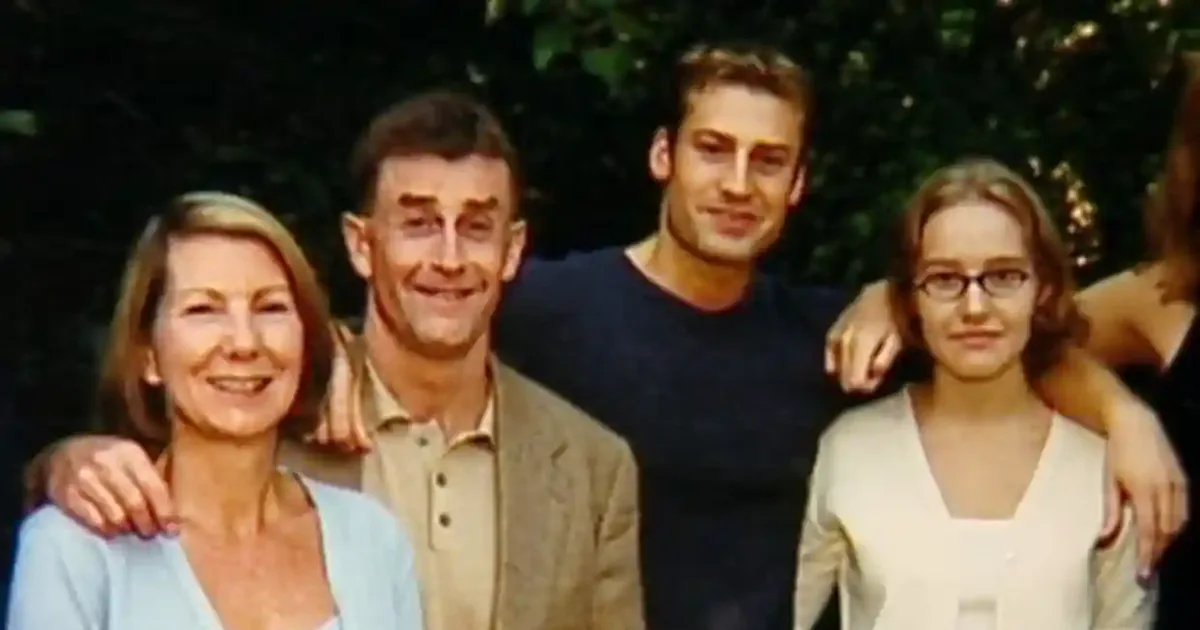
The Staircase (originally titled Soupçons) is a seminal true crime documentary series that follows the high-profile trial of novelist Michael Peterson, who was accused of murdering his wife, Kathleen, in 2001. Directed by Academy Award-winner Jean-Xavier de Lestrade, the series provides unparalleled access to the defense team and the Peterson family over nearly two decades.
The Origins and Significance of The Staircase
Long before the current "true crime boom" dominated streaming platforms, The Staircase set the gold standard for the genre. Directed by French filmmaker Jean-Xavier de Lestrade, the project began shortly after Michael Peterson's arrest in Durham, North Carolina. De Lestrade, who had recently won an Oscar for Murder on a Sunday Morning, sought to examine the American judicial system through a single, complex case. What began as a standard documentary project evolved into a 15-year odyssey that captured the evolution of forensic science, the fallibility of expert testimony, and the grueling emotional toll of a capital murder trial.
The series is celebrated for its "cinema verité" style, where the camera acts as an observer without the use of a narrator. This immersive approach allows viewers to feel like "the thirteenth juror," sitting in on strategy sessions with the defense team and witnessing the private moments of the Peterson and Ratliff children as they grapple with the possibility of their father’s life imprisonment. In 2026, the series remains a primary case study in film schools and law schools alike for its portrayal of legal ethics and narrative construction.
The Central Mystery: The Death of Kathleen Peterson
On the night of December 9, 2001, Michael Peterson called 911 to report that he had found his wife, Kathleen Peterson, unconscious at the foot of a back staircase in their Forest Hills mansion. He claimed she had fallen after a night of drinking wine by the pool. However, the responding officers and the medical examiner found the scene suspicious. The sheer volume of blood at the scene and the nature of Kathleen’s head injuries—seven deep lacerations—suggested to the prosecution that she had been beaten to death with a "blow poke," a fireplace tool that was allegedly missing from the home.
The prosecution's case was built on three pillars: the physical evidence (the blood spatter and injuries), the financial motive (Kathleen’s life insurance), and a "character" motive involving Michael’s bisexuality and his discovery of his personal life by Kathleen. The documentary meticulously tracks how the defense, led by David Rudolf, attempted to dismantle each pillar by arguing that the injuries were consistent with a fall and that Michael and Kathleen had a loving, supportive marriage.
The Production Timeline and Episode Structure
The documentary did not arrive as a single, finished product but rather as a living document of the legal proceedings. Understanding the timeline is crucial for any viewer looking to grasp the full scope of the Peterson saga.
| Release Year | Title / Version | Number of Episodes | Key Focus |
|---|---|---|---|
| 2004 | Soupçons (Original) | 8 Episodes | The initial 2003 trial, verdict, and sentencing. |
| 2013 | The Staircase II | 2 Episodes | The discovery of Duane Deaver's misconduct and Peterson’s release on bond. |
| 2018 | The Staircase (Netflix) | 3 New (13 Total) | The final legal resolution, the Alford plea, and the aftermath. |
The 2018 Netflix release consolidated the original eight episodes, the two 2013 follow-ups, and three brand-new episodes into a seamless 13-episode collection. This version is widely considered the "definitive" edition of the documentary.
Key Figures and Cast Members
While The Staircase is a documentary, its real-life participants are often discussed with the same intensity as characters in a drama. The "cast" consists of the legal teams, the Peterson family, and the investigators involved in the Durham County justice system.
The Peterson Family
- Michael Peterson: The protagonist, a veteran and novelist whose life is dissected by the court. His behavior—often described as eccentric or arrogant—becomes a focal point of the prosecution's narrative.
- Kathleen Peterson: Although seen only in home movies and photos, her life and death are the center of the series. She was a successful executive at Nortel and a well-regarded member of the Durham community.
- Todd and Clayton Peterson: Michael’s sons from his first marriage. Throughout the documentary, they remain steadfast in their support of their father, despite Clayton's own past legal troubles.
- Martha and Margaret Ratliff: The daughters of Elizabeth Ratliff, a close friend of Michael’s who died in Germany in 1985 under eerily similar circumstances (found at the bottom of a staircase). Michael raised them as his own. Their loyalty to Michael is a significant emotional thread in the series.
- Caitlin Atwater: Kathleen’s biological daughter. Initially supportive of Michael, she eventually broke away from the family and joined the prosecution's side after learning more about the evidence.
The Legal Teams
- David Rudolf: The lead defense attorney. Rudolf is often praised for his meticulous preparation and his visible frustration with the flaws in the prosecution's case. His dynamic with Michael is central to the "behind-the-scenes" feel of the documentary.
- Jim Hardin: The District Attorney who prosecuted the case. He presented a traditional, conservative image to the jury.
- Freda Black: An Assistant District Attorney known for her closing arguments, which often focused on Michael Peterson's personal life. Her presence in the documentary is iconic among true crime fans for her Southern delivery and moralizing tone.
- Tom Maher: A key member of the defense team who assisted Rudolf in analyzing the forensic evidence.
Critical Turning Points in the Documentary
The series is famous for several "bombshell" moments that redirected the course of the trial and the documentary itself.
The Germany Connection
Midway through the original trial, the prosecution discovered that a close friend of Michael’s, Elizabeth Ratliff, had died in Germany in 1985 and was found at the foot of a staircase. Michael was the last person to see her alive and was the guardian of her estate and children. The body was exhumed for a second autopsy, a move the defense fought tooth and nail, arguing it was a prejudicial coincidence designed to poison the jury.
The Duane Deaver Scandal
Years after Michael Peterson was convicted, a massive scandal erupted involving the North Carolina State Bureau of Investigation (SBI). It was revealed that blood spatter analyst Duane Deaver had misrepresented his qualifications and falsified evidence in multiple cases. Deaver’s testimony had been the "smoking gun" that convicted Peterson. This revelation provided the legal grounds for Peterson to be granted a new trial and released from prison under house arrest in 2011.
The Alford Plea
The documentary concludes with the 2017 legal resolution. Rather than going through a second full trial, which would have been costly and risky for both sides, Michael Peterson entered an Alford plea. This is a legal maneuver where a defendant maintains their innocence but acknowledges that the state has enough evidence to convict them. He was sentenced to time already served, making him a free man, though technically a convicted felon.
The "Owl Theory": An Unseen Narrative
Interestingly, one of the most famous theories regarding Kathleen Peterson's death is barely mentioned in the documentary itself. The Owl Theory suggests that Kathleen was attacked by a barred owl outside her home, causing the deep lacerations on her scalp, and subsequently fell down the stairs while disoriented.
While Jean-Xavier de Lestrade did not include this in the main series (as it was never presented in court), it has become a staple of true crime discussion. Supporters of the theory point to the microscopic feathers and cedar needles found in Kathleen’s hands. The omission of this theory in the documentary highlights de Lestrade’s focus on the legal process rather than providing an exhaustive list of every possible external theory.
Where to Watch The Staircase in 2026
As of 2026, the streaming rights for the documentary remain primarily with Netflix. The platform owns the rights to the three "final" episodes and has the exclusive license for the previous ten episodes in most international markets.
- Netflix: The 13-episode complete series is available globally. This is the recommended way to watch as it includes the 2013 and 2018 updates.
- VOD Platforms: Some regions may allow the purchase of the original eight episodes on platforms like Apple TV or Amazon Prime Video, though this version lacks the crucial updates regarding the SBI scandal and the Alford plea.
- Physical Media: There are DVD releases of the original 2004 series, often titled Soupçons, though these are increasingly rare and primarily for collectors.
It is important to distinguish the documentary from the 2022 HBO Max (now Max) scripted miniseries also titled The Staircase. The scripted version stars Colin Firth as Michael Peterson and Toni Collette as Kathleen. While the scripted series is a dramatization of the events (and includes the documentary crew as characters), the Netflix documentary is the original source material containing the actual footage of the trial and family.
Frequently Asked Questions
Did Michael Peterson really do it?
The documentary does not provide a definitive answer, which is part of its enduring appeal. While Michael Peterson entered an Alford plea (maintaining innocence while accepting conviction), public opinion remains sharply divided. Some believe the forensic evidence points toward an attack, while others believe the "Owl Theory" or an accidental fall are more plausible.
What is Michael Peterson's status in 2026?
Michael Peterson remains a free man. After his Alford plea in 2017, he returned to his life in Durham, North Carolina. He has since written several books about his experience in the legal system and his time in prison, including Behind the Staircase.
Why was the documentary criticized for bias?
Critics of the series often point out that the editor, Sophie Brunet, had a long-term romantic relationship with Michael Peterson that began during the editing of the first eight episodes. Director Jean-Xavier de Lestrade has defended the work, stating that Brunet’s personal feelings did not influence the editorial integrity of the series and that he remained the final arbiter of the content.
Is the "blow poke" still a factor?
The blow poke was a major focus of the 2003 trial. The prosecution claimed Michael used it to kill Kathleen and then hid it. However, the defense actually found the blow poke in the Peterson garage during the trial—undamaged and covered in dust—undermining the prosecution's theory that it was the murder weapon.
How long does it take to watch the whole series?
The 13 episodes vary in length from 45 to 55 minutes. A complete viewing of the Netflix series takes approximately 11 to 12 hours. It is generally recommended to watch them in chronological order to understand the evolution of the legal arguments.
Summary and Next Steps for Viewers
The Staircase is more than just a true crime story; it is a profound look at the limitations of the American justice system and the ambiguity of truth. For those new to the case, the best course of action is to start with the first episode on Netflix.
If you find yourself captivated by the legal maneuvering of David Rudolf, you may also enjoy reading his memoir, American Injustice, which provides further context on the Peterson trial and other cases he has handled. For those interested in the forensic side, researching the Duane Deaver SBI scandal provides a chilling look at how easily "expert" testimony can be manipulated. Whether you finish the series believing Michael Peterson is a victim of the system or a master manipulator, The Staircase is guaranteed to leave you with more questions than answers.