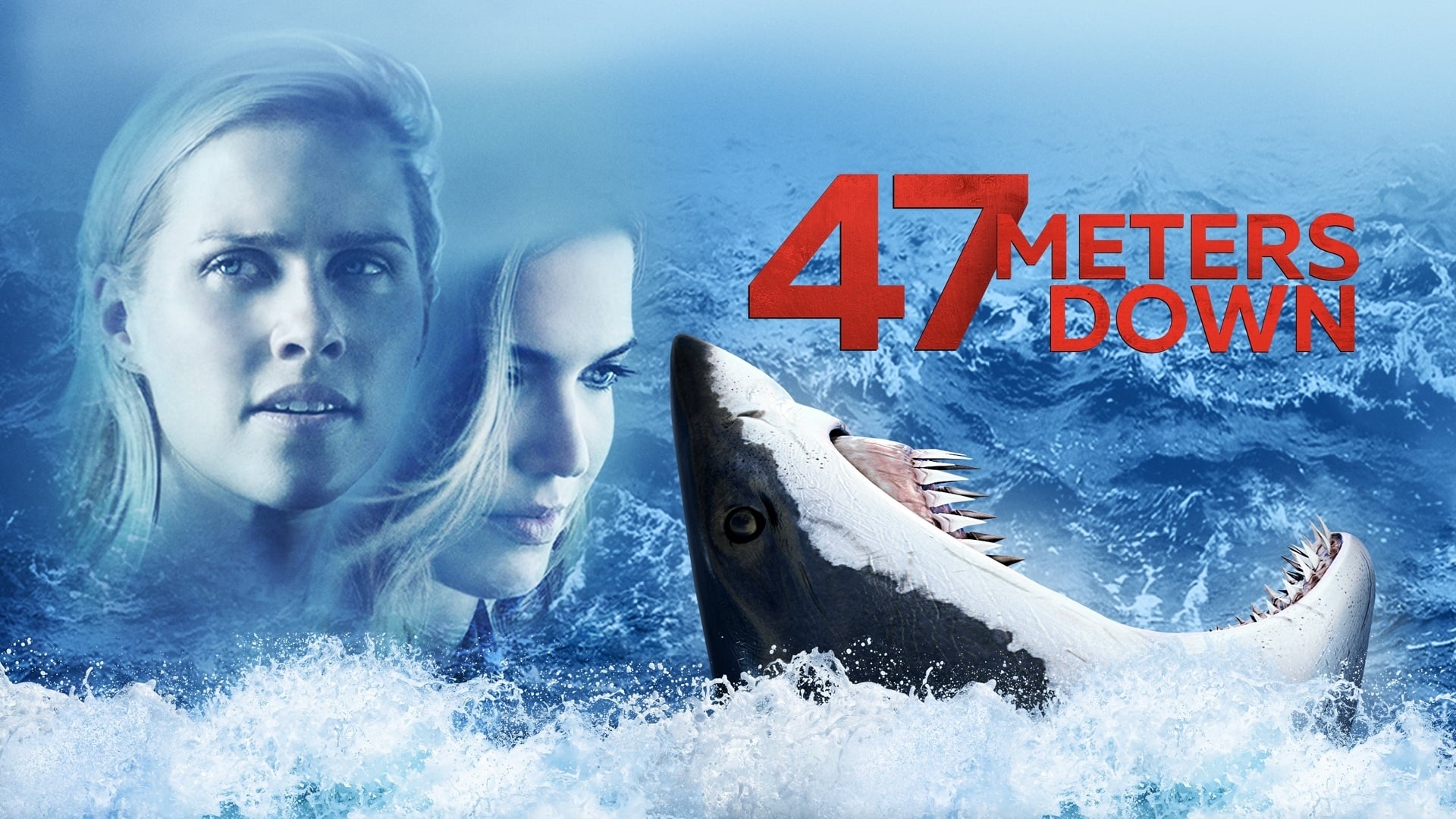
47 Meters Down is a 2017 survival horror-thriller film directed by Johannes Roberts, following two sisters trapped in a shark cage at the bottom of the ocean. The movie relies heavily on claustrophobic tension, underwater logistics, and physiological limitations to drive its narrative suspense rather than relying solely on traditional monster-movie tropes.
Introduction to the Survival Subgenre
The survival thriller genre relies on placing everyday characters into extreme, inescapable environments where every resource—such as oxygen, time, and physical endurance—diminishes rapidly. 47 Meters Down (released in the United States by Entertainment Studios) capitalizes on this formula by anchoring its narrative to the terrifying depths of the Mexican ocean floor. Directed by Johannes Roberts and co-written by Roberts and Ernest Riera, the film stars Claire Holt and Mandy Moore as Lisa and Kate, two sisters vacationing in Mexico who agree to go cage diving to view great white sharks.
What begins as a tourist excursion turns into a catastrophic ordeal when the winch cable holding the metal cage snaps, plunging the structure 47 meters (approximately 154 feet) down to the ocean floor. To understand the film's enduring appeal, one must examine not only its box office performance and narrative structure, but also the technical realities of deep-water diving, the psychological dimensions of nitrogen narcosis, and the filmmaking techniques required to simulate an underwater environment on a controlled soundstage.
Plot Overview and Narrative Progression
The narrative trajectory of 47 Meters Down is intentionally linear and compressed, mimicking the rapidly dwindling time window dictated by the characters' oxygen supply. The story establishes the dynamic between the cautious Lisa, who has recently experienced a painful breakup, and her adventurous sister Kate, who pushes Lisa to step out of her comfort zone. Seeking a thrill, they meet two local men (Louis and Javier) who convince them to hire Captain Taylor (played by Matthew Modine) for an unauthorized, cage-diving excursion off the coast.
The Descent and Catalyst
Upon reaching the dive site, Captain Taylor utilizes a rusted, older vessel and a visibly worn-down winch system. Lisa, initially terrified, is persuaded to enter the steel cage alongside Kate. Lowered into the water, they experience the thrill of observing great white sharks circling the perimeter. However, the structural integrity of the apparatus fails. The winch snaps under the sudden weight and stress of the environment, sending the cage plummeting through the water column until it impacts the sandy ocean floor at 47 meters depth.
Isolation and Communication Barriers
Once settled on the seabed, the immediate challenge is survival and communication. The cage is trapped beneath heavy debris, and the communications line connecting Captain Taylor to the divers via their full-face masks is damaged. Javier attempts a risky descent to hook a recovery line to the cage, leading to the film's first major set-piece involving shark predation. This leaves the sisters entirely on their own, forced to venture outside the relative safety of the broken cage to salvage a lost radio and manage their rapidly depleting air tanks.
Physiological Pressures and Technical Realities
While 47 Meters Down is a work of fiction designed to elicit terror, it incorporates several genuine physiological and physical phenomena associated with deep-sea diving. The depth of 47 meters places divers well within the realm of recreational diving limits (typically 40 meters / 130 feet for advanced recreational divers), pushing into technical diving territory where specialized gas mixtures, extensive training, and rigorous decompression schedules are mandatory.
Nitrogen Narcosis
At depths exceeding 30 meters, breathing compressed air can induce nitrogen narcosis, a reversible alteration in consciousness caused by the anesthetic effect of inert gases under high pressure. Colloquially known as "rapture of the deep," nitrogen narcosis mimics alcohol intoxication, leading to impaired judgment, euphoria, hallucinations, and confusion. In the film, Lisa experiences symptoms of nitrogen narcosis while outside the cage, leading to visual distortions and delayed cognitive function—a plot device that heightens the psychological horror by making it difficult for the protagonist to distinguish between reality and hallucinations caused by her oxygen-starved, nitrogen-addled brain.
Decompression Sickness and Air Depletion
Ascending too rapidly from a depth of 47 meters without proper decompression stops exposes a diver to decompression sickness (the "bends"), caused by nitrogen bubbles forming in the bloodstream and tissues. The film addresses the ticking-clock element of air consumption. Standard aluminum 80 scuba cylinders contain roughly 3,000 psi of compressed air, but at 47 meters, the ambient pressure is nearly six times greater than at sea level (roughly 5.7 atmospheres absolute), causing air to be consumed at an exponentially faster rate. Panic, exertion, and hyperventilation further accelerate depletion, grounding the film's central tension in verifiable physical science.
| Diving Factor | At Sea Level (1 atm) | At 47 Meters (5.7 atm) | Physiological / Operational Impact |
|---|---|---|---|
| Ambient Pressure | 1.0 Bar / ATA | ~5.7 Bars / ATA | Compresses air spaces; increases gas density and uptake. |
| Air Consumption Rate | Baseline ($X$) | $\sim 5.7 \times X$ | Scuba tanks deplete nearly six times faster than at the surface. |
| Nitrogen Narcosis Risk | Negligible | High | Impairs cognitive function, decision-making, and sensory perception. |
| Decompression Requirement | None | Mandatory | Rapid unassisted ascent risks fatal gas embolism or the bends. |
Production, Filming, and Visual Effects
Creating a feature-length film set almost entirely underwater presents extraordinary technical hurdles for actors, directors, and cinematographers. Principal photography for 47 Meters Down took place primarily inside specialized water tanks in the United Kingdom and the Dominican Republic, rather than open-ocean deep-sea locations.
Working in Wet-Stage Environments
To achieve the appearance of deep ocean waters—characterized by dim visibility, particulate suspension, and eerie blue-green tones—the production utilized large water tanks equipped with controlled lighting rigs and bluescreens. Actors Mandy Moore and Claire Holt underwent extensive scuba diving training prior to filming. They spent weeks performing complex stunt choreography underwater while wearing heavy diving gear, communicating via specialized underwater speaker systems, and managing real physical constraints such as cold water temperatures and the sensation of water pressure.
The Mechanics of Underwater Suspense
Director Johannes Roberts utilized lighting, shadow, and restricted field-of-view to simulate the terror of the deep. By confining the primary action to a rusted cage and murky surrounding waters, the cinematography restricts what the audience can see, leveraging human primal fear of the unknown. The sharks—depicted as apex predators operating within their natural, dominant domain—were rendered using a combination of animatronics and computer-generated imagery (CGI) to maintain tactile physical interactions between the actors and the digital creatures.
Critical Reception and Commercial Performance
Released in the summer of 2017, 47 Meters Down defied the modest expectations often placed on independent shark thriller films. Distributed by Entertainment Studios, the film grossed over $62 million worldwide against a relatively low production budget, turning a substantial profit and demonstrating enduring public appetite for contained-environment survival cinema.
Critical Divide and Audience Engagement
Critics offered mixed reviews, praising the film's effective use of claustrophobia, pacing, and the performances of Moore and Holt, while occasionally critiquing familiar genre tropes and narrative predictability. However, horror and thriller audiences responded positively to the film's relentless focus on survival mechanics rather than excessive gore. The success of the original film led to a standalone sequel, 47 Meters Down: Uncaged (2019), which shifted the setting to an underwater labyrinth of Mayan ruins.
Frequently Asked Questions
Is 47 Meters Down based on a true story?
No, the film is entirely a work of fiction. While the scenario of a cage-diving accident involving great white sharks is plausible, the specific characters, plot events, and twist endings were created by writer-director Johannes Roberts and co-writer Ernest Riera.
How deep is 47 meters in feet, and why is that depth dangerous?
47 meters is approximately 154 feet. At this depth, recreational diving limits are exceeded, atmospheric pressure is nearly six times normal, compressed air is consumed rapidly, and divers face severe risks of nitrogen narcosis and decompression sickness if they ascend without proper protocols.
Did the actors actually dive in the open ocean with real sharks?
No. The actresses performed their roles in controlled, specialized water tanks using a mixture of practical sets, stunt doubles, animatronics, and digital effects. Live shark footage utilized in the background was captured by professional second-unit marine cinematographers.
What causes the twist ending in the film?
The film features a psychological twist involving severe nitrogen narcosis and hypoxia (oxygen deprivation). Lisa's oxygen-starved brain causes her to hallucinate a successful rescue and escape, only for reality to snap back when she realizes she is still trapped on the ocean floor as sharks close in.
Where was 47 Meters Down filmed?
Principal photography took place primarily on soundstages with massive indoor and outdoor water tanks located in the United Kingdom and the Dominican Republic.
Conclusion and Final Recommendation
47 Meters Down stands out as a tightly constructed survival thriller that leverages genuine physical and physiological constraints to elevate standard monster-movie tropes into an exercise in psychological endurance. For viewers interested in survival cinema, the film offers a masterclass in pacing, atmosphere, and confined-space tension. To fully appreciate the mechanics of the film, watch it with attention to the sound design and underwater cinematography, noting how effectively the production transforms a simple metal cage into a floating coffin.