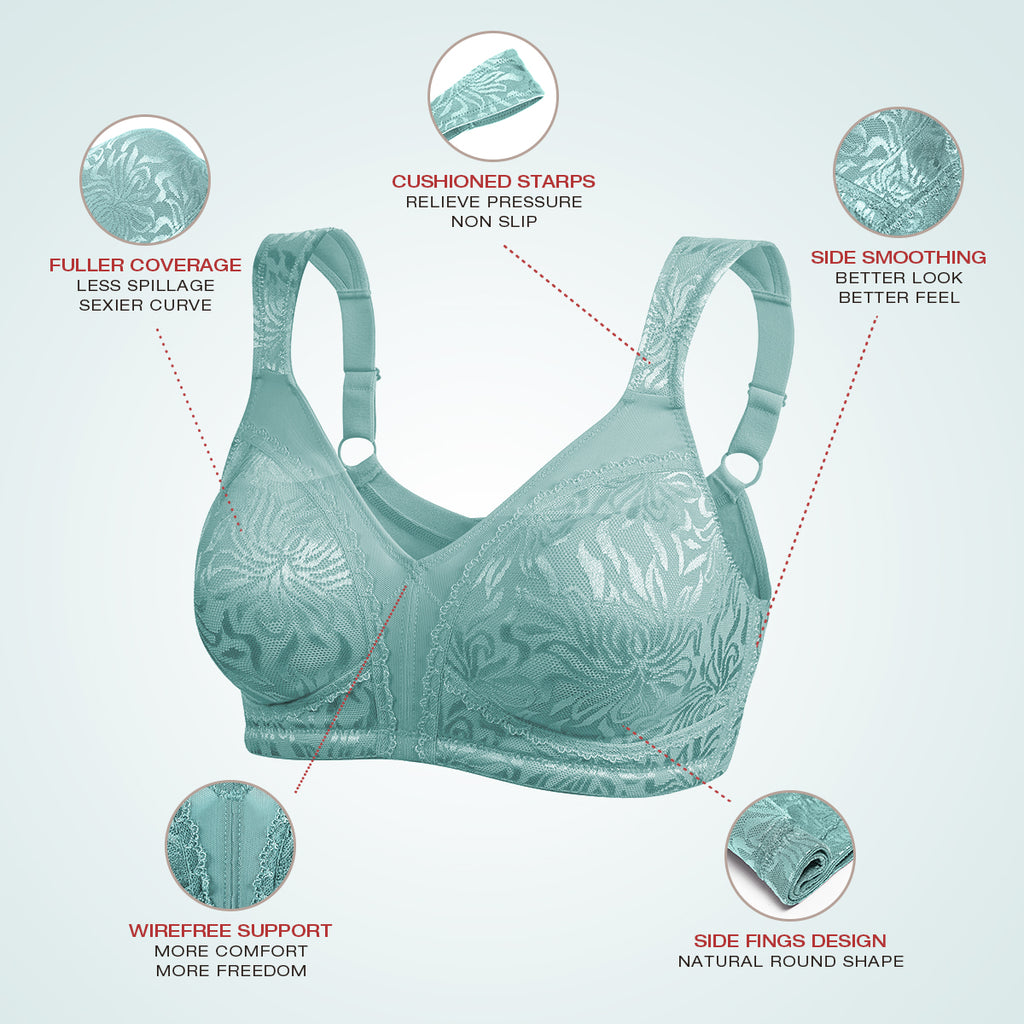
A 32DDD minimizer bra is a specialized undergarment engineered to reduce the forward projection of the bust by approximately one to one and a half inches. It achieves this by redistributing breast tissue across a wider surface area of the chest wall, rather than pushing it together or upward, providing a streamlined silhouette for specific clothing styles.
Defining the 32DDD Profile
To understand how a minimizer works for a 32DDD, one must first understand the specific geometry of this size. In the standard US sizing system used in 2026, a 32 band indicates a ribcage measurement of approximately 30 to 32 inches. The "DDD" cup (often interchangeable with an "E" cup in UK sizing) signifies a six-inch difference between the underbust and the fullest part of the bust.
For a person wearing a 32DDD, the breast volume is significant relative to a narrow frame. This creates a high "projection ratio," where the breast tissue extends forward prominently. This can lead to specific wardrobe challenges, such as the "gapping" effect in button-down shirts or a top-heavy appearance in tailored professional wear. The 32DDD minimizer is designed specifically to manage this volume without the bulk of traditional padding.
The Engineering of a Minimizer: How It Works
The term "minimizer" is often misunderstood as a garment that simply flattens the chest through painful compression, similar to a sports bra or a binder. However, the mechanical function of a high-quality minimizer is far more sophisticated. It relies on spatial redistribution rather than sheer force.
The Shallow Cup Design
Standard bras are constructed with deep cups that encourage breast tissue to settle in a forward-facing, "projected" position. A minimizer uses a shallower, wider cup shape. By increasing the diameter of the cup and decreasing its depth, the bra encourages the tissue to spread toward the underarms and upward toward the collarbone. This "thins out" the profile of the breast when viewed from the side.
The Role of High-Tensile Fabrics
In 2026, fabric technology has advanced to allow for ultra-thin materials that possess incredible tensile strength. For a 32DDD, the fabric must be rigid enough to hold the weight of the tissue in a redistributed state without stretching out over the course of the day. Manufacturers typically use non-stretch simplex fabrics or high-denier power mesh. These materials ensure that once the tissue is moved toward the periphery of the chest, it stays there.
Wire Architecture
The underwire in a 32DDD minimizer is wider than the wire found in a standard balconette or plunge bra. This wider "U-shape" is essential because it encompasses the breast tissue that has been pushed toward the sides. If the wire were too narrow, it would sit on the breast tissue (causing discomfort) rather than framing the chest wall.
The Practical Benefits for 32DDD Wearers
Choosing a minimizer is usually a stylistic or functional decision rather than a comfort-driven one, though modern designs have bridged the gap between the two. For the 32DDD wearer, the benefits are specifically geared toward garment fit and body proportion.
Solving the "Button-Down" Dilemma
The most common reason for 32DDD individuals to seek a minimizer is to prevent buttons from pulling or popping on shirts and blazers. By reducing the circumference of the bust by an inch or more, the fabric of the shirt can lay flat against the torso. This creates a more professional, tailored look that is often difficult to achieve with standard full-coverage bras.
Creating Visual Balance
On a 32-inch frame, a DDD cup can sometimes overwhelm the silhouette, especially in loose-fitting knitwear or high-neck tops. A minimizer creates a more "athletic" or streamlined look. By spreading the tissue, it can also make the waist appear more defined, as the bust no longer casts a wide shadow over the midsection.
Reducing Bounce through Encapsulation
Because minimizers spread the tissue over a larger area and use firmer fabrics, they naturally provide a high degree of encapsulation. While not a replacement for a dedicated sports bra, many 32DDD wearers find that the reduced projection leads to less movement during daily activities like walking or commuting.
Comparing Minimizer Bras to Other Styles
It is important to distinguish the minimizer from other common styles found in the 32DDD size range. Each serves a different architectural purpose for the body.
| Feature | Minimizer Bra | Standard Full Coverage | Push-Up Bra |
|---|---|---|---|
| Primary Goal | Reduce forward projection | Support and natural shape | Lift and cleavage |
| Cup Depth | Shallow and wide | Medium to deep | Shallow with bottom padding |
| Tissue Direction | Outward toward underarms | Centered and forward | Upward and inward |
| Underwire Width | Very wide | Standard | Narrow to standard |
| Compression Level | Moderate/High | Low/Moderate | Low (Focus on lift) |
| Profile Impact | Reduces profile by 1–1.5" | Maintains natural profile | Increases upper-pole fullness |
Key Technical Features to Look for in a 32DDD Minimizer
When shopping for a 32DDD minimizer, not all designs are created equal. Because the 32 band is relatively small, the bra must work harder to provide leverage.
- The Center Gore: In a 32DDD, the center gore (the fabric between the cups) should be "high" and "tacked." This means it sits flat against the sternum. If the gore floats, the bra is not successfully redistributing the tissue; it is simply being pushed away from the body.
- Side Wings and Power Bands: Look for wide side wings (the part of the bra that goes under the arm). For a 32DDD, these wings should be reinforced with power mesh to prevent the tissue from "spilling" over the top of the bra once it has been moved to the side.
- Padded Straps: Because the tissue is being held in a wider configuration, there can be more tension on the straps. Padded, "comfort" straps help prevent the 32DDD weight from digging into the shoulders.
- Seamless vs. Seamed: Seamless molded minimizers offer the smoothest look under T-shirts. However, seamed minimizers often provide better "structural" minimizing because the seams act as anchors for the fabric.
Potential Drawbacks and Considerations
While the 32DDD minimizer is a tool for many, it is not without its limitations. Understanding these can help users decide when to wear one and when to opt for a different style.
The "Uni-boob" Effect
Lower-quality minimizers or those that rely too heavily on compression can sometimes create a "uni-boob" appearance, where the breasts lose their individual definition. This is why looking for a design with a clear center gore and structured cups is vital for maintaining an attractive shape while reducing volume.
Side-Profile Width
Since the breast tissue has to go somewhere, it goes to the sides. This can occasionally make the wearer feel "wider" when looking at themselves head-on. For those with a very narrow ribcage, this side-spread can sometimes lead to the arms rubbing against the breast tissue during movement.
Comfort Adjustments
Transitioning from a soft, stretchy lace bra to a firm-tissue minimizer can take time. The 32DDD wearer may feel a "firm" sensation against the chest wall. It is important to ensure the wires are not so wide that they poke into the armpit, a common issue in poorly scaled minimizers.
How to Verify the Fit of a 32DDD Minimizer
Finding the right fit in a minimizer is more technical than in a standard bra. Follow these steps to ensure the garment is working correctly:
- The Scoop and Swoop: After putting the bra on, lean forward and use your hand to pull all breast tissue from the underarm area into the cup. In a minimizer, this is essential to ensure the tissue is properly "spread" within the shallow cup.
- The Finger Test: You should be able to fit two fingers under the 32 band, but no more. If the band is too loose, the weight of the DDD cups will cause the bra to tilt forward, ruining the minimizing effect.
- The Profile Check: View yourself in a mirror from the side while wearing a fitted t-shirt. You should notice a visible decrease in how far the bust extends from the ribcage compared to a standard bra.
- Wire Placement: Ensure the underwire follows the natural crease of the breast. In a minimizer, the wire will sit further back toward the armpit than usual, but it should still be comfortable.
Frequently Asked Questions
Does a minimizer bra actually make you smaller?
A minimizer bra does not physically reduce the size or weight of the breast tissue. Instead, it changes the perceived volume by altering the shape. By moving tissue from the front to the sides and top, it reduces the circumference of the bust, making it easier to fit into smaller-sized garments or tailored clothing.
Can I wear a 32DDD minimizer every day?
Yes, you can wear a minimizer daily, provided it fits correctly. Modern 32DDD minimizers are designed with breathable fabrics and ergonomic wires. However, because they use firmer materials to achieve the minimizing effect, some users prefer to save them for professional or formal attire where a streamlined silhouette is required, opting for softer styles for lounging.
Will a minimizer make my 32DDD breasts look saggy?
A well-engineered minimizer should not make the breasts look saggy. While it reduces "perky" forward projection, it should still provide a lift to the "apex" of the breast. High-quality brands use internal slings or specific seaming to ensure the tissue is supported vertically while being compressed horizontally.
Is a 32DDD minimizer the same as a sports bra?
No. While both use compression, a sports bra is designed to limit movement in all directions (up, down, side-to-side) during high-impact activity. A minimizer is designed for aesthetics, focusing specifically on reducing forward projection while maintaining a shape suitable for everyday clothing. Sports bras often create a more "mashed" look that is less ideal for professional wardrobes.
How do I care for a high-tension minimizer?
To maintain the "minimizing" power of the 32DDD bra, you must protect the elasticity of the fabric. Always hand wash or use a delicate cycle in a mesh bag with cold water. Never put a minimizer in the dryer, as the heat will break down the elastane and power mesh fibers, causing the bra to lose its ability to redistribute tissue effectively.
Recommendation for 32DDD Wearers
If you find that your professional wardrobe is limited by your bust projection, or if you prefer a more streamlined, athletic silhouette, a 32DDD minimizer is a highly effective tool. When selecting one, prioritize brands that specialize in "full bust" or "fuller cup" engineering. Look for styles with molded, non-stretch cups if you want a seamless look under knits, or three-part seamed cups if you require maximum projection reduction. Always verify your 32-band size annually, as the effectiveness of the minimizing tech relies entirely on a firm, supportive band that stays parallel to the floor.