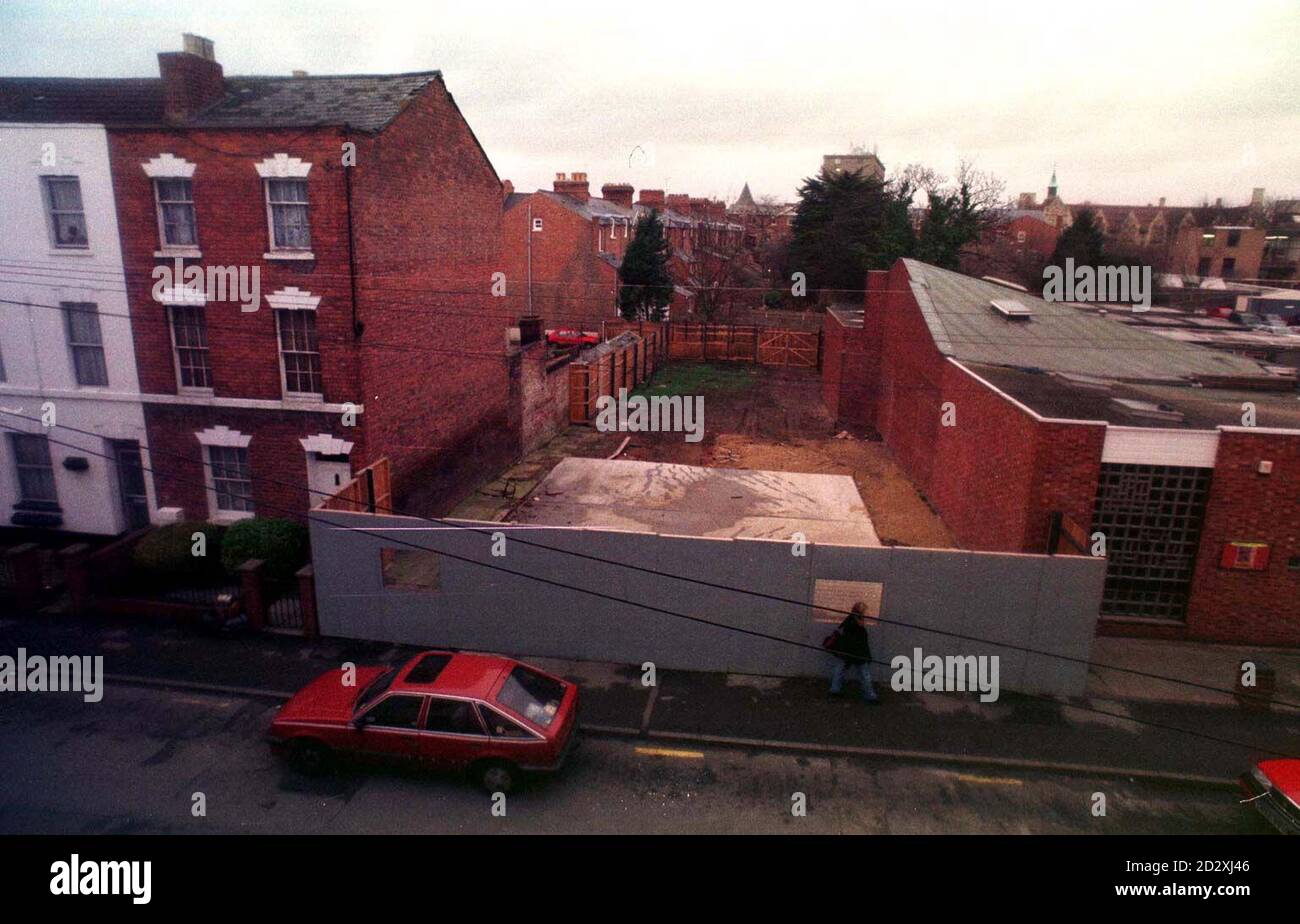
25 Cromwell Street was the former residence of serial killers Fred and Rosemary West in Gloucester, England. Between 1972 and 1994, the property was the site of numerous murders and served as a burial ground for several victims. The house was demolished in 1996 to prevent it from becoming a site of morbid curiosity, and today the land serves as a public pedestrian walkway.
The address 25 Cromwell Street remains one of the most notorious locations in British criminal history. While the physical structure no longer exists, the events that transpired there between the early 1970s and the mid-1990s fundamentally altered the landscape of UK forensic investigation and social services. To understand the significance of this location, one must look past the sensationalist headlines and examine the historical timeline, the forensic challenges of the site, and the eventual decision to erase the building from the map of Gloucester.
Historical Background of the Property
Originally built as a traditional Victorian terraced house, 25 Cromwell Street was located in a residential area of Gloucester. Like many houses of its era, it featured high ceilings, narrow hallways, and a basement. When Fred and Rosemary West moved into the property in 1972, it appeared to be a standard, albeit somewhat cluttered, family home.
Over the two decades of their occupancy, the house underwent significant internal modifications. Fred West, a laborer with experience in masonry and construction, frequently carried out "renovations" that served a dual purpose: expanding the living space for their large family (including children and lodgers) and creating hidden spaces. These modifications included the laying of thick concrete floors in the basement and the construction of extensions at the rear of the property. For years, these structural changes masked the grim reality that the house was being used to conceal the remains of young women, including members of the Wests' own family.
The house functioned as a boarding home at various times, with the Wests taking in lodgers. This high turnover of residents provided a degree of "social noise" that allowed disappearances to go unnoticed by the community and local authorities for an extended period.
The 1994 Investigation and Discovery
The investigation into 25 Cromwell Street did not begin as a serial murder inquiry. It started as a missing person case regarding Heather West, the couple’s eldest daughter, who had not been seen since 1987. The Wests had long maintained that Heather had moved away to work elsewhere, but by early 1994, Gloucestershire Constabulary obtained a search warrant based on renewed suspicions and inconsistencies in the family’s accounts.
The Initial Excavation
The search began in February 1994. Forensic teams initially focused on the garden, where they suspected Heather’s remains might be buried. On February 26, 1994, police discovered human remains that were later identified as Heather West. This discovery fundamentally changed the scope of the warrant, turning the family home into a massive crime scene.
Forensic Challenges
The forensic recovery at 25 Cromwell Street was one of the most complex in UK history. Because Fred West had frequently poured concrete and remodeled the cellar and garden, investigators had to use ground-penetrating radar and systematic excavation. The process was painstaking:
- Structural Support: Because the house was part of a terrace, investigators had to ensure that excavating the cellar did not cause the collapse of neighboring properties (numbers 23 and 27).
- Systematic Sifting: Every bucket of soil and debris removed from the house and garden was hand-sifted to ensure that small bones, teeth, or personal effects were not missed.
- DNA Identification: In 1994, DNA profiling was an emerging field. The identification of the victims required a massive effort to match remains with missing persons reports dating back to the late 1960s.
Victims Discovered at the Property
While the Wests were linked to murders at other locations (such as Letterbox Field and Much Marcle), 25 Cromwell Street was the primary site for the concealment of their victims during their two decades of residence. The following table outlines the individuals whose remains were recovered from the property:
| Victim Name | Age | Relationship/Context | Discovery Location |
|---|---|---|---|
| Heather West | 16 | Daughter of Fred and Rose | Garden/Patio area |
| Shirley Robinson | 18 | Former lodger | Garden |
| Alison Chambers | 16 | Missing person | Garden |
| Theresa Hall | 21 | Missing person | Under the cellar floor |
| Shirley Hubbard | 15 | Missing person | Under the cellar floor |
| Lucy Partington | 21 | Missing person | Under the cellar floor |
| Juanita Mott | 18 | Missing person | Under the cellar floor |
| Lynda Gough | 19 | Former lodger | Under the kitchen floor/Extension |
| Carole Ann Christensen | 20 | Missing person | Under the cellar floor |
The concentration of remains within the small footprint of the house and its yard earned the property the nickname "The House of Horrors" in the contemporary press.
The Demolition of 25 Cromwell Street
By 1996, following the suicide of Fred West in prison and the conviction of Rosemary West, the fate of the house became a matter of intense public debate. Gloucester City Council and the local community were faced with a dilemma: what to do with a building that had become a monument to trauma.
The decision was made to demolish the house entirely. This was not a standard demolition; it was a deliberate act of "erasure." The local government purchased the property to ensure that no private developer could profit from the site or turn it into a dark tourism attraction.
The Process of Erasure
In October 1996, contractors began the demolition. To prevent "souvenir hunting," several strict protocols were followed:
- Brick-by-Brick Destruction: Every brick and piece of timber was crushed or pulverized so that no part of the original structure could be salvaged or sold.
- Secure Disposal: The rubble was transported to an undisclosed location and buried in a way that prevented any future recovery.
- Privacy Screening: Scaffolding and heavy-duty plastic sheeting were erected around the site during the process to provide privacy for the victims' families and to shield the neighborhood from the spectacle.
The neighboring house, number 23, was also eventually purchased and significantly remodeled or partially cleared to facilitate the creation of a new public space.
The Site in 2026: Status and Current Use
As of 2026, 25 Cromwell Street no longer exists as an address or a building. The site has been transformed into a landscaped pedestrian link that connects Cromwell Street to St. Catherine Street.
The design of the area is intentionally minimalist. There is no plaque, monument, or official memorial to the Wests' victims at the site. This was a conscious decision made in consultation with the victims' families and the residents of Gloucester to prevent the location from remaining a focal point for the "true crime" community. Instead, the path is lined with simple paving and shrubbery, serving as a quiet thoroughfare for local residents.
For those visiting the area in 2026, the only indication of the site's history is the gap in the Victorian terrace. The street itself remains a quiet residential area, though the shadow of the 1994 investigation still lingers in the historical memory of the city.
Impact on Criminal Justice and Social Policy
The events at 25 Cromwell Street led to significant changes in how the UK handles long-term missing persons cases and child protection.
- Multi-Agency Cooperation: The failure to identify the disappearances of the West children and lodgers highlighted gaps in communication between schools, social services, and the police. This contributed to the development of more robust safeguarding protocols.
- Forensic Advancements: The techniques used to excavate the site and identify the victims became a case study for forensic archaeology. It demonstrated the importance of involving archaeologists and geologists in crime scene investigations involving buried remains.
- Victim Support: The scale of the tragedy required a new approach to supporting the families of victims who had been missing for decades. It helped shape the modern "Family Liaison Officer" (FLO) role within British policing.
Frequently Asked Questions
Can I visit 25 Cromwell Street today?
The physical house at 25 Cromwell Street was demolished in 1996. You can visit the location where it once stood, which is now a public pedestrian walkway between Cromwell Street and St. Catherine Street in Gloucester. There is no building or museum at the site.
Why wasn't a memorial built at the site?
The decision not to build an official memorial was made to respect the privacy of the victims' families and the local residents. It was feared that a memorial would attract "dark tourists" and prevent the neighborhood from moving on from the tragedy. The goal was to return the land to a functional, neutral state.
What happened to the neighboring houses?
The houses on either side of number 25 remained, although number 23 was also acquired by the council during the redevelopment process. Great care was taken during the demolition of number 25 to ensure the structural integrity of the remaining terrace houses.
Were all the victims found at 25 Cromwell Street?
No. While nine victims were recovered from the property, other victims were found elsewhere. Fred West's first wife, Catherine "Rena" West, and his daughter, Charmaine, were found at a previous residence in Midland Road and at a field in Much Marcle.
Is Rose West still in prison in 2026?
Rosemary West was sentenced to life imprisonment in 1995 with a whole-life order, meaning she was never to be considered for parole. As of 2026, unless there has been a significant change in her health or status reported by the Ministry of Justice, she remains incarcerated. Fred West took his own life in HM Prison Birmingham in January 1995 before his trial.
Final Recommendations for Researchers
For those researching the history of 25 Cromwell Street, it is recommended to consult official police archives and reputable historical accounts rather than sensationalized media. The Gloucester City Council archives provide the most accurate information regarding the demolition and subsequent landscaping of the site.
If you are a student of forensics or criminal justice, the case serves as a primary example of "no-body" murder investigations turning into major forensic recoveries. It emphasizes the necessity of patience and systematic methodology in domestic crime scenes where the perpetrator has had years to alter the physical environment.