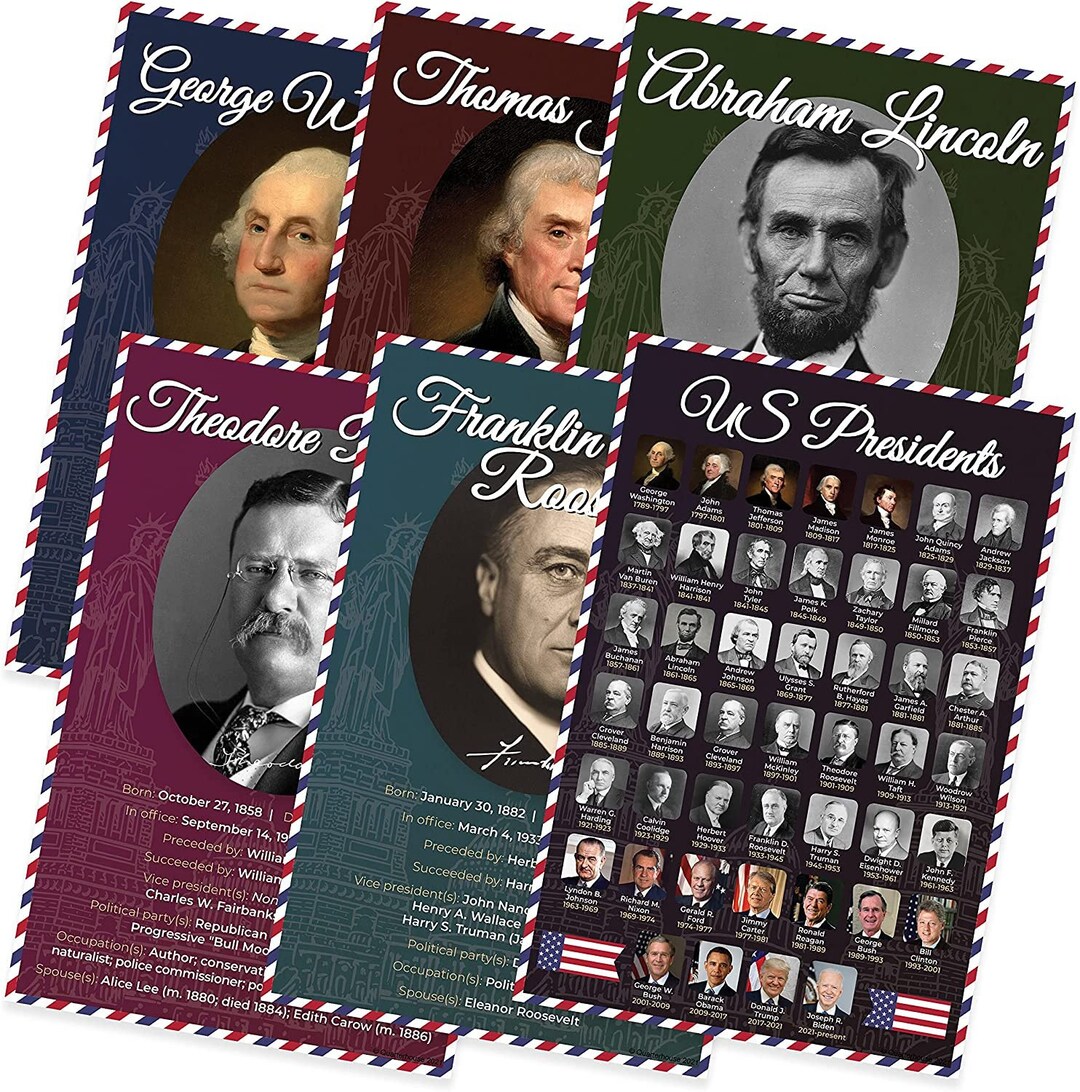
Assessing the 10 most influential presidents in history requires examining how transformative chief executives altered the trajectory of the United States, expanded the powers of the executive branch, and navigated profound national crises. Historians, political scientists, and biographers consistently evaluate presidential greatness through criteria such as crisis leadership, legislative skill, economic stewardship, moral vision, and enduring institutional legacy. While presidential ranking polls—such as those conducted by the American Political Science Association (APSA) and C-SPAN—exhibit slight variations over time, a clear consensus emerges regarding the leaders whose actions permanently reshaped American governance and global history.
Understanding presidential influence demands looking beyond popularity or political party affiliations to measure structural permanence. The most impactful presidents did not merely manage the status quo during periods of relative stability; they seized critical historical inflection points to redefine constitutional boundaries, forge new political coalitions, and steer the nation through existential threats like the Civil War, the Great Depression, and global conflicts.
1. Abraham Lincoln (16th President, 1861–1865)
Abraham Lincoln occupies the summit of presidential influence due to his leadership during the American Civil War, the preservation of the Union, and the abolition of chattel slavery. Taking office as the nation fractured, Lincoln leveraged extraordinary rhetorical skill and pragmatic political maneuvering to rally a divided North.
His issuance of the Emancipation Proclamation in 1863 fundamentally transformed the character of the war, shifting the objective from merely restoring the Union to a moral crusade for human freedom. Lincoln pushed the limits of executive authority, suspending habeas corpus and issuing military orders that expanded the wartime powers of the presidency. His Gettysburg Address redefined the American democratic experiment, framing the struggle as a rebirth of freedom. Assassinated just as the war ended, Lincoln's martyrdom cemented his legacy as the savior of the American republic.
2. George Washington (1st President, 1789–1797)
As the foundational executive, George Washington established the institutional precedents, cultural norms, and operational boundaries of the American presidency. Because the United States Constitution left the daily mechanics of the executive branch largely undefined, Washington's actions determined whether the office would resemble an elected monarchy or a constitutional administrator.
Washington created the first presidential Cabinet, demonstrated the supremacy of federal law during the Whiskey Rebellion, and established a foreign policy of neutrality regarding European conflicts. His most influential act, however, was his voluntary relinquishment of power after two terms. By stepping down in 1797, Washington ensured the peaceful transfer of power—a bedrock principle of American democracy that prevented the presidency from devolving into lifelong authoritarian rule.
3. Franklin D. Roosevelt (32nd President, 1933–1945)
Franklin D. Roosevelt is the defining figure of the modern American administrative state, having led the nation through its two greatest mid-20th-century crises: the Great Depression and World War II. Elected to an unprecedented four terms, FDR fundamentally altered the social contract between citizens and the federal government.
Through his New Deal legislative program, Roosevelt created sweeping federal safety nets, including Social Security, federal labor protections, and financial regulatory bodies like the Securities and Exchange Commission. Economically and politically, he redefined liberalism and expanded the regulatory scope of the federal government. During World War II, FDR mobilized the American economy into an industrial powerhouse, transformed the nation into the "Arsenal of Democracy," and laid the architectural groundwork for the post-war international order through the creation of the United Nations.
4. Thomas Jefferson (3rd President, 1801–1809)
Thomas Jefferson's profound influence stems both from his authorship of the Declaration of Independence and his transformative executive actions, most notably the Louisiana Purchase of 1803. By acquiring 828,000 square miles of territory from France for $15 million, Jefferson doubled the geographic size of the United States and secured control of the Mississippi River, fundamentally altering the nation's geopolitical future.
Despite his strict constructionist interpretation of the Constitution—which created a philosophical dilemma regarding whether the document permitted the purchase of foreign territory—Jefferson's pragmatic expansionism set a precedent for broad presidential authority in matters of national interest and continental empire-building.
5. Theodore Roosevelt (26th President, 1901–1909)
Theodore Roosevelt modernized the presidency by transforming the office into a "bully pulpit" for progressive reform and public advocacy. Assuming office after the assassination of William McKinley, TR shifted the balance of power between labor and corporate monopolies.
Roosevelt championed his "Square Deal" domestic policies, which involved aggressively prosecuting corporate trusts under the Sherman Antitrust Act, regulating railroad rates, and supporting organized labor during the 1902 coal strike. Furthermore, his ardent conservationism permanently preserved roughly 230 million acres of public land, establishing national parks, forests, and monuments. Globally, his "Big Stick" diplomacy and the construction of the Panama Canal projected American power across the Western Hemisphere.
6. Harry S. Truman (33rd President, 1945–1953)
Thrust into the presidency amid the closing months of World War II, Harry S. Truman made some of the most consequential and controversial decisions in modern history. He authorized the atomic bombings of Hiroshima and Nagasaki to accelerate the end of the war, permanently altering global military strategy and ushering in the nuclear age.
In the post-war era, Truman architected the containment strategy of the Cold War. Through the Truman Doctrine, the Marshall Plan, and the formation of NATO, he established a multilateral foreign policy framework that anchored American global leadership for decades. Domestically, Truman integrated the United States Armed Forces by executive order in 1948 and fought to defend New Deal programs under his "Fair Deal" platform.
7. Dwight D. Eisenhower (34th President, 1953–2001)
Dwight D. Eisenhower brought steady, pragmatic leadership to the White House during the height of Cold War tensions. Operating under his "New Look" national security strategy, Eisenhower relied on nuclear deterrence and covert operations to manage Soviet expansion while reining in military expenditures.
Eisenhower successfully ended the Korean War, managed the Suez Crisis, and established the Interstate Highway System in 1956—the largest public works project in American history, which revolutionized domestic commerce, suburbanization, and civil defense logistics. Additionally, despite his personal reluctance, Eisenhower enforced federal law during the desegregation crisis at Central High School in Little Rock, Arkansas, deploying federal troops to protect Black students.
8. James Polk (11th President, 1845–1849)
James K. Polk remains the most effective single-term president in terms of achieving a specific, pre-stated agenda. Elected on an expansionist platform, Polk promised to fulfill Manifest Destiny by acquiring Oregon, California, and the intervening territories.
Through skilled diplomacy with Great Britain, Polk resolved the Oregon boundary dispute at the 49th parallel. Subsequently, his expansionist policies provoked the Mexican-American War, resulting in the Treaty of Guadalupe Hidalgo. This treaty ceded vast territories—including modern-day California, Nevada, Utah, Arizona, and parts of New Mexico, Colorado, and Wyoming—to the United States. While his actions exacerbated sectional tensions over slavery that ultimately led to the Civil War, Polk permanently secured the continental footprint of the nation.
9. Ronald Reagan (40th President, 1981–1989)
Ronald Reagan reshaped the American political landscape by revitalizing the conservative movement and orchestrating a major realignment in domestic and foreign policy. His economic program, commonly termed "Reaganomics," emphasized tax cuts, deregulation, and a reduction in the growth of domestic government spending, sparking a prolonged economic expansion during the 1980s.
On the world stage, Reagan's assertive rhetoric and defense build-up applied intense pressure on the Soviet Union. Through strategic negotiations with Soviet General Secretary Mikhail Gorbachev, Reagan contributed significantly to the thawing of Cold War tensions, setting the stage for the collapse of the Soviet bloc.
10. Woodrow Wilson (28th President, 1913–1921)
Woodrow Wilson combined progressive domestic reform with ambitious international idealism. During his first term, Wilson oversaw the passage of sweeping legislation, including the Underwood-Simmons Tariff, the creation of the Federal Reserve System to stabilize the banking sector, and the establishment of the Federal Trade Commission to curb unfair business practices.
During World War I, Wilson mobilized the nation and subsequently sought to construct a durable international peace based on his "Fourteen Points." Although the United States Senate ultimately rejected American entry into the League of Nations—Wilson's signature diplomatic achievement—his internationalist vision permanently altered foreign policy discourse, laying the intellectual foundation for the United Nations and modern global diplomacy.
Comparative Overview of Top Historical Presidents
| President | Term in Office | Political Party | Primary Historical Contribution | Defining Achievement |
|---|---|---|---|---|
| Abraham Lincoln | 1861–1865 | Republican | Preserving the Union, ending slavery | Emancipation Proclamation & Gettysburg Address |
| George Washington | 1789–1797 | Unaffiliated | Establishing executive precedents | Peaceful transfer of power & Cabinet system |
| Franklin D. Roosevelt | 1933–1945 | Democratic | Expanding federal governance, WWII victory | The New Deal & Allied leadership in WWII |
| Thomas Jefferson | 1801–1809 | Democratic-Republican | Territorial expansion | The Louisiana Purchase (1803) |
| Theodore Roosevelt | 1901–1909 | Republican | Progressive reform, conservation | Trust-busting & National Parks system |
| Harry S. Truman | 1945–1953 | Democratic | Cold War containment, post-war order | Marshall Plan & NATO establishment |
| Dwight D. Eisenhower | 1953–1961 | Republican | Infrastructure, Cold War stability | Interstate Highway System |
| James Polk | 1845–1849 | Democratic | Territorial fulfillment of Manifest Destiny | Mexican-American War & Oregon settlement |
| Ronald Reagan | 1980–1989 | Republican | Conservative political realignment | Economic deregulation & Cold War diplomacy |
| Woodrow Wilson | 1913–1921 | Democratic | Progressive legislation, internationalism | Federal Reserve Act & League of Nations vision |
Frequently Asked Questions
How do historians determine presidential rankings?
Historians and political scientists utilize structured surveys that evaluate presidents across multiple competency categories, including crisis leadership, economic management, moral authority, administrative skills, and relations with Congress. These assessments are periodically updated to reflect evolving historical perspectives and contemporary social values.
Did any modern presidents rank in the top ten?
Yes, Franklin D. Roosevelt, Harry S. Truman, Dwight D. Eisenhower, and Ronald Reagan frequently secure positions within the top ten in scholarly surveys due to their profound impacts on the domestic economy, regulatory state, and global affairs during the 20th century.
Why do rankings for specific presidents change over time?
Historical reputations fluctuate as new archival evidence emerges, social values shift, and the long-term consequences of a president's policies become clearer. For instance, mid-century evaluations often penalized presidents for civil rights failures, whereas modern scholarship places much greater weight on racial equality and human rights.
What distinguishes an influential president from a popular one?
Influence measures structural permanence and systemic change, whereas popularity often reflects short-term public approval during a specific term. A president can maintain low approval ratings while enacting policies that fundamentally transform American governance, such as Harry Truman or Abraham Lincoln during wartime.
Why is George Washington consistently ranked near the top?
Washington occupies a premier tier because he accepted the presidency with immense reluctance and systematically defined what the office could and should do. By prioritizing constitutional norms over personal aggrandizement and stepping down after two terms, he successfully prevented the nascent American republic from fracturing into tyranny.
Next Actions and Further Reading
For readers interested in deepening their understanding of presidential history, examining primary source documents—such as Washington's Farewell Address, Lincoln's second inaugural speech, and Franklin D. Roosevelt's First Inaugural Address—provides direct insight into their governance philosophies. Academic studies published by organizations like the American Political Science Association offer granular methodological breakdowns of how modern executive rankings are calculated.