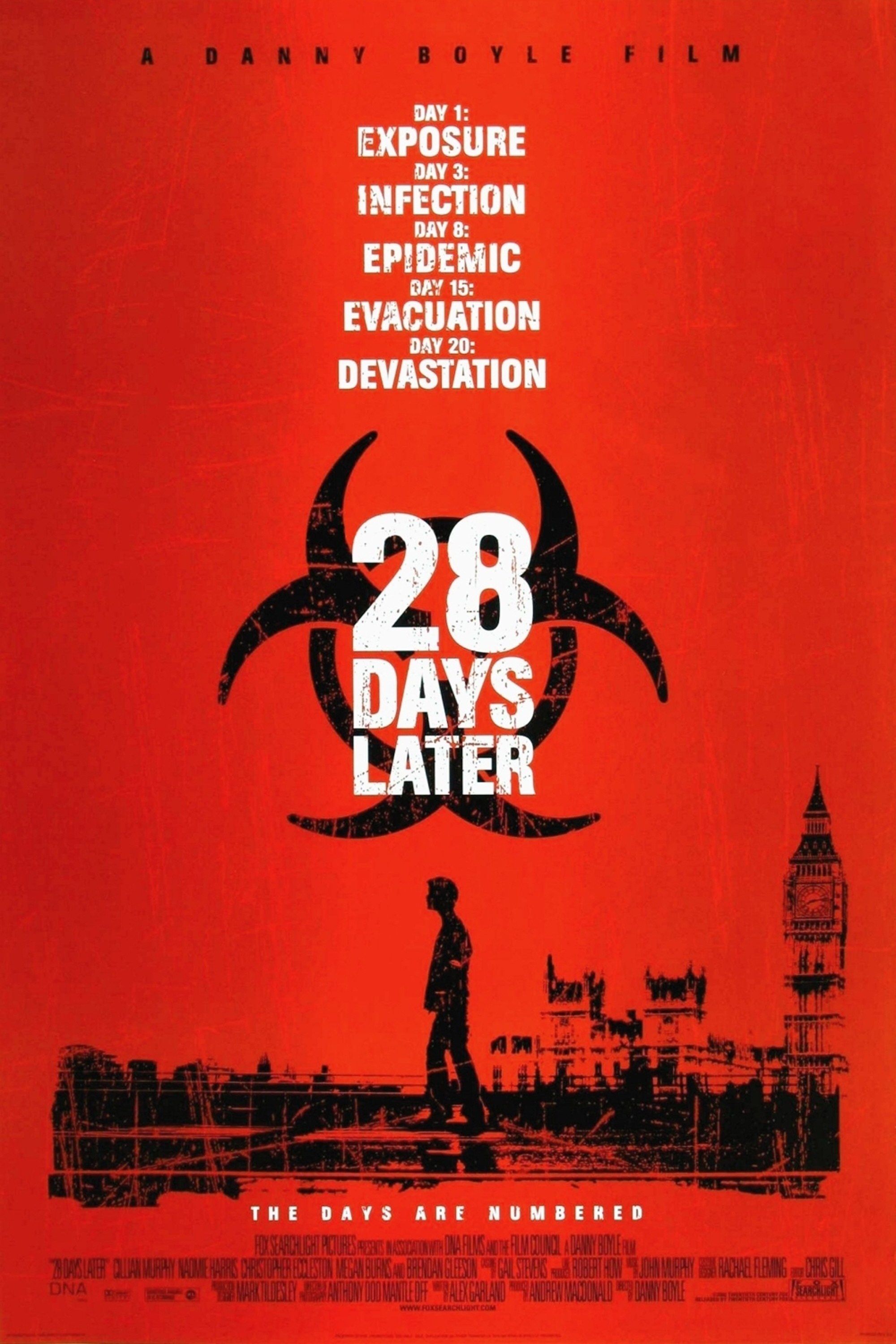
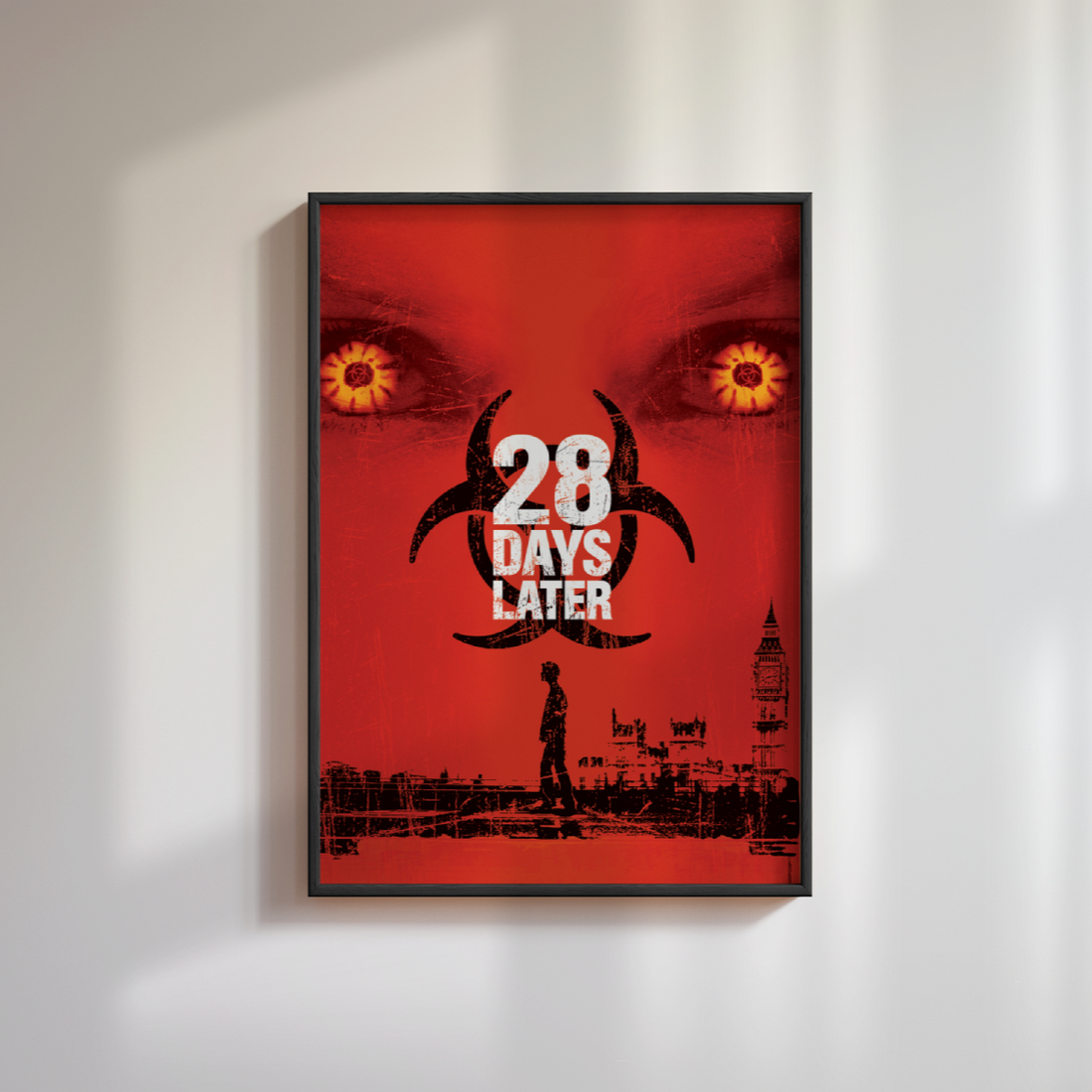
28 Days Later is a seminal 2002 post-apocalyptic horror film directed by Danny Boyle and written by Alex Garland. It follows Jim, a bicycle courier who wakes from a coma to find London decimated by a highly contagious "Rage Virus" that turns humans into aggressive killers, effectively reinventing the modern zombie genre.
The film is widely credited with revitalizing the horror genre in the early 21st century. By introducing "fast zombies"—though technically living humans infected with a virus—Boyle and Garland shifted the pace of post-apocalyptic storytelling from the slow, dread-filled crawl of the George A. Romero era to a high-octane, visceral nightmare. As we look back from 2026, the film’s influence remains palpable, not only in cinema but across television and gaming, serving as the primary DNA for massive franchises like The Walking Dead and The Last of Us.
The Genesis of the Rage Virus: Production and Vision
The development of 28 Days Later was born out of a desire to create a "socially relevant" horror film that felt grounded in reality. Alex Garland, then primarily known as a novelist (The Beach), was inspired by the biological scares of the late 1990s, including outbreaks of Ebola and the UK’s own foot-and-mouth disease crisis. The result was the "Rage Virus," a pathogen transmitted via blood or saliva that takes effect within seconds, stripping the host of all higher cognitive function and leaving only pure, homicidal aggression.
Danny Boyle, fresh off the success of Trainspotting but looking for a stylistic departure, chose to shoot the film in a way that would reflect the chaos of its subject matter. The decision to use the Canon XL-1 digital video camera was revolutionary at the time. While most feature films were still being shot on 35mm film, Boyle and cinematographer Anthony Dod Mantle opted for the lower-resolution, handheld digital format.
The Impact of Digital Cinematography
The choice of the Canon XL-1 was not merely a budget-saving measure; it was a technical necessity driven by the production's most ambitious sequence: the empty streets of London. To capture the haunting images of a deserted Westminster Bridge and Piccadilly Circus, the crew had only minutes each morning before the city’s traffic was unleashed. The lightweight, portable nature of the digital cameras allowed them to set up multiple angles rapidly, capturing the "ghost town" aesthetic that would have been impossible with bulky film equipment.
Furthermore, the digital "noise" and smeary motion of early digital video lent the film a documentary-like grit. It felt immediate, ugly, and terrifyingly real, contrasting sharply with the polished, high-gloss horror films typical of the late 90s. This aesthetic became a hallmark of the "found footage" and "shaky cam" movements that would dominate the next decade of horror.
Narrative Structure: From Isolation to Totalitarianism
The film is structured into three distinct acts, each exploring a different facet of societal collapse and the human condition under duress.
Act I: The Awakening and Urban Desolation
The first act is perhaps the most iconic, beginning with Jim (Cillian Murphy) waking up in a deserted hospital. This "blank slate" protagonist allows the audience to experience the shock of the apocalypse alongside him. The mastery of this segment lies in its silence. The absence of sound in a metropolis like London creates a sense of profound existential dread. Jim’s eventual meeting with Selena (Naomie Harris) and Mark introduces the "rules" of this new world: "It’s always the same. They’re coming, and you run."
Act II: The Search for Hope
The second act introduces a sense of family and normalcy with the inclusion of Frank (Brendan Gleeson) and his daughter Hannah (Megan Burns). This middle section shifts the film from a survival horror into a road movie. As the group travels north toward a supposed military broadcast promising salvation, the film explores the importance of human connection. The chemistry between the four leads provides the emotional stakes necessary for the tragedy that follows.
Act III: The Man is the Monster
The final act takes a dark turn when the survivors reach a military blockade led by Major Henry West (Christopher Eccleston). Here, Garland’s script moves away from the threat of the Infected and toward the threat of man. The soldiers, driven to madness by isolation and the loss of the future, attempt to establish a horrific new social order based on reproductive slavery. This transition reinforces the film’s central theme: that the "Rage" is not just a virus in a vial, but a fundamental part of the human psyche that emerges once the guardrails of civilization are removed.
Technical Specifications and Casting
28 Days Later was produced on a relatively modest budget of approximately $8 million, but it went on to gross over $82 million worldwide. Its success was bolstered by a cast that, at the time, featured relatively unknown actors who would soon become international stars.
| Feature | Specification / Detail |
|---|---|
| Director | Danny Boyle |
| Writer | Alex Garland |
| Primary Cast | Cillian Murphy, Naomie Harris, Brendan Gleeson, Christopher Eccleston |
| Cinematography | Anthony Dod Mantle (Shot on Canon XL-1) |
| Music | John Murphy (Score: "In the House - In a Heartbeat") |
| Release Date | November 1, 2002 (UK) / June 27, 2003 (US) |
| Running Time | 113 Minutes |
| Budget | Approx. $8 Million |
| Genre | Post-Apocalyptic / Horror / Thriller |
The Musical Score: A Heartbeat of Dread
No discussion of 28 Days Later is complete without mentioning John Murphy’s score. The track "In the House - In a Heartbeat" has become one of the most recognizable pieces of music in cinema history. Characterized by a relentless, escalating tempo and a distorted guitar riff, the track perfectly mirrors the frantic, unstoppable nature of the Rage Virus. It has been reused in countless trailers, sequels, and other media, serving as a shorthand for rising tension and impending doom.
The Extended "28" Franchise (2026 Perspective)
As of 2026, the 28 Days Later franchise has evolved into a trilogy that spans decades of in-universe history. Understanding the timeline is essential for new viewers and returning fans alike.
28 Weeks Later (2007)
Directed by Juan Carlos Fresnadillo, the sequel expanded the scope of the virus to an international level. It focused on the US military's efforts to repatriate Britain and the subsequent catastrophic failure of "District One" in London. While it leaned more into action-horror, it maintained the original's bleak outlook.
28 Years Later (2025/2026)
After years of development hell, the long-awaited third installment, 28 Years Later, finally arrived in theaters (released in 2025). Directed once again by Danny Boyle and written by Alex Garland, this film serves as a direct narrative evolution of the original themes. It explores a world that has "settled" into the apocalypse, looking at how generations born after the collapse view the world before the Rage. This revival has sparked a renewed interest in the 2002 original, cementing its status as a timeless classic.
Scientific and Philosophical Themes
The "Rage Virus" differs from traditional zombies in several key ways that invite deeper analysis:
- Metabolic Constraints: Unlike the undead, the Infected in 28 Days Later can die of starvation. This was a critical plot point in the first film, suggesting that if survivors could simply hide long enough, the initial wave of the infected would eventually expire.
- Psychological Transmission: The virus is described as "Rage" in a literal sense. It is the amplification of the most violent human impulses. This makes the virus a metaphor for the rapid spread of misinformation, anger, and societal polarization—themes that feel even more relevant in 2026 than they did in 2002.
- The Concept of "The End": The film asks whether a world worth living in can exist without the structures we take for granted. Selena’s cold pragmatism at the start of the film suggests that survival is the only goal, but Jim’s optimism and Frank’s paternal love argue that survival without humanity is no survival at all.
Common Mistakes and Misconceptions
When discussing or reviewing 28 Days Later, several common errors often arise:
- "It’s a Zombie Movie": Purists often argue that it is not a zombie movie because the antagonists are not reanimated corpses. While technically correct (they are "Infected"), the film follows all the conventions of the zombie subgenre and is credited with its revival.
- The Ending: There are multiple endings to the film. The theatrical ending is optimistic (the "S-O-S" scene), but the DVD and later releases include a much darker alternate ending where Jim dies in the hospital, bringing his journey full circle.
- The Origin of the Virus: Some viewers forget the opening scene. The virus was not a natural mutation but a result of medical experimentation on chimpanzees involving "Inhibitors" to combat extreme rage, which backfired when animal rights activists released the subjects.
Troubleshooting Your Viewing Experience
If you are watching 28 Days Later for the first time in 2026, you may encounter some technical hurdles:
- Visual Quality: Because the film was shot on standard-definition digital video (MiniDV), it will never look "crisp" in 4K or 8K. Modern Blu-ray and 4K UHD releases have upscaled the footage, but the inherent grain and low resolution are intentional artistic choices. Do not mistake the low-fi look for a poor-quality transfer.
- Regional Differences: Depending on your streaming platform or physical disc, you may have access to the "Extended Ending" or the "Hospital Ending." Check the bonus features to see the original vision Garland had before test audiences requested a more hopeful conclusion.
Frequently Asked Questions
Is 28 Days Later based on a book?
No, 28 Days Later is an original screenplay by Alex Garland. However, Garland has acknowledged the influence of John Wyndham’s 1951 novel The Day of the Triffids, which also begins with a protagonist waking up in a silent London hospital after a global catastrophe.
Why are the zombies so fast in this movie?
The "zombies" are actually living humans infected with a virus that causes them to be in a permanent state of adrenaline-fueled rage. Unlike the undead, their muscles do not decay, allowing them to run, jump, and exert themselves with terrifying speed and strength.
Does Jim die at the end of 28 Days Later?
In the theatrical version, Jim survives. He is rescued from the military compound and recuperates in a cottage in the Lake District, where he, Selena, and Hannah signal a passing jet. In the "Director’s Cut" alternate ending, Jim dies from his gunshot wounds in a hospital, echoing the film's opening.
What is the difference between the Rage Virus and a standard zombie virus?
The Rage Virus has an incredibly short incubation period (10–20 seconds) and does not involve the death of the host. Standard zombie viruses (like those in Resident Evil) usually require the host to die and reanimate, a process that can take minutes or hours.
Where can I watch 28 Days Later in 2026?
Availability varies by region, but the film is commonly available on major streaming platforms like Disney+ (internationally) or Hulu (in the US) due to 20th Century Studios' ownership. It is also a staple of boutique physical media collections.
Is Cillian Murphy in the sequel?
Cillian Murphy did not appear in the 2007 sequel 28 Weeks Later. However, he returned to the franchise for the 2025/2026 production of 28 Years Later, reprising his role as Jim to bring a sense of closure to the character's journey.
Final Recommendation
For anyone interested in the evolution of modern horror, 28 Days Later is mandatory viewing. It is more than just a "zombie" film; it is a masterclass in atmospheric filmmaking and a poignant exploration of human nature. If you are a fan of The Last of Us or A Quiet Place, you owe it to yourself to see where the modern era of post-apocalyptic tension truly began. Watch it for the haunting imagery of a silent London, stay for the gut-wrenching performance by Naomie Harris, and appreciate the raw, digital grit that changed the face of cinema forever.