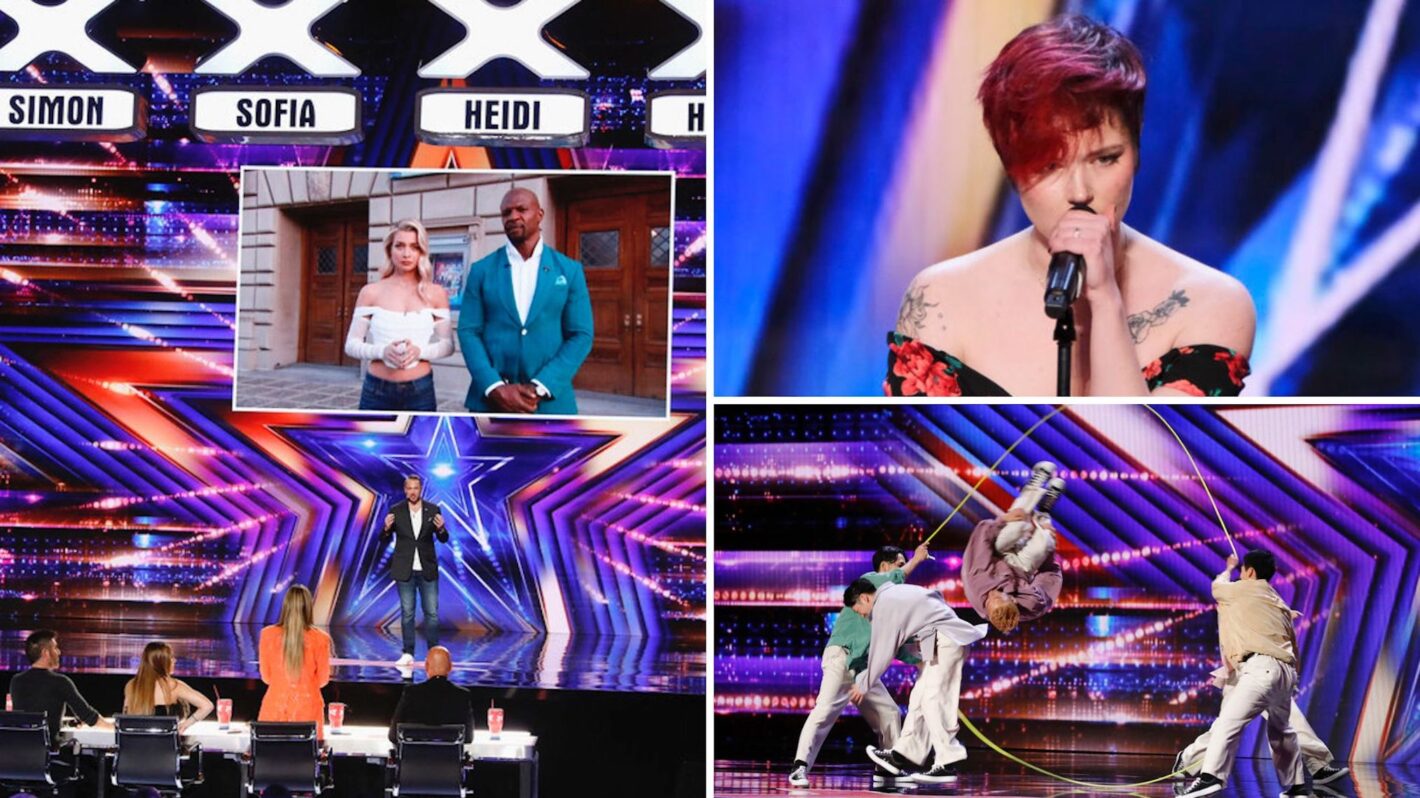
The 2018 season of America’s Got Talent (Season 13) was defined by visceral, high-stakes moments, most notably the near-fatal fall of Mary Wolfe-Nielsen during Duo Transcend’s trapeze act and the polarizing, high-energy transformation of 13-year-old Courtney Hadwin. These instances, alongside the horror-themed performances of The Sacred Riana and the eventual victory of magician Shin Lim, marked a definitive shift toward more dangerous and technically complex variety acts in the show's history.
The Gravity-Defying Terror of Duo Transcend’s Trapeze Accident
One of the most genuinely distressing moments in the history of the franchise occurred during the Judge Cuts round of Season 13. Duo Transcend, consisting of husband-and-wife duo Tyce Nielsen and Mary Wolfe-Nielsen, performed a high-altitude trapeze routine that pushed the boundaries of physical safety. The "shock" was not part of the choreography; it was a mechanical and physical failure that played out in real-time before a live audience and the panel of judges.
The Mechanics of the Fall
During their routine, Tyce, who suffers from Fuchs' dystrophy (a progressive eye disease that significantly impairs his vision), was performing a blindfolded catch. Mary was supposed to slide down his legs and be caught by her ankles. However, as she descended, Tyce’s grip failed. Mary plummeted approximately 15 to 20 feet to the stage floor, which was covered with a thin safety mat.
The immediate reaction from the judges—Simon Cowell, Heidi Klum, Mel B, and Howie Mandel—was one of visible horror. Host Tyra Banks rushed toward the stage as the audience gasped. The "shock" factor here was rooted in the reality of the stakes; unlike scripted television, the potential for a career-ending or life-altering injury was immediate.
The Recovery and Professionalism
Remarkably, Mary stood up almost immediately, demonstrating the resilience of professional acrobats. The couple actually requested to perform the stunt again immediately, a request the judges denied for safety reasons. This moment became a cornerstone of the 2018 season, highlighting the inherent risks of variety performances. Their ability to move past the trauma and eventually reach the finals demonstrated a level of grit that resonated with the voting public.
The Courtney Hadwin Phenomenon: The Audition That Divided an Audience
If Duo Transcend provided a physical shock, Courtney Hadwin provided a psychological one. When the 13-year-old from County Durham, England, walked onto the stage, she appeared painfully shy, barely able to speak to the judges. However, the moment the music for Otis Redding’s "Hard to Handle" (specifically the Black Crowes' arrangement) began, she underwent a metamorphosis.
The Contrast of Performance
Hadwin’s performance style was a frantic, high-energy homage to Janis Joplin and James Brown. The shock came from the sheer incongruity between her introverted persona and her explosive stage presence. Howie Mandel was so impressed that he pressed his Golden Buzzer, catapulting her straight to the live shows.
The Post-Audition Controversy
The "shock" continued off-stage as viewers discovered that Hadwin had previously been a finalist on The Voice Kids UK. This sparked a heated debate regarding the "amateur" status of AGT contestants. While the show's rules have never prohibited previous professional or international experience, the narrative of the "undiscovered shy girl" felt manipulated to some segments of the audience. This controversy added a layer of complexity to the 2018 season, forcing viewers to confront the reality of TV production and talent scouting.
The Sacred Riana and the Mainstreaming of Horror Magic
In 2018, The Sacred Riana (Marie Antoinette Riana Graharani) brought a level of cinematic horror to the AGT stage that had never been seen before. Having already won Asia's Got Talent, her arrival in the American market was highly anticipated but no less shocking in its execution.
Technical Production and Psychological Priming
Riana’s act was built on "The Conjuring" style of horror. She stayed in character at all times—twitching, silent, and carrying a tattered doll. Her performances often involved interactive elements with the judges, particularly Mel B, who became the unwitting foil for many of the scares.
The most shocking moment occurred during the Quarterfinals when her performance was "abruptly" cut to black and a commercial break, appearing as though a supernatural entity had hijacked the broadcast. While this was a planned production element, the seamless integration of stage magic with television editing was a technical milestone for the show. Her elimination before the semifinals was equally shocking to her massive global fanbase, illustrating the divide between viral internet popularity and the American voting demographic of 2018.
Shin Lim’s Victory: Breaking the "Singer’s Curse"
For years, America’s Got Talent was frequently criticized for being a "singing competition in disguise," as vocalists often dominated the winner’s circle. The 2018 victory of Shin Lim was a shock to the established hierarchy of the show.
The Mastery of Sleight of Hand
Shin Lim did not use grand illusions, pyrotechnics, or assistants. His act was purely "close-up magic," primarily using a deck of cards and a table. The shock value in Lim’s performances was derived from the technical perfection of his sleight of hand. His "52 Shades of Red" routine and his ability to perform in total silence, choreographed to music, forced the audience to focus entirely on the visual impossibility of his movements.
Impact on the Franchise
Lim’s win was the first time a magician had won the show since Mat Franco in Season 9, but the nature of his win—relying on technical skill rather than personality-driven patter—was a revelation. It proved that a specialized, non-vocal variety act could sustain interest over an entire season and win the $1 million prize and a Las Vegas residency.
Comparing the High-Stakes Moments of Season 13
The following table summarizes the most impactful moments of the 2018 season, categorized by the type of "shock" they delivered to the audience.
| Act Name | Category | The "Shock" Event | Outcome |
|---|---|---|---|
| Duo Transcend | Trapeze/Acrobatics | Mary's 20-foot fall during a blindfolded catch. | Finalists; later appeared on AGT: The Champions. |
| Courtney Hadwin | Vocalist | Extreme personality shift from shy teen to rock star. | Finalist; signed with Syco/Arista Records. |
| The Sacred Riana | Horror/Magic | Interactive "paranormal" scares and technical "glitches." | Quarterfinalist; viral sensation with 100M+ views. |
| Shin Lim | Close-up Magic | Achieving "impossible" visual feats without speaking. | Winner of Season 13 and AGT: The Champions. |
| Michael Ketterer | Vocalist | Simon Cowell's emotional Golden Buzzer response. | 5th Place; later faced personal/legal controversy. |
| Zurcaroh | Acrobatic Troupe | The sheer scale and precision of the "Golden Buzzer" audition. | Runner-up; highly praised for technical choreography. |
The Golden Buzzer Controversies and Highs
The Golden Buzzer is designed to be the ultimate "shock" moment of an episode, but in 2018, several selections sparked significant discussion.
- Michael Ketterer: A pediatric nurse and father of six (five of whom were adopted from foster care). His story was incredibly moving, leading Simon Cowell to a rare display of public emotion. Ketterer’s success was a classic AGT "heartstring" shock, though his legacy was later tarnished by post-show legal issues.
- Zurcaroh: This Austrian acrobatic group received the Golden Buzzer from host Tyra Banks. Their performance was a masterclass in synchronization and storytelling. The "shock" here was the realization that an amateur group could produce a show of Cirque du Soleil caliber.
- Vicki Barbolak: While not a Golden Buzzer winner, her "Trailer Nasty" persona was a shock to the standard "clean" comedy often seen on the show. Her advancement to the finals showed a shift in the audience's appetite for more irreverent, character-driven stand-up.
Audition Stage Oddities: The Rise of the "Joke" Act
Season 13 also leaned heavily into the "cringe-shock" category, most notably with the introduction of Sethward. Dressed as a caterpillar (and later other animals), his act consisted primarily of falling down and being physically awkward.
While purists of the show often find these acts frustrating, they serve a specific function in the AGT ecosystem: they provide a palate cleanser between high-stakes emotional or dangerous acts. The shock of Sethward wasn't talent-based; it was the audacity of the performance itself and the polarizing reaction it elicited from Simon Cowell versus the more lenient judges.
Looking Back from 2026: The Legacy of Season 13
From the perspective of 2026, Season 13 (2018) remains a pivot point for the franchise. It was the season that proved visual storytelling (Zurcaroh), technical sleight of hand (Shin Lim), and atmospheric horror (The Sacred Riana) could compete with, and often outperform, traditional singers.
The "shocking" fall of Duo Transcend also led to more transparent conversations about the safety protocols on the show, which have become even more rigorous in subsequent years. Furthermore, Shin Lim’s subsequent win on AGT: The Champions shortly after Season 13 cemented his status as perhaps the most successful contestant the show has ever produced, surpassing even the most popular vocalists in terms of long-term brand value and residency longevity.
Frequently Asked Questions
Was the Duo Transcend fall staged for ratings?
No. While reality television often utilizes editing for dramatic effect, the fall of Mary Wolfe-Nielsen was a genuine accident. Tyce Nielsen’s vision impairment (Fuchs' dystrophy) is a documented medical condition, and the physical impact on the stage was unscripted. The couple has since discussed the incident in numerous interviews, detailing the physical recovery and the mental hurdle of performing the stunt again.
Why was Courtney Hadwin allowed to compete if she was already famous?
America’s Got Talent rules do not exclude contestants based on previous experience in other countries or on other talent shows. At the time of the 2018 season, Hadwin was a minor and had only competed on The Voice Kids UK. The "shock" of her audition was her talent and style, not her lack of experience. Many AGT contestants are professional or semi-professional performers seeking a larger American platform.
What happened to The Sacred Riana after her elimination?
Despite her "shocking" early exit in the Quarterfinals, The Sacred Riana remained one of the most-watched acts of the season on digital platforms. She continued to perform internationally and even starred in a self-titled horror film, The Sacred Riana: Beginning, released in 2019. Her performance style influenced several "dark" acts in later seasons of AGT.
Did Shin Lim really do all his own card tricks?
Yes. Shin Lim is widely regarded by professional magicians as one of the best sleight-of-hand artists in the world. His 2018 win was notable because he does not use "camera magic" or shills in the audience. His tricks are based on years of finger dexterity training and "misdirection," a technical term in magic for directing the audience’s attention away from the secret move.
How did the 2018 season change the Golden Buzzer rules?
The 2018 season followed the standard Golden Buzzer format where each judge and the host had one press during the auditions. The success of acts like Zurcaroh and Courtney Hadwin reinforced the "Golden Buzzer" as a tool for variety acts, not just singers, which has influenced judge selections in the seasons leading up to 2026.
Practical Recommendation for Fans
For those looking to revisit these moments, the official America’s Got Talent YouTube channel maintains a "Best of Season 13" playlist. Specifically, analysts of stagecraft should study Shin Lim’s Quarterfinal performance for its lighting and pacing, and Zurcaroh’s audition for its use of vertical space. These performances remain the gold standard for how to utilize the AGT stage to its maximum potential.