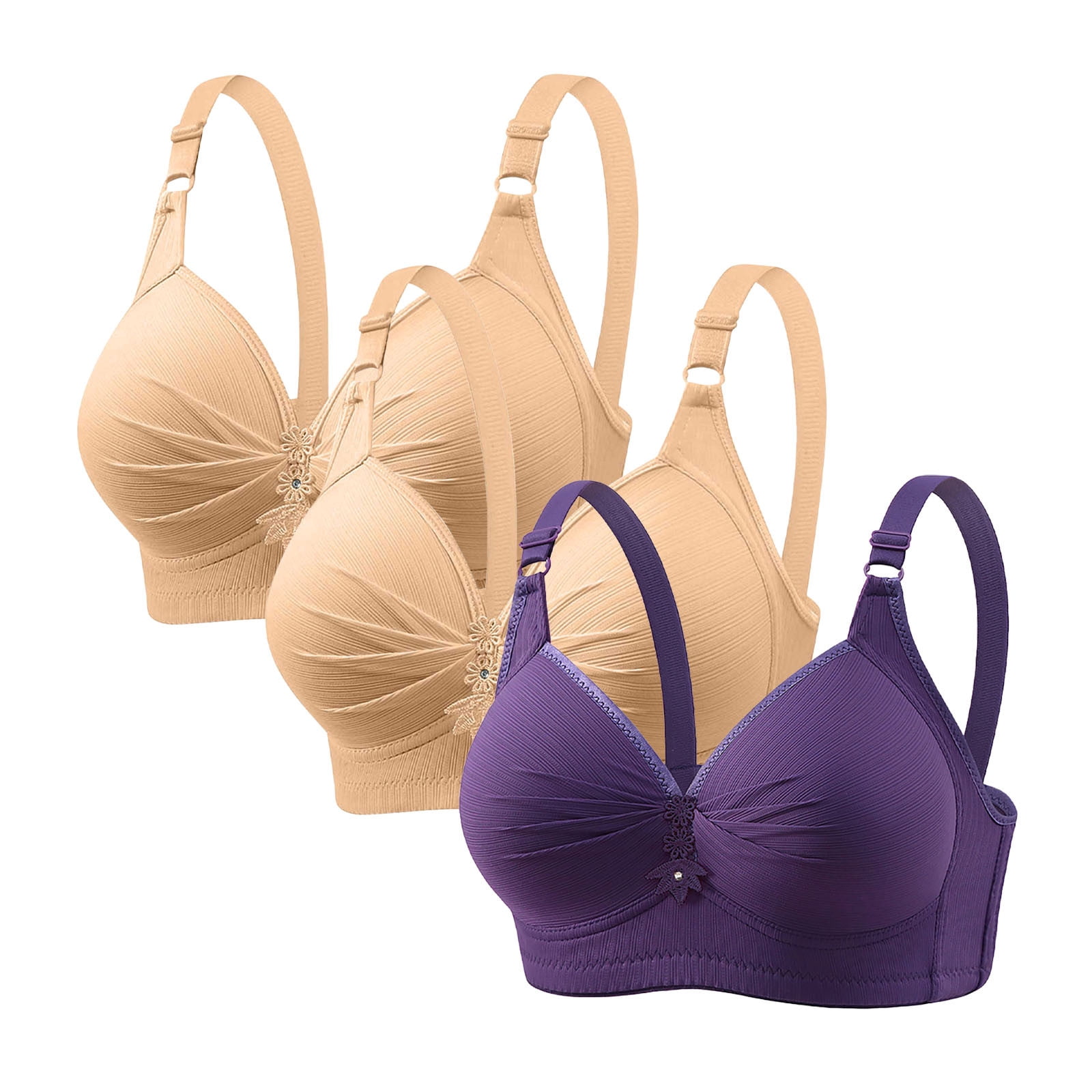
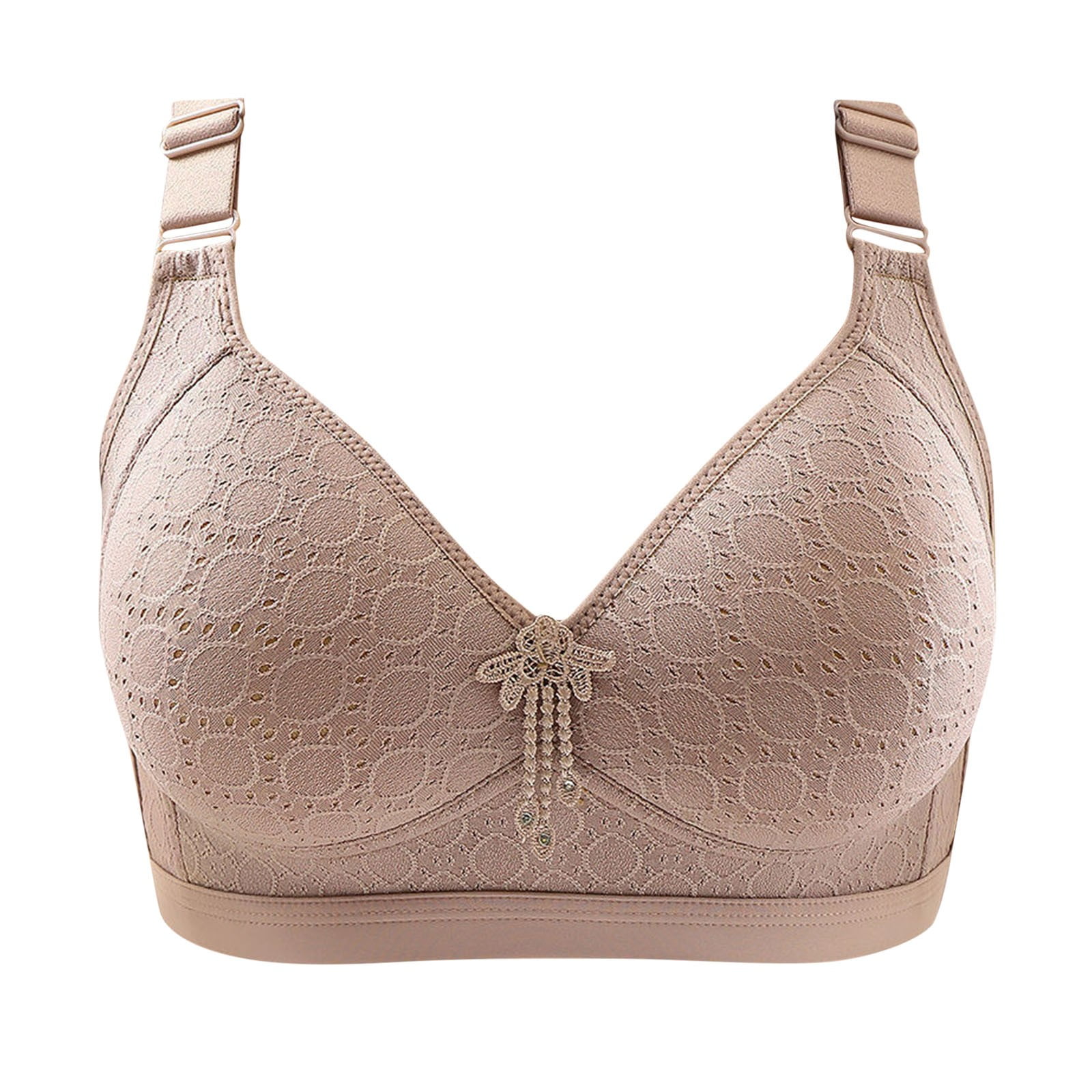
A wireless minimizer bra reduces the forward projection of the bust by redistributing breast tissue across the chest wall using engineered fabrics, wide wings, and molded cups rather than rigid metal. It delivers a smoother silhouette, eliminates blouse gaping, and decreases apparent cup projection by up to one to two inches without underwire pressure.
What Is a Wireless Minimizer Bra and How Does It Work?
For decades, intimate apparel relied almost exclusively on rigid underwires to lift, anchor, and separate full-bust figures. When traditional minimizers entered the market, they earned a reputation for being stiff, restrictive, and occasionally uncomfortable due to heavy steel channeling pressed firmly against the ribcage.
A wireless minimizer bra reimagines this design entirely. Instead of using a metallic hoop to define and anchor the perimeter of the breast, it achieves support through architectural textile engineering, high-tensile power mesh, and multi-directional compression.
The fundamental goal of any minimizer is not to flatten the chest like a sports bra or medical binder, but to reshape breast tissue. By spreading the tissue evenly over a wider surface area across the chest wall and outward toward the underarms, the bra reduces the forward projection of the bustline. In standard measurements, a properly fitted wireless minimizer reduces the outward protrusion of the apex by approximately one to two inches (roughly one cup size in appearance).
Underwire-free versions accomplish this through three primary mechanical elements:
- Shallow, Broad Cup Geometry: Rather than deep, conical cups that guide tissue forward and center it, wireless minimizers feature wider, flatter cup profiles that gently encourage breast tissue to disperse laterally and vertically.
- Dense Elasticity and High Modulus Fabrics: Standard intimate wear often uses soft, stretchy nylon-spandex blends that stretch in all directions. Minimizers employ fabrics with high tensile strength and low mechanical yield, preventing breast tissue from spilling forward.
- Reinforced Side Panels (Slings): Hidden interior slings or reinforced outer cup panels prevent the dispersed tissue from extending too far beneath the arms, keeping the profile contained and front-facing.
The Engineering Behind Wire-Free Support
Removing the metal wire eliminates the single strongest load-bearing element of traditional bra construction. To compensate, designers replace the isolated point support of a wire with distributed tension across the entire garment framework.
| SUPPORT ARCHITECTURE |
|---|
| 1. Broad Underband: Replaces rigid wire; carries 80% weight |
| 2. Lateral Slings: Contain side tissue, prevent underarm bulk |
| 3. High-Modulus Fabric: Disperses forward cup projection |
| 4. Centered Straps: Relieve shoulder grooving & neck tension |
| 5. Multi-Hook Closures: Distributes ribcage tension evenly |
1. The Anchored Underband
In any supportive bra, roughly 80% of the bust weight should be carried by the underband rather than the shoulder straps. In a wire-free design, this foundation becomes even more critical. Wireless minimizers feature wide, dual- or triple-layer elastic underbands that sit flush against the inframammary fold (the crease where the breast meets the chest wall). Because there is no wire to maintain the fold's structure, the underband is typically wider—ranging from 1.5 to 2.5 inches—to prevent rolling, shifting, or riding up.
2. Side Wings and Power Mesh
To maintain separation and prevent a flattened, monolithic appearance (often called "uniboob"), the band extends into broad side wings reinforced with power mesh. Power mesh is a synthetic knit with high elastomeric recovery, meaning it stretches to fit the torso but immediately snaps back, generating continuous tension that keeps the bra snug against the ribcage.
3. Anatomical Seaming vs. Seamless Molding
Wireless minimizers generally fall into two construction categories:
- Molded Seamless Cups: Heat-pressed synthetic fabrics form a smooth, contoured surface. These are virtually invisible under fine knits, silk blouses, and tight T-shirts. They rely heavily on fabric density to compress and shape.
- Cut-and-Sew (Multi-Part) Cups: Constructed from two, three, or four distinct fabric panels sewn together. Seamed cups offer greater structural integrity and superior shaping for larger cup sizes (DD through J cups) because vertical and horizontal seams act as internal structural beams.
Comparing Minimizer Styles: Wireless vs. Underwire
Choosing between a wireless and an underwire minimizer comes down to personal priorities regarding chest separation, skin sensitivity, and everyday comfort.
| Feature | Wireless Minimizer Bra | Traditional Underwire Minimizer Bra |
|---|---|---|
| Primary Support Mechanism | Wide underband, side slings, and compression panels | Rigid spring-steel wire anchoring breast roots |
| Separation (Gore Tack) | Low to moderate; fabric bridges chest without tacking | High; wire gore presses flat against sternum |
| Pressure Points | Evenly distributed across ribcage and band | Concentrated on ribcage, sternum, and underarms |
| Profile Reduction | 1 to 1.5 inches outward projection reduction | 1.5 to 2 inches outward projection reduction |
| Tissue Distribution | Slightly wider spread; softer, natural contour | Flattened, wide spread; distinct separation |
| Comfort for Ribcage Pain | Superior; ideal for costochondritis, rib flares, or sensory issues | May cause discomfort during prolonged sitting or slouching |
| Invisibility Under Clothing | High; seamless versions leave no wire ridges | Moderate; wire channels may show under thin fabric |
| Longevity | Fabric elasticity degrades over 6–12 months of daily use | Wires maintain form longer, though fabric still wears |
Key Benefits of Wearing a Wireless Minimizer
While conventional marketing often frames minimizers as tools for hiding one's figure, their practical benefits focus far more on garment fit, posture relief, and daily ergonomic comfort.
1. Eliminating Button-Down Gaping
One of the most persistent wardrobe challenges for fuller-busted individuals is the dreaded "shirt gap"—where a button-down shirt fits the waist and shoulders but pulls open across the chest. By reducing forward projection and smoothing the apex, a wireless minimizer allows tailored jackets, formal wear, and buttoned blouses to hang straight without needing safety pins or oversized garments.
2. Relieving Shoulder and Neck Strain
Traditional bras that concentrate breast mass forward place significant rotational torque on the torso, pulling the shoulders forward and encouraging poor posture. By flattening the apex and bringing the center of gravity closer to the spine, a minimizer reduces the forward-pulling leverage. Pairing this with wide, padded straps prevents painful shoulder grooving.
3. Relief from Wire-Related Skin Irritation
Many individuals experience contact dermatitis, chafing, or tissue bruising from underwires, particularly in warm climates or during long desk shifts where sitting pushes the ribcage into the wire channels. Wireless minimizers eliminate wire poke-throughs, center-gore chafing, and underarm pinch points while retaining an organized, structured silhouette.
How to Find Your True Size in a Wireless Minimizer
Because a minimizer alters the natural distribution of breast tissue, improper sizing can lead to side-spill, excessive chest compression, or tissue migration. Measuring accurately requires a flexible measuring tape and a mirror.
- Step 1: Measure Snug Underbust (Band Size)
- Pull tape firmly directly under bust along the inframammary fold.
- Exhale fully. Round to nearest whole even number.
- Step 2: Measure Standing & Leaning Bust (Cup Size)
- Take loose measurement across the fullest point of the bust.
- Average the standing and 90-degree leaning measurements.
- Step 3: Calculate Cup Difference
- Subtract Band Size from Adjusted Bust Measurement:
- 1" = A | 2" = B | 3" = C | 4" = D | 5" = DD/E | 6" = DDD/F
The Sizing Process: Step-by-Step
- Find the Underband Measurement: Wrap the tape measure directly beneath your bustline, parallel to the floor. Pull the tape firmly—snugger than you want the bra to feel, as the elastic will stretch. Note the measurement in inches. If you measure an odd number, round up to the nearest even integer (e.g., 33 inches becomes 34).
- Find the Full Bust Measurement: Wear an unpadded, non-minimizing bra. Measure around the fullest part of your chest, ensuring the tape remains horizontal across your back and shoulder blades. Keep the tape loose enough that it touches the skin without denting the tissue.
- Calculate Cup Size: Subtract the underband measurement from the full bust measurement:
- 1-inch difference = A cup
- 2-inch difference = B cup
- 3-inch difference = C cup
- 4-inch difference = D cup
- 5-inch difference = DD (or E) cup
- 6-inch difference = DDD (or F) cup
- 7-inch difference = G cup
- 8-inch difference = H cup
Crucial Fitting Rule: Do Not Size Down to Minimize
A frequent mistake when purchasing a wireless minimizer is ordering a cup size smaller than measured, hoping for extra reduction. In a wireless design, sizing down forces breast tissue out of the cup and into the armpits or down under the band, compromising support and causing visible rolls under clothing. The minimizing capability is engineered directly into the pattern; always buy your actual measured size.
Evaluating Essential Design Features
Not all wireless minimizers are built alike. When shopping, inspect the garment for structural markers that indicate reliable support and longevity.
1. Fabric Density and Fiber Composition
Look for fabrics combining polyamide (nylon) with a high percentage of elastane (spandex/Lycra)—ideally between 15% and 25%. Lower elastane content may feel stiff, while higher amounts without high-denier nylon will lack the tensile strength needed to hold fuller tissue firmly.
2. Wing and Back Band Width
Turn the bra to inspect the back closure. For cup sizes D and above, look for bands featuring at least three to four vertical hook-and-eye rows. A narrow, two-hook band concentrates pressure into a thin strip of skin, causing the band to cut into the back and ride up toward the neck. A wide U-shaped or "leotard" back design distributes pressure across the latissimus dorsi muscles, smoothing back fat and preventing slippage.
3. Strap Position and Adjustability
Check where the straps attach to the cups. Centered (inward-set) straps stay anchored on sloping or narrow shoulders far better than wide-set demi-style straps. In wireless minimizers, the straps should have minimal stretch along the front half, reserving elastic stretch exclusively for the back adjustable section to prevent excessive bouncing.
Common Fitting Problems and Troubleshooting
| Problem | Root Cause | Practical Adjustment |
|---|---|---|
| Tissue spillage at the armpits | Cup width is too narrow, or side slings are inadequate | Go up one cup size while keeping band size unchanged; look for models with dedicated high side-smoothing wings. |
| Band rides up the back | The underband is too large, transferring weight to the straps | Drop down one band size and increase one cup size (e.g., switch from 38D to 36DD) to maintain cup volume. |
| Shoulder straps dig into skin | Underband is loose, forcing straps to carry the bust weight | Tighten the band by using a closer hook setting or sizing down in the band. Straps should only support 10–20% of the weight. |
| "Uniboob" or center sweat accumulation | Center gore is wide but lacks separation structure | Choose a seamed multi-part cup design rather than a single molded cup plate to create vertical distinction. |
| Bottom band rolls over or flips upward | Torso length is short, or band elastic is too soft for belly compression | Look for a firm, ribbon-faced brushed elastic underband rather than a fabric-wrapped fold-over band. |
Care and Maintenance for Extended Performance
Wireless minimizers endure high dynamic stress because their elastic fibers continuously work to redistribute tissue weight without the help of a metal skeleton. Proper laundering preserves their elasticity and compressive strength.
- Never Machine Wash on Heavy Cycles: Wash on a delicate cycle using cold water and a mesh laundry bag, or preferably wash by hand in a basin with mild, enzyme-free detergent.
- Avoid Fabric Softeners: Fabric softeners coat synthetic fibers with silicone-based lubricating agents. This degrades the elastane core, stripping the fabric of its elasticity and causing the bra to stretch out permanently.
- Air Dry Exclusively: The high heat of a commercial dryer breaks down the synthetic polymers in power mesh and warps molded cups. Lay the bra flat on a drying rack or hang it by the center gore—never hang it by the shoulder straps, as the weight of wet fabric will stretch them out.
- Rotation Schedule: Avoid wearing the same wireless minimizer two days in a row. Elastane fibers require 24 to 48 hours to rest and contract back to their original mechanical shape.
Frequently Asked Questions
Will a wireless minimizer bra flatten my chest completely?
No. A wireless minimizer reduces forward projection by roughly one to two inches by redistributing breast tissue slightly outward and across the chest wall. It is designed to create a balanced, natural contour, not to completely compress the chest flat like a compression vest or sports binder.
Can I wear a wireless minimizer every day?
Yes. Wireless minimizers are well-suited for daily wear because they lack rigid metal underwires that can cause bruising, chafing, or pressure sores during extended use. As long as you are fitted in your correct size and rotate between bras to let the elastic recover, daily wear is safe and comfortable.
Is a wireless minimizer the same as a high-impact sports bra?
No. While both reduce forward breast motion and flatten projection to some degree, they serve different functions. High-impact sports bras rely heavily on tight vertical and horizontal compression or encapsulation to arrest sudden physical bounce during exercise. Wireless minimizers focus on gentle reshaping, profile reduction, and all-day comfort under everyday clothing without constricting the ribcage.
Does a wireless minimizer cause breast tissue damage or sagging?
No. There is no clinical or orthopedic evidence indicating that minimizer bras cause tissue damage or accelerate breast ptosis (sagging). Ptosis is driven primarily by genetics, age, skin elasticity, gravity, and hormonal shifts over time. A properly fitted wireless minimizer supports the Cooper’s ligaments by transferring the load securely to the underband.
How do I stop a wireless minimizer from creating a uniboob?
Select a model constructed with multi-part cut-and-sew cups and an articulated center gore rather than a single seamless front piece. Seamed cups feature vertical and horizontal panels that guide each breast into its own designated space, maintaining separation without relying on an underwire to pin the fabric down.
Next Steps for the Right Fit
Before purchasing your next bra, take fresh underbust and bust measurements using a flexible tape measure rather than relying on past sizing tags. When trying on a wireless minimizer, execute the "scoop and swoop": bend slightly forward, gently gather your breast tissue from the sides into the center of the cup, and fasten the bra on the loosest hook. Ensure the band remains level across your back, the fabric sits smoothly without cutting into your tissue, and your clothing drapes naturally without pulling.