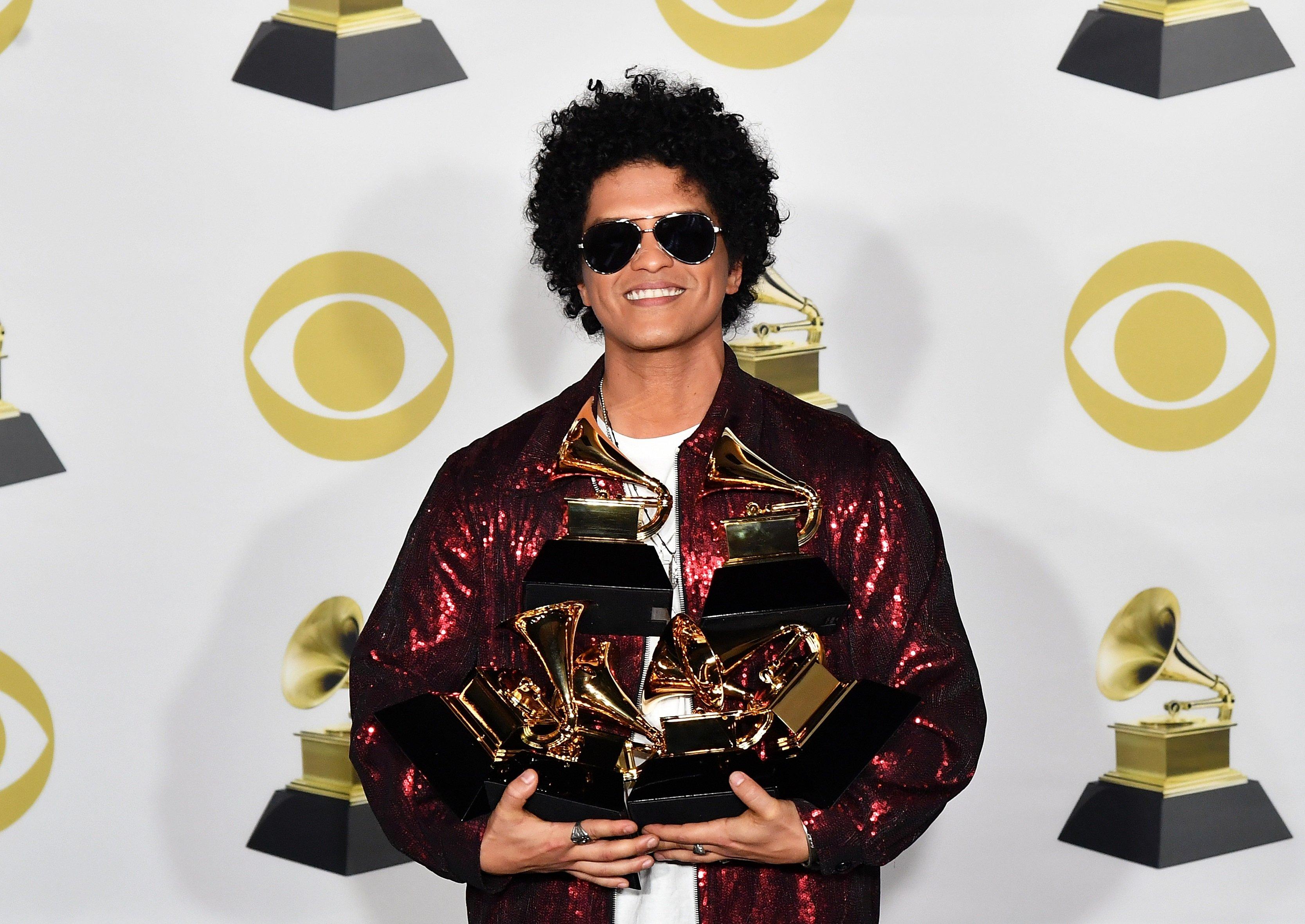
The 2018 Grammy Awards, officially known as the 60th Annual Grammy Awards, took place on January 28, 2018, at Madison Square Garden in New York City. The ceremony saw Bruno Mars sweep the "Big Three" categories—Album, Record, and Song of the Year—while Kendrick Lamar dominated the rap field.
The 60th anniversary of the Recording Academy’s premiere event was a milestone moment for the music industry, marked by a return to New York City for the first time in 15 years. Beyond the trophies, the 2018 Grammys became a flashpoint for discussions regarding gender representation, the role of hip-hop in high-culture accolades, and the industry’s response to the #MeToo and Time’s Up movements. As we look back from the perspective of 2026, the 2018 ceremony remains a pivotal case study in how the Academy navigates the tension between commercial pop success and critical, socially conscious art.
Historical Context: The Return to the Big Apple
The decision to host the 60th Annual Grammy Awards at Madison Square Garden was a deliberate move to honor the history of the awards. Since 2004, the ceremony had been held almost exclusively at the Staples Center in Los Angeles. The 2018 return to New York City was intended to evoke the glamour of the city's musical heritage, but it also presented logistical challenges and a different atmospheric energy for the attendees.
James Corden returned as host for the second consecutive year, bringing a lighthearted, Late Late Show-inspired tone to the proceedings. However, the jovial hosting often sat in stark contrast to the heavy political and social themes that dominated the red carpet and several key performances. The industry was reeling from the Harvey Weinstein revelations of late 2017, and the music world was under intense scrutiny regarding its own treatment of women.
Major Winners and Statistical Breakdown
The night was undeniably a triumph for Bruno Mars. His R&B-infused pop album 24K Magic resonated with the Recording Academy’s voting body, which often favors high production value and traditional musicality. Mars’s sweep was statistically significant, as he won in every category for which he was nominated.
Conversely, the night was a series of disappointments for SZA, who entered as the most-nominated woman of the evening with five nods but left without a single trophy. This discrepancy fueled ongoing debates about the Academy’s historical struggle to reward R&B and hip-hop artists in the "General Field" categories versus genre-specific ones.
2018 Grammy Winners: General Field and Major Categories
| Category | Winner | Work |
|---|---|---|
| Album of the Year | Bruno Mars | 24K Magic |
| Record of the Year | Bruno Mars | "24K Magic" |
| Song of the Year | Bruno Mars | "That's What I Like" |
| Best New Artist | Alessia Cara | N/A |
| Best Rap Album | Kendrick Lamar | DAMN. |
| Best Rock Album | The War on Drugs | A Deeper Understanding |
| Best Country Album | Chris Stapleton | From A Room: Volume 1 |
| Best Pop Vocal Album | Ed Sheeran | ÷ (Divide) |
The Bruno Mars Sweep: Commercial Appeal vs. Critical Acclaim
Bruno Mars’s victory in the Album of the Year category over Kendrick Lamar’s DAMN. and Lorde’s Melodrama was one of the most debated outcomes in recent Grammy history. 24K Magic was a massive commercial success, reviving 90s R&B sounds with impeccable modern engineering. The Academy voters, who represent a broad cross-section of industry professionals, clearly favored Mars’s celebratory, polished, and largely apolitical work.
However, critics argued that Kendrick Lamar’s DAMN. represented a more significant cultural and artistic achievement. Lamar did not go home empty-handed; he won five awards, including Best Rap Album, Best Rap Song, and Best Rap Performance. Yet, the "snub" in the General Field suggested a glass ceiling for hip-hop, an issue the Academy has attempted to address in the years since 2018 by diversifying its voting membership.
Kendrick Lamar and the State of Hip-Hop
Kendrick Lamar’s presence at the 2018 Grammys was transformative. He opened the show with a high-concept, politically charged performance of "XXX" and "DNA," featuring appearances by Dave Chappelle and U2’s Bono and The Edge. The performance used satirical interludes to comment on the reality of being a Black man in America, setting a serious tone for the evening that the rest of the broadcast struggled to maintain.
Lamar’s dominance in the rap categories solidified his status as the premier lyricist of his generation. His win for Best Rap Album for DAMN. was his second in that category, following To Pimp a Butterfly. Despite the lack of an Album of the Year win, 2018 was the year the Grammys truly acknowledged hip-hop as the dominant force in global music, even if the top prize remained elusive for the genre.
Cultural Impact: #TimesUp and the White Rose
The 2018 Grammys occurred during the height of the #MeToo movement. To show solidarity with victims of sexual harassment and to advocate for gender equality, many artists wore or carried white roses on the red carpet. This initiative, organized by the "Voices in Entertainment" group, aimed to bring the "Time’s Up" message from Hollywood to the music industry.
The most poignant moment of the night regarding this movement was Kesha’s performance of "Praying." Accompanied by a chorus of female artists including Cyndi Lauper, Camila Cabello, Andra Day, Julia Michaels, and Bebe Rexha, Kesha delivered a raw, emotional rendition of a song that chronicled her own legal and emotional battles with her former producer. It was widely regarded as the "soul" of the 2018 ceremony, providing a rare moment of genuine vulnerability and collective support.
The "Step Up" Controversy: Neil Portnow’s Comments
Perhaps the most lasting legacy of the 2018 Grammys was the controversy surrounding then-Recording Academy President Neil Portnow. Following a ceremony where only one woman (Alessia Cara) won a major televised award, Portnow was asked backstage about the lack of female representation. His response—that women in the industry needed to "step up"—ignited a firestorm of criticism.
Prominent artists like Pink, Sheryl Crow, and Katy Perry publicly rebuked the comments, noting that women were already "stepping up" but were being held back by systemic barriers and biased voting. The backlash was so severe that it led to the formation of a Task Force on Diversity and Inclusion and eventually contributed to Portnow’s departure from the Academy. This moment served as a catalyst for significant structural changes in how the Grammys operate, including the expansion of the number of nominees in major categories.
Memorable Performances and Guest Appearances
Beyond the controversies, the 2018 Grammys featured several standout musical moments that showcased the technical proficiency of the performers.
- P!nk: She delivered a powerful, stripped-back performance of "Wild Hearts Can't Be Broken," eschewing her usual acrobatics for a focus on vocal strength and sign language interpretation.
- Logic, Khalid, and Alessia Cara: They performed the suicide prevention anthem "1-800-273-8255," featuring a group of suicide loss and attempt survivors on stage. This performance highlighted the power of music as a tool for public health and mental health awareness.
- Bruno Mars and Cardi B: Bringing 90s nostalgia to the stage, their performance of "Finesse" was a high-energy highlight that demonstrated the chemistry between the night’s big winner and its rising rap superstar.
- Lady Gaga: Performing "Joanne" and "Million Reasons" at a wing-draped piano, Gaga reminded the audience of her roots as a classically trained musician and songwriter.
Snubs and Surprises: Evaluating the Recording Academy's Choices
Every Grammy year has its "snubs," and 2018 was particularly notable for them. SZA's loss in Best New Artist to Alessia Cara was a major talking point. While Cara was a talented and successful artist, SZA’s Ctrl had been hailed as a genre-defining R&B masterpiece, and many felt her impact on the cultural zeitgeist in 2017 was unmatched.
Lorde’s Melodrama was another significant talking point. As the only woman nominated for Album of the Year, she was notably not offered a solo performance slot, whereas her male counterparts in the category were. This discrepancy was cited by critics as evidence of the very gender bias that Portnow’s "step up" comments would later exacerbate.
In the rock categories, The War on Drugs won Best Rock Album for A Deeper Understanding, beating out veterans like Metallica and Mastodon. This reflected the Academy’s occasional willingness to reward indie-leaning, critically acclaimed acts within specific genres.
Technical and Production Aspects
The move to Madison Square Garden required a massive technical overhaul of the venue to accommodate the Grammy's complex staging and live broadcast requirements. The production utilized state-of-the-art LED displays and a multi-stage setup that allowed for seamless transitions between the 20+ performances.
From an engineering perspective, the 2018 Grammys were praised for their sound quality, a difficult feat in a basketball arena known for its challenging acoustics. The Recording Academy’s Producers & Engineers Wing played a vital role in ensuring that both the live audience and the millions of viewers at home experienced studio-quality audio.
Legacy of the 60th Grammys in 2026
From the vantage point of 2026, the 2018 Grammys are seen as the end of an era. It was the last year of the "old guard" leadership style at the Academy. The fallout from the 2018 ceremony led directly to the diversification of the voting body, the invitation of thousands of new members from underrepresented demographics, and a shift toward more transparent voting processes.
The awards won by Bruno Mars are now viewed as a celebration of peak "pop-funk," while Kendrick Lamar’s DAMN. has aged as a landmark in American literature and music (notably becoming the first non-classical or jazz work to win the Pulitzer Prize for Music shortly after the Grammys). The 2018 ceremony proved that while the Grammys may sometimes lag behind cultural shifts, the backlash to those delays often provides the momentum needed for institutional change.
FAQ
Who won the most awards at the 2018 Grammys? Bruno Mars was the biggest winner of the night, taking home six awards. He swept the top three categories: Album of the Year (24K Magic), Record of the Year ("24K Magic"), and Song of the Year ("That's What I Like"). He also won Best R&B Performance, Best R&B Song, and Best R&B Album.
Why was the 2018 Grammy ceremony held in New York? The 60th Annual Grammy Awards moved to New York City to celebrate the 60th anniversary of the awards. The Academy wanted to return to the city where the first ceremony was held and to highlight New York's status as a global music hub. It was the first time the ceremony was held outside of Los Angeles since 2003.
What was the "White Rose" movement at the 2018 Grammys? The White Rose was a symbol of solidarity used by artists to support the Time’s Up and #MeToo movements. It was a visual protest against sexual harassment and gender inequality within the music industry, mirroring the black dress code seen at the Golden Globes earlier that month.
Did Kendrick Lamar win Album of the Year in 2018? No, Kendrick Lamar did not win Album of the Year. Despite DAMN. being a critical favorite and winning five other awards that night (including Best Rap Album), the top prize went to Bruno Mars for 24K Magic.
What did Neil Portnow say at the 2018 Grammys? After the show, Neil Portnow, the President of the Recording Academy, suggested that women who wanted to win more awards needed to "step up." The comment was widely viewed as tone-deaf and sexist, leading to massive industry backlash and Portnow’s eventual departure from his role.
Final Recommendation for Music Historians
For those researching the evolution of the Recording Academy, the 2018 Grammys serve as a critical turning point. It is recommended to view the official winners list on the Grammy website and compare the nominees with the subsequent changes made to the Academy’s bylaws in 2019 and 2020. Understanding the social tension of 2018 is essential to understanding the more inclusive and diverse Grammy ceremonies that followed in the early 2020s.