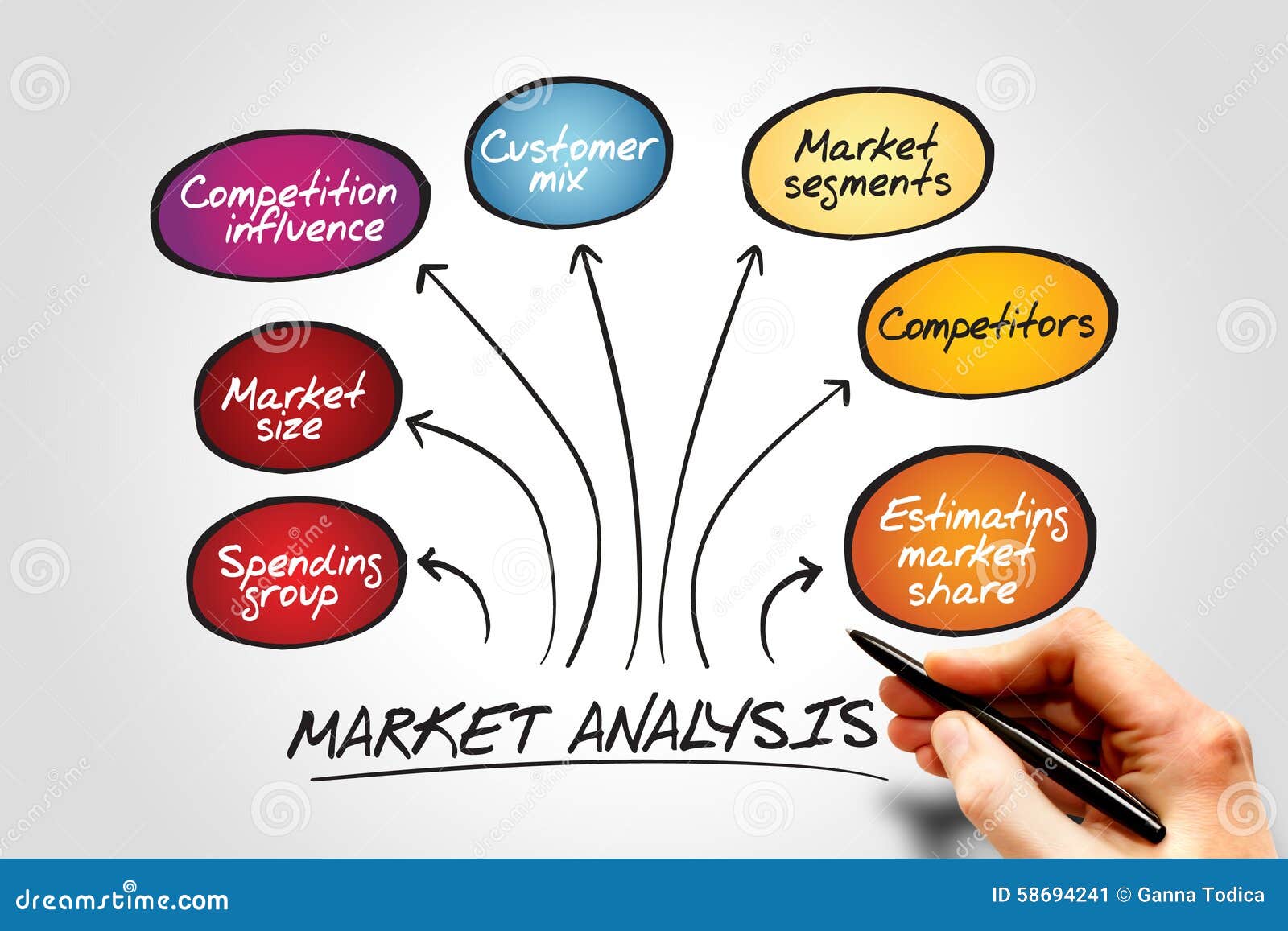
Market analysis is the systematic process of gathering, modeling, and interpreting data regarding a specific industry, its customers, and the competitive landscape. It identifies market size, growth trends, and risks to inform strategic decision-making. In 2026, this practice integrates real-time behavioral data and AI-driven predictive modeling to ensure business viability in a highly volatile global economy.
Conducting a thorough market analysis is no longer an optional exercise for startups or established enterprises; it is a foundational requirement for capital allocation and operational scaling. By understanding the underlying mechanics of a market, organizations can transition from reactive survival to proactive leadership. This guide explores the essential components, methodologies, and frameworks required to perform a high-level market analysis.
The Core Dimensions of Market Analysis
A robust market analysis is built upon several interlocking dimensions. Each provides a different lens through which to view the opportunity and the barriers to entry. To achieve a 360-degree view, an analyst must look at the total environment, the specific segment of interest, and the individual actors within that space.
Market Size and Growth Potential (TAM, SAM, SOM)
Understanding the scale of the opportunity is the first step in any analysis. This is typically visualized through the TAM, SAM, and SOM framework, which prevents businesses from overestimating their reachable revenue.
- Total Addressable Market (TAM): This represents the total global demand for a product or service. For instance, if you are analyzing the electric vehicle (EV) charging market in 2026, the TAM would be the total potential revenue if every vehicle owner transitioned to electric and used your charging infrastructure.
- Serviceable Addressable Market (SAM): This is the portion of the TAM that fits your specific business model, geography, and technology constraints. Using the EV example, if your company only operates in North America with Level 3 fast chargers, your SAM is restricted to that specific region and technology tier.
- Serviceable Obtainable Market (SOM): This is the most realistic metric, representing the share of the SAM that you can realistically capture within a specific timeframe, accounting for competition and resource limits.
Determining these figures requires a "top-down" approach (using industry reports and high-level statistics) and a "bottom-up" approach (calculating potential sales based on known pricing and local customer volume). Discrepancies between these two methods often reveal hidden market nuances or flaws in the business model.
Target Audience and Customer Segmentation
Identifying who the customer is remains the most critical aspect of market analysis. In 2026, segmentation has moved beyond simple demographics (age, gender, location) into deep psychographics and behavioral clusters. Analysts now look at "jobs to be done"—the specific problem a customer is trying to solve—rather than just who the customer is.
Segmentation should be based on:
- Behavioral Patterns: How often do they purchase? What platforms do they use for discovery?
- Pain Points: What specific frustrations do they have with current market offerings?
- Willingness to Pay (WTP): This involves price sensitivity analysis to determine the optimal price point that maximizes both volume and margin.
Macro-Environmental Analysis: The PESTLE Framework
A market does not exist in a vacuum. It is influenced by external forces that can either accelerate growth or create insurmountable roadblocks. The PESTLE framework is the industry standard for evaluating these external factors.
Political and Legal Factors
Political stability and trade policies significantly impact market entry. In 2026, data sovereignty laws and international trade agreements regarding AI and green energy are primary considerations. Legal factors include labor laws, consumer protection regulations, and industry-specific certifications that serve as barriers to entry.
Economic Considerations
This involves analyzing inflation rates, currency fluctuations, and consumer spending power. For a market analysis to be valid, it must account for the current stage of the economic cycle. For example, luxury markets often contract during high-inflation periods, while "discount" or "utility" sectors may see growth.
Social and Technological Trends
Social trends include shifts in lifestyle, such as the continued rise of decentralized work or the increasing demand for sustainable products. Technological factors are perhaps the most disruptive; the integration of generative AI into consumer interfaces and the advancement of automation have fundamentally changed how products are delivered and supported.
Environmental Impact
With global ESG (Environmental, Social, and Governance) standards becoming more stringent, market analysis must now include an assessment of environmental sustainability. This includes the carbon footprint of supply chains and the availability of raw materials, which can impact long-term scalability.
Competitive Landscape and Benchmarking
A critical failure in many market analyses is the "competitor blind spot"—the tendency to focus only on direct competitors while ignoring indirect threats. A comprehensive analysis categorizes competition into three tiers.
- Direct Competitors: These offer the same product or service to the same target audience (e.g., two different manufacturers of enterprise CRM software).
- Indirect Competitors: These offer different products that solve the same problem (e.g., a high-end restaurant competes indirectly with a meal-kit delivery service for the "special occasion dinner" market).
- Replacement Competitors: These are emerging technologies or shifts in behavior that eliminate the need for the product entirely.
Porter’s Five Forces
To evaluate the attractiveness of an industry, analysts frequently use Porter’s Five Forces. This framework assesses:
- Threat of New Entrants: How easy is it for a new player to disrupt the market? High capital requirements or strong brand loyalty usually lower this threat.
- Bargaining Power of Buyers: If customers have many options, they can drive prices down.
- Bargaining Power of Suppliers: If a market relies on a single source for raw materials, that supplier holds significant leverage over margins.
- Threat of Substitute Products: The likelihood of customers switching to alternatives.
- Intensity of Rivalry: The degree of competition among existing players.
Data Collection Methodologies in 2026
Modern market analysis relies on a hybrid of traditional research and high-velocity digital intelligence. The reliability of an analysis is directly proportional to the quality of the data sourced.
Primary Research
Primary research involves gathering new data directly from the source. This is essential for understanding specific customer nuances that general reports might miss.
- Surveys and Questionnaires: Large-scale data collection to identify broad trends.
- In-Depth Interviews (IDIs): Qualitative insights into customer motivations.
- Focus Groups: Observing group dynamics and reactions to new concepts.
- Synthetic Data Modeling: Using AI to simulate consumer behavior based on existing datasets, allowing for "what-if" scenario testing without the cost of a live pilot.
Secondary Research
Secondary research utilizes existing data. While less tailored, it is often more cost-effective and provides historical context.
- Government Publications: Sources like the U.S. Bureau of Labor Statistics or the Census Bureau provide essential demographic and labor data.
- Industry Reports: Firms such as Gartner, Forrester, or Statista offer deep dives into specific technological and consumer sectors.
- Financial Filings: Analyzing the 10-K filings of public competitors can reveal their revenue streams, R&D spend, and identified risks.
| Analysis Type | Primary Goal | Data Sources | Typical Timeline |
|---|---|---|---|
| Exploratory | To define a problem or identify new opportunities. | Interviews, social listening, focus groups. | 2–4 Weeks |
| Descriptive | To quantify market size, segments, and competitor shares. | Surveys, census data, secondary reports. | 4–8 Weeks |
| Causal | To determine the relationship between variables (e.g., price vs. demand). | A/B testing, controlled experiments, AI modeling. | 8–12 Weeks |
| Predictive | To forecast future market movements and trends. | Historical data, machine learning, PESTLE analysis. | Ongoing |
The SWOT Analysis: Synthesizing the Data
Once the data is collected, it must be synthesized into an actionable format. The SWOT analysis (Strengths, Weaknesses, Opportunities, Threats) remains the most effective tool for this purpose. However, a "2026 SWOT" must be more rigorous than a simple bulleted list.
- Strengths (Internal): Unique IP, proprietary data, a strong brand, or a highly efficient supply chain. These are factors you control that give you an edge.
- Weaknesses (Internal): Lack of scale, outdated technology, or high customer churn. These are internal limitations that must be addressed to compete.
- Opportunities (External): Emerging market segments, a competitor's decline, or favorable regulatory changes. These are external factors you can exploit.
- Threats (External): New disruptive technologies, economic downturns, or shifting consumer sentiment. These are external factors that could jeopardize the business.
The goal of the SWOT is to find the Strategic Fit—where your internal strengths align with external opportunities, and where your internal weaknesses leave you most vulnerable to external threats.
Common Pitfalls in Market Analysis
Even with sophisticated tools, market analysis can lead to incorrect conclusions if the underlying assumptions are flawed.
- Confirmation Bias: Analysts often seek out data that supports their initial hypothesis (e.g., "The market is ready for this product") while ignoring data that suggests otherwise.
- Over-Reliance on Secondary Data: Industry reports are often dated by the time they are published. In 2026, a report from 2024 might be functionally obsolete in fast-moving sectors like AI or biotechnology.
- Ignoring the "Small" Competitor: Many companies focus only on the market leaders. However, disruption often comes from small, agile startups that are ignored until they have captured significant market share.
- Static Analysis: A market analysis is a snapshot in time. In a modern business environment, the analysis must be updated quarterly to account for rapid shifts in technology and consumer behavior.
FAQ
How much does a professional market analysis cost in 2026?
The cost varies significantly based on the scope. A basic analysis using secondary data and internal resources can be done for under $5,000. However, a comprehensive analysis for a new market entry, involving primary research and AI-driven predictive modeling, typically ranges from $25,000 to $100,000 when conducted by professional firms.
How often should a market analysis be updated?
While a full-scale analysis may only be necessary during the strategic planning cycle (every 1-2 years), key metrics like competitive movements and consumer sentiment should be monitored in real-time. A formal "refresh" is generally recommended every six months to ensure the strategy remains aligned with market reality.
What is the difference between market analysis and market research?
Though often used interchangeably, market research is the specific process of gathering data (the "how"), whereas market analysis is the broader interpretation of that data within a strategic framework (the "so what"). Research provides the ingredients; analysis is the finished recipe.
Can AI replace human market analysts?
AI is exceptional at processing vast amounts of data and identifying patterns that humans might miss. However, AI lacks the contextual nuance to understand political subtleties or the emotional drivers behind consumer loyalty. In 2026, the most effective analyses are those where AI handles the data processing and humans handle the strategic interpretation.
Is market analysis necessary for small businesses?
Yes. Small businesses often have less "room for error" than large corporations. A simple market analysis can prevent a small business from entering an oversaturated market or help them identify a niche that larger competitors are ignoring, significantly increasing their chances of survival.
What are the most reliable sources for secondary data?
Official government databases (like the SBA or the Federal Reserve), peer-reviewed academic journals, and reputable industry associations remain the most reliable sources. Be cautious with "free" whitepapers from vendors, as these are often biased toward the vendor's specific solution.
Practical Recommendations
To conduct a successful market analysis, begin by clearly defining your research objective. Are you looking to enter a new territory, launch a product, or defend your current market share? Once the objective is set, use a "triangulation" approach: verify every key finding with at least three different sources (e.g., a customer interview, a competitor's financial report, and an industry trend forecast). Finally, ensure that the analysis results in at least three specific, actionable strategic recommendations. A market analysis that sits on a shelf is a wasted investment; its value lies entirely in the decisions it informs.