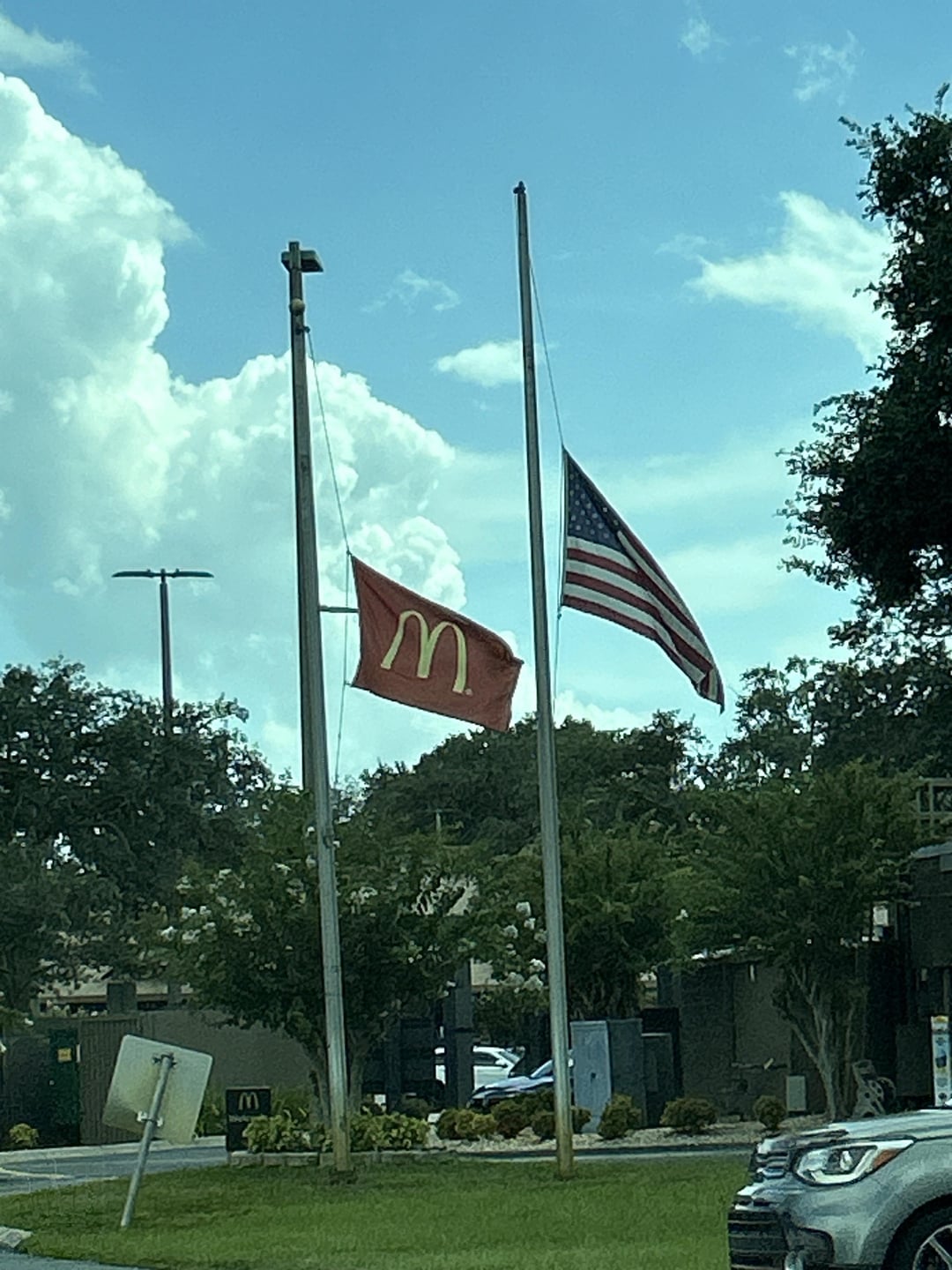
McDonald’s is more than a fast-food chain; it is a global economic powerhouse that influences real estate, labor markets, and international chemistry standards. The most shocking facts involve its primary revenue model as a real estate company, its status as the world’s largest toy distributor, its complex ingredient engineering, its massive role in the American workforce, and the psychological depth of its branding.
1. McDonald’s Is Primarily a Real Estate Company, Not a Burger Chain
To the average consumer, McDonald’s exists to flip burgers and fry potatoes. However, from a corporate and financial perspective, the organization is one of the most sophisticated real estate portfolios in existence. This distinction is not merely a piece of trivia; it is the fundamental engine that drives the company’s multi-billion dollar annual profits.
The shift in perspective began in the 1950s with Harry J. Sonneborn, McDonald’s first president and CEO. Sonneborn famously stated that the company was not technically in the food business, but in the real estate business. He realized that the path to consistent, recession-proof wealth was not through the volatile margins of hamburger meat, but through the ownership of the land upon which the burgers were sold.
The Sonneborn Model
Under this model, McDonald’s Corporation (the parent company) purchases the land and the buildings for its restaurant locations. It then leases these sites back to franchisees, often at a significant markup. While most franchisors earn their money primarily through a percentage of gross sales (royalties), McDonald’s generates a massive portion of its income from rent.
In 2026, as in previous decades, this strategy provides a "double dip" of revenue:
- Fixed Rent: Franchisees pay a base rent regardless of how many Big Macs they sell.
- Percentage Rent: Franchisees also pay a percentage of their monthly sales as additional rent.
This structure creates an incredibly stable financial foundation. If a franchisee struggles with labor costs or food inflation, the parent corporation is still protected by the underlying value of the real estate and the legally binding lease agreements. This is why McDonald’s is often referred to as a "landlord with a spatula."
2. The World’s Largest Toy Distributor
When people think of the world’s largest toy retailers, names like Amazon, Walmart, or the historical Toys "R" Us come to mind. However, none of these companies distribute more toys globally than McDonald’s. Through the Happy Meal program, launched in 1979, McDonald’s has secured its place as a dominant force in the toy industry.
The Scale of the Happy Meal
McDonald’s sells approximately 1.5 billion toys every year. This volume is achieved by including a toy with nearly every Happy Meal sold across its tens of thousands of locations globally. This distribution strategy allows McDonald's to bypass traditional retail barriers and place products directly into the hands of its youngest demographic.
The "shocking" element here is the sheer power McDonald’s holds over the toy manufacturing supply chain. Because they order in such massive quantities, they can dictate production schedules and costs that even the largest toy companies cannot match. Furthermore, the Happy Meal serves as a critical marketing vehicle for Hollywood. Major studios like Disney, DreamWorks, and Warner Bros. have historically viewed a McDonald’s partnership as the gold standard for promoting new films.
In recent years, leading up to 2026, McDonald’s has faced pressure to modernize this program due to environmental concerns. This has led to the phased introduction of paper-based toys and books, yet the sheer volume of "units distributed" remains unsurpassed by any traditional toy store.
3. The 19-Ingredient French Fry
The McDonald’s French fry is often cited as the gold standard of fast-food side dishes. Its consistent texture, smell, and taste across different continents are the result of rigorous chemical engineering. While a homemade French fry typically contains two or three ingredients (potatoes, oil, and salt), the McDonald’s version has historically utilized 19 distinct ingredients to achieve its "world-famous" profile.
Engineering the Flavor
One of the most controversial aspects of the fry's composition is "natural beef flavor." In 1990, McDonald’s switched from frying in beef tallow to vegetable oil to reduce saturated fat. To maintain the flavor profile customers loved, they added a chemical additive derived from wheat and milk that mimics the taste of beef.
Other critical components include:
- Dimethylpolysiloxane: An anti-foaming agent used to prevent the oil from splattering during high-volume cooking.
- TBHQ (Tert-Butylhydroquinone): A preservative used to extend the shelf life of the oil and prevent rancidity.
- Sodium Acid Pyrophosphate: An additive that prevents the potatoes from turning gray or brown after freezing and before frying.
- Dextrose: A form of sugar that is sprayed on the fries to ensure a perfectly uniform golden color regardless of the season or the natural sugar content of the potato batch.
The technical depth of this ingredient list highlights that the McDonald's fry is not just a vegetable; it is a highly processed industrial product designed for peak palatability and logistical efficiency.
Common Additives in McDonald's Signature Items
| Ingredient | Purpose | Commonly Found In |
|---|---|---|
| Dimethylpolysiloxane | Prevents oil foaming | French Fries, McNuggets |
| Sodium Acid Pyrophosphate | Color retention | French Fries, Hash Browns |
| TBHQ | Antioxidant/Preservative | Frying Oil, Chicken McNuggets |
| Dextrose | Uniform browning | French Fries |
| High Fructose Corn Syrup | Sweetener/Texture | Buns, Ketchup, Sauces |
| Azodicarbonamide | Flour bleaching/Conditioner | Various Bread Products |
4. The "1 in 8" Labor Phenomenon
The scale of McDonald’s influence on the global labor market is staggering. It is estimated that 1 in 8 Americans has, at some point in their lives, been employed by McDonald’s. This statistic underscores the company’s role as the "de facto" training ground for the modern workforce.
The Economic Impact of the "McJob"
The term "McJob" was famously added to the Merriam-Webster and Oxford English dictionaries to describe low-pay, low-prestige work that requires little skill and offers little opportunity for advancement. While McDonald’s corporate has historically fought against this definition, the sheer volume of employees passing through its doors makes it a central figure in the debate over the minimum wage and labor rights.
Because McDonald’s employs such a significant portion of the population, its internal wage policies often set the floor for the rest of the service industry. When McDonald’s raises its starting wage or implements automated kiosks, it triggers a ripple effect across the entire economy. For many, a "McJob" provides essential first-time employment skills—such as punctuality, following standardized procedures, and customer service—that serve as a foundation for future careers in diverse sectors.
5. The Psychological Power of the Golden Arches
The McDonald’s logo is more than just a stylized "M." It is one of the most recognized symbols in human history, with some studies suggesting that more people can identify the Golden Arches than the Christian Cross. This level of brand saturation is the result of decades of psychological marketing research.
The "Mothers' Breasts" Theory
In the 1960s, McDonald’s considered changing its logo. They hired design consultant and psychologist Louis Cheskin, who argued vehemently against the change. Cheskin claimed that the Golden Arches had a "Freudian" appeal, suggesting they unconsciously reminded consumers of "mother McDonald's breasts." According to this theory, the arches triggered a primal sense of nourishment and comfort in the subconscious mind.
While this theory remains a subject of debate among modern marketing historians, the impact of the color palette is undeniable. The combination of red and yellow is specifically chosen because:
- Red: Stimulates appetite, increases heart rate, and creates a sense of urgency.
- Yellow: Associated with happiness, optimism, and visibility from long distances (especially on highways).
This "Ketchup and Mustard" theory of color psychology is now a standard practice in the fast-food industry, but McDonald’s was the pioneer in refining this visual manipulation to drive global sales.
Frequently Asked Questions
Is McDonald's meat real?
Yes, McDonald’s uses 100% real beef for its burger patties, with no fillers, additives, or preservatives. The "shock" often comes from the processing and freezing methods used to maintain consistency across thousands of locations. For products like the McRib or Chicken McNuggets, the meat is ground and molded, but it still originates from animal sources. The primary health concerns usually stem from the high sodium and caloric density rather than the "realness" of the meat itself.
Why does the McDonald's Coke taste better?
There is a scientific reason for this. McDonald's has a unique partnership with Coca-Cola. Unlike other retailers who receive syrup in plastic bags, McDonald’s receives its syrup in stainless steel tanks to preserve freshness. The water and syrup are pre-chilled before entering the fountain, and the carbonation levels are set higher than average to account for the ice melting. Additionally, McDonald's uses a wider straw, which allows more of the flavor to hit your taste buds simultaneously.
What happened to "Pink Slime"?
"Pink Slime," technically known as lean finely textured beef (LFTB), was a meat additive that McDonald’s stopped using in 2011 after significant public outcry. While LFTB was deemed safe by the USDA, the negative publicity regarding the ammonia-hydroxide treatment process led the company to remove it from their supply chain entirely. As of 2026, McDonald’s continues to emphasize its "100% beef" commitment to distance itself from this era.
How many people does McDonald's feed daily?
McDonald’s serves approximately 69 million people every single day. To put that in perspective, that is roughly 1% of the entire world's population eating at a McDonald's every 24 hours. This massive scale is what allows the company to maintain such low prices and exert such heavy influence over global agriculture and livestock markets.
Are McDonald’s salads actually healthy?
Historically, some McDonald’s salads contained more calories and sodium than a Big Mac, primarily due to the dressings and fried chicken toppings. In many markets, including the US, McDonald's actually removed salads from the menu during the 2020s to streamline operations and focus on core products. When available, consumers should always check the nutritional data, as the "health halo" of a salad can be misleading when high-fat dressings are included.
Practical Recommendation
If you are a frequent consumer of McDonald's, the most important action you can take is to familiarize yourself with the nutritional transparency tools provided by the company. Use the official McDonald’s app or website to view the specific ingredient lists and allergen warnings for your region. Because the company operates on a massive industrial scale, understanding the chemical preservatives and sodium levels in your favorite items can help you make more informed dietary choices. For those interested in the business side, viewing McDonald's as a real estate investment trust (REIT) rather than a food service provider provides a much clearer picture of its long-term market stability.