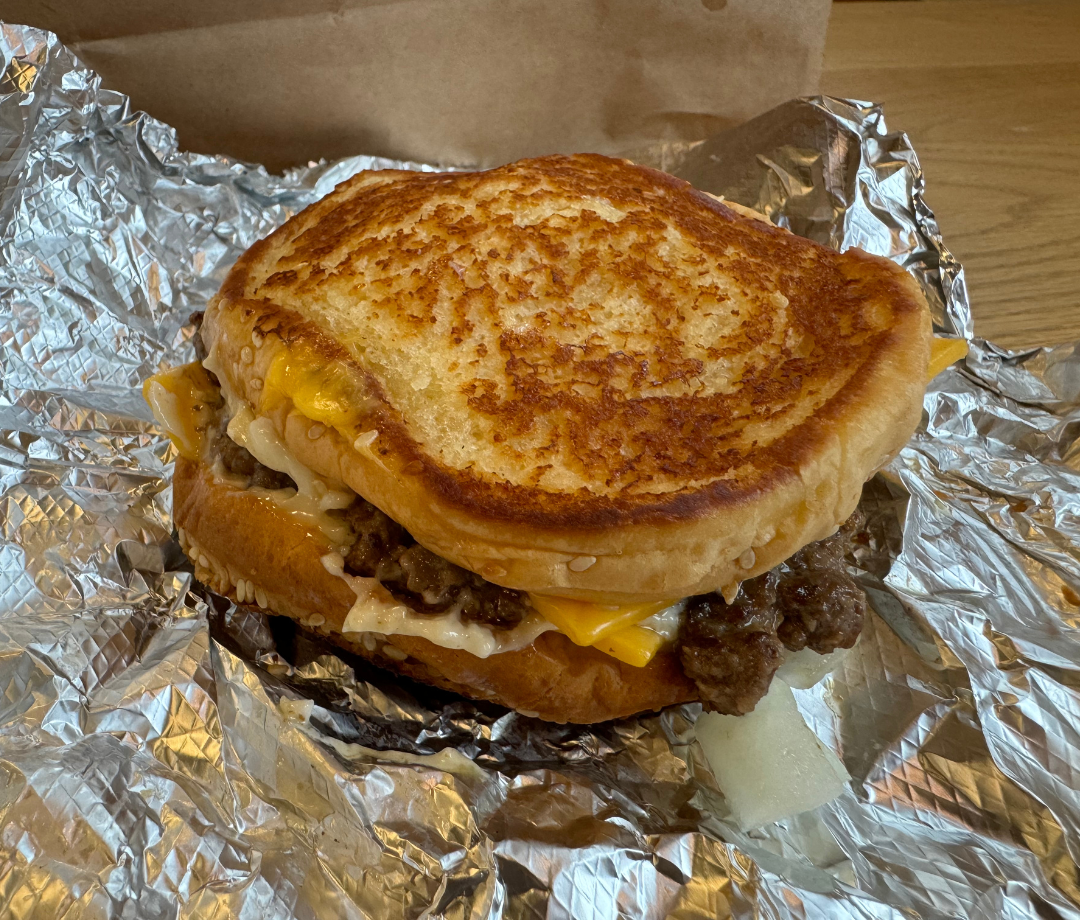
A 5 patty burger, frequently referred to as a "quintuple burger" or a "5x5," is a specialized hamburger consisting of five distinct ground beef patties stacked vertically within a single bun. While rarely featured on standard menus due to its extreme size and caloric density, it remains a popular custom-order item at major chains and a benchmark for competitive eaters and enthusiasts seeking a high-protein, "maximalist" dining experience.
The Anatomy of a 5 Patty Burger: Beyond the Meat
At its core, a 5 patty burger is an exercise in culinary verticality. To understand why this specific configuration is significant, one must look at the standard architecture of a hamburger. Most fast-casual burgers utilize one or two patties. A third patty is often considered the limit for "handheld" comfort. When you transition to four and five patties, the burger ceases to be a simple sandwich and becomes a structural engineering challenge.
The primary components of a high-quality 5 patty burger include:
- The Protein Foundation: Typically, each patty weighs between 2 ounces (smash-style) and 4 ounces (quarter-pounders). A 5 patty burger using quarter-pound patties results in 1.25 pounds of beef, excluding toppings.
- The Adhesive Layer: In these builds, cheese is not just a topping; it is a structural necessity. Melted American or cheddar cheese acts as a high-viscosity binding agent that prevents the stack from sliding.
- The Structural Base (Bottom Bun): The "heel" of the bun must be toasted to a high degree of rigidity. If the bottom bun is soft, the rendered fats (grease) and juices from five patties will cause the bread to disintegrate within minutes.
- The Crown (Top Bun): Usually a standard seed bun or brioche, though in 2026, many enthusiasts prefer a "sturdy" potato roll to handle the weight.
Commercial Availability: Where to Find a 5 Patty Burger in 2026
Finding a restaurant that officially lists a 5-stack on their printed menu is difficult. Most national chains avoid this to limit liability regarding health concerns and to maintain kitchen speed. However, the "customization culture" of 2026 makes it accessible through specific ordering strategies.
Wayback Burgers and the "Triple Triple" Legacy
Wayback Burgers is famous for its "Triple Triple," a 9-patty behemoth. Because their systems are designed to handle 9-patty builds, ordering a 5 patty burger there is a routine request. It provides a more manageable middle ground for those who find nine patties excessive but three insufficient.
Five Guys Customization
Five Guys is perhaps the most reliable location for a 5 patty burger. While their "Bacon Cheeseburger" comes standard with two patties, their "all the toppings" model and flexible POS (Point of Sale) systems allow diners to add extra patties for a standardized surcharge. The advantage here is the quality of the beef and the foil wrapping, which helps steam the bun and hold the massive stack together during transport.
In-N-Out and the 4x4 Limit
Historically, In-N-Out allowed customers to order "any-number-by-any-number" (e.g., a 20x20). However, following several viral incidents and concerns over food quality/consistency, the chain officially capped orders at a 4x4 (four patties and four slices of cheese). In 2026, to obtain a 5-patty equivalent at In-N-Out, customers typically order a 4x4 and a separate "Flying Dutchman" (two patties with cheese, no bun) and manually assemble the fifth layer.
Steak ’n Shake
Steak ’n Shake previously popularized the "7x7" (seven patties for $7.77), though pricing has since evolved. Their "prime" steakburgers are thinner and "smashed," making a 5-stack surprisingly compact and easier to consume than a 5-stack of thicker, hand-pressed patties.
The Physics of the Stack: Maintaining Structural Integrity
When building or eating a 5 patty burger, physics becomes a limiting factor. The "Center of Gravity" problem is the most common cause of "burger failure," where the internal patties slide out the back of the bun.
To prevent this, culinary experts suggest the "Symmetry Rule." Each of the five patties should be identical in diameter. If a larger patty is placed on top of a smaller one, the stack becomes top-heavy. Furthermore, the use of a central skewer—often a long bamboo pick—is essential for any burger exceeding three patties. This skewer anchors the meat to the bread, allowing the diner to compress the burger safely before the first bite.
Another technical consideration is heat retention. In a 5 patty burger, the middle patty (the third one) is insulated by the two patties above it and the two below it. While this keeps the center meat hot, it also means the middle patty continues to "carry-over cook." If the kitchen cooks all five patties to "well done," the middle patty may become dry and rubbery by the time it reaches the table. Professional "monster burger" chefs often pull the middle patties slightly earlier to ensure a uniform texture across the stack.
Nutritional Profile and Health Considerations
Consumption of a 5 patty burger is a significant metabolic event. In 2026, with increased transparency in nutritional labeling, it is important to recognize the sheer scale of the macronutrients involved.
| Component | Estimated Quantity (5x 1/4lb patties) | % Daily Value (Based on 2,000 kcal) |
|---|---|---|
| Calories | 1,600 - 2,100 kcal | 80% - 105% |
| Total Fat | 110g - 140g | 170% - 215% |
| Saturated Fat | 45g - 60g | 225% - 300% |
| Sodium | 3,200mg - 4,500mg | 140% - 195% |
| Protein | 100g - 130g | 200% - 260% |
| Cholesterol | 350mg - 450mg | 115% - 150% |
Note: These figures vary based on the fat content of the beef (e.g., 80/20 vs. 90/10) and the number of cheese slices included.
From a physiological standpoint, the primary challenge of the 5 patty burger is the sodium and saturated fat load. The high sodium content can lead to temporary water retention and increased blood pressure, while the high fat content requires significant gallbladder activity to process the bile needed for digestion. It is generally recommended that such meals be treated as rare "challenge" events rather than dietary staples.
Culinary Preparation: How to Build a 5-Stack at Home
If you are preparing a 5 patty burger at home, the "Smash Burger" technique is the most effective method for ensuring the burger remains edible and flavorful.
- Selection of Meat: Use an 80/20 ground chuck blend. The fat is necessary for flavor, but more importantly, it provides the "crust" when it hits the heat.
- The Ball Method: Roll five 2.5-ounce balls of beef. Do not flatten them yet.
- High-Heat Searing: Use a cast-iron skillet or a flat-top griddle heated to approximately 450°F (232°C). Place the balls on the surface and use a heavy spatula or a burger press to smash them as thin as possible.
- The Seasoning Window: Season only the side facing up immediately after smashing. Use a blend of salt, black pepper, and garlic powder.
- The Flip and Cheese: Flip the patties after approximately 90 seconds. Immediately place a half-slice of American cheese on each patty.
- The Stacking Sequence: Do not stack them on the bun. Stack the five patties on top of each other while still on the griddle. This allows the cheese to melt and fuse the patties together into a single, cohesive unit before they ever touch the bread.
- The Bun Prep: While the meat rests for 60 seconds, heavily toast a potato roll with butter. Apply "secret sauce" (mayonnaise, mustard, relish) to the bottom bun to create a moisture barrier.
The Strategy of Consumption: How to Eat a Monster Burger
Eating a 5 patty burger requires a tactical approach to avoid a mess and ensure every bite contains a balanced ratio of ingredients.
- The Compression: Place your hand on top of the crown bun and apply steady, even pressure. This "burps" the air out of the buns and compresses the meat, making the stack more dense and less likely to tip.
- The Hinge Method: Keep the burger in its wrapper (if available) or use a large napkin to wrap the bottom half. Use your pinky fingers to support the bottom of the burger while your other fingers hold the top. This creates a "hinge" that prevents the back of the burger from blowing out.
- The Knife and Fork Debate: For burgers exceeding five patties, or those with heavy "wet" toppings like chili or fried eggs, the "knife and fork" method is often the only viable option. While purists may scoff, it allows for better temperature management and prevents the bottom bun from becoming a grease-soaked sponge.
Common Mistakes to Avoid
- Over-topping: With five patties, the meat is the star. Adding bulky items like thick onion rings, large tomato slices, or excessive lettuce will make the burger physically impossible to bite. Stick to thin pickles and shredded "shrettuce."
- Ignoring the Rest Period: High-volume meat stacks release a lot of steam and juice. Let the burger sit for two minutes after assembly. This allows the juices to redistribute within the fibers of the meat rather than dumping onto the plate on the first bite.
- The "Cold Center": If using frozen patties, a 5-stack will almost certainly have a cold center if cooked too quickly. Always use fresh, room-temperature beef for multi-patty builds.
Frequently Asked Questions
Is a 5 patty burger the same as a "Pentuple Burger"?
Yes. The terms are interchangeable. "Quintuple" and "Pentuple" both refer to the number five. In most culinary contexts, "5x5" (pronounced five-by-five) is the most common industry shorthand, originating from the California burger scene.
How many calories are in a 5 patty burger from Five Guys?
A standard Five Guys patty is approximately 265 calories. Five patties alone total 1,325 calories. When you add the bun (280 calories) and five slices of cheese (approx. 350 calories), the total reaches nearly 2,000 calories before adding fries or a drink.
Why do some restaurants refuse to make 5 patty burgers?
The primary reasons are cooking time and equipment capacity. A standard grill has "zones." Occupying a large section of the grill for five patties for a single customer can slow down the "ticket time" for everyone else in the restaurant. Additionally, the structural instability of a 5-stack increases the likelihood of a customer being dissatisfied with the presentation.
Can I order a 5 patty burger on delivery apps?
In 2026, most delivery apps allow for "extra patty" add-ons. However, be aware that 5 patty burgers do not travel well. The residual heat trapped in the packaging will steam the bun, often resulting in a soggy bottom bun by the time it arrives at your door.
What is the world record for the most patties on a burger?
While various "tallest burger" records exist, most involve stabilized structures that are not intended for single-sitting consumption. For a "commercially available" burger, the Wayback Triple Triple (9 patties) was the long-standing benchmark. Individual challenge burgers have reached 100 patties (the In-N-Out 100x100), but such orders are no longer permitted by corporate policies.
Practical Recommendation: The "Optimal" Monster Order
For those determined to experience the 5 patty burger, the most balanced approach is the "Smash Style 5x5." Because smashed patties are thinner and have more surface area for the Maillard reaction (the chemical reaction that creates the savory "crust"), a 5-stack of thin patties offers significantly more flavor than two thick patties.
To ensure the best experience, order the patties "extra crispy" and request the cheese be placed between every layer. This ensures the maximum structural bond. If you are eating at a restaurant like Five Guys or a local diner, ask for the burger to be "wrapped tight" in foil and let it sit for three minutes before unwrapping. This short resting period allows the cheese to fully fuse the stack, turning five individual pieces of meat into one legendary culinary landmark.