Owning a Panoz Esperante GTR-1 requires commissioning a bespoke continuation build directly through Panoz LLC or acquiring an original 1997 GT1 homologation chassis through high-end collector auctions. Priced from $890,000 to over $1.5 million depending on specification and provenance, securing this front-mid-engine V8 supercar involves specialized low-volume vehicle registration, custom carbon-fiber chassis maintenance, and direct factory support from Braselton, Georgia.
1. The Panoz Esperante GTR-1 Legacy
The Panoz Esperante GTR-1 occupies an iconic position in supercar history. Developed in 1997 by Panoz Auto Development alongside Reynard Motorsport, the GTR-1 was engineered to challenge motorsport giants like Porsche, Mercedes-Benz, and McLaren in the top-tier GT1 class at the 24 Hours of Le Mans and the FIA GT Championship.
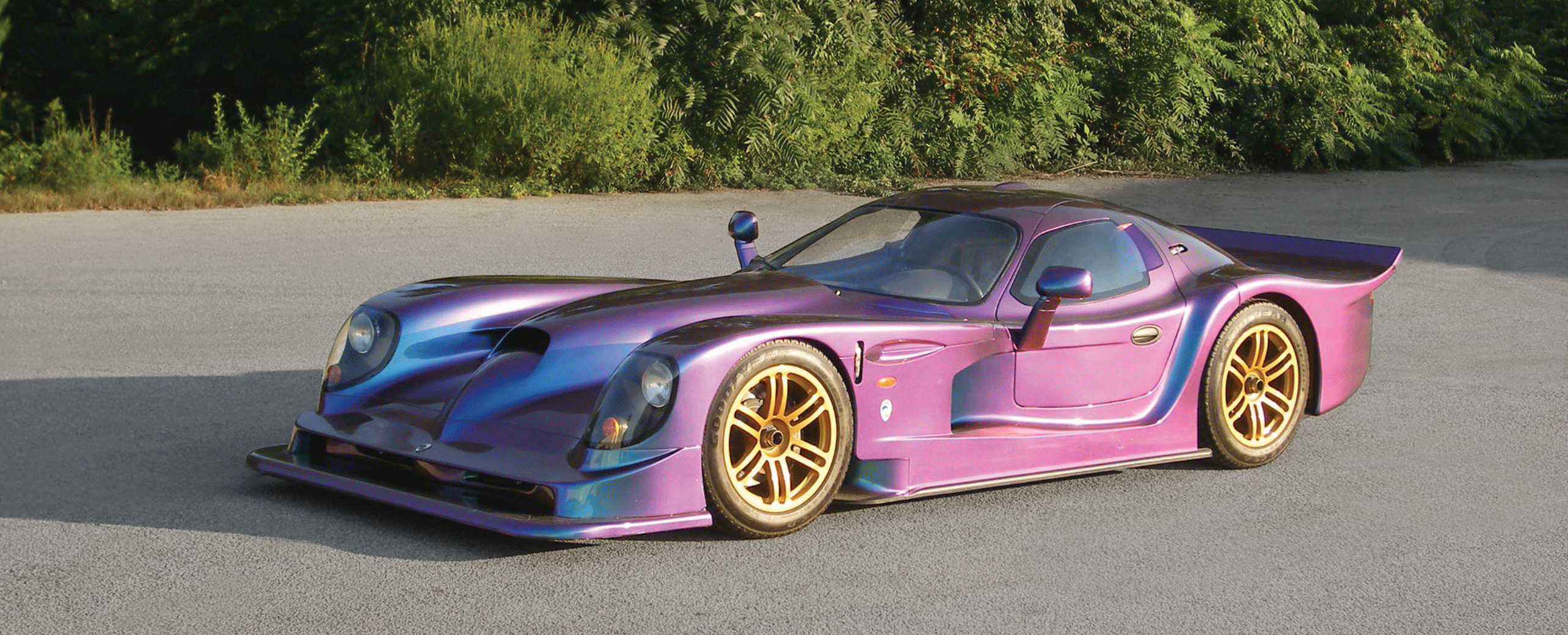
Unlike its rear-mid-engine competitors, pharmaceutical entrepreneur Don Panoz insisted on a front-mid-engine layout. Designers placed a massive V8 engine entirely behind the front axle line, creating a distinctive long-bonnet silhouette that earned the vehicle its famous nickname, "The Batmobile." To meet strict homologation requirements imposed by racing governing bodies in the late 1990s, Panoz created street-legal iterations of the race car.
In addition to the original 1997 homologation car preserved by the Panoz family, Panoz LLC announced a continuation program allowing collectors to commission brand-new, street-legal Esperante GTR-1 models. Built from the original chassis molds and body tooling at the company's facility in Braselton, Georgia, these cars offer modern buyers a direct line to 1990s GT1 racing royalty.
- Engine Block (Roush-Ford V8)
- Front Axle Line (Engine sits entirely behind axle)
- Driver Cockpit
- Rear Axle / Transaxle
2. Technical Specifications and Performance Architecture
The Esperante GTR-1 street version is fundamentally a Le Mans endurance racer equipped with minimal road-going modifications. Its engineering prioritizes raw mechanical feedback, structural strength, and high-speed aerodynamic downforce.
Powertrain and Performance
At the heart of the GTR-1 is a naturally aspirated 6.0-liter Roush-Ford V8 engine. Derived from Ford's racing block architecture and tuned by Roush Racing, this engine delivers violent acceleration paired with an unmistakable American V8 exhaust rumble.
- Engine Displacement: 6.0 Liters (5,988 cc / 365 cu in) naturally aspirated V8
- Horsepower: 600+ bhp @ 7,200 RPM (street trim calibration)
- Torque: 500+ lb-ft @ 5,200 RPM
- Transmission: 6-speed manual transaxle or optional Hewland 6-speed sequential gearbox
- Drive Configuration: Front-mid engine, rear-wheel drive (RWD) with limited-slip differential
- 0–60 mph Acceleration: Approximately 3.2 seconds
- Top Speed: Exceeds 200 mph (322 km/h) depending on wing angle and gearing setup
Chassis, Aerodynamics, and Braking
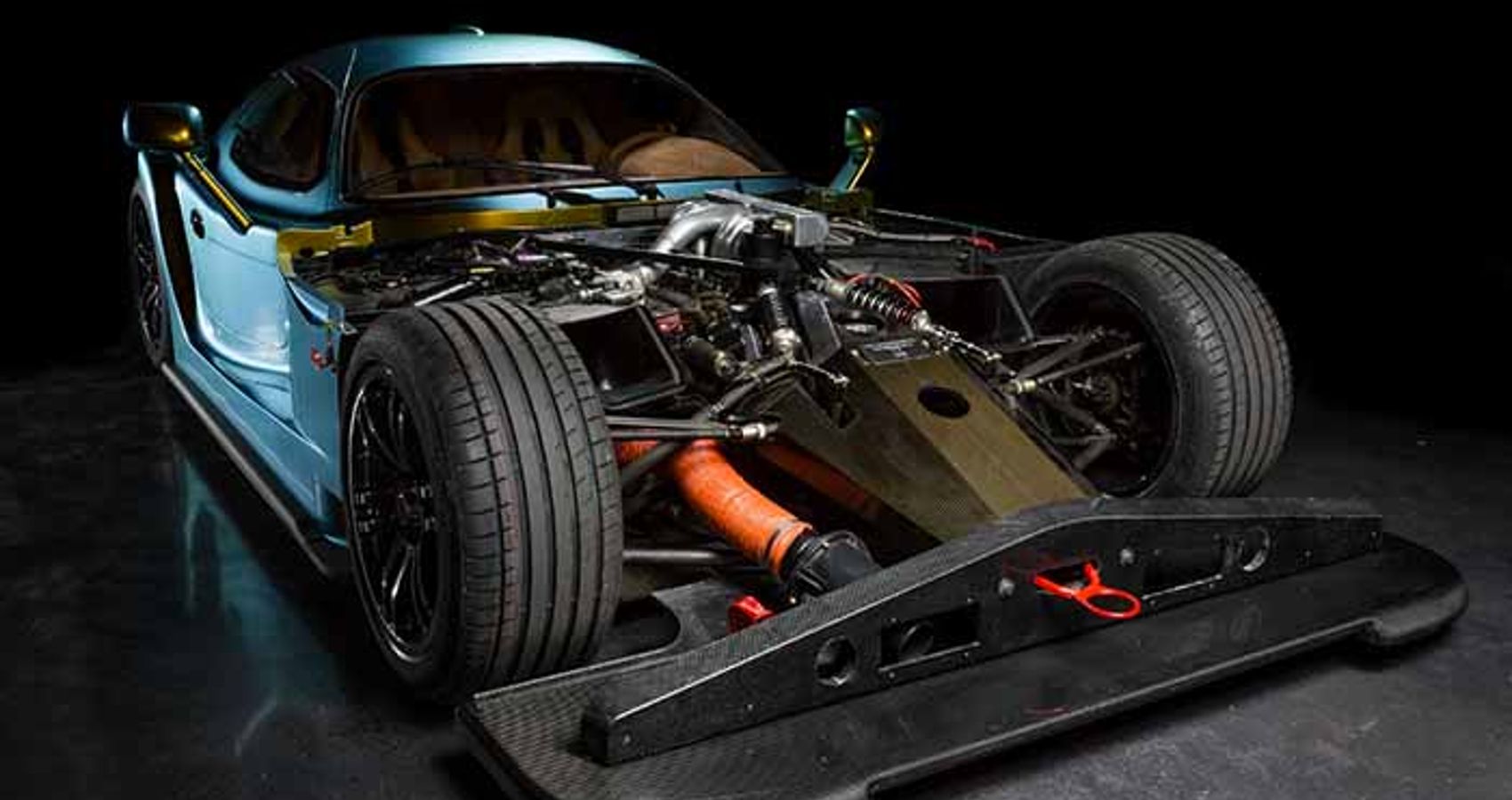
The underlying structural framework of the Esperante GTR-1 is constructed from carbon-fiber composite materials integrated with an intermediate steel roll cage structure.
- Chassis Construction: Carbon-fiber and Kevlar monocoque tub with front and rear tubular subframes
- Bodywork: Full carbon-composite bodywork featuring quick-release front and rear clam shells
- Suspension System: Independent double wishbones front and rear, with pushrod-actuated inboard dynamic dampers and adjustable anti-roll bars
- Braking System: AP Racing 8-piston front and 4-piston rear calipers with ventilated steel or carbon-ceramic brake discs
- Curb Weight: Approximately 2,425 lbs to 2,650 lbs (1,100–1,202 kg) depending on customer creature comforts
3. How to Acquire an Esperante GTR-1
Acquiring a Panoz Esperante GTR-1 differs significantly from buying a production supercar from Ferrari or Porsche. Due to extreme rarity, prospective owners must navigate specialized channels.
- APPLICANT INITIATION
- Submit Collector Portfolio & Intent to Panoz LLC (Braselton, GA)
- SPECIFICATION & CONSULT
- Choose Chassis Options, Gearing, Trim, & Powertrain Calibration
- PRODUCTION PHASE (12–18 mos)
- Monocoque Fabrication, Engine Dressing, Assembly, Track Testing
- DELIVERY & COMPLIANCE
- Track Handover, Boutique/Replica Titling, & Transport Logistics
Option A: Commissioning a Factory Continuation Build
Panoz LLC accepts private commissions to manufacture new Esperante GTR-1 continuation models using preserved original assembly tooling.
- Direct Application and Consultation: Prospective buyers initiate contact with Panoz LLC in Braselton, Georgia. Because production capacity is strictly limited, applicants undergo a portfolio review to verify collector credentials and financial readiness.
- Deposit and Customization Agreement: Upon approval, buyers sign a bespoke build contract requiring a substantial initial deposit (typically 30% to 50% of the baseline price). Customers customize interior finishes, exterior liveries, gearbox choices (h-pattern vs sequential), and sound dampening packages.
- Build Timeline: Fabrication and assembly take between 12 and 18 months. The monocoque tub is laid up, the Roush-Ford V8 is custom-built and dyno-tested, and final assembly is performed by historic racing technicians.
- Factory Track Handover: Completed builds undergo shakedown testing at Road Atlanta (located adjacent to the Panoz headquarters) before formal customer delivery.
Option B: Purchasing Historic GT1 Provenance Cars
Extremely rarely, an original 1997 race chassis or the single original 1997 factory road car appears at premier international auction houses like RM Sotheby’s, Gooding & Company, or Bonhams.
- Documentation Audit: Buyer representatives must audit the car's logbooks, racing history (if applicable), engine hours, and structural carbon integrity.
- Auction Valuation: Original homologation chassis and Le Mans competition cars command premiums between $1.2 million and $2.5 million based on racing provenance and historical significance.
4. Legal, Titling, and Registration Considerations
Registering a race-bred GT1 supercar for street use requires navigating complex regulatory landscapes.
United States Registration
- Low Volume Motor Vehicle Manufacturers Act: Continuation builds are typically registered under low-volume manufacturer rules or custom/replica car statutes depending on the state of registration (e.g., California SB 100).
- Show or Display Exemption: For original 1997 homologation vehicles imported or transferred within the U.S., owners often utilize the National Highway Traffic Safety Administration (NHTSA) Show or Display exemption, which restricts road driving to 2,500 miles per calendar year.
- Emissions Compliance: The 6.0L Roush V8 engine must be configured with catalytic converters and specialized ECU maps to meet state-level tailpipe standards where required.
International Registration
Importing an Esperante GTR-1 into Europe, the UK, or Asia requires checking local single-vehicle approval (SVA) or Individual Vehicle Approval (IVA) procedures. Noise limits, lighting compliance, headlight height regulations, and pedestrian safety bumpers may require minor modifications before passing inspection.
5. Maintenance, Servicing, and Ownership Realities
Operating a GT1 homologation supercar involves specialized maintenance practices. Unlike mass-market supercars supported by global dealer networks, GTR-1 ownership relies on direct factory technical support and specialized race shop care.
- Panoz Factory Support (Braselton, GA)
- Roush-Ford Powertrain
- Engine Oil & Dry Sump
- Spark Plugs & ECU Maps
- Valve Train Adjustments
- Carbon Monocoque & Body
- Structural Inspections
- Kevlar/Composite Repair
- Aerodynamic Alignment
- Roush-Ford Powertrain
Powertrain Upkeep
The 6.0-liter Roush-Ford V8 is robust compared to fragile Italian high-revving engines of the era, but it operates with race-grade tolerances:
- Dry-Sump Lubrication: The engine uses a dry-sump oiling system. Checking oil levels requires warming the engine to operating temperature and following strict dipstick protocols to prevent overfilling.
- Spark Plugs and Ignition: High-compression race engines foul spark plugs quickly during slow-speed street driving or extended idling. Plugs should be inspected every 1,000 miles.
- Engine Rebuild Intervals: While detuned for street durability, the valvetrain and bottom end require comprehensive overhaul inspections every 15,000 to 20,000 miles or after aggressive track outings.
Structural Carbon Fiber and Bodywork Care
The GTR-1 features expansive front and rear carbon-composite clam shells.
- Ground Clearance & Splitters: The low front splitter is vulnerable to steep driveways and speed bumps. Owners should fit front-axle lift systems during the build process to protect expensive carbon weave.
- Clam Shell Operations: Opening and closing the heavy single-piece body sections requires two people to prevent hinge twisting or gel-coat cracking.
Tires and Mechanical Consumables
Finding period-correct rubber that handles 600+ horsepower requires specialized procurement:
- Tires: Center-lock or custom 5-lug forged wheels require ultra-high-performance rubber such as Michelin Pilot Sport Cup 2 tires. Tires must be replaced every 3 to 4 years regardless of tread depth due to compound heat-cycle degradation.
- Brakes: Steel rotors are easier to manage for street applications, whereas optional carbon-ceramic discs require higher operating temperatures to achieve optimal stopping power.
6. Driving Dynamics and Ergonomics
Stepping into the Esperante GTR-1 reveals its uncompromised motorsport origins.
Cockpit Ingress and Cabin Layout
Entering the cabin requires stepping over wide carbon-fiber sills and dropping into deeply bolstered fixed-back bucket seats. The driving position is positioned far back in the chassis, roughly over the rear axle, looking down a sweeping bonnet.
- Visibility: Forward sightlines are framed by wide front fender arches. Rearward visibility is minimal, heavily reliant on wide side mirrors and optional modern rear-view camera systems integrated during continuation builds.
- Creature Comforts: Factory continuation models can be specified with air conditioning, leather-wrapped carbon bucket seats, and sound-insulating carpets. However, mechanical gear whine, exhaust resonance, and wind noise remain prominent features of the cabin experience.
On-Road vs. Track Performance
- Steering Feedback: The heavy power-assisted rack-and-pinion steering communicates every road texture directly to the driver's hands, requiring constant engagement.
- Clutch and Gearing: The heavy twin-disc clutch and short-throw shifter require deliberate footwork. Operating the optional sequential gearbox on public roads is jerky, rewarding smooth, high-rev upshifts on track facilities over low-speed urban cruising.
7. Comparative Analysis: GT1 Homologation Icons
To evaluate where the Panoz Esperante GTR-1 fits in the exotic collector market, consider how its specifications, production volume, and market values compare to its contemporary late-1990s GT1 homologation competitors.
| Vehicle Model | Powertrain / Displacement | Horsepower & Torque | Production Quantity | Chassis Material | Estimated Market Value (2026) |
|---|---|---|---|---|---|
| Panoz Esperante GTR-1 (Street) | 6.0L Naturally Aspirated Roush-Ford V8 | 600+ bhp / 500 lb-ft | 2 Original / Bespoke Continuations | Carbon-Fiber & Kevlar Monocoque | $890,000 – $2,500,000 |
| Porsche 911 GT1 Strassenversion | 3.2L Twin-Turbo Flat-6 | 536 bhp / 443 lb-ft | ~20 Units | Steel Front Subframe / Carbon Rear | $5,000,000 – $10,000,000 |
| Mercedes-Benz CLK GTR Coupe | 6.9L Naturally Aspirated AMG V12 | 604 bhp / 572 lb-ft | 20 Coupes (6 Roadsters) | Carbon-Fiber Monocoque | $8,000,000 – $13,000,000 |
| McLaren F1 HDF / GTR Longtail | 6.1L Naturally Aspirated BMW V12 | 627 bhp / 479 lb-ft | 106 Total (28 GTR versions) | Carbon-Fiber Monocoque | $20,000,000 – $30,000,000+ |
8. Financial Outlook and Investment Valuation
Investing in an exotic GT like the Esperante GTR-1 requires balancing acquisition costs, long-term appreciation prospects, and annual operating budgets.
Valuation Drivers
- Scarcity Factor: With only two original 1997 homologation road cars in existence alongside limited factory-authorized continuation builds, market supply is restricted. This scarcity supports strong value retention compared to mass-produced exotic supercars.
- Motorsport Heritage: The GTR-1's participation at Le Mans, Sebring, and Nürburgring gives it undeniable historic racing credentials, a primary driver of long-term collector car appreciation.
- Continuation vs. Period Original: Period-built 1997 race chassis command higher prices at public auctions than modern continuation builds. However, continuation models offer superior paint customization, mechanical reliability, and tailored cabin acoustics.
Ongoing Ownership Costs
Prospective owners should budget for the following annual operating expenses:
- Specialized Insurance: Agreed-value collector policies from providers such as Hagerty or Grundy cost between $6,000 and $15,000 annually, depending on coverage limits, storage facilities, and declared mileage.
- Routine Maintenance Reserve: Set aside $8,000 to $15,000 per year for fluids, spark plugs, specialized tire sets, and minor suspension re-centerings.
- Transport Logistics: Moving the vehicle between home storage, track events, and maintenance facilities requires enclosed transport, costing $2 to $5 per mile.
9. Frequently Asked Questions
Is the Panoz Esperante GTR-1 street-legal?
Yes. Both the original 1997 homologation car and the official factory continuation models built by Panoz LLC are fully street-legal. In the U.S., continuation models are registered via low-volume manufacturer laws or state-specific boutique car construction codes, while international buyers utilize single-vehicle approval pathways.
How many Esperante GTR-1 street cars exist?
Panoz originally constructed two street-legal road cars in 1997 to satisfy FIA GT1 homologation mandates (one of which remains in the Panoz family collection). Subsequent customer continuation models are manufactured strictly to order by Panoz LLC, keeping total global road-going volume extremely small.
What engine is in the Panoz Esperante GTR-1?
The Esperante GTR-1 is powered by a front-mid-mounted 6.0-liter naturally aspirated Roush-Ford V8 engine. It produces over 600 horsepower and 500 lb-ft of torque in street tune, delivering power to the rear wheels via a 6-speed manual or optional sequential transaxle.
Can Panoz still build a brand-new Esperante GTR-1?
Yes. Panoz LLC in Braselton, Georgia retains the original carbon-fiber molds, chassis tooling, and engineering schematics from the 1997 Le Mans program. Qualified buyers can commission a bespoke, hand-assembled continuation build directly through the factory.
What is the base price of a Panoz Esperante GTR-1?
Base factory continuation builds start at approximately $890,000 before taxes, registration, and custom options. Fully customized builds featuring specialized carbon-ceramic brakes, custom leather interiors, and specialized sequential transaxles routinely cross $1,000,000.
How hard is it to service an Esperante GTR-1?
Because the powertrain uses a robust Roush-Ford V8 architecture, engine mechanics are simpler to maintain than period European V12s. However, carbon monocoque repairs, custom suspension tuning, and bodywork alignment require direct technical support from Panoz LLC or experienced vintage racing shops.
10. Summary and Next Actions
The 2024 Panoz Esperante GTR-1 continuation program offers supercar collectors a rare opportunity to acquire a legendary 1990s GT1 racer built for the street. Combining a high-downforce carbon monocoque chassis with a naturally aspirated Roush-Ford V8, the GTR-1 delivers an uncompromising driving experience that modern electronically assisted hypercars cannot replicate.
Recommended Next Steps
- Initiate Contact with Panoz LLC: Serious prospective buyers should contact Panoz LLC in Braselton, Georgia, to inquire about allocation availability, build terms, and factory tours.
- Review State and Local Titling Laws: Verify your state's registration requirements for low-volume or boutique replica vehicles (e.g., California SB 100 or state-specific street rod/custom car titles) prior to placing a deposit.
- Engage a Qualified Historic Motorsport Inspector: If acquiring a period 1997 racing or road chassis at auction, retain an independent composite and race engineering specialist to perform non-destructive testing (NDT) on the carbon monocoque.
- Establish Specialized Transport and Storage: Prepare climate-controlled storage with battery maintenance hardware and secure enclosed transport services tailored to low-ground-clearance GT vehicles.