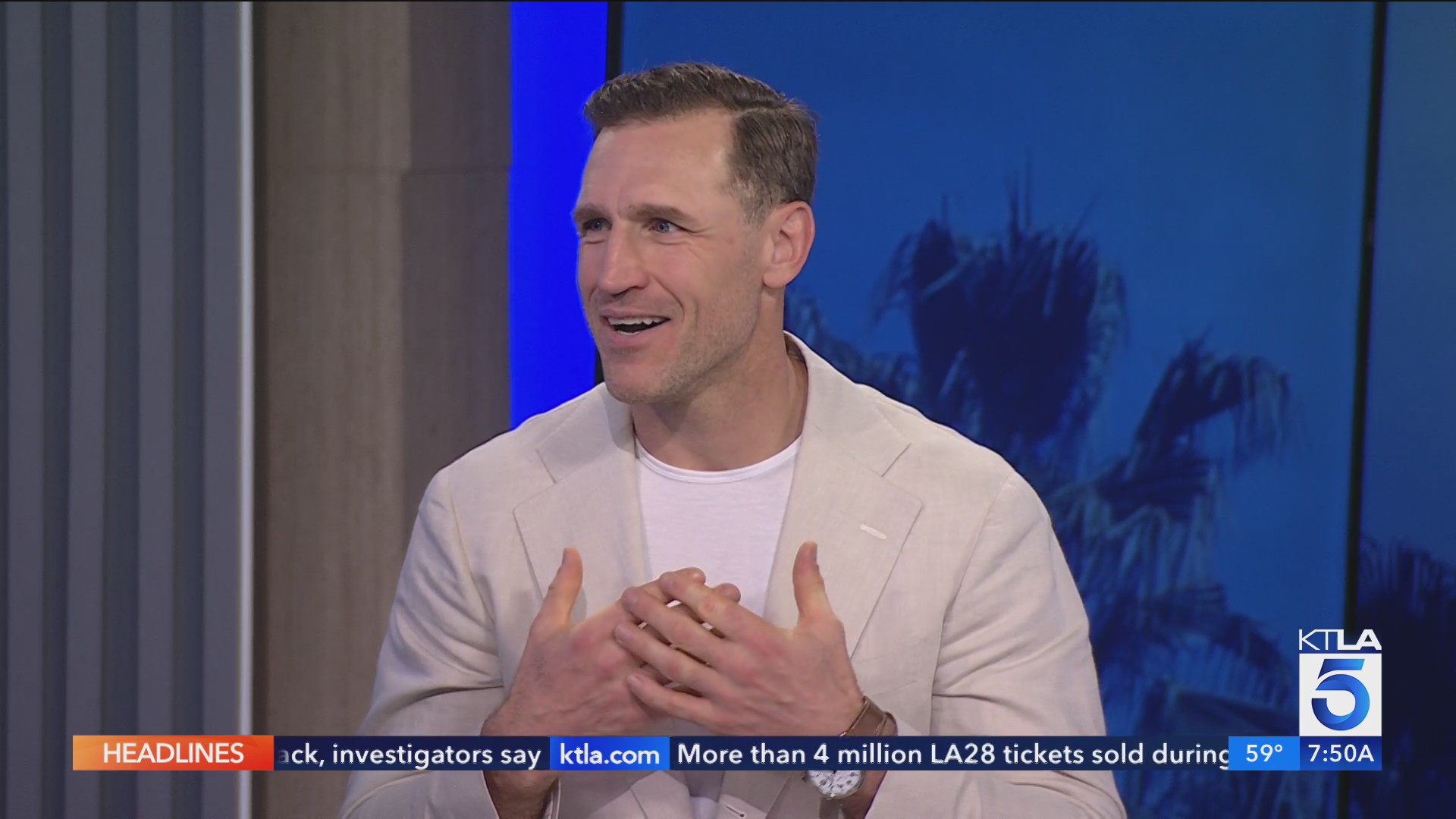
Brooks Laich is a retired professional ice hockey center who played over 15 seasons in the NHL, most notably with the Washington Capitals. As of 2026, Laich has transitioned into a successful post-hockey career focused on wellness, entrepreneurship, and media, having earned over $35 million in career salary while establishing a reputation as one of the league’s most durable and respected leaders.
The Foundations of a Professional Career: 2001–2004
Brooks Laich’s journey to the National Hockey League began in the Western Hockey League (WHL), where he played for the Moose Jaw Warriors and the Seattle Thunderbirds. His work ethic and two-way play caught the attention of scouts, leading to his selection by the Ottawa Senators in the sixth round (193rd overall) of the 2001 NHL Entry Draft.
While late-round picks often struggle to make an impact, Laich’s trajectory was defined by steady incremental progress. He spent the 2002-2003 season honing his skills in the American Hockey League (AHL) with the Binghamton Senators. His brief debut with Ottawa in 2003-2004 consisted of only one game, but the organization recognized his value as a developmental asset.
The turning point of his early career occurred on February 18, 2004. In a move that signaled the beginning of a new era for the Washington Capitals, the Senators traded Laich and a second-round pick to Washington in exchange for veteran star Peter Bondra. At the time, Laich was viewed as a secondary piece of the trade, but he would eventually become a foundational element of the Capitals' roster for more than a decade.
The Washington Capitals Era: Peak Performance and Leadership
Laich’s tenure in Washington is remembered for his transformation from a checking-line prospect into a versatile, top-six forward. During the "Rock the Red" era, alongside superstars like Alexander Ovechkin and Nicklas Backstrom, Laich provided the defensive responsibility and "grit" that balanced the team's offensive firepower.
The Developmental Years and 2006 Calder Cup
Before becoming a permanent fixture in the NHL, Laich was instrumental in the success of the Capitals' AHL affiliate, the Hershey Bears. In 2006, he helped lead the Bears to a Calder Cup Championship, scoring 15 points in 21 playoff games. This championship experience was vital; it established Laich as a player who performed when the stakes were highest, a trait that would define his reputation in the NHL.
Statistical Peaks and "Iron Man" Reliability
Between 2007 and 2012, Laich enjoyed his most productive years. He recorded three consecutive seasons of 20 or more goals (2008–2010), peaking with a 25-goal, 59-point campaign in 2009-2010. Perhaps more impressively, Laich earned a reputation for durability. He played all 82 games in four different seasons, embodying the "Iron Man" archetype that coaches value for line consistency.
His role was not limited to scoring; he was a premier penalty killer and a reliable faceoff specialist. His ability to play both center and wing made him a "Swiss Army Knife" for various Capitals coaches, including Bruce Boudreau and Dale Hunter.
Brooks Laich’s NHL Contracts and Financial Overview
Throughout his career, Laich’s contracts reflected his rising value as a core leader. His earnings were a result of both his on-ice production and his perceived value in the locker room.
Entry-Level and Bridge Deals
Laich’s initial years were spent on standard entry-level compensation. Following the 2004 trade, he signed several short-term deals as he established his place in the lineup. In 2008, he signed a three-year, $6.187 million contract (an AAV of roughly $2.06 million). This deal was considered a bargain for the Capitals as Laich consistently outperformed his cap hit during this window.
The 2011 Landmark Extension
In June 2011, facing potential unrestricted free agency, Laich signed the most significant contract of his career: a six-year, $27 million extension with the Washington Capitals. The deal carried an Annual Average Value (AAV) of $4.5 million.
At the time, the contract was a subject of intense debate among NHL analysts. While Laich was the "heart and soul" of the team, a $4.5 million cap hit for a player who was primarily a second- or third-line center was seen as a steep premium for leadership. However, the Capitals' management viewed him as indispensable to the team's culture.
Career Earnings Summary Table
| Contract Period | Team(s) | Total Value | Annual Average Value (AAV) |
|---|---|---|---|
| 2003 – 2006 | OTT / WSH | ~$1.8M (ELC) | ~$600,000 |
| 2006 – 2008 | Washington | $1.525M (2 years) | $762,500 |
| 2008 – 2011 | Washington | $6.187M (3 years) | $2,062,500 |
| 2011 – 2017 | WSH / TOR | $27,000,000 (6 years) | $4,500,000 |
| 2017 – 2018 | LA Kings | $650,000 (1 year) | $650,000 |
| Total Career | NHL | ~$37,162,500 | N/A |
Late Career Transitions: Toronto and Los Angeles
As Laich entered his early 30s, injuries began to take a toll. Groin and hamstring issues limited his mobility, making it difficult to live up to the $4.5 million price tag.
In February 2016, the Capitals traded Laich, Connor Carrick, and a second-round pick to the Toronto Maple Leafs in exchange for Daniel Winnik and a fifth-round pick. For Washington, this was a "salary dump" move to clear cap space for a playoff run. For Toronto, who were in the early stages of a total rebuild under Mike Babcock, Laich was brought in to provide veteran mentorship to young stars like Auston Matthews and Mitch Marner.
After spending time in the AHL with the Toronto Marlies during the 2016-2017 season—where he handled the demotion with characteristic professionalism—Laich became a free agent. He signed a one-year, $650,000 contract with the Los Angeles Kings in 2017 after a successful professional tryout (PTO). He played 12 games for the Kings before being waived and eventually retiring from professional play.
Technical Depth: The Playing Style of a "Glue Player"
To understand why Laich was able to command a $27 million contract, one must look beyond the scoresheet. He was the quintessential "glue player."
- Penalty Killing Excellence: Laich utilized a long reach and high hockey IQ to take away passing lanes. He was often the first forward over the boards during five-on-three disadvantages.
- Net-Front Presence: Despite not being the largest player on the ice, Laich was fearless in the "dirty areas." A significant portion of his goals came from deflections and winning battles in the crease.
- Faceoff Proficiency: Late in games, Laich was frequently used for defensive zone draws. His strength on the puck allowed him to neutralize opposing centers, even if he didn't win the draw cleanly.
- Fitness and Conditioning: Laich was often cited by teammates as the fittest player on the roster. His dedication to off-season training allowed him to maintain an NHL pace well into his 30s, even as the league transitioned toward a faster, youth-oriented game.
Current Status in 2026: Life After the Rink
As of 2026, Brooks Laich has successfully navigated the "second act" of his life, a transition that many professional athletes find challenging. He has leveraged his NHL earnings and public profile to build a multifaceted career in the wellness and media sectors.
Wellness and Fitness Advocacy
Laich has become a prominent voice in the functional fitness community. He frequently invests in and promotes high-intensity interval training (HIIT) platforms and recovery technologies. His personal brand focuses on "the athlete's mindset," helping non-athletes apply professional discipline to their daily health routines.
Media and Podcasting
Laich’s articulateness and comfort in front of the camera led him to several media ventures. Following the success of his early podcasting efforts (such as How Men Think), he has continued to appear as a guest analyst for NHL broadcasts, particularly during the Stanley Cup Playoffs. His analysis is often praised for focusing on the psychological aspects of the game—leadership, locker room dynamics, and the pressure of the postseason.
Venture Capital and Private Equity
With career earnings exceeding $35 million, Laich has been active in venture capital. In 2026, his portfolio includes interests in sustainable food tech, athletic apparel, and mental health apps for youth. He remains a resident of the United States, maintaining ties to both the Los Angeles and Washington, D.C. areas, where he is still revered by the Capitals' fanbase.
Common Questions Regarding Brooks Laich
Did Brooks Laich win a Stanley Cup?
No, Brooks Laich did not win a Stanley Cup during his NHL career. He was a key member of the Washington Capitals during several of their most successful regular seasons, but the team did not win the championship until 2018, two years after Laich had been traded to the Toronto Maple Leafs. However, he did win a Calder Cup (AHL) with the Hershey Bears in 2006.
When did Brooks Laich officially retire?
While he last played in the NHL during the 2017-2018 season with the Los Angeles Kings, Laich did not immediately file formal retirement papers. He spent some time exploring opportunities overseas and in training before transitioning fully into his post-hockey business ventures by late 2019.
What was Brooks Laich’s highest-earning season?
Laich’s highest-earning years were between 2011 and 2017, during his six-year, $27 million contract. His peak base salary in a single season reached $5.5 million (unadjusted for escrow or taxes) during the mid-portion of that deal.
What is Brooks Laich doing now in 2026?
In 2026, Brooks Laich is an entrepreneur, venture capitalist, and fitness advocate. He remains active in the public eye through media appearances and his work in the health and wellness industry. He is also known for his passion for the outdoors and adventure travel, which he documents for his substantial social media following.
Why was Brooks Laich traded from Washington?
The trade in 2016 was primarily a financial decision. Laich’s $4.5 million cap hit was no longer proportionate to his fourth-line production at that stage of his career. By trading him to Toronto, the Capitals cleared the necessary "cap space" to acquire Daniel Winnik and add defensive depth, which was required for their status as a championship contender.
Practical Recommendation for Fans and Researchers
For those looking to study the evolution of NHL contracts and player longevity, Brooks Laich serves as a premier case study of the "pre-analytics" vs. "post-analytics" transition in hockey. His 2011 contract is often cited in sports management courses as an example of "paying for intangibles."
If you are interested in following his current contributions to the fitness world, his proprietary training programs and wellness seminars remain the best way to engage with his professional work in 2026. For hockey historians, the Washington Capitals' archives and the Hershey Bears' Hall of Fame provide the most comprehensive look at his on-ice impact and his role in building the culture of a championship-caliber organization.