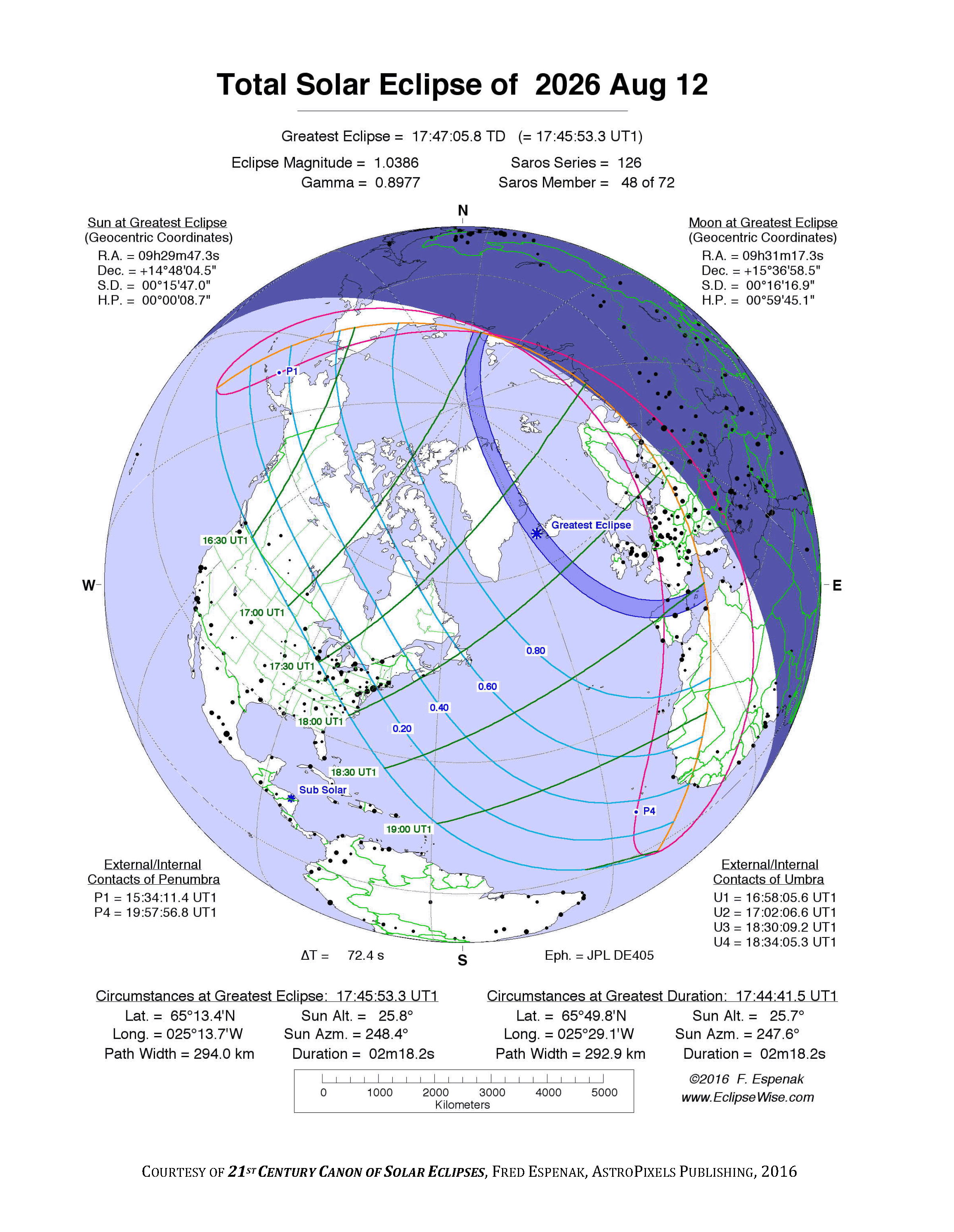
The 2026 total solar eclipse, occurring on August 12, 2026, is one of the most anticipated astronomical events of the decade, carving a path of totality across Greenland, Iceland, and northern Spain, with a partial eclipse visible across a much broader region of Europe, North Africa, and North America.
Understanding the 2026 Total Solar Eclipse
A total solar eclipse occurs when the Moon passes directly between the Earth and the Sun, completely obscuring the face of the Sun and plunging a narrow track of the Earth's surface into temporary twilight. The 2026 event represents a major celestial alignment that has drawn intense interest from scientists, amateur astronomers, and travelers worldwide. Because totality occurs over relatively accessible landmasses in the late afternoon for parts of Europe, it offers unique viewing opportunities compared to remote ocean-bound eclipses or polar-exclusive events.
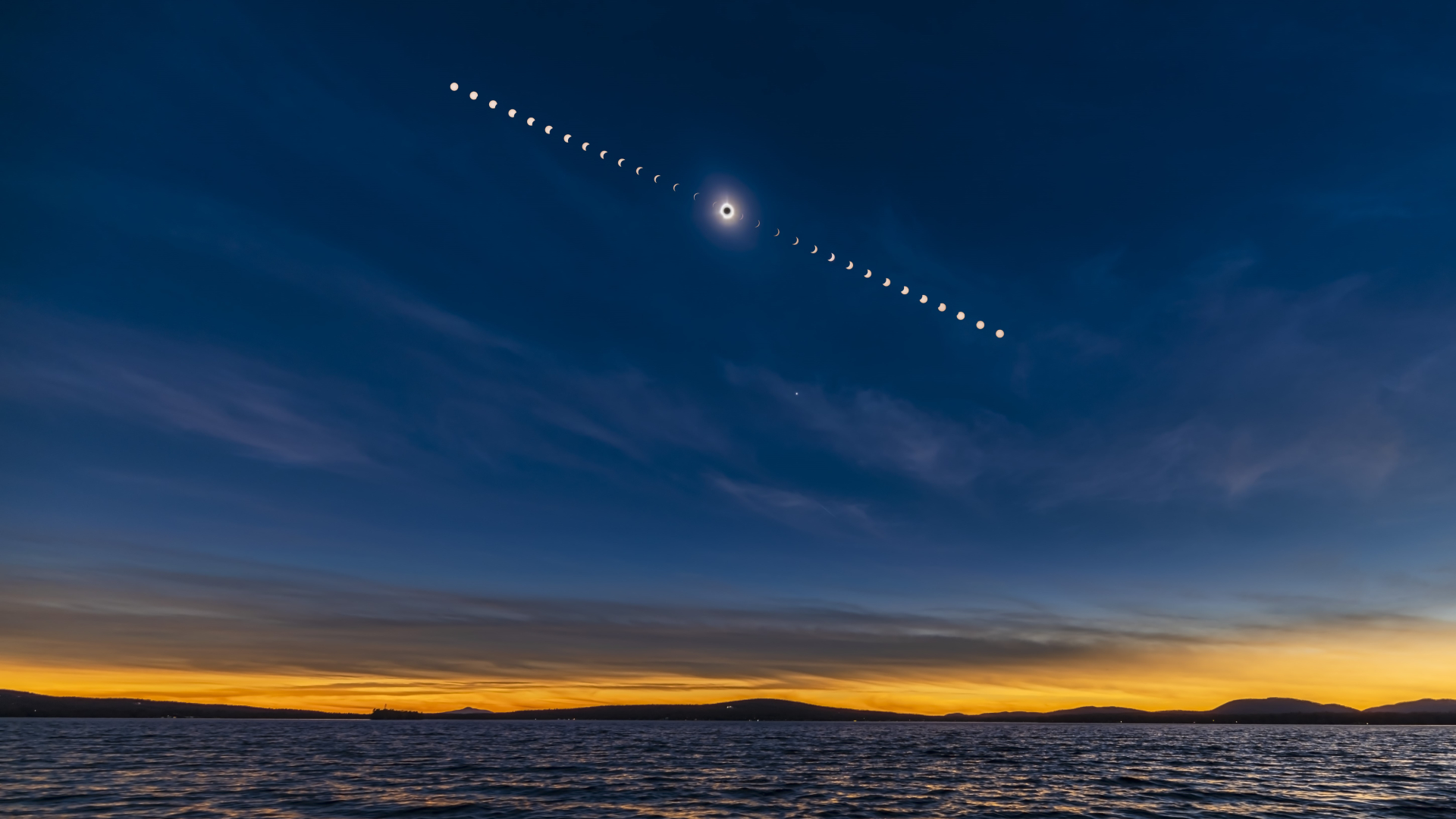
The geometry of this eclipse involves the Moon's umbral shadow sweeping across the globe at supersonic speeds. For those positioned directly within the path of totality, the sun's corona—its outer atmosphere—will become visible to the naked eye for a matter of minutes or seconds, depending on their exact location along the centerline. Beyond this narrow path, millions of people across a wider geographical footprint will experience a partial solar eclipse, where the Moon takes a significant "bite" out of the solar disc without fully blocking it.
The Path of Totality: Where to See the Full Eclipse
The path of the 2026 total solar eclipse begins in the high Arctic, crosses the remote expanses of eastern Greenland, sweeps across the island nation of Iceland, travels over the Atlantic Ocean, and makes landfall in northern Spain before terminating near the Balearic Islands at sunset.
Greenland and the Arctic
The eclipse path first touches land in northeastern Greenland. Due to the extreme terrain, sparse infrastructure, and unpredictable late-summer Arctic weather, this region will primarily attract scientific expeditions and specialized adventure-travel groups. Totality here occurs relatively early in the day, offering a dramatic backdrop of glaciers and fjords, though cloud cover and logistical hurdles make it a challenging destination for casual observers.
Iceland
Iceland is expected to be one of the premier land-based viewing platforms for the 2026 eclipse. The path of totality crosses the western part of the country, including the capital city of Reykjavík, though parts of the capital and the Reykjanes peninsula lie near the southern edge of the path and will experience a slightly shorter duration of totality. Locations further north within the path, such as the Snaefellsnes Peninsula, will enjoy longer periods of complete darkness.
The primary challenge in Iceland is climatological. August weather in the North Atlantic is notoriously variable, featuring frequent maritime cloud cover and rain. Observers traveling to Iceland must remain mobile, monitoring real-time meteorological forecasts to position themselves beneath clear skies along the accessible ring-road network.
Spain
After crossing the Atlantic, the Moon's shadow makes landfall in northern Spain during the late afternoon, just before sunset. The path of totality cuts diagonally across the Iberian Peninsula, encompassing major regions such as Cantabria, Asturias, parts of Castilla y León, the Basque Country, Aragon, Valencia, and the Balearic Islands, including Ibiza and Mallorca.
Spain offers exceptional logistical advantages compared to Greenland and Iceland:
- Extensive Infrastructure: A dense highway network, robust rail links, and abundant hospitality options make moving around the path of totality straightforward.
- Favorable Climate: August in central and northern Spain is historically dry and clear, significantly reducing the statistical probability of weather-related obstruction.
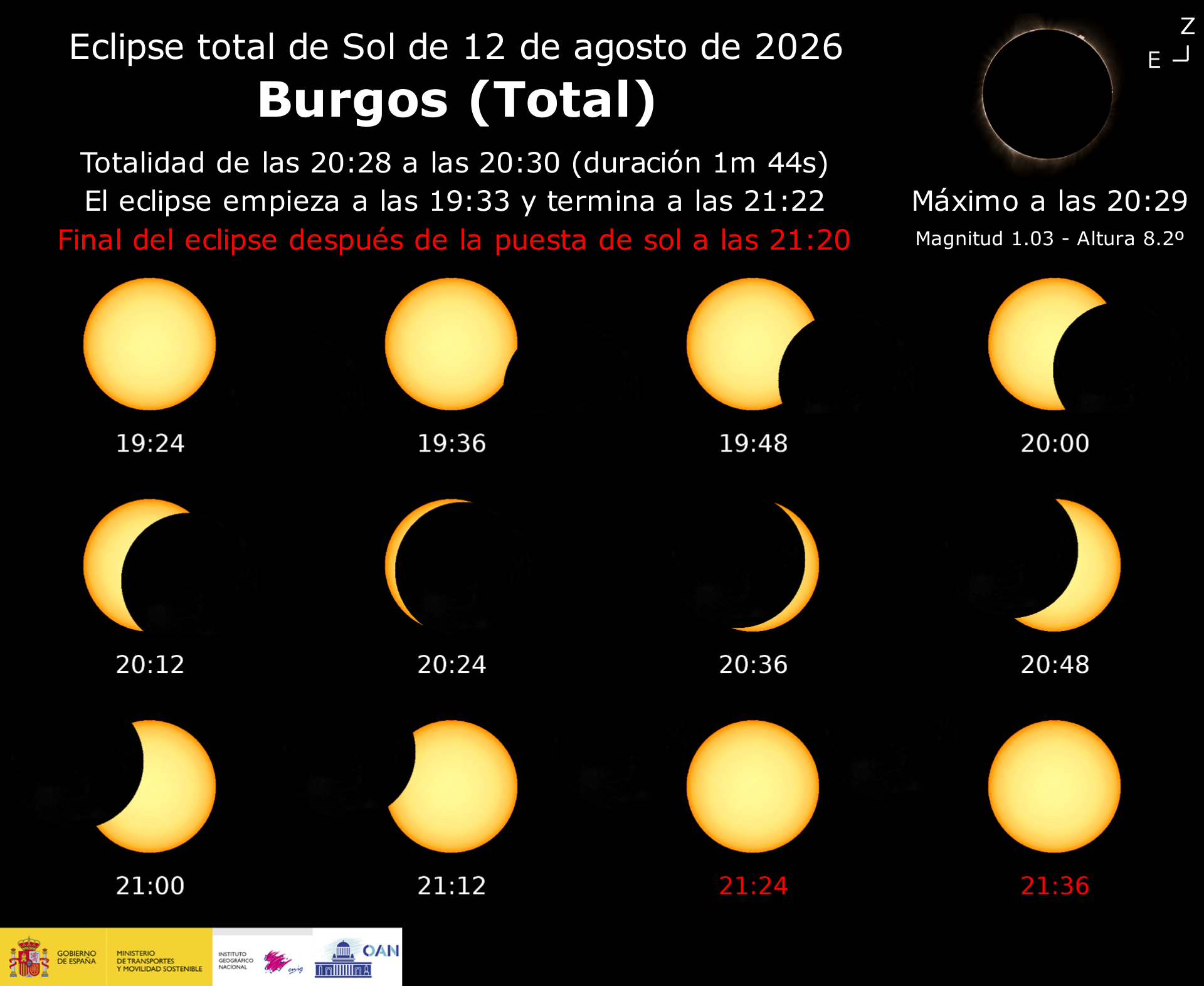
- Low Sun Angle: Because totality occurs late in the evening—often just minutes before sunset—observers will experience the rare phenomenon of a low-horizon eclipse, providing dramatic photographic opportunities against terrestrial landscapes. Cities like Burgos, Zaragoza, and Palma de Mallorca fall near or within the zone of totality, providing urban hubs for viewing events.
Timeline, Duration, and Local Circumstances
The exact timing of the 2026 eclipse varies by geographic coordinates, progressing along a west-to-east trajectory according to the rotation of the Earth and the orbital velocity of the Moon.
| Location | Approximate Totality Start (Local Time) | Maximum Totality Duration | Partial Eclipse Onset |
|---|---|---|---|
| Scoresby Sund, Greenland | ~17:48 UTC | 2m 25s | ~16:30 UTC |
| Reykjavík, Iceland | ~17:48 UTC | ~1m 00s (varies by district) | ~16:47 UTC |
| Burgos, Spain | ~20:30 CEST | ~1m 45s | ~19:30 CEST |
| Mallorca, Spain | ~20:32 CEST | ~1m 20s (varies by location) | ~19:34 CEST |
The duration of totality is determined by the width of the shadow cone and the observer's position relative to the centerline. Those standing directly on the centerline experience the maximum possible duration for that specific segment of the path. Moving toward the northern or southern edges of the path drastically shortens totality and increases the risk of missing the total phase entirely if topographical features or marginal positioning interfere.
Safety Protocols and Eye Protection
Observing any solar eclipse requires strict adherence to safety protocols to prevent permanent eye damage. The concentrated infrared and ultraviolet radiation emitted by the photosphere can burn retinal tissue without causing immediate pain, as the retina lacks pain receptors.
Certified Solar Filters
At all times outside of the brief period of totality, direct viewing of the Sun requires certified solar filters that comply with the international ISO 12312-2 safety standard. These filters reduce visible sunlight to safe levels and block out harmful infrared and ultraviolet radiation.
- Ecliptic Glasses: Handheld viewers or cardboard glasses must be inspected for scratches, punctures, or separation from the cardboard frame before use. Filters older than three years or showing structural damage must be discarded.
- Optical Instruments: Telescopes, binoculars, and telephoto camera lenses must have solar filters attached securely to the front objective lens (the end facing the Sun). Never place a solar filter behind the eyepiece, as concentrated solar rays can crack the filter material and cause instant eye injury.
The Safe Removal and Replacement Rule
The single crucial rule of eclipse safety is knowing when it is safe to remove eye protection:
- Partial Phases: Use ISO-certified filters continuously when looking at the Sun as the Moon gradually covers it.
- Totality: The only moment eye protection can be safely removed is during absolute totality—the brief window when the Moon completely obscures the solar disc and the corona is visible.
- The Diamond Ring Effect: The moment the first bead of direct sunlight reappears (signaling the end of totality or the "diamond ring" effect), all observers must immediately resume using certified eye protection.
Planning, Travel Logistics, and Preparation
Securing accommodations and travel arrangements within the narrow path of totality requires advance planning, particularly for remote destinations like Iceland and popular tourist regions in Spain.
Accommodation and Transportation
- Iceland: Rental vehicles and hotels in Reykjavík and the western regions book out months—and sometimes years—in advance. Travelers should secure flexible lodging arrangements and monitor vehicle rental options that permit driving on gravel or unpaved tracks if necessary to escape localized weather systems.
- Spain: While Spain possesses vast hotel capacity, coastal resorts in Mallorca and historic cities along the centerline experience extreme demand. High-speed rail networks (AVE) and regional bus services provide alternatives to driving, though traffic congestion on major rural highways immediately following the eclipse is virtually guaranteed.
Equipment Checklist for Observers and Photographers
- Observation Gear: Multiple pairs of ISO-certified eclipse glasses for every member of the party.
- Optical Tools: Binoculars equipped with securely mounted solar filters for examining sunspots during partial phases.
- Imaging Equipment: Digital cameras with telephoto lenses (300mm to 600mm or greater) paired with dedicated solar filter sheets. A sturdy tripod and a remote shutter release are essential for sharp images during the low-light conditions of totality.
- Navigation and Weather Tools: Offline maps, meteorological apps providing high-resolution cloud cover predictions (such as ECMWF or local meteorological service data), and physical paper road maps in case cellular networks experience localized congestion.
Frequently Asked Questions
What happens if it is cloudy during the 2026 total solar eclipse?
Cloud cover is the primary risk for any eclipse chaser. If thick clouds obscure the sky during totality, observers will not see the corona, prominences, or the dramatic darkening of the sky, though ambient light levels will still drop significantly. Mitigation strategies include remaining mobile in a rental car, checking satellite weather models hours before first contact, and driving to an alternate microclimate outside the primary cloud bank.
Can I look at the eclipse without glasses during totality?
Yes, but only during the exact minutes and seconds of total eclipse when the Sun is 100% blocked by the Moon. The moment any part of the bright solar disk reappears, looking directly at it without an ISO 12312-2 certified filter causes immediate and severe retinal damage. When in any doubt whatsoever, keep the glasses on.
How does the 2026 eclipse compare to the 2024 North American eclipse?
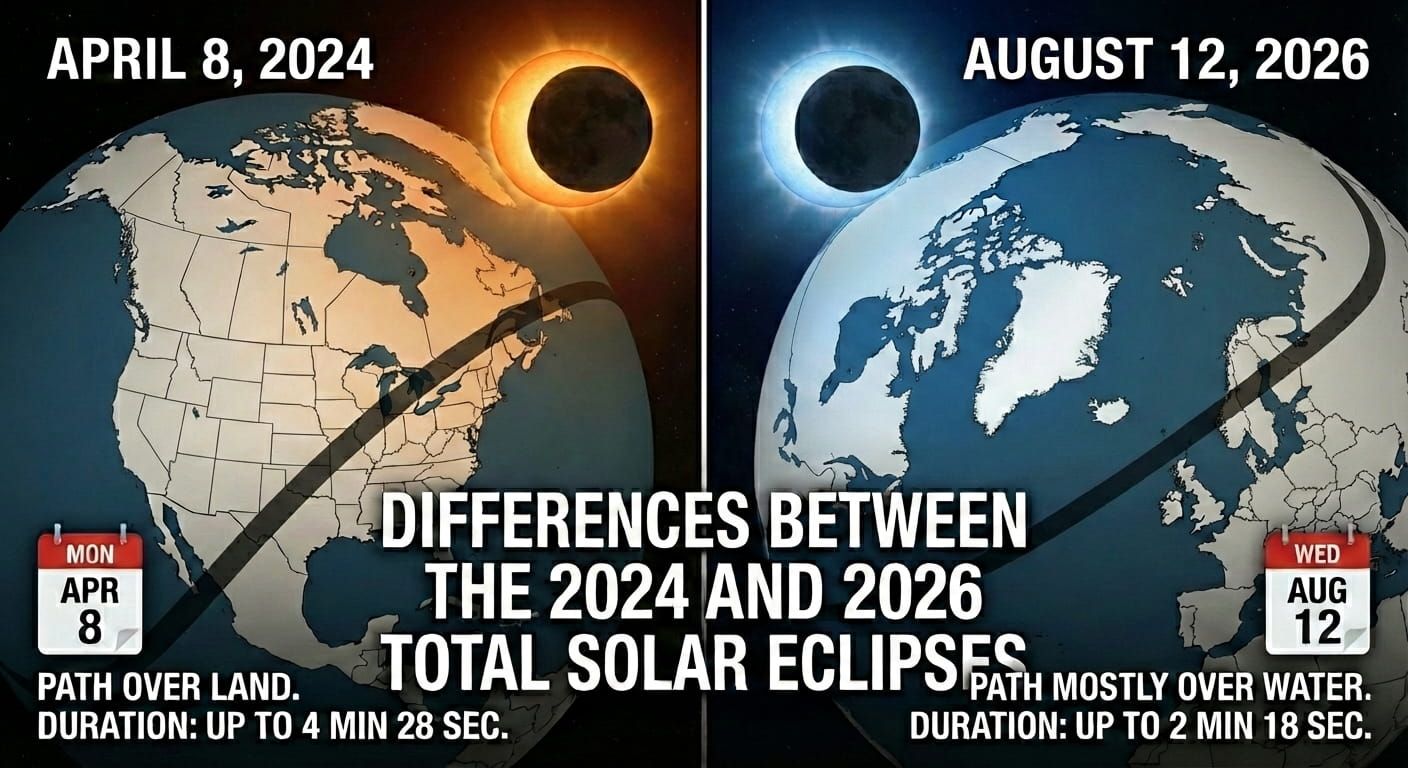
The 2024 eclipse featured long durations of totality (exceeding four minutes in some areas) and crossed densely populated regions of Mexico, the United States, and Canada. By contrast, the 2026 eclipse offers shorter durations of totality, generally lasting between one and two minutes, and features landfalls primarily in Iceland and northern Spain during the late afternoon, concluding near sunset.
Are animals affected by a total solar eclipse?
Yes. As totality approaches and ambient light levels drop rapidly, diurnal animals often exhibit nocturnal behaviors, such as birds returning to roost, crickets chirping, and livestock settling down for the night. These behaviors reverse abruptly within minutes when the solar light returns.
Where can I find official scientific data and path coordinates?
Official cartographic data, precise centerline coordinates, contact timings, and local circumstances tables are published by specialized astronomical institutions, including the NASA Eclipse Web Site and astronomical almanacs produced by national observatories.
Conclusion
The 2026 total solar eclipse offers a compelling opportunity to witness one of nature's most awe-inspiring spectacles against the distinct landscapes of Iceland and northern Spain. Success depends heavily on rigorous preparation, strict adherence to eye safety guidelines using ISO-certified filters, and maintaining flexibility to outmaneuver potential weather disruptions. By planning travel logistics well in advance and understanding the precise timeline of local circumstances, observers can maximize their chances of experiencing an unforgettable celestial alignment.