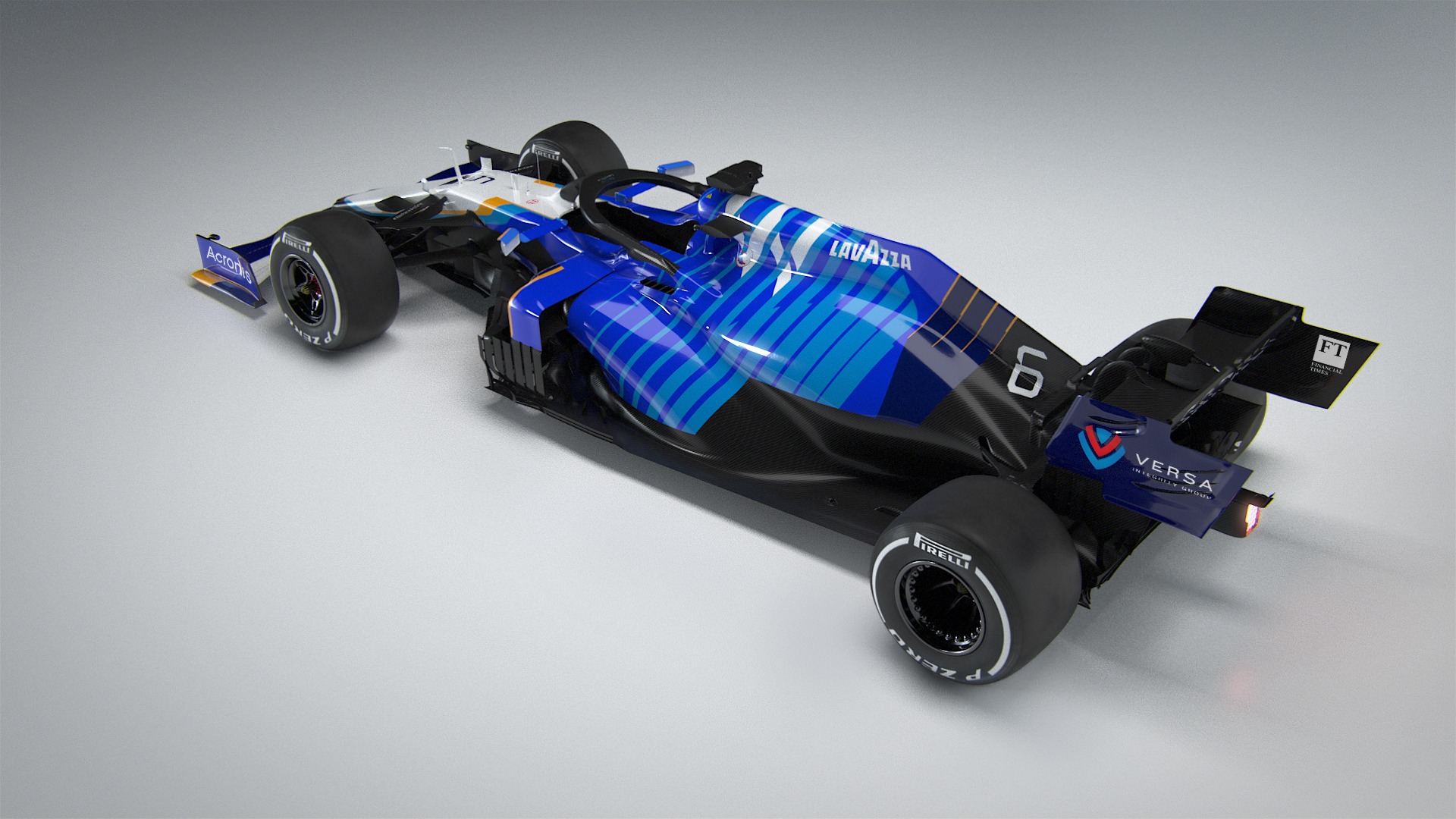
The 2021 Williams FW43B remains a pivotal machine in Formula 1 history, marking the team’s transition from back-marker struggles toward competitive mid-field relevance. Powered by the Mercedes-AMG M12 Power Unit, this car featured sophisticated aerodynamic innovations designed to maximize "peak" downforce, ultimately securing the team's first podium in years during the 2021 season.
The Williams FW43B was more than just an evolutionary step from its 2020 predecessor; it represented a strategic gamble by Williams Racing to prioritize outright speed in specific conditions over general stability. As we look back from 2026, the FW43B is a highly sought-after chassis for collectors and the Williams Heritage program, representing the final year of the high-downforce, pre-ground-effect technical regulations. Understanding this car requires a deep dive into its unique "peaky" aerodynamic philosophy, its integration of the class-leading Mercedes powertrain, and the logistical realities of keeping such a complex hybrid machine race-ready for private operation or historical demonstration.
The FW43B Architecture: Engineering Under the Skin
The FW43B was built upon a carbon-fiber and honeycomb composite structure, a carry-over from the FW43 chassis due to the development freezes imposed by the FIA during the COVID-19 pandemic. However, the "B" designation signified significant internal revisions. To maintain "race-ready" status, the car utilized a complex hydraulic system for steering and braking, alongside a sophisticated electronic control unit (ECU) provided by McLaren Applied, which was the standard across the grid.
The cooling packaging was one of the most critical engineering feats of the 2021 season. Williams worked closely with Mercedes High Performance Powertrains (HPP) to shrink the sidepod inlets while maintaining thermal efficiency. This was achieved through high-efficiency heat exchangers and a revised air-intake system above the driver’s head. For modern owners or curators in 2026, maintaining this cooling integrity is the primary challenge, as the seals and composite ducts must be pressure-tested regularly to prevent the M12 engine from overheating during low-speed demonstration runs.
Aerodynamic Evolution and the Wind Sensitivity Challenge
One of the most discussed technical aspects of the 2021 Williams car was its aerodynamic "peakiness." Unlike the more stable platforms of Mercedes or Red Bull, the FW43B was designed to generate massive amounts of downforce at very specific yaw angles. This meant that on a calm day or at a high-speed circuit like Spa-Francorchamps or Monza, the car was exceptionally fast, often punching above its weight in qualifying.
The trade-off for this innovation was extreme sensitivity to wind. Crosswinds could disrupt the airflow over the floor and the rear wing, causing sudden losses of grip. This was a deliberate choice by the technical team; they knew that by chasing a "peak" rather than a "plateau" of performance, they could occasionally compete for points even if the car was difficult to drive in suboptimal conditions. The "race-ready" setup for this car today involves careful calibration of the front wing flaps and the rear "T-wing" to ensure that the driver—whether a professional or a wealthy collector—can handle the car’s inherent volatility.
2021 Regulatory Shifts: Managing the Floor and Diffuser
The 2021 season introduced specific aero-curtailing rules aimed at reducing downforce to protect the tires. These included a diagonal cut on the floor ahead of the rear wheels and the removal of slots in the floor edge. Williams responded by innovating in the "bargeboard" area—the complex forest of carbon fiber vanes between the front wheels and the sidepods.
The FW43B’s bargeboard assembly was a masterpiece of vortex management. Its primary goal was to "outwash" the turbulent air (wake) generated by the front tires, keeping it away from the underfloor. By 2021, Williams had refined this to the point where they could claw back a significant portion of the downforce lost to the new regulations. For technical historians, the FW43B stands as a textbook example of how to manipulate airflow without the help of the massive venturi tunnels found in the 2022-and-later ground-effect cars.
The Mercedes-AMG M12 E Performance Power Unit
At the heart of the FW43B's speed was the Mercedes-AMG M12 E Performance 1.6-liter V6 turbocharged hybrid engine. In 2021, this was arguably the most powerful and efficient internal combustion engine ever created, producing over 1,000 brake horsepower when combined with the Energy Recovery System (ERS).
The M12 unit featured a split-turbocharger design, with the compressor at one end of the engine and the turbine at the other, linked by a shaft running through the "V" of the engine. This innovation reduced "turbo lag" and allowed for more efficient packaging. When preparing a 2021 Williams for the track in 2026, the complexity of the ERS—comprising the MGU-K (Kinetic), MGU-H (Heat), and the Energy Store (Battery)—requires a specialized team of high-voltage technicians. The "Race Ready" status of such a car is not merely about turning a key; it involves pre-heating the oil and coolant to precise temperatures and using an external "slave" battery to initialize the systems.
Comparative Technical Specifications: FW43 vs. FW43B
To understand the innovation of the 2021 car, it is helpful to compare it to its 2020 predecessor, highlighting where the team focused its development tokens.
| Specification | 2020 Williams FW43 | 2021 Williams FW43B |
|---|---|---|
| Engine | Mercedes-AMG M11 | Mercedes-AMG M12 E Performance |
| Chassis | Monocoque Carbon-Composite | Refined Monocoque (Carry-over) |
| Floor Design | Rectangular / Slotted | Diagonal Cut (2021 Regs) |
| Transmission | Williams 8-speed Seamless | Williams 8-speed Seamless |
| Weight | 746 kg | 752 kg |
| Innovation Focus | Structural Integrity | Aero Peak Performance & Cooling |
| Best Result | 11th Place | 2nd Place (Spa-Francorchamps) |
Performance and Logic: The 2021 Season Impact
The performance of the FW43B was highlighted by George Russell’s legendary qualifying lap at the Belgian Grand Prix. In treacherous wet conditions, the car's inherent "peaky" downforce allowed Russell to find grip that others could not, securing a front-row start and an eventual podium. This validated the technical team's decision to pursue a specialized aero map rather than a generic one.
For the team, 2021 was also the first full year under the ownership of Dorilton Capital. This brought a shift in the "race-ready" philosophy of the organization. Investment flowed into the Grove factory, allowing for faster prototyping of parts. The FW43B benefited from a more aggressive update cycle, including a revamped front wing and revised brake ducts that improved tire temperature management—a chronic weakness for Williams in previous years.
Innovations in Data and Driver Interface
Inside the cockpit of the FW43B, the driver interface was a blend of tradition and high-tech innovation. While many teams integrated the main display screen into the steering wheel itself, Williams famously kept the screen mounted on the cockpit dash for several years to reduce the steering wheel's weight and rotational inertia.
The 2021 steering wheel featured over 20 buttons and rotary switches, allowing the driver to adjust the differential, engine braking, and ERS deployment on every corner. The "innovation" here was not just in the hardware, but in the software mapping. The team developed "event-specific" maps that allowed drivers to toggle between qualifying "hot lap" modes and "race-saving" modes with a single click. In 2026, running these cars requires the original software laptops and proprietary Williams/Mercedes code, making "race-ready" status a matter of digital as much as mechanical maintenance.
Maintaining and Operating the FW43B in 2026
If you are looking to see or operate a 2021 Williams F1 car today, you are likely dealing with the Williams Heritage division. Keeping a hybrid-era F1 car in running condition is an immense undertaking compared to the V8 or V10 eras.
- Electronic Lifespan: The sensors and looms (wiring) in a 2021 car are subjected to extreme heat and vibration. In 2026, many of these components are reaching the end of their shelf life and require custom fabrication or replacement with aerospace-grade equivalents.
- The Battery Challenge: The Lithium-Ion Energy Store in the FW43B has strict "State of Charge" requirements. If left discharged for too long, the battery can be permanently damaged, costing hundreds of thousands of dollars to replace.
- Hydraulic Systems: The car operates at pressures exceeding 3,000 PSI. The seals on the actuators for the DRS (Drag Reduction System) and power steering must be replaced annually to ensure the car remains "race ready" and safe for high-speed use.
- Fuel and Lubricants: The M12 engine was designed for specific Petronas fuel blends. Using modern pump gas would cause immediate detonation and engine failure. Specialized racing fuels must be sourced to match the 2021 combustion maps.
Frequently Asked Questions
What makes the 2021 Williams FW43B faster than the 2020 version?
The primary speed increase came from the Mercedes-AMG M12 power unit and refined aerodynamics. Despite the 2021 regulations cutting floor area to reduce downforce, Williams optimized their bargeboard and diffuser interaction to regain that lost grip, while the engine provided better energy deployment through the MGU-K.
Is the Williams FW43B "race ready" for private buyers?
While Williams occasionally sells older chassis, the 2021 hybrid cars are rarely sold to private individuals without a comprehensive service contract. To be "race ready," the car requires a team of at least 4-6 specialized engineers and significant trackside support equipment, including nitrogen starters and cooling fans.
Why did George Russell perform so well in this specific car?
George Russell's driving style was well-suited to the FW43B's "peaky" aero. He was able to handle the car's instability in crosswinds and exploit the maximum downforce available in high-commitment corners. His feedback also helped the team refine the steering weight and throttle mapping throughout the 2021 season.
How much does it cost to run a 2021 Williams F1 car today?
Operating a hybrid F1 car in 2026 can cost upwards of $50,000 per track day, excluding the cost of the car itself. This includes specialized fuel, a crew of engineers, transport, and the "lifing" of components (replacing parts before they fail due to fatigue).
Can the FW43B be converted to a simpler engine?
While it is technically possible to fit a simpler V8 engine into the chassis for easier maintenance (as seen in some "EuroBOSS" series), it would require a complete redesign of the rear suspension, gearbox casing, and electronics. Doing so would destroy the historical value and the "innovation" profile of the original 2021 Mercedes-integrated design.
Practical Recommendations for Enthusiasts and Collectors
For those interested in the technical legacy of the 2021 Williams FW43B, the best course of action is to engage with the Williams Heritage program based in Grove, UK. This department maintains the cars to their original 2021 specifications, ensuring that the software and hybrid systems remain functional.
If you are a sim racer or a model collector, look for "Scan-accurate" versions of the FW43B, which capture the intricate details of the 2021 floor and bargeboard innovations. For those attending historic motorsport events in 2026, seeing the FW43B in person is a rare opportunity to witness the final iteration of the "narrow-body" high-downforce era of Formula 1. When viewing the car, pay close attention to the rear wing endplates and the floor edges; these are the areas where Williams’ 2021 innovations were most visible and effective in clawing back performance against the giants of the sport.