Chris Van Allsburg is a master of the "picture book for all ages," renowned for his surrealist narratives and technically masterful illustrations that utilize unique perspectives and dramatic lighting. His most famous works, including The Polar Express and Jumanji, have become cultural touchstones, winning multiple Caldecott Medals and inspiring major motion picture adaptations while maintaining their status as essential components of modern children’s literature.
The Artistic Legacy of Chris Van Allsburg
As of 2026, the body of work produced by Chris Van Allsburg continues to serve as a primary bridge between traditional fine art and children’s storytelling. Unlike many illustrators who rely on bright, primary colors and simple shapes to capture a child's attention, Van Allsburg utilizes a technique known as tenebrism—a style of painting or drawing characterized by high-contrast light and shadow. This creates a sense of "magical realism" that makes the impossible feel physically grounded and tangibly real.
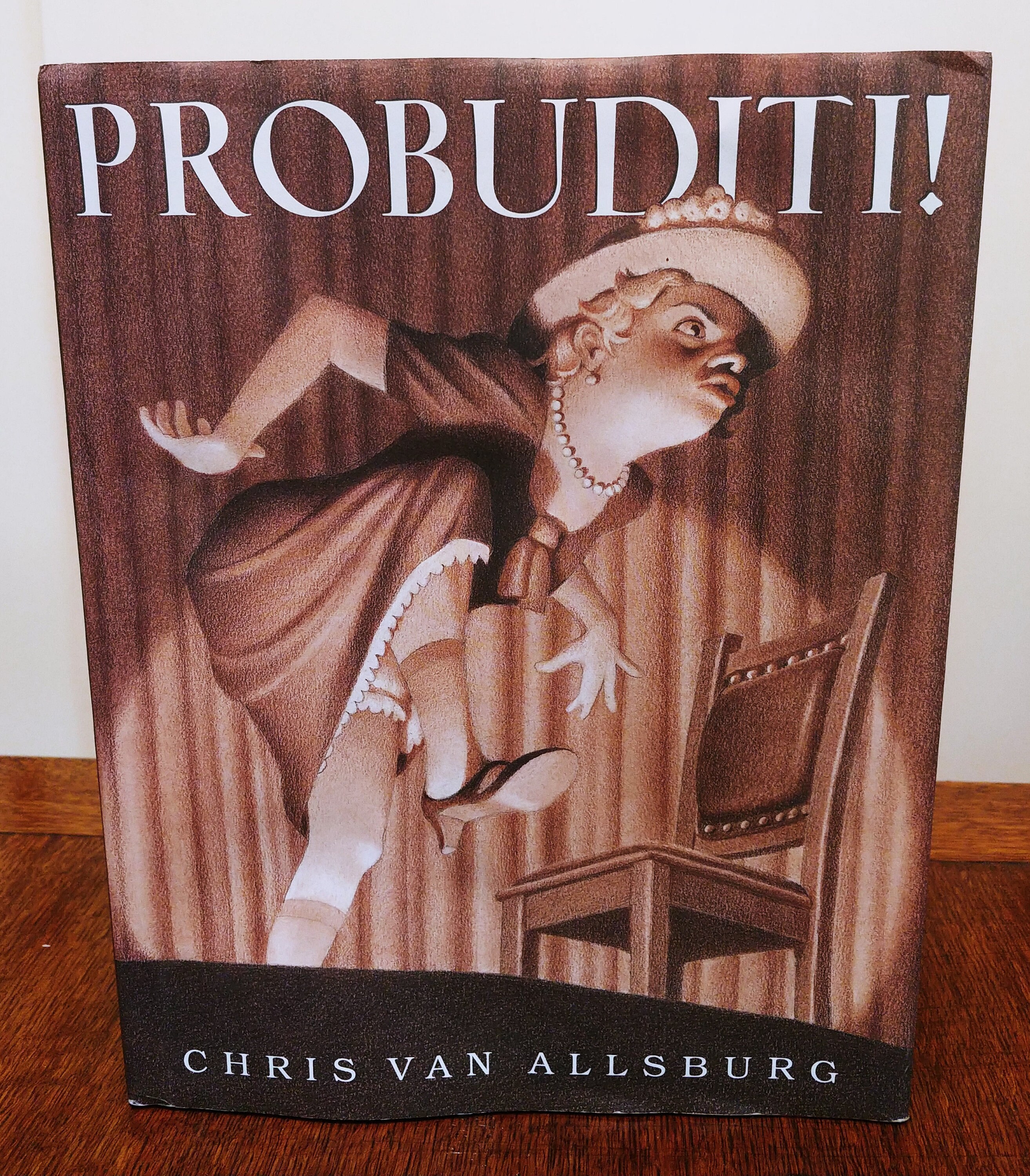
Van Allsburg’s background as a sculptor heavily influences his two-dimensional work. His drawings possess a structural weight and three-dimensional quality that distinguish them from flatter, more cartoonish styles. Whether using charcoal, carbon pencil, or oil pastels, he treats the page as a stage, often employing "low-angle" or "bird's-eye" perspectives that force the reader to see familiar environments from unsettling or heroic viewpoints.
The Mystery of the "Hidden Dog"
A defining characteristic for collectors and young readers alike is the recurring appearance of Fritz, a white bull terrier with a black eye patch. Originally modeled after a real dog owned by his brother-in-law, Fritz first appeared in The Garden of Abdul Gasazi. Since then, Van Allsburg has hidden the dog in almost every subsequent book, turning the reading experience into a visual scavenger hunt that rewards meticulous observation.
The Bestselling Classics: A Deep Dive
To understand the impact of Van Allsburg’s bibliography, one must examine the titles that redefined the commercial and critical potential of the picture book. These works are not merely stories; they are atmospheric experiences that challenge the boundary between the mundane and the fantastic.
Jumanji (1981)
The winner of the 1982 Caldecott Medal, Jumanji introduced the concept of a board game that comes to terrifying life. The narrative follows Peter and Judy as they navigate a jungle that manifests within their own suburban living room.
The technical brilliance of Jumanji lies in the use of conté dust and charcoal. By avoiding color, Van Allsburg focuses the reader’s attention on texture—the rough skin of a rhinoceros, the plush upholstery of a chair, and the grain of the wooden floor. This choice makes the intrusion of the wild animals feel more visceral. In 2026, Jumanji remains a staple in classrooms for teaching "cause and effect" and narrative tension.
The Polar Express (1985)
Perhaps his most commercially successful work, The Polar Express won the Caldecott Medal in 1986 and has since become a global Christmas tradition. The story of a boy who boards a mysterious train to the North Pole is told through lush, full-color oil pastels.
The lighting in The Polar Express is particularly noteworthy. Van Allsburg creates a "glow" effect—the steam from the engine, the flickering lights of the city, and the soft shimmer of fallen snow—that evokes a sense of nostalgia and dreamlike wonder. It is a masterclass in using color to establish temperature and mood, contrasting the cold blue of the winter night with the warm gold of the train’s interior.
The Mysteries of Harris Burdick (1984)
While not his highest-selling title in terms of mass-market volume compared to The Polar Express, The Mysteries of Harris Burdick is arguably his most influential work among educators and writers. The book is presented as a series of "found" illustrations, each accompanied by a single title and one line of text, inviting the reader to invent the story themselves.
This interactive format has turned the book into a foundational tool for creative writing workshops. The images—such as a man about to hit a lump under a rug or a house lifting off like a rocket—are intentionally ambiguous, proving that what is left unsaid is often more powerful than a completed narrative.
Technical Evolution: From Monochrome to Full Color
Van Allsburg’s career can be viewed through the lens of his shifting mediums. His early works were almost exclusively monochromatic, focusing on form and shadow. As his career progressed, he integrated color to explore different emotional landscapes.
- The Charcoal/Carbon Era: This includes The Garden of Abdul Gasazi and Jumanji. The focus here is on architectural precision and the "uncanny valley" of everyday objects.
- The Colored Pencil/Pastel Transition: Works like The Wreck of the Zephyr (1983) marked his first significant foray into color. He used these tools to create a softer, more impressionistic feel while maintaining his signature heavy shadows.
- The Full-Color Maturity: In books like The Widow’s Broom (1992) and Bad Day at Riverbend (1995), Van Allsburg experimented with different styles entirely—Riverbend, for example, uses the aesthetic of a coloring book to tell a meta-narrative about "raiders" (crayons) invading a two-dimensional world.
Summary of Major Works and Characteristics
The following table summarizes the key technical and thematic elements of Van Allsburg’s most prominent bestselling books.
| Title | Publication Year | Primary Medium | Narrative Theme |
|---|---|---|---|
| The Garden of Abdul Gasazi | 1979 | Carbon Pencil | The boundary between magic and reality. |
| Jumanji | 1981 | Conté Crayon/Dust | Consequences of play and domestic chaos. |
| The Polar Express | 1985 | Oil Pastels | The endurance of belief and childhood wonder. |
| The Z Was Zapped | 1987 | Charcoal/Graphite | An alphabet book as a series of stage plays. |
| Two Bad Ants | 1988 | Pen and Ink/Watercolor | Perspective shift from an insect’s viewpoint. |
| The Widow’s Broom | 1992 | Sepia-toned Pencil | Prejudice, utility, and quiet magic. |
| Zathura | 2002 | Conté Crayon | Sibling rivalry set against a space-odyssey. |
| The Misadventures of Sweetie Pie | 2014 | Oil Pastels/Mixed Media | The ethics of pet ownership and freedom. |
The "Chris Van Allsburg Style": Why It Works
Readers and critics often wonder why Van Allsburg’s books feel "different" from other illustrated works. The answer lies in his refusal to pander to a simplified view of childhood. His stories often contain elements of mystery, mild peril, and unresolved endings.
Psychological Depth
Van Allsburg understands that children are deeply interested in the "rules" of the world and what happens when those rules are broken. In The Stranger (1986), the narrative never explicitly states who the mysterious visitor is (though it is heavily implied to be Jack Frost). By leaving these gaps, Van Allsburg respects the intelligence of his audience, requiring them to synthesize visual clues with the text.
Architectural Precision
Coming from a background in sculpture and design, Van Allsburg’s rendering of interiors is remarkably accurate. Whether it is the Victorian architecture in The Garden of Abdul Gasazi or the mid-century modern aesthetic in parts of Zathura, the environments feel lived-in. This groundedness makes the eventual arrival of the supernatural—a flying boat, a living broom, or a giant sloth—feel far more jarring and effective.
Essential Guidance for Collectors and Educators
In 2026, many of Van Allsburg’s early first editions have become highly sought-after collector's items. If you are looking to build a library of his works, keep the following considerations in mind:
- Condition of the Dust Jacket: Because his covers are often dark and matte-finished (especially The Mysteries of Harris Burdick and The Polar Express), they are prone to "scuffing" and edge wear. Pristine jackets significantly increase the value of a collection.
- Printings and Editions: The Polar Express has gone through dozens of printings. For collectors, the "First Edition, First Printing" (identifiable by a specific sequence of numbers on the copyright page) is the gold standard.
- Educational Use: For teachers, Van Allsburg’s books are ideal for teaching Visual Literacy. Asking students to identify the source of light in a drawing or the "camera angle" helps them understand how artists manipulate emotion through composition.
Frequently Asked Questions
Which Chris Van Allsburg books have been made into movies?
Three of his major works have received big-screen adaptations: Jumanji (1995 and the subsequent reboot series), The Polar Express (2004), and Zathura: A Space Adventure (2005). Each film expanded on the relatively brief text of the picture books, but the original illustrations remain the primary source of the visual "DNA" for these franchises.
Is Chris Van Allsburg still writing and illustrating?
While his output has slowed in recent years, his existing library is frequently re-released in special anniversary editions. His focus has remained on high-quality, singular works rather than long-running series, ensuring that each new title is treated as a major literary event.
What is the best book to start with for a young reader?
Two Bad Ants is often the most accessible for very young children (ages 4-7) because of its clear narrative and humorous "ant's-eye view" of a kitchen. For older children (ages 8+), The Mysteries of Harris Burdick is highly recommended as a way to spark their own creative writing and storytelling abilities.
Why are many of his books in black and white?
Van Allsburg has stated that he often prefers black and white because it allows him to focus on the "logic of light" and the sculptural form of his subjects. He believes that color can sometimes distract from the mood or the structural integrity of a drawing.
Where is the dog Fritz in The Polar Express?
In The Polar Express, Fritz the dog is famously difficult to find. He appears as a small pull-toy or a silhouette in the background of certain scenes, rather than a living character. This "Easter egg" tradition is part of why the books are frequently re-read.
Practical Recommendation: Building Your Collection
If you are beginning your journey into the books of Chris Van Allsburg in 2026, the most effective approach is to start with the "Caldecott Trio": The Garden of Abdul Gasazi, Jumanji, and The Polar Express. These three books represent the foundation of his career and demonstrate his range from stark, carbon-pencil realism to vibrant, glowing oil pastels.
For those interested in the more cerebral side of his work, The Mysteries of Harris Burdick is an essential purchase. It serves not just as a book, but as a permanent invitation to the imagination. Whether you are a parent, a teacher, or an art enthusiast, these works offer a rare combination of technical perfection and emotional resonance that continues to define the pinnacle of the illustrated book genre.