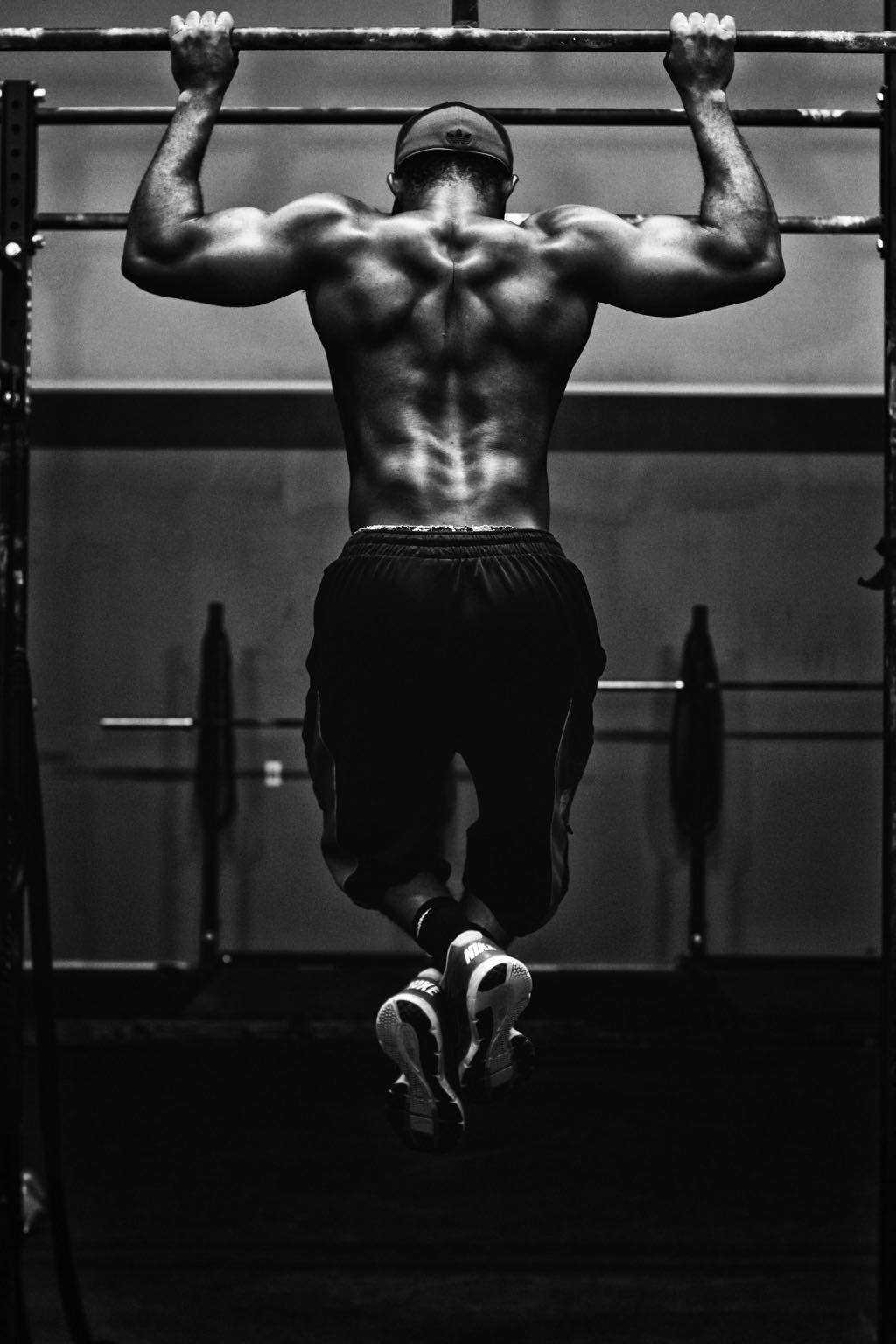
The 24-hour pull-up world record is an endurance feat measuring the maximum number of completed, form-compliant pull-ups performed within a continuous 24-hour window. Regulated primarily by Guinness World Records, it requires a pronated grip, full elbow extension at the bottom, and the chin clearing the bar at the top, all verified by strict video and witness evidence.
The 24-hour pull-up record represents one of the ultimate tests of human upper-body endurance, mental fortitude, and physiological resilience. Unlike short-burst strength records, this category demands a strategic balance between volume, recovery, and injury prevention. As of 2026, the record has evolved from the low thousands into a territory that requires nearly superhuman pacing and a deep understanding of the official measurement protocols that separate a "gym rep" from a "world record rep."
What is the 24-Hour Pull-Up World Record?
At its core, the record is a tally of total successful repetitions of a pull-up within a 1,440-minute timeframe. The "what" of this record is often misunderstood as merely "doing as many pull-ups as possible." In reality, it is a highly structured event that must adhere to a specific definition of a pull-up recognized by international sanctioning bodies, most notably Guinness World Records (GWR).
The record is categorized by gender and sometimes by the type of grip used, although the "pull-up" specifically refers to the pronated grip (palms facing away from the athlete). While related records exist for 1-minute, 1-hour, and 12-hour intervals, the 24-hour mark is the pinnacle of the endurance sub-discipline. It requires the athlete to manage extreme fatigue, skin tearing (palmar blisters), and the metabolic demands of constant eccentric and concentric muscle loading.
Historically, the record has been held by legendary endurance athletes and military personnel. Figures like David Goggins, who famously brought mainstream attention to the record in 2013 with 4,030 repetitions, paved the way for specialists who have since pushed the number well beyond 8,000. In 2026, the benchmark for elite performance in this category is defined by athletes who can maintain a pace of 5 to 6 repetitions per minute for the better part of a full day and night.
How the Record is Measured: Official Standards of Execution
Measurement of the 24-hour pull-up record is not just about the final number; it is about the validity of every individual repetition. For an attempt to be officially recognized, every rep must meet a "standard of movement" that is far stricter than what is commonly seen in local fitness centers.
The Definition of a Successful Repetition
According to GWR guidelines, a single pull-up consists of three distinct phases that must be clearly visible to observers and cameras:
- The Dead Hang (Start): The athlete must begin from a dead hang position with the arms fully extended. "Soft" elbows or beginning the pull with a slight bend results in a "no-rep."
- The Ascent (The Pull): The body must be pulled upward using the muscles of the back and arms. The use of momentum, known as "kipping" (swinging the legs or hips to generate upward force), is strictly prohibited.
- The Chin Clearance (Peak): At the top of the movement, the chin must clearly pass the horizontal plane of the top of the bar. It is not enough to simply touch the bar with the chin; it must be above it.
- The Descent (Return): The athlete must lower themselves back to the starting position where the arms are once again fully locked out.
Prohibited Movements and "No-Reps"
If an athlete fails to meet any of the criteria above, the repetition is discarded. Common reasons for disqualification of a rep include:
- Leg Kicking: Any jerky movement of the legs to assist the pull.
- Resting on the Bar: The athlete cannot rest their chin on the bar or hook their arms over it to rest.
- Incomplete Range of Motion: Failing to lock out the elbows at the bottom is the most common reason for mass disqualification of reps during video review.
Verification Requirements for Official Recognition
Measuring a 24-hour attempt involves a rigorous administrative process. Because it is impossible for a single official to maintain peak focus for 24 hours, the verification process relies on a combination of technology and human oversight.
Independent Witnesses
Guinness World Records typically requires at least two independent witnesses to be present at all times. These individuals cannot be affiliated with the athlete (e.g., they cannot be their coach, family member, or business partner). They work in shifts, usually four to six hours long, to ensure they remain alert. Their job is to maintain a manual log of every repetition, noting the time and the count.
Continuous Video Surveillance
The most critical component of measurement is the video evidence. The attempt must be filmed from an angle that clearly shows the athlete’s arms (to verify lockout) and the chin (to verify clearance). The footage must be continuous; any break in the recording can lead to the disqualification of the entire attempt. In 2026, high-definition multi-angle setups are the standard, allowing reviewers to zoom in on specific reps if the manual count is contested.
The Logbook
A chronological log must be kept, documenting not only the repetitions but also the rest breaks. While the clock does not stop for 24 hours, the athlete is permitted to take breaks for food, sleep, or medical attention. However, every second spent off the bar is time lost for accumulating repetitions.
The Evolution of the 24-Hour Pull-Up Record
To understand where the record stands in 2026, one must look at the progression of the "total count" over the last decade. The record has seen significant jumps as training methodologies for "ultra-endurance calisthenics" have become more sophisticated.
| Year | Record Holder | Repetitions | Key Aspect of Attempt |
|---|---|---|---|
| 2013 | David Goggins | 4,030 | Brought global media attention to the feat. |
| 2016 | Andrew Shapiro | 7,306 | Motivated by a family health struggle; set three records in one go. |
| 2019 | Brandon Tucker | 7,715 | Demonstrated the effectiveness of high-frequency sub-maximal training. |
| 2024 | Kenta Adachi | 8,940 | Showcased the dominance of Japanese endurance athletes in calisthenics. |
| 2026 | Current Benchmark | 9,000+ | Represents the "elite ceiling" of current human performance. |
The jump from 4,000 to nearly 9,000 repetitions is the result of shifting from "brute force" mental toughness to "pacing and efficiency." Modern record holders treat the attempt like a marathon rather than a sprint, often utilizing a "set of 3 or 5 every minute" strategy rather than doing large sets to failure.
Equipment and Environmental Specifications
The measurement of the record also extends to the physical environment. The bar itself must meet specific criteria to ensure the record is comparable to previous attempts.
- Bar Diameter and Material: The bar must be a standard fixed pull-up bar. It cannot be revolving or assisted (no "easy-grip" rotating sleeves). The diameter is usually standard (around 1 to 1.25 inches).
- Grip Aids: Generally, chalk is permitted to manage sweat and friction. However, the use of lifting straps that bind the hand to the bar is strictly forbidden, as it reduces the grip strength requirement of the exercise.
- Bar Height: The bar must be high enough that the athlete’s feet do not touch the ground during the dead hang. If the athlete’s feet touch the floor or a mat during a rep, that rep is void.
Pacing Strategies: The Math Behind the Measurement
Measuring success in a 24-hour attempt requires constant "math-in-the-head." To hit 8,000 repetitions, an athlete cannot simply work until they are tired. They must follow a strict mathematical pacing guide.
- The High-Frequency Model: Performing 6 reps every minute. This results in 360 reps per hour. Over 24 hours, this theoretically totals 8,640 reps. This allows for roughly 45–50 seconds of rest every single minute.
- The Buffer Method: Aiming for 10 reps per minute for the first 6 hours to "bank" repetitions, followed by a lower frequency (4 reps per minute) as fatigue sets in.
- The Interval Approach: 10 minutes of work followed by 2 minutes of rest. This is often used by athletes to manage heart rate and prevent the forearms from "pumping out" (hypertrophy-induced blood flow restriction).
Risks and Physiological Considerations
The measurement of this record is often interrupted by medical necessity. When an athlete attempts 7,000+ pull-ups, the body undergoes extreme stress.
- Rhabdomyolysis: A serious condition where muscle tissue breaks down and releases protein (myoglobin) into the blood, which can damage the kidneys. Official observers often look for signs of extreme swelling or darkened urine.
- Palmar Tears: The friction of the bar against the palms often rips the skin. Measurement may be paused for "taping," but the clock continues to run.
- Central Nervous System (CNS) Fatigue: After 12 hours, the brain's ability to send signals to the muscles diminishes. This is where "no-reps" become most frequent, as the athlete loses the ability to fully lock out their elbows.
Frequently Asked Questions
What is the difference between a pull-up and a chin-up in record terms?
In the context of world records, a pull-up requires a pronated grip (palms facing away), which puts more emphasis on the latissimus dorsi and the brachioradialis. A chin-up uses a supinated grip (palms facing toward the athlete), which involves more biceps brachii. Guinness maintains separate record categories for these because the supinated grip is generally considered slightly easier for high-volume attempts due to increased bicep recruitment.
Are you allowed to wear gloves during a 24-hour pull-up record attempt?
The rules regarding gloves can vary depending on the specific record-breaking body, but Guinness World Records generally allows for hand protection like palm protectors or gloves, provided they do not offer a mechanical advantage (like a hook). However, most elite athletes prefer chalk or thin athletic tape to maintain a better "feel" for the bar and prevent the bunching of material that can cause deeper blisters.
Can I rest during the 24 hours?
Yes. The 24-hour limit is a "running clock" total. You can rest for 10 minutes or 10 hours if you choose, but the clock never stops. Most record holders take very few long breaks, instead opting for "micro-breaks" of 30 to 50 seconds between small sets of repetitions to keep their muscles from seizing up.
Who verifies the repetitions if a Guinness official isn't there?
If an official adjudicator is not present on-site, the attempt is verified through a "Remote Adjudication" process. This involves submitting the full 24-hour video footage, the independent witness statements, and the manual logbooks to the Guinness World Records headquarters for a forensic review. This review process can take several weeks or months.
What is the most common reason for an attempt to be disqualified?
The most common reason is "incomplete lockout." As the athlete becomes exhausted, they unconsciously begin to "cheat" the bottom of the movement, failing to fully extend their arms. Even if the chin clears the bar, if the arms are even slightly bent at the start of the next rep, that rep will be disqualified during the final video audit.
Practical Recommendations for Aspiring Record Seekers
If you are considering an attempt at the 24-hour pull-up record, the first step is not strength—it is documentation. Before doing a single rep, you must apply to Guinness World Records to receive the specific "Evidence Guidelines" for your attempt. These guidelines change periodically, and an attempt made without following the current year's (2026) specific filming and witness requirements will not be ratified, regardless of the number of reps performed.
Furthermore, focus on "greasing the groove" (high-frequency, low-intensity training) rather than max-effort sets. The goal is to make a single pull-up feel as effortless as a single step in a marathon. Once you can perform 500 pull-ups in a day without significant soreness, you can begin the specific periodization required for a 24-hour measurement attempt.