The legendary 40-42 carat diamond ring associated with Aristotle Onassis and Jacqueline Kennedy Onassis—frequently referred to as the Lesotho III diamond or the marquise-cut engagement ring—remains one of the most famous pieces of twentieth-century jewelry. While widely discussed as a wedding or engagement gift, its true history involves a multi-million-dollar auction legacy, high-profile museum exhibitions, and a complex narrative of ownership following the former First Lady's passing.
Understanding the Origins: The Onassis-Kennedy Union and the Diamond Ring
When shipping tycoon Aristotle Onassis proposed to Jacqueline Kennedy in October 1968, the union instantly became a global media spectacle. Seeking a token fitting the immense wealth and status of the Greek billionaire, Onassis turned to Harry Winston, the premier jeweler of the era, to acquire a diamond of extraordinary proportions.
The centerpiece of this acquisition was a massive marquise-cut diamond. While popular historical accounts and auction records frequently cite the stone as weighing approximately 40.42 carats, it is fundamentally linked to the legendary Lesotho III diamond. The rough stone, discovered in the Letseng-la-Terai mine in Lesotho in 1967, weighed an astonishing 601 carats before being cut into several distinct gems by Harry Winston.
Specifications of the Lesotho III Diamond Cut
| Attribute | Detail |
|---|---|
| Original Rough Weight | 601 carats (Lesotho III) |
| Final Cut Weight | ~40.42 carats |
| Gemstone Cut | Marquise (Navette) |
| Primary Jeweler | Harry Winston |
| Acquisition Year | 1968 |
| Associated Figure | Jacqueline Kennedy Onassis |
The marquise cut, characterized by its elongated boat-like shape and pointed ends, is designed to maximize carat weight while creating an illusion of even greater size. Set simply on a platinum band with tapered baguettes, the stone was designed to showcase the pristine clarity and exceptional color of the diamond rather than relying on complex mounting architecture.
The Myth Versus Reality of the "Wedding Ring"
A common point of confusion among jewelry historians and biographers is the precise categorization of the 40.42-carat diamond. While popular culture often labels it the "Aristotle Onassis wedding ring," etiquette and historical records indicate it functioned primarily as an engagement or betrothal gift.
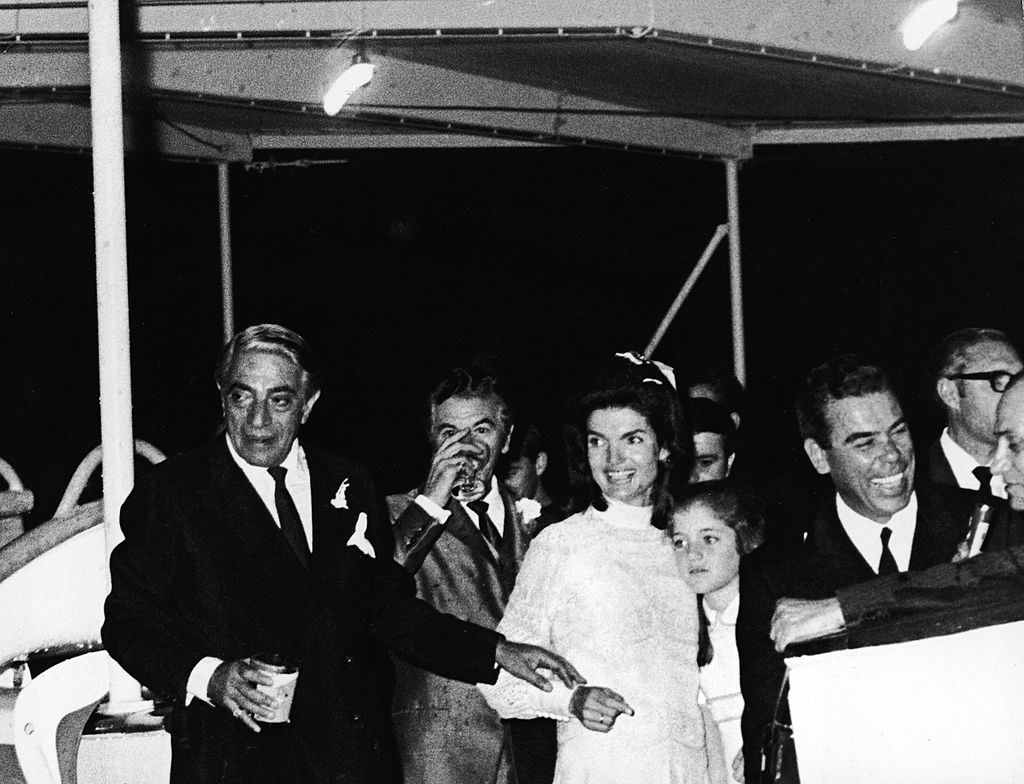
In traditional Greek Orthodox wedding ceremonies—the rite performed when Onassis and Kennedy married on the island of Skorpios on October 20, 1968—simpler bands of gold or platinum are exchanged during the service, symbolizing the binding nature of the sacrament. The massive Harry Winston marquise diamond was worn separately as a statement piece rather than the functional wedding band.
Despite its limited wearability due to its extreme value and physical size, the ring became an indelible symbol of Jacqueline Kennedy's entry into a world of immense international wealth. However, Jackie famously wore the ring on very few public occasions. Security concerns and a desire to avoid ostentatious displays in post-assassination New York City led her to keep the diamond securely locked in a New York bank vault for the vast majority of her post-marriage life.
The 1996 Sotheby's Auction and the Sothebys Legacy
Following Jacqueline Kennedy Onassis's death in May 1994, her estate became the subject of intense global curiosity. Her children, Caroline Kennedy and John F. Kennedy Jr., elected to auction a vast majority of her personal belongings, decorative arts, and jewelry through Sotheby's in New York in April 1996. The event, titled "The Estate of Jacqueline Kennedy Onassis," broke numerous auction records and attracted bidders from every corner of the globe.
The 40.42-carat marquise diamond ring—Lot 97 in the catalogue—was anticipated to fetch immense sums. Industry experts initially estimated the ring would sell for between $500,000 and $600,000. However, the allure of the former First Lady drove fierce competitive bidding.
Auction Performance and Final Metrics
- Pre-Sale Estimate: $500,000 – $600,000
- Final Hammer Price: $2.59 million (inclusive of buyer's premium)
- Buyer Identity: An anonymous private collector, widely reported to be representing a corporate or international buyer.
The sale price shattered expectations, reflecting not merely the intrinsic value of a 40-plus-carat diamond, but the profound cultural cachet attached to anything bearing the provenance of Jacqueline Kennedy Onassis.
The Subsequent Journey of the Diamond
Unlike many items from the 1996 Sotheby's auction that found their way into institutional museums or public collections, the current whereabouts of the 40.42-carat Onassis diamond remain shrouded in private ownership. Because the buyer chose to remain anonymous, the stone has largely vanished from public view, adding an air of mystique to its modern history.
Gemological experts note that diamonds of this scale and historical provenance rarely re-enter the open market through standard retail channels. Instead, when they do change hands, they typically do so via private treaty sales managed by elite auction houses like Sotheby's or Christie's, ensuring complete discretion for both buyers and sellers.
Comparing the Onassis Diamond to Other Iconic Presidential Jewels
To understand the unique significance of the 40.42-carat ring within American history, it is helpful to place it in context alongside other notable presidential and high-profile engagement rings.
| Ring / Recipient | Gemstone Details | Historical Context |
|---|---|---|
| Jackie Kennedy (First Marriage) | 2.84-carat diamond and 2.88-carat emerald with tapered baguettes (Van Cleef & Arpels) | Presented by John F. Kennedy in 1953; later modified to include diamond baguettes and round brilliants. |
| Jackie Kennedy Onassis (Second Marriage) | ~40.42-carat marquise-cut diamond (Harry Winston) | Cut from the Lesotho III rough stone; presented by Aristotle Onassis in 1968. |
| Grace Kelly | 10.47-carat emerald-cut diamond (Cartier) | Presented by Prince Rainier III of Monaco in 1955, symbolizing her transition from Hollywood icon to European royalty. |
While her first engagement ring from John F. Kennedy featured a sophisticated combination of emeralds and diamonds that reflected mid-century American political elegance, the Onassis ring represented a dramatic departure into international glamour, excess, and industrial-scale wealth.
Frequently Asked Questions
Did Jackie Kennedy wear the 40.42-carat ring often?
No. Due to overwhelming security concerns, the immense physical weight of the stone, and her personal preference for understated elegance in her daily life, Jackie Onassis wore the ring on only a handful of public occasions. It spent the majority of its existence in a secure New York bank vault.
Who bought the ring at the 1996 Sotheby's auction?
The buyer chose to remain entirely anonymous. While persistent rumors have linked the purchase to various international collectors and Middle Eastern royalty, no official confirmation has ever been released by Sotheby's regarding the winning bidder's identity.
Is the ring currently on public display?
No. Because the ring is held within a private collection, it is not currently accessible to the public, nor is it housed in any museum or permanent exhibition space.
What was the original source of the diamond?
The diamond was cut from the Lesotho III, a 601-carat rough diamond discovered in southern Africa in 1967. The rough stone was purchased by Harry Winston, who cut it into eighteen individual diamonds, the largest of which was the magnificent marquise gem given to Jackie.
Practical Insights for High-Value Jewelry Collectors
For collectors and investors studying historical estate jewelry, the Onassis-Kennedy auction offers several key takeaways regarding provenance and asset valuation:
- Provenance Trumps Intrinsic Value: The final auction price of $2.59 million vastly exceeded the raw gemological value of the diamond at the time, proving that historical association with a cultural icon exponentially increases market valuation.
- Documentation is Essential: The authentication provided by Harry Winston and Sotheby's ensured absolute buyer confidence during the 1996 sale. Certified lineage is non-negotiable for multi-million-dollar estate pieces.
- Storage and Security: High-carat diamonds require specialized insurance riders and secure vault storage, mirroring the practical realities that prompted Jackie Onassis to limit the ring's exposure during her lifetime.