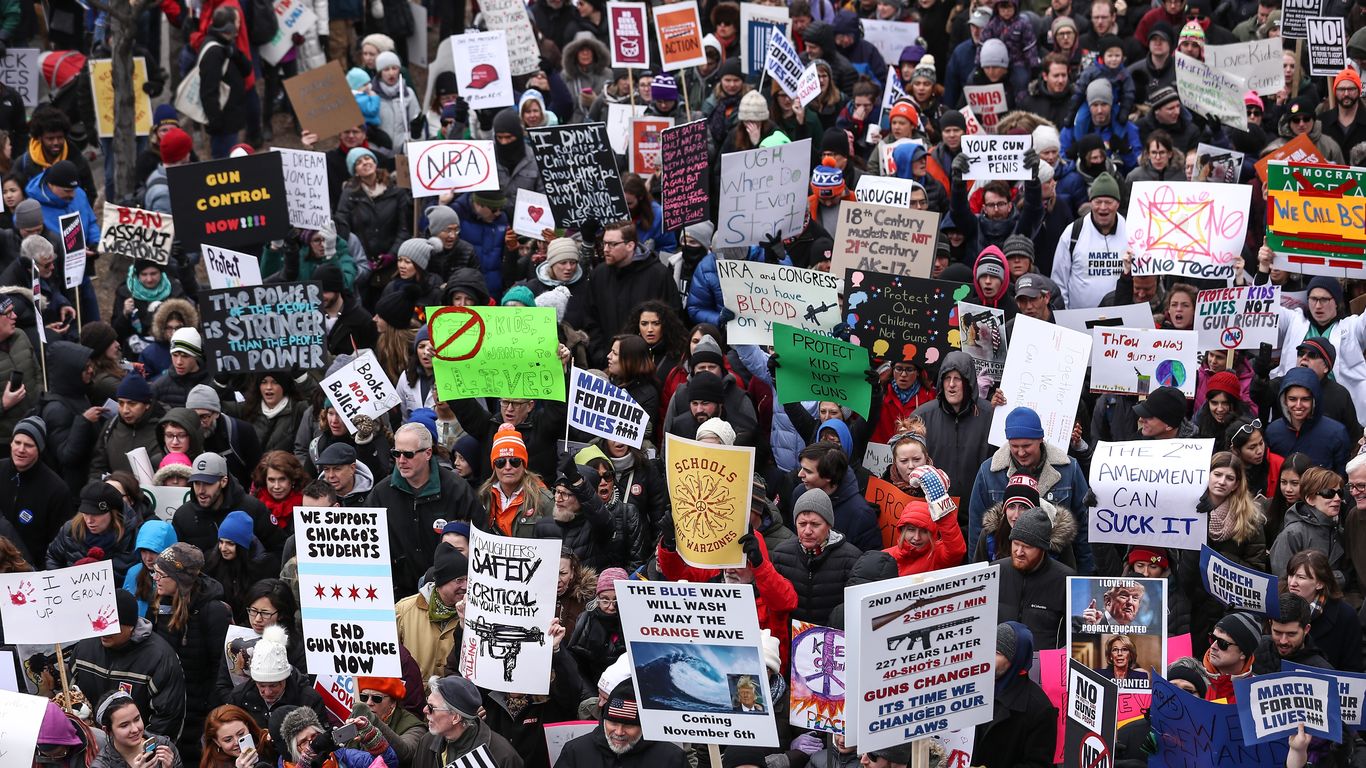
In 2018, firearm violence in the United States remained a critical public health and safety issue, characterized by a total of 39,740 recorded deaths. This year was marked by high-profile mass casualty events, a significant increase in youth-led activism, and the implementation of several key state-level legislative reforms aimed at curbing gun-related fatalities and injuries.
The year 2018 stands as a pivotal moment in the contemporary history of firearm violence. It was a period where the statistical reality of gun deaths—dominated largely by suicides—collided with a surge of public outcry following mass shootings in educational and social settings. To understand 2018 firearm violence is to examine a complex interplay of criminal justice data, public health trends, and a shifting political landscape that sought to balance Second Amendment rights with public safety imperatives.
Statistical Overview of 2018 Firearm Fatalities
Data from the Centers for Disease Control and Prevention (CDC) and the Federal Bureau of Investigation (FBI) provide a clear, albeit sobering, picture of the 2018 landscape. While mass shootings often capture the most media attention, the vast majority of firearm deaths in 2018 were the result of suicides and everyday homicides.
The Prevalence of Firearm Suicides
In 2018, suicides accounted for approximately 61% of all firearm-related deaths in the United States. Of the nearly 40,000 deaths, 24,432 were ruled as suicides. This highlights a persistent challenge in firearm violence prevention: the intersection of mental health and lethal means. Research has consistently shown that firearms are the most lethal method of suicide attempt, and their presence in a household significantly increases the risk of a completed suicide.
Homicide and Other Categories
Firearm homicides totaled 13,958 in 2018, representing roughly 35% of all gun deaths. The remaining percentage of fatalities consisted of unintentional discharges (accidents), legal interventions (police-involved shootings), and cases where the intent could not be determined.
The geographical distribution of these deaths revealed significant disparities. While urban centers often saw higher rates of firearm homicides, rural areas frequently experienced higher rates of firearm suicides. This distinction is vital for policymakers because the strategies required to prevent gang-related violence in a city are fundamentally different from those needed to address rural mental health crises.
Significant Mass Shooting Events of 2018
The year 2018 was defined in the public consciousness by several high-profile mass shootings. These events acted as catalysts for national debate and subsequent legislative action.
Marjory Stoneman Douglas High School (Parkland, Florida)
On February 14, 2018, a former student opened fire at Marjory Stoneman Douglas High School, killing 17 people and injuring 17 others. This event was unique not only for its scale but for the reaction of the survivors. The "March for Our Lives" movement, led by Parkland students, became one of the largest youth-led protests in American history, demanding stricter gun control measures such as universal background checks and bans on high-capacity magazines.
Santa Fe High School (Santa Fe, Texas)
Only months after Parkland, on May 18, 2018, a shooting at Santa Fe High School resulted in 10 deaths and 13 injuries. This event shifted some of the focus toward school hardening measures, such as increasing the presence of school resource officers and limiting entry points to campus buildings, reflecting a different ideological approach to school safety.
Borderline Bar and Grill (Thousand Oaks, California)
On November 7, 2018, a gunman killed 12 people in a country music bar in Thousand Oaks. This event highlighted the vulnerability of "soft targets"—public spaces with limited security—and the recurring theme of veteran mental health, as the shooter was a former Marine.
Comparative Data: Firearm Death Categorization in 2018
To better visualize the impact of different types of firearm violence, the following table breaks down the 2018 figures based on CDC Wonder database reports.
| Category of Fatality | Number of Deaths (Approx.) | Percentage of Total |
|---|---|---|
| Suicide | 24,432 | 61.5% |
| Homicide | 13,958 | 35.1% |
| Unintentional/Accidental | 458 | 1.2% |
| Legal Intervention | 539 | 1.4% |
| Undetermined Intent | 353 | 0.8% |
| Total | 39,740 | 100% |
Note: Data derived from the CDC's National Center for Health Statistics for the 2018 calendar year.
Legislative and Policy Responses in 2018
The legislative response to 2018's violence occurred primarily at the state level, though a significant federal rule change regarding firearm accessories also took place.
Federal Action: The Bump Stock Ban
Following the 2017 Las Vegas shooting, the Department of Justice (DOJ) moved to reclassify "bump stocks"—devices that allow semi-automatic rifles to fire at a rate similar to fully automatic weapons—as "machine guns" under the National Firearms Act. In December 2018, the DOJ officially issued a final rule banning these devices. Owners were given 90 days to destroy or surrender them, marking one of the few federal-level restrictions enacted during that era.
State-Level "Red Flag" Laws
One of the most significant trends in 2018 was the expansion of Extreme Risk Protection Orders (ERPOs), commonly known as "Red Flag" laws. These laws allow law enforcement or family members to petition a court to temporarily remove firearms from individuals deemed a danger to themselves or others.
- Florida: Following the Parkland shooting, Florida—a state traditionally known for robust gun rights—passed the Marjory Stoneman Douglas High School Public Safety Act. This included a Red Flag law, a raise in the minimum age to purchase a firearm to 21, and a three-day waiting period for all firearm purchases.
- Other States: Vermont, Maryland, Rhode Island, and Delaware also enacted or significantly strengthened ERPO statutes in 2018.
School Safety Funding
At the federal level, the STOP School Violence Act was signed into law in March 2018 as part of an omnibus spending bill. This legislation provided hundreds of millions of dollars in grants for school security improvements, crisis intervention teams, and training for students and faculty to recognize signs of potential violence.
Demographic Impacts and Vulnerable Populations
Firearm violence in 2018 did not affect all demographics equally. Analyzing the data through a demographic lens reveals deep-seated social and economic disparities.
Impact on Youth
According to the American Academy of Pediatrics, firearm-related injuries remained a leading cause of death for children and adolescents in 2018. The trauma of school shootings, while statistically rarer than day-to-day community violence, had a profound psychological impact on the "Generation Z" demographic, influencing their political engagement and mental health.
Racial Disparities in Homicide
Firearm homicide disproportionately affected Black communities. In 2018, Black men and boys made up a significant plurality of gun homicide victims, often linked to systemic issues such as economic disinvestment in urban neighborhoods, underfunded social services, and the prevalence of illicit firearm trafficking.
Suicide Among Older Populations and Veterans
Conversely, firearm suicide rates were highest among older white males. For veterans, the rate of firearm suicide remained a critical concern in 2018, prompting the Department of Veterans Affairs (VA) to increase its focus on firearm safety counseling and the distribution of gun locks as part of suicide prevention efforts.
The Role of Non-Fatal Injuries
While fatalities are the most frequently cited statistic, non-fatal firearm injuries in 2018 significantly outnumbered deaths. Estimates suggest that for every person killed by a gun in 2018, two to three others were injured.
These non-fatal injuries carry immense long-term costs, including:
- Medical Expenses: Initial emergency room visits and long-term rehabilitative care.
- Psychological Trauma: High rates of Post-Traumatic Stress Disorder (PTSD) among survivors and witnesses.
- Economic Loss: Lost wages and decreased productivity for survivors who may suffer from permanent disabilities.
The "cost" of 2018 firearm violence extends far beyond the immediate loss of life, placing a continuous strain on the healthcare system and community resources.
Common Misconceptions Regarding 2018 Data
Understanding the nuances of the 2018 data requires debunking several common myths that often cloud the public debate.
- Misconception: Mass shootings are the primary cause of gun deaths. As shown in the statistical breakdown, mass shootings account for less than 1% of annual gun fatalities. While they are horrific and demand attention, the "quiet" epidemic of suicide and individual homicides represents the bulk of the violence.
- Misconception: Gun laws have no impact on violence. The 2018 data from states like Florida showed that targeted interventions, such as Red Flag laws, provided law enforcement with tools that were used hundreds of times in the first year alone to prevent potential tragedies.
- Misconception: Firearm violence is only a "big city" problem. Because suicide is the leading cause of gun death, many rural states with high gun ownership rates actually have higher per-capita firearm death rates than states with large, dense cities.
Frequently Asked Questions
What was the total number of gun deaths in 2018?
There were 39,740 firearm-related deaths in the United States in 2018, according to the CDC. This was a slight increase from the previous year, continuing a general upward trend that had been observed throughout the mid-2010s.
How did the Parkland shooting change gun laws?
The Parkland shooting led to the passage of the Marjory Stoneman Douglas High School Public Safety Act in Florida. This was significant because it was a Republican-led effort that introduced a "Red Flag" law, raised the age for gun purchases to 21, and implemented a mandatory waiting period. It served as a template for other states to pursue similar "middle-ground" reforms.
Were bump stocks banned in 2018?
The official rule to ban bump stocks was finalized by the Department of Justice in December 2018. While the implementation and surrender period extended into early 2019, the legal groundwork and the executive order that initiated the process occurred in 2018.
Which was more common in 2018: gun suicide or gun homicide?
Gun suicide was significantly more common. Approximately 61% of all firearm deaths in 2018 were suicides, while roughly 35% were homicides. This ratio has remained relatively consistent in the U.S. for several decades.
What is a "Red Flag" law, and why did it become popular in 2018?
A Red Flag law, or Extreme Risk Protection Order (ERPO), allows a court to temporarily seize firearms from someone who is a danger to themselves or others. These laws gained popularity in 2018 because they were seen as a proactive way to prevent mass shootings and suicides by intervening when "warning signs" were reported by family or police.
Final Recommendation for Researchers and Advocates
When analyzing 2018 firearm violence, it is essential to distinguish between the visibility of violence and its prevalence. While mass shootings drive the policy conversation, suicide prevention and community-based violence intervention (CVI) programs remain the most effective tools for reducing the actual number of fatalities. Researchers should utilize the CDC WONDER database for granular state-level data and consult the FBI's Uniform Crime Reporting (UCR) program for detailed homicide statistics to build a comprehensive understanding of the year's impact.
For those looking to engage in advocacy or policy-making, the 2018 data suggests that a multi-pronged approach—combining mental health resources, "safe storage" education, and targeted legislative measures like ERPOs—offers the most robust path toward reducing firearm-related harm.