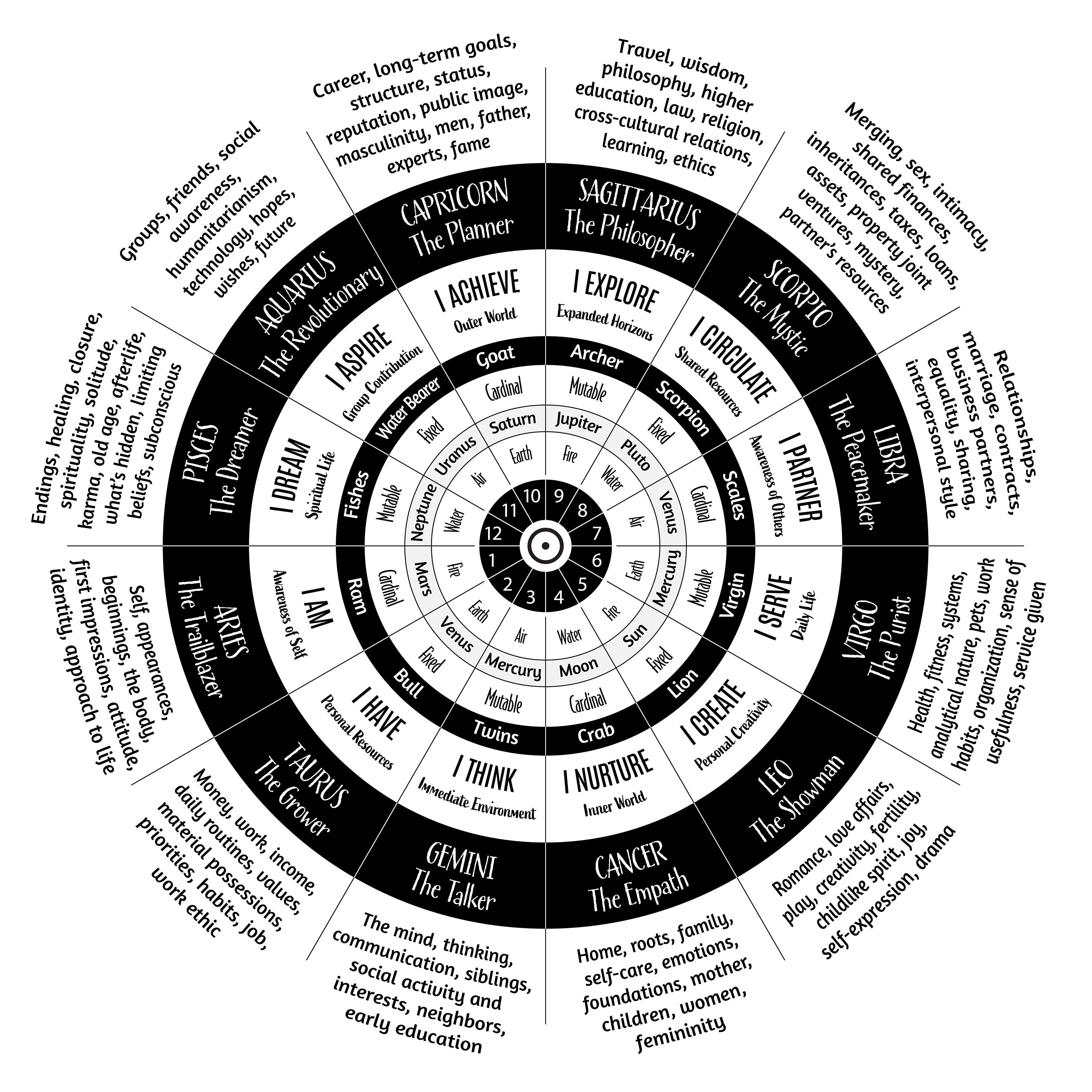
In astrology, the 12 houses represent distinct areas of life experiences, ranging from the self and identity to career, relationships, and the subconscious. Each house is governed by a specific zodiac sign and planetary ruler in the "natural wheel," providing a structural map of an individual's journey from birth to spiritual transcendence.
Understanding the 12 houses is essential for anyone seeking to move beyond simple "Sun sign" astrology. While your signs describe the energy you possess (the "how"), the houses describe the specific arenas where that energy manifests (the "where"). For instance, having Mars in Aries tells us you are assertive, but seeing Mars in the 10th House tells us that assertiveness is primarily directed toward your professional career and public reputation.
As of 2026, astrological practice has increasingly integrated traditional Hellenistic techniques with modern psychological interpretations. This clear reference provides a comprehensive look at the 12 houses, their classifications, and how they shape the narrative of a birth chart.
The Foundation of the Houses: The Four Angles
Before examining each house individually, it is vital to understand the "angles." These are the most potent points in an astrological chart, acting as the pillars of a person’s life.
- The Ascendant (1st House Cusp): The "Rising Sign" represents the self, the physical body, and the mask we wear when meeting the world.
- The Imum Coeli or IC (4th House Cusp): Represents our roots, home, family, and the private self.
- The Descendant (7th House Cusp): Represents "the other," including committed partnerships and how we relate to those around us.
- The Midheaven or MC (10th House Cusp): Represents our highest aspirations, public status, and professional achievements.
The 1st House: The House of Self
The First House, often called the House of Self, marks the beginning of the zodiac. It is naturally ruled by Aries and the planet Mars. This house encompasses your physical appearance, your personality, and the first impression you make on others.
This house is synonymous with "identity." When planets occupy the first house, they heavily color the person's ego and physical vitality. For example, someone with Jupiter in the first house might appear optimistic, expansive, and physically large or presence-heavy. It is the filter through which you view the world and the way the world views you. As the start of the "First Quadrant," it is entirely focused on the development of the individual ego.
The 2nd House: The House of Value
The Second House is the House of Value and Possessions, naturally ruled by Taurus and Venus. While it is often simplified as the "money house," its meaning is much deeper. It represents what you value, your personal finances, your sense of self-worth, and your material security.
This house dictates how you handle resources. It covers your earned income (as opposed to inherited wealth) and your relationship with the physical world. If you have Saturn here, you may feel a constant need to save or experience "scarcity" mindset, whereas Venus here might suggest a love for luxury and an easy flow of material goods. Ultimately, the Second House asks: "What do I need to feel secure?"
The 3rd House: The House of Communication
The Third House is the House of Communication, naturally ruled by Gemini and Mercury. It governs the immediate environment, including siblings, neighbors, local travel, and early education.
In a modern 2026 context, this house also relates to our digital footprint, social media interactions, and how we process information. It is a "cadent" house, meaning it is where we learn to adapt and exchange ideas. Planets here influence how you speak, write, and think. A person with Neptune in the third house may have a poetic, non-linear way of communicating, while someone with Pluto here might have a piercing, investigative mind.
The 4th House: The House of Home and Family
The Fourth House sits at the bottom of the chart and is known as the House of Home and Family, naturally ruled by Cancer and the Moon. It represents your foundation—both the literal house you live in and your psychological roots.
This house covers your relationship with your parents (traditionally the mother, though modern astrology often views it as the nurturing parent), your ancestry, and your sense of domestic security. It is the most private part of the chart. Planets in the fourth house indicate what you need to feel emotionally "at home." If Mars is located here, there might be frequent activity or even conflict within the domestic sphere.
The 5th House: The House of Pleasure
The Fifth House is the House of Pleasure, Creativity, and Romance, naturally ruled by Leo and the Sun. This is where we find joy, playfulness, and the "inner child."
This house governs everything we create—be it a work of art, a hobby, or a biological child. It also covers "short-term" romance and dating (the "fluttery" stage before a committed contract). Planets here show how you express your unique spark. A person with Uranus in the fifth house may have very unconventional hobbies or an avant-garde approach to romance and self-expression.
The 6th House: The House of Health and Service
The Sixth House is the House of Health and Service, naturally ruled by Virgo and Mercury. It shifts the focus from the fun of the fifth house to the daily grind and the necessity of maintenance.
This house governs your daily routines, your workplace environment (as a place of duty), your physical health, and your relationship with small pets. It is about the "rituals" of life. If someone has many planets in the sixth house, they may be highly focused on productivity, diet, and being of service to others. It is the house of "how you work" rather than "what your career is."
The 7th House: The House of Partnership
The Seventh House is the House of Partnership, naturally ruled by Libra and Venus. Positioned directly across from the First House of Self, this house represents "The Other."
It governs marriage, business partnerships, and legal contracts. Interestingly, it also governs "open enemies"—those people with whom we have a clear, documented conflict. The Seventh House shows what qualities we look for in others and what we bring to a one-on-one relationship. Planets here describe the nature of your long-term commitments. Jupiter in the seventh often indicates luck through partnerships or a spouse who is philosophical and expansive.
The 8th House: The House of Transformation
The Eighth House is often misunderstood. Known as the House of Transformation, Sex, and Death, it is naturally ruled by Scorpio and Pluto (traditionally Mars). It governs shared resources—money that isn't yours, such as inheritances, taxes, and your partner's finances.
This is the house of deep intimacy and psychological bonding. It covers the "taboo" subjects of life: death, rebirth, and the occult. It is where we go through intense changes that leave us fundamentally different. Planets in the eighth house suggest a person who deals with intense emotional or financial situations. For example, Saturn here might suggest delays in receiving an inheritance or a very serious, disciplined approach to intimacy.
The 9th House: The House of Philosophy
The Ninth House is the House of Philosophy and Long-Distance Travel, naturally ruled by Sagittarius and Jupiter. After the intensity of the eighth house, the ninth seeks meaning and expansion.
This house governs higher education, law, religion, and travel to foreign lands. It represents the search for "The Truth." Planets here indicate your worldview and your appetite for exploration. A person with the Moon in the ninth house may feel an emotional need to travel or may find comfort in religious or philosophical studies. It is the house of the "Big Picture."
The 10th House: The House of Social Status
The Tenth House, or the Midheaven (MC), is the House of Social Status and Career, naturally ruled by Capricorn and Saturn. It is the highest point in the chart and represents your public life and reputation.
Unlike the sixth house (daily work), the tenth house is about your calling and your achievements. It reflects your relationship with authority figures and your desire for legacy. Planets here are highly visible to the public. Someone with Venus in the tenth house might be known for their charm, artistic ability, or public-facing role in beauty or diplomacy. It answers the question: "What will I be known for?"
The 11th House: The House of Friendships
The Eleventh House is the House of Friendships and Collective Vision, naturally ruled by Aquarius and Uranus (traditionally Saturn). This is the house of networking, social groups, and humanitarian causes.
It also governs your "Hopes and Dreams." While the tenth house is what you achieve, the eleventh is the community that supports those achievements. It is where you find like-minded people. Planets in the eleventh house indicate how you function within a group. Mars here might suggest a person who is a leader or a "warrior" for social justice, while the Sun here might indicate someone who shines within a large organization or social circle.
The 12th House: The House of the Subconscious
The Twelfth House is the House of the Subconscious and Undoing, naturally ruled by Pisces and Neptune (traditionally Jupiter). This is the most mysterious house, representing things that are hidden: secrets, hospitals, prisons, and the collective unconscious.
It is the "dustbin" of the zodiac, where we store things we don't want to deal with. However, it is also the house of spiritual transcendence and karma. Planets in the twelfth house often feel "hidden" from the individual until they do deep psychological or spiritual work. A person with Mercury in the twelfth house may have a very rich internal dialogue but struggle to speak up in public settings.
Summary Table: The 12 Houses at a Glance
| House | Natural Sign | Natural Ruler | Primary Theme | Life Area |
|---|---|---|---|---|
| 1st | Aries | Mars | Self | Identity, Appearance, Vitality |
| 2nd | Taurus | Venus | Value | Money, Possessions, Self-Worth |
| 3rd | Gemini | Mercury | Communication | Siblings, Local Travel, Intellect |
| 4th | Cancer | Moon | Home | Roots, Family, Private Life |
| 5th | Leo | Sun | Creativity | Joy, Romance, Children, Hobbies |
| 6th | Virgo | Mercury | Service | Health, Daily Routine, Work Habits |
| 7th | Libra | Venus | Partnership | Marriage, Contracts, Open Enemies |
| 8th | Scorpio | Pluto | Transformation | Sex, Other's Money, Rebirth |
| 9th | Sagittarius | Jupiter | Philosophy | Travel, Higher Ed, Law, Religion |
| 10th | Capricorn | Saturn | Career | Public Status, Reputation, Legacy |
| 11th | Aquarius | Uranus | Community | Friends, Social Goals, Hopes |
| 12th | Pisces | Neptune | Subconscious | Secrets, Spirituality, Karma |
House Classifications: Angular, Succedent, and Cadent
In professional astrology, houses are grouped by their "modality," which describes how energy moves within them.
- Angular Houses (1, 4, 7, 10): These are the houses of action. They correspond to the cardinal signs. Planets here have the most power to initiate change and are the most visible in a person’s life.
- Succedent Houses (2, 5, 8, 11): These houses provide stability. They correspond to fixed signs. They represent the resources we use to sustain what was started in the angular houses.
- Cadent Houses (3, 6, 9, 12): These are houses of transition and adaptation. They correspond to mutable signs. They are where we process information, learn, and prepare for the next angular shift.
Understanding Different House Systems
When looking at a birth chart in 2026, you will likely encounter different "house systems." The two most common are Placidus and Whole Sign.
- Placidus: This is a time-based system. It results in houses of varying sizes, depending on where and when you were born. Some houses might be "intercepted" (containing an entire sign without it appearing on a cusp). Many modern astrologers prefer this for psychological depth.
- Whole Sign: This is the oldest system, popularized again by the revival of Hellenistic astrology in the 2020s. Each house is exactly 30 degrees and corresponds perfectly to a zodiac sign. If your Ascendant is 15 degrees Leo, your entire 1st house is Leo, your 2nd is Virgo, and so on. This system is often praised for its clarity and predictive accuracy.
Frequently Asked Questions
What does it mean if a house is empty?
An "empty house" does not mean that area of your life is empty or unimportant. It simply means there wasn't a planetary focus there at the moment of your birth. To understand an empty house, look at the sign on the cusp of that house and find where its "ruling planet" is located in your chart. For example, if your empty 2nd house is in Libra, look at where your Venus is placed to see how you handle money.
Which house is the most important?
While all houses are necessary for a complete life, the Angular Houses (1, 4, 7, and 10) are considered the most influential. Among these, the 1st House (the Ascendant) is the most personal, as it defines your physical incarnation and how you engage with all other houses.
Is the 12th house always "bad"?
No. While the 12th house is associated with "undoing" and isolation, it is also the house of immense spiritual gifts, intuition, and artistic inspiration. Many successful artists and spiritual leaders have strong 12th-house placements. It requires a person to turn inward rather than seeking external validation.
How do I find out which signs are in my houses?
You need your exact birth date, birth time (down to the minute), and birth location. You can use official astronomical tools or reputable calculation services like the Swiss Ephemeris or NASA’s Jet Propulsion Laboratory data for planetary positions to ensure accuracy.
Practical Next Actions
To use this clear reference effectively, follow these steps:
- Generate your Birth Chart: Use a reputable site to calculate your chart using the "Placidus" or "Whole Sign" system.
- Identify the Cusps: Look at which zodiac sign sits at the beginning of each house.
- Locate Planets: Note which planets fall into which houses.
- Synthesize: Read the description of the house and combine it with the energy of the planet. If you have Saturn (restriction) in the 5th House (joy), you may find that you take your hobbies very seriously or that you didn't feel "playful" until later in life.
By mastering the 12 houses, you gain a structural understanding of how your life is organized, allowing for deeper self-reflection and more accurate personal forecasting.